
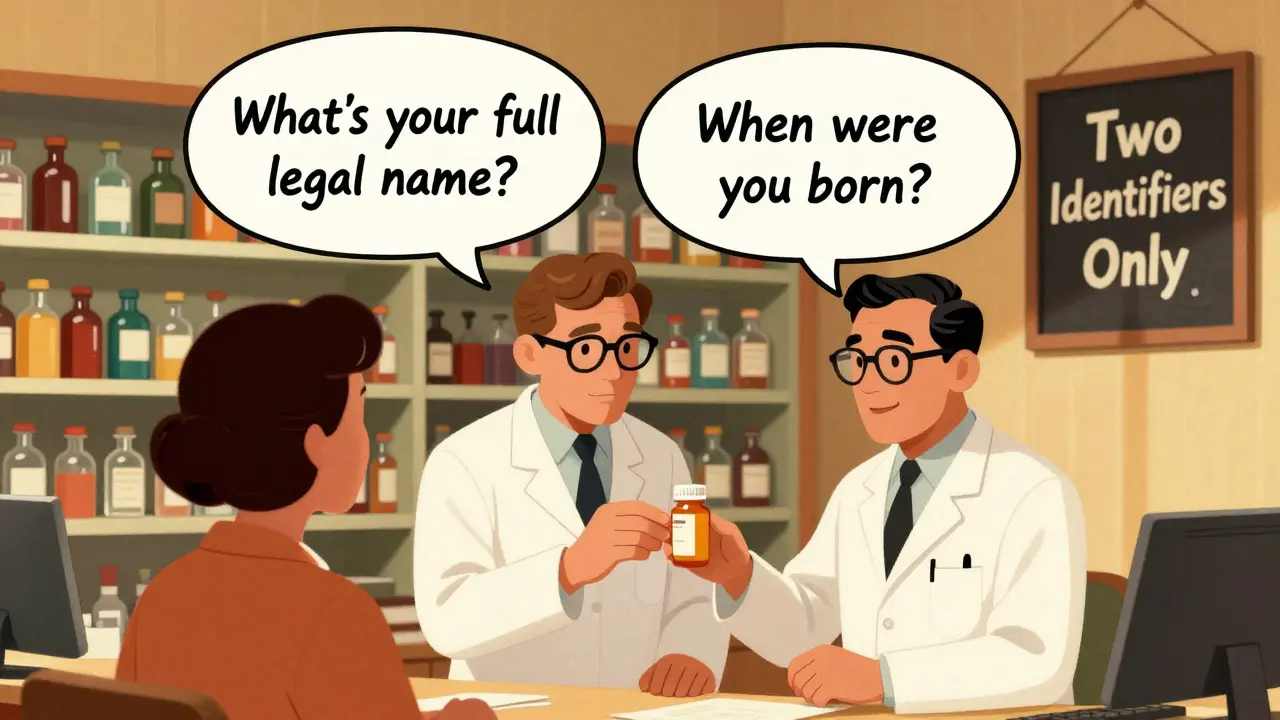
Every year, thousands of people in the U.S. get the wrong medication-not because the pharmacy made a mistake with the pill, but because they gave it to the wrong person. This isn’t rare. It happens more often than most people realize. And the fix? Simple, but often ignored: use two patient identifiers before handing out any prescription.
Why Two Identifiers? It’s Not Just a Rule-It’s a Lifesaver
The Joint Commission, the organization that accredits hospitals and pharmacies in the U.S., made this a national safety goal back in 2003. Their rule is clear: before you dispense any medication, you must verify the patient using at least two unique identifiers. Not one. Not just the name. Not just the date of birth alone. Two separate pieces of information that belong to that person and only that person. Acceptable identifiers include full name, date of birth, medical record number, or phone number. What doesn’t count? Room number. Bed number. Location. These change all the time and can’t be trusted to identify someone. I’ve seen pharmacists say, “It’s Joe in room 304,” only to hand a heart medication to a different Joe who just walked in. That’s not a typo. That’s a preventable disaster. A 2020 study in JMIR Medical Informatics found that about 10% of serious drug interaction alerts in U.S. pharmacies go unnoticed-not because the system is broken, but because the patient’s records are mixed up. That means someone with a known allergy to penicillin might get it anyway, just because their name is similar to someone else’s in the system. And those aren’t just hypothetical risks. Real people end up in the ER because of this.Manual Checks Alone Aren’t Enough
Many pharmacies still rely on staff asking, “What’s your full name?” and “When were you born?” Then they check it against the screen. Sounds simple, right? But humans make mistakes. We get tired. We rush. We assume. A 2023 survey by the American Society of Health-System Pharmacists found that 63% of pharmacists admit they sometimes skip full verification during busy hours. In community pharmacies, 42% of the time, the check is done verbally-no written record. No paper trail. No accountability. That’s not safety. That’s luck. And here’s the scary part: research in BMJ Quality & Safety showed that having two staff members double-check a prescription doesn’t actually reduce errors if they’re just reading the same screen together. If both people are looking at the same mistake, they’ll both miss it. Independent verification only works if each person checks from a different source. That’s hard to do without technology.Technology Makes the Difference
The real game-changer? Barcode scanning. When a pharmacist scans the patient’s wristband and the medication’s barcode, the system cross-checks the name, date of birth, medication, dose, and time-all in seconds. If something doesn’t match, it alerts you. No guessing. No assumptions. A 2012 study in the Journal of Patient Safety found that hospitals using barcode systems saw a 75% drop in medication errors reaching patients. That’s not a small improvement. That’s life-changing. One hospital in Seattle reported their near-miss errors dropped by 60% in just six months after switching to barcode verification. Biometric systems like palm-vein scanners are also gaining ground. Imprivata’s system, used in over 1,000 hospitals, matches patients to records with 94% accuracy-compared to just 17% in places without a centralized patient index. That’s because many patients have multiple records under slightly different names: “Robert Smith” vs. “Bob Smith,” or “Maria Garcia” vs. “María García.” Without a system that links them all, you’re flying blind.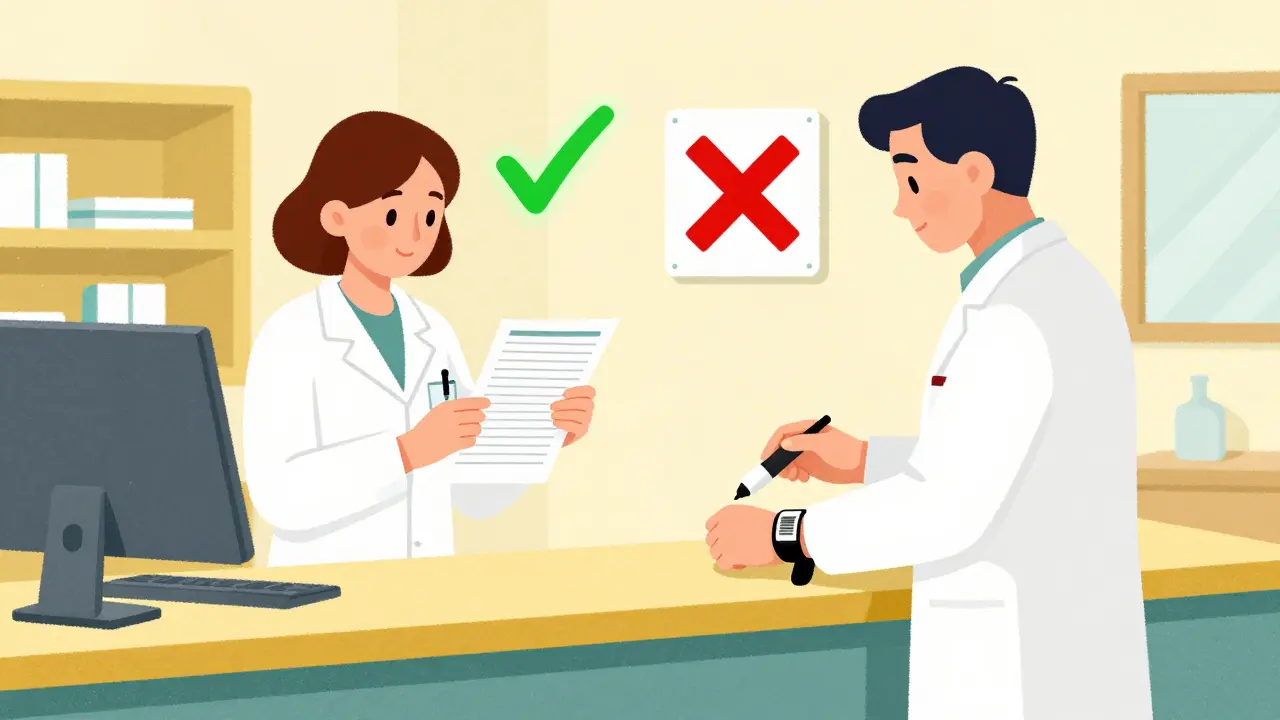
What Happens When You Skip the Check?
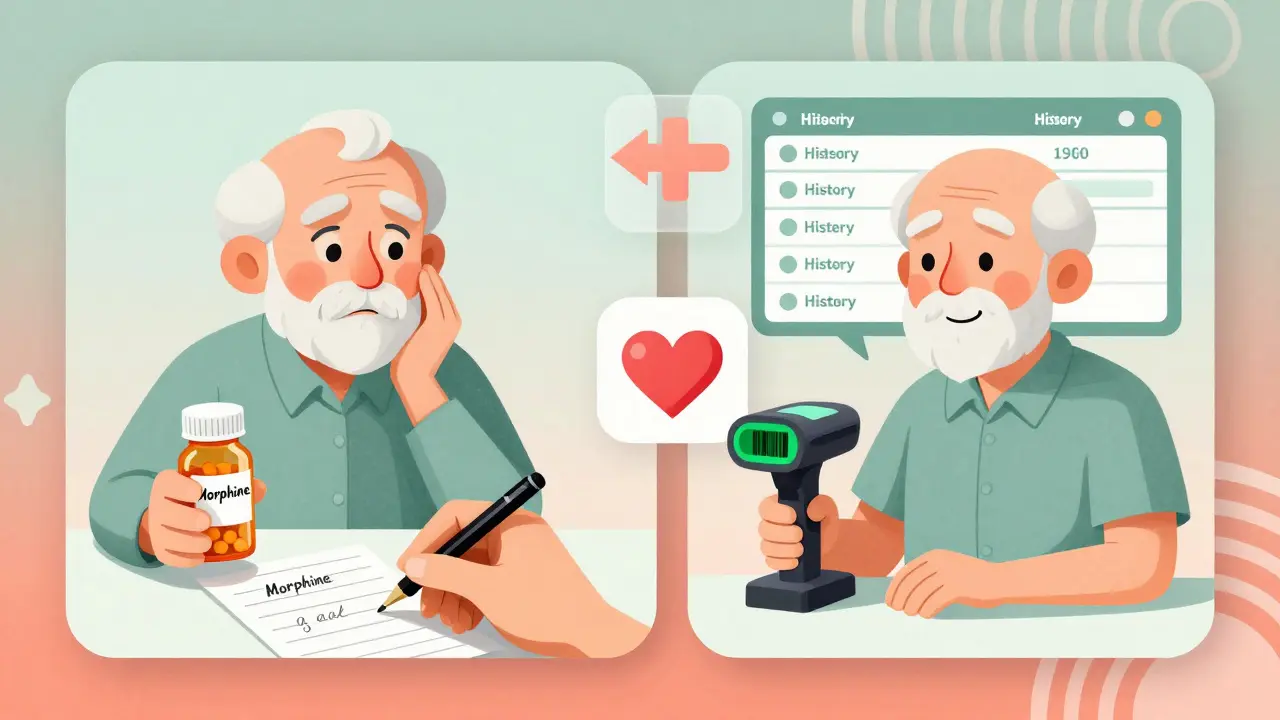
Let’s look at a real case. A man was brought to an emergency room unconscious. He was transferred from another hospital. The staff couldn’t find his record because he was listed under his middle name, not his first. They created a new file. Days later, they realized he had a documented allergy to morphine-recorded in his old file. If they’d used a unified system with two identifiers, they’d have caught it. Instead, he nearly died. Another case: a woman with chronic fatigue was prescribed two different medications by two different specialists. Neither doctor knew about the other’s prescription because her records were split across systems. She ended up with a dangerous drug interaction. The root cause? Duplicate records. And duplicate records happen because patient identification is inconsistent. The Office of the National Coordinator for Health IT estimates that 8-12% of patient records in hospitals without strong ID systems are duplicated. That’s not a glitch. That’s a systemic failure. And it costs hospitals $40 million a year just to clean up the mess.How to Get It Right
If you work in a pharmacy, here’s how to make sure you’re following the protocol correctly:- Always ask for two identifiers-never assume. Even if the patient says, “You know me, I come here every week,” still verify.
- Use the patient’s own words. Don’t read the name from the screen and ask, “Is that you?” Say, “What’s your full legal name?” and “What’s your date of birth?”
- Match what they say to the record-out loud. Say it together. “Your name is Linda Chen. Your birth date is March 14, 1978. Correct?”
- Document it. If you don’t write it down, it didn’t happen. The Joint Commission found that 37% of non-compliant pharmacies didn’t record verification.
- Use technology when you can. Barcode wristbands, biometric scanners, and EMPI systems aren’t luxuries-they’re safety nets.
Why This Still Isn’t Fixed
You’d think after 20+ years, everyone would be doing this right. But compliance is still a problem. In 2023, non-compliance with the two-identifier rule was the third most common violation in hospital surveys. Why? - Time pressure. Community pharmacies are understaffed. Rushing is normal. - Poor training. Staff aren’t always taught *why* this matters-just that they have to do it. - Legacy systems. Older pharmacy software doesn’t integrate with barcode or biometric tools. - Patient resistance. Some people think it’s annoying. They say, “I’ve been coming here for 20 years.” But safety isn’t about familiarity. It’s about accuracy. The World Health Organization and the Emergency Care Research Institute both list patient misidentification as one of the top 10 threats to patient safety. And they’re not exaggerating. Medication errors tied to bad ID are preventable. But they won’t stop unless we treat them like the emergencies they are.The Future Is Already Here
In January 2025, a pilot program launched in five regional health exchanges to test a national patient identifier system. That means one unique number for every patient-like a Social Security number, but for health records. It’s not mandatory yet. Privacy concerns are real. But the math is clear: without it, duplicate records will keep costing lives and money. Until then, the only tool we have is the two-identifier rule. And it works-if we use it right.There’s no magic pill. No AI that can replace human attention. Just two questions. Two checks. One life saved.
What are the two patient identifiers required in a pharmacy?
The two patient identifiers must be specific to the individual and cannot be location-based. Acceptable identifiers include the patient’s full name, date of birth, assigned medical record number, or phone number. Room number, bed number, or location are not valid identifiers because they are not unique to the person.
Why can’t room number or bed number be used as patient identifiers?
Room and bed numbers change frequently and are assigned based on availability, not identity. A patient might be moved to another room during their stay, or two patients might have similar names and be assigned to nearby rooms. Relying on location increases the risk of giving medication to the wrong person. The Joint Commission explicitly prohibits these as identifiers because they don’t guarantee the right person is being served.
Is double-checking by two staff members effective?
Research shows that simply having two people look at the same screen doesn’t reduce errors. If both are reading the same incorrect information, they’ll both miss the mistake. True independent double-checking requires each person to verify from a separate source-like one checking the prescription label and the other checking the patient’s electronic record. Without technology, this is hard to do consistently.
How does barcode scanning improve patient safety in pharmacies?
Barcode scanning links the patient’s wristband (with name and DOB) to the medication’s barcode, automatically verifying that the right drug, dose, and route are being given to the right person. Studies show this reduces medication errors reaching patients by up to 75%. It also creates a digital audit trail, which helps with accountability and compliance.
What happens if a pharmacy doesn’t use two patient identifiers?
Non-compliance puts patients at risk of receiving the wrong medication, which can lead to serious injury or death. Pharmacies can also lose accreditation from The Joint Commission, which affects Medicare and Medicaid reimbursement. In 2023, this rule was the third most common violation in hospital surveys, with 28% of all patient safety goal failures tied to this single requirement.
Are electronic health records enough to prevent misidentification?
Not by themselves. Many hospitals have multiple, unlinked records for the same patient due to name variations, misspellings, or data entry errors. Without an Enterprise Master Patient Index (EMPI) to merge these records, even the most advanced EHR can’t prevent misidentification. Two identifiers must still be verified at the point of care-technology supports, but doesn’t replace, human verification.
How can community pharmacies implement two-identifier verification without expensive tech?
Even without barcode scanners, community pharmacies can enforce strict verbal verification: always ask for the full name and date of birth, say them out loud, and confirm with the patient. Document the verification in the patient’s record-even if it’s just a checkbox on a printed form. Training staff on the *why* behind the rule reduces resistance. And using a timeout before high-risk medications gives everyone a moment to pause and verify.


Write a comment