
Key Takeaways
- Turmeric supplements contain high concentrations of curcumin, which acts as a natural anticoagulant.
- Combining turmeric supplements with prescription blood thinners like warfarin can dangerously spike bleeding risks (INR > 10).
- Culinary use of turmeric spice in food is generally safe, but therapeutic doses in pills are risky.
- Medical authorities like Medsafe and WMIC advise avoiding concurrent use due to unpredictable metabolic interactions.
- If you take anticoagulants, you must consult your doctor before starting any turmeric or curcumin regimen.
We often hear that natural remedies are safer than drugs. It is a comforting thought. You sprinkle turmeric on your chicken curry, maybe toss a supplement pill for joint pain, and assume the worst that could happen is a yellow carpet. But if you are prescribed medication to prevent clots, that assumption becomes life-threatening. There is hard evidence proving that this golden spice does not play well with certain prescriptions.
This isn't just theoretical biochemistry. Real people have ended up in hospitals because their blood became too thin to clot normally. The gap between what we see on a health blog and what happens inside our veins is significant. We need to look at the actual chemical pathways, the documented medical cases, and the specific guidelines health agencies have issued recently.
The Chemical Reality: What Is Actually in Turmeric?
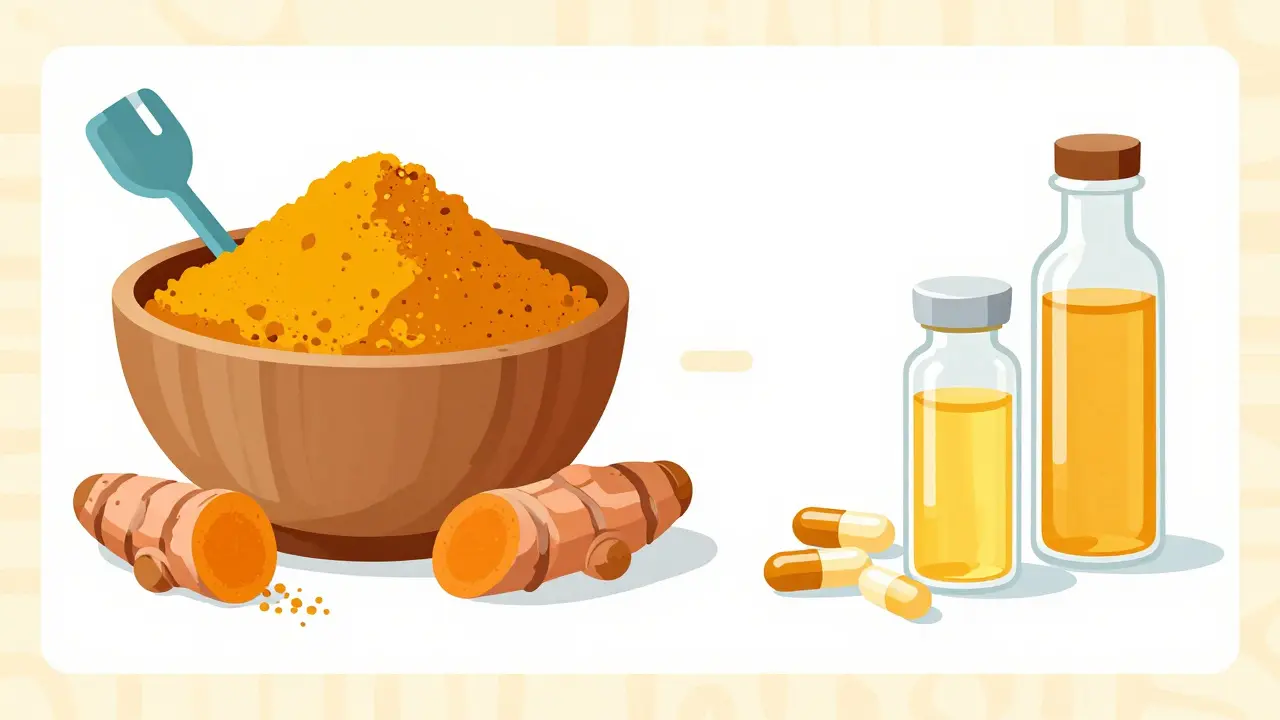
To understand why the interaction happens, we need to define exactly what we are putting into our bodies. Turmeric is the root of Curcuma longa. In its raw form, dried as a powder, it contains only about 2% to 8% curcumin by weight. Curcumin is the bright yellow pigment responsible for the color and the potent biological activity.
When you buy a "turmeric supplement" online, however, the concentration changes drastically. Many extracts are standardized to contain 95% curcuminoids. That means one tablet delivers the equivalent potency of dozens of teaspoons of kitchen spice. Your body processes concentrated chemicals differently than dietary compounds. The pharmacokinetics shift when the dose crosses a threshold. This distinction between "food" and "supplement" is critical for anyone managing chronic conditions.
Beyond curcumin, the rhizome contains other compounds like bisdemethoxycurcumin (BDMC). Research indicates that these derivatives also contribute to anticoagulant effects. A study published in PubMed (PMID: 22531131) noted that while curcumin had superior effects to BDMC, both prolonged activated partial thromboplastin time (aPTT) in a dose-dependent manner. Essentially, the more you consume, the slower your blood clots become.
How Prescription Blood Thinners Work
Prescription anticoagulants are not designed to be vague. They have precise targets. Let's look at the two main categories patients typically encounter.
- Warfarin (Coumadin): This older, widely used drug works by inhibiting the Vitamin K Epoxide Reductase Complex Subunit 1 (VKORC1). This prevents the liver from activating clotting factors II, VII, IX, and X. Because it relies on vitamin K intake, doctors monitor patients using the International Normalized Ratio (INR). An INR between 2.0 and 3.0 is usually the target for stable therapy. Going above 4.0 significantly increases bleeding risk.
- Direct Oral Anticoagulants (DOACs): Newer drugs like rivaroxaban (Xarelto) or apixaban (Eliquis) directly inhibit Factor Xa. They are more predictable than warfarin, but they still rely on a delicate balance. Adding another substance that hits Factor Xa creates a double-hit effect.
These medications require stability. When you introduce a variable like a herbal extract, you destabilize that system. Unlike the drugs, which undergo rigorous testing for consistency, supplements vary wildly from batch to batch.
The Mechanism of Dangerous Interaction
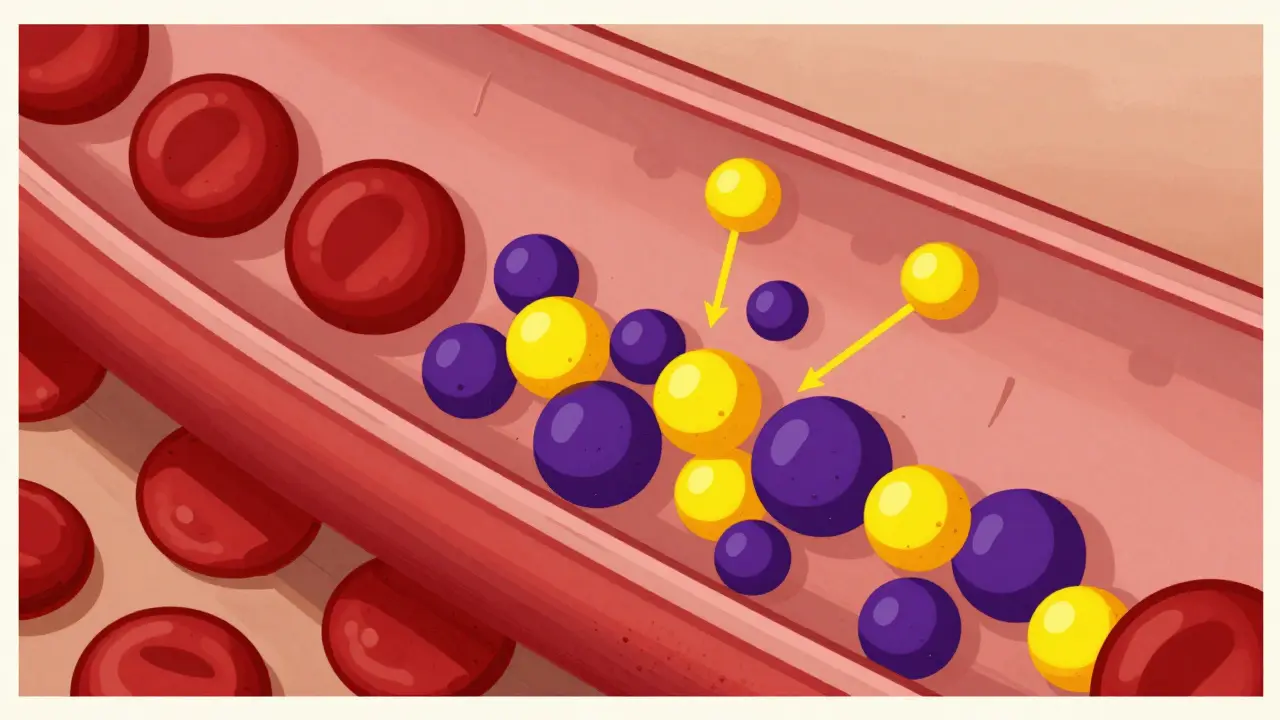
The danger arises because turmeric hits the same braking mechanisms as the prescription drugs. Curcumin does not just sit passively in the stomach. It inhibits thrombin activity. Thrombin is the enzyme that converts fibrinogen into fibrin, the meshwork that stops bleeding. It also inhibits Factor Xa.
If you are taking warfarin to lower your Factor Xa activity, adding curcumin lowers it further. It creates a synergistic effect. This leads to excessive clotting times. Furthermore, turmeric decreases platelet aggregation via the inhibition of platelet-activating factor. This is a dual attack on hemostasis: it reduces the speed of the clotting cascade and hampers the platelets' ability to stick together to form a plug.
There is also a metabolic component. Curcumin moderately inhibits the CYP3A4 enzyme in the liver. This enzyme is responsible for breaking down many drugs, including tacrolimus and norfloxacin. If the enzyme is busy processing curcumin, the blood levels of the primary medication rise to toxic heights. One small study of eight people showed sulfasalazine plasma concentrations were 3.2 times higher when combined with a 2g daily dose of curcumin.
Real World Case Studies
Data from lab studies is convincing, but actual patient outcomes tell the most compelling story. In April 2018, Medsafe New Zealand issued a formal warning following a specific report. A patient who was stable on warfarin therapy decided to start a turmeric-containing product. Within weeks, their INR spiked from a stable range to over 10. For context, an INR of 10 suggests the blood has almost lost its ability to clot naturally. This requires immediate reversal therapy and carries a high risk of spontaneous hemorrhage.
A second case reported by the Welsh Medicines Information Centre (WMIC) involved a kidney transplant patient. This individual consumed large quantities of turmeric-specifically described as "15 or more spoonfuls" of powder daily for ten days. The result was acute nephrotoxicity and tacrolimus levels reaching 29 nanograms per milliliter. Toxic levels of immunosuppressants can cause kidney failure, creating a chain reaction of organ damage initiated by a common spice.
These are not rare outliers. As healthcare access improves, more people self-medicate with supplements alongside prescribed therapies. The British Heart Foundation updated their guidance in 2023 noting that high doses of turmeric could interact with both DOACs and warfarin. They emphasize that the risk exists even for those already monitoring their own health closely.
Safety Guidelines from Medical Authorities
Global health organizations have aligned on stricter messaging. The consensus is moving away from "monitor carefully" toward "avoid concurrent use." Medsafe explicitly stated in their 2018 monitoring communication that concurrent use of natural health products containing turmeric should be avoided. Why? Because the margin for error is too narrow.
The Mayo Clinic Health System advises stopping turmeric supplements at least two weeks before any surgery. This aligns with standard protocols to minimize surgical bleeding risks. However, the advice extends beyond just pre-surgery. For daily users of anticoagulants, the risk persists during routine maintenance therapy. The WMIC updated their guidance in October 2024, reiterating that curcumin might decrease the clearance of warfarin, leading to raised INR levels associated with serious bleeding.
Dr. Oracle's analysis in 2023 supports this conservative approach, stating unequivocally that the evidence clearly indicates a significant risk. While some traditional medicine advocates claim low doses are safe, clinical medicine cannot gamble with intracranial hemorrhage statistics, which can carry mortality rates as high as 50% in severe bleeding events.

Dietary Intake vs. Therapeutic Dosing
You probably love curry, right? Do you need to stop eating Indian food or Thai dishes entirely? Most experts suggest a distinction between culinary spice and therapeutic supplementation. Using turmeric as a pinch of seasoning to flavor a meal provides negligible amounts of curcumin compared to a concentrated capsule.
However, "golden milk" lattes sold in cafes are a gray area. These drinks are made with turmeric extract, often mixed with black pepper and fats to increase absorption. If you drink these daily while on blood thinners, the cumulative dose might reach a threshold where it impacts your coagulation profile. If you enjoy spicy food, try to keep it moderate. If you are drinking a commercially prepared turmeric shot or taking a pill labeled for "anti-inflammatory support," consider it a high-risk supplement.
| Turmeric Form & Risk Profile | ||
|---|---|---|
| Form | Typical Curcumin Content | Risk Assessment for Anticoagulants |
| Kitchen Powder | 2-8% | Low Risk (Seasoning amounts) |
| "Golden Milk" Lattes | Moderate | Moderate Risk (Daily frequency matters) |
| Supplements / Extracts | Up to 95% | High Risk (Avoid with prescription thinners) |
Practical Next Steps for Patients
If you are currently taking blood-thinning medications, here is how you protect yourself.
- Inventories: Write down every single bottle of vitamins or herbs in your cupboard. Show this list to your pharmacist.
- Ask Specific Questions: Don't ask "Is this okay?" Ask "Will this affect my INR or kidney function?" Be specific about the ingredient.
- Monitor Symptoms: Watch for signs of bleeding such as unexplained bruising, nosebleeds, gum bleeding, dark tarry stools, or persistent headaches. These are early warnings of coagulopathy.
- Timing: If your doctor approves a trial, never start without baseline blood work. Schedule re-testing 3-5 days after introducing the new element.
- Pre-Surgery: Stop all herbal supplements two weeks prior to any planned procedure.
Knowledge empowers us, but sometimes the safest knowledge is knowing when to say no. Your liver filters your medications; don't overload it with substances that confuse that filter. The cost of a supplement is small money compared to the hospital bills of treating a bleed.


Write a comment