
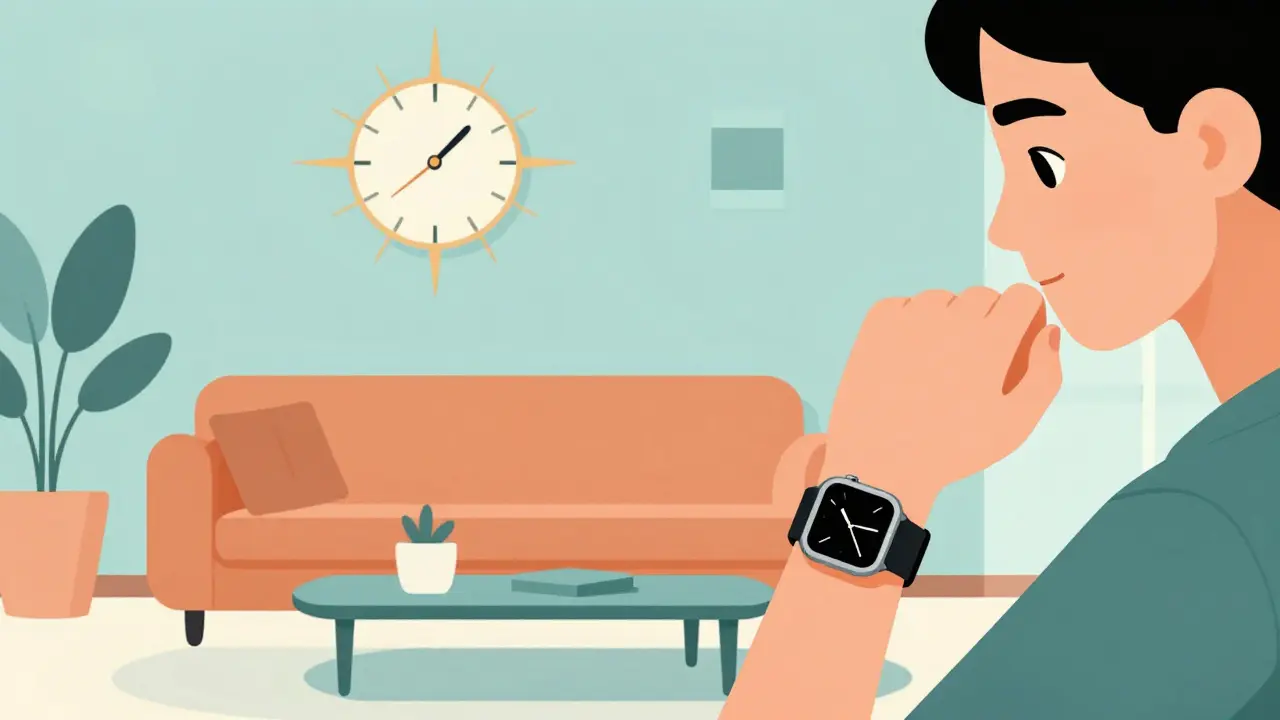
Medication Side Effect Baseline Tracker
Recommended Device for Your Concern
Focus: Cardiac shifts/Tachycardia
Focus: Sleep Architecture
Focus: Dyskinesia/Lethargy
Focus: High Precision
| Device | Strongest Suit | Potential Weakness | Typical Use Case |
|---|---|---|---|
| Apple Watch | Heart Rate Accuracy | Shorter Battery Life | Cardiac side effects (e.g., Tachycardia) |
| Fitbit | Sleep Architecture | Higher HRV Variability | Insomnia or fatigue monitoring |
| Garmin | Movement/Activity | Complex Interface | Motor changes (e.g., Dyskinesia) |
| BioSticker | Clinical Precision | High Cost/Prescription Required | Strict medical supervision |
Spotting Heart Rate Shifts
Many medications, especially those for blood pressure or mental health, directly affect your heart. If you're taking beta-blockers, for example, your heart rate might drop too low-a condition called bradycardia. A Apple Watch using its photoplethysmography (PPG) sensors can detect these drops in real-time. In fact, some newer algorithms are specifically designed to flag heart rates below 40 bpm that last for more than five minutes. But it's not just about the speed of your heart; it's about the rhythm. Tachycardia, or an unexpectedly fast heart rate, can sometimes signal a dangerous interaction between two different drugs. When you have a continuous log of your heart rate, you can show your doctor exactly when these spikes happen. Does it happen an hour after your morning dose? Or is it happening at 3 AM? That level of detail is something a standard office visit simply can't capture.Uncovering Sleep Disruptions
Sleep is often the first thing to go when a medication has a side effect. You might feel tired, but you might not realize your Sleep Architecture-the way your brain cycles through light, deep, and REM sleep-has been completely rewritten. Devices like Fitbit are particularly strong here, offering high accuracy in tracking how long you actually stay in deep sleep. If you notice that your deep sleep percentage has plummeted since starting a new antidepressant or steroid, that's a concrete data point. It's much more useful to tell a doctor, "My deep sleep dropped from 20% to 5%," than to say, "I feel tired." Be aware, though, that wearables aren't perfect; they're good, but they aren't as precise as a clinical sleep study (polysomnography). Use them to find trends, not to diagnose a sleep disorder on your own.Measuring Changes in Activity and Movement
Some of the most critical side effects are motor-related. For people dealing with Parkinson's, medications like levodopa can eventually cause dyskinesia-uncontrollable, jerky movements. These can be so subtle at first that you might ignore them. However, Garmin devices use high-resolution accelerometers and gyroscopes to pick up these tiny shifts in movement patterns. Beyond tremors, look at your overall activity levels. If your daily step count drops significantly or your "active minutes" vanish, it could be a sign of medication-induced fatigue or lethargy. By tracking your daily rhythms, you can see if you're becoming less active over time, which might suggest that a dose is too high or that the medication is causing a gradual decline in your quality of life.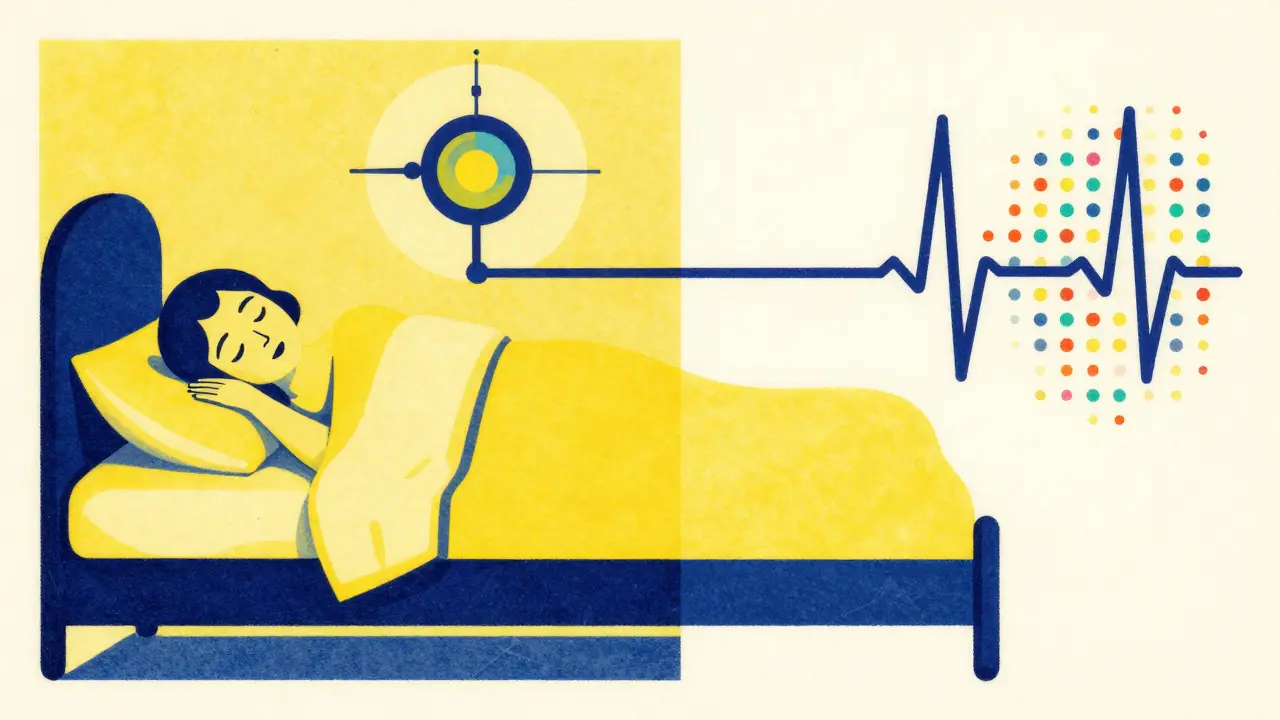
Building Your Personal Baseline
Here is the most important rule: don't compare your data to a "normal" chart in a textbook. Everyone's body is different. Some people naturally have a lower resting heart rate, and some people naturally toss and turn more. To make this work, you need a baseline. Spend two to four weeks tracking your data *before* you start a new medication. This creates your "normal." Once you start the drug, you can look for deviations from your own average rather than a generic standard. Research shows that there is massive variability between patients-up to 81% in some movement patterns-so your own history is the only reliable yardstick.Dealing with the Downsides
It's not all smooth sailing. One of the biggest risks is "notification anxiety." This happens when you start obsessing over every tiny flicker in your heart rate, which actually increases your stress and pushes your heart rate even higher. It's a vicious cycle. If you find yourself checking your wrist every ten minutes, it might be time to turn off some alerts and just review the weekly summary. There are also technical gaps. For instance, PPG sensors (the green lights on the back of the watch) can be less accurate on darker skin tones because the light is absorbed differently. If you have a darker complexion, you might see a slightly higher margin of error in your readings. Additionally, be mindful of skin irritation from wearing a strap 24/7. Switching wrists or using a breathable band can help you avoid the rashes that some long-term users report.
Turning Data Into Action
Data is useless if it just sits on your phone. The goal is to integrate this into your medical care. Many systems now allow you to export health data directly into electronic health records, which saves your doctor from having to scroll through a hundred screenshots of your watch. When you meet with your provider, bring a summary. Instead of saying "I think I'm feeling worse," try saying, "My resting heart rate has increased by 10 beats per minute over the last three weeks, and my average deep sleep has dropped by an hour." This gives your doctor a clear, objective signal to decide whether to adjust your dosage or switch medications entirely.Are consumer smartwatches accurate enough for medical monitoring?
For most people, yes, for spotting trends. High-end wearables have a 92-98% accuracy rate for heart rate compared to ECGs. However, they are not replacements for medical-grade equipment. They are best used as "screening tools" to identify when something is wrong so you can seek professional clinical testing.
How do I know if a change is a side effect or just a bad day?
This is why the baseline period is critical. Look for sustained changes over a week or more rather than a single day. If your sleep quality drops and stays low for seven days straight after starting a drug, it's more likely to be a side effect than a one-off bad night.
Which wearable is best for tracking sleep-related side effects?
Fitbit devices generally lead in sleep architecture analysis, with research showing high agreement with professional polysomnography. Oura rings are also excellent for sleep and temperature tracking due to their comfortable form factor for overnight wear.
Can wearables detect dangerous drug interactions?
They can't "diagnose" an interaction, but they can detect the physiological results of one. For example, an Apple Watch can flag unexplained tachycardia (fast heart rate) which may be a sign of a dangerous interaction between medications like antidepressants and blood pressure drugs.
Do I need a prescription for medical-grade wearables?
Yes, specialized devices like the BioIntelliSense BioSticker often require a prescription and are significantly more expensive than consumer watches. These are usually reserved for high-risk patients who need 97%+ accuracy in continuous vital sign monitoring.


Write a comment