

Why Thyroid Medication Matters During Pregnancy
When you’re pregnant, your body doesn’t just change in obvious ways-your thyroid works harder. If you’re taking levothyroxine for hypothyroidism, your dose will need to go up. Ignoring this can put your baby’s brain development at risk. The first 12 weeks of pregnancy are critical: your baby relies entirely on your thyroid hormones to build its nervous system. If your levels drop too low, even for a short time, it can affect IQ, attention, and long-term learning. Studies show that untreated hypothyroidism during pregnancy can lower a child’s IQ by 7 to 10 points. But the good news? Getting your dose right can cut miscarriage risk by 60% and help your child thrive.
How Much More Medication Do You Need?
If you were already on levothyroxine before pregnancy, you’re likely going to need 20% to 50% more. The increase isn’t gradual-it starts the moment you conceive. Many women don’t even know they’re pregnant yet, but their thyroid demand jumps right away. The American Thyroid Association recommends increasing your dose by 20-30% as soon as you get a positive pregnancy test. That means if you were taking 75 mcg daily before, you’d jump to about 90-95 mcg. Some doctors go even further, suggesting a 50 mcg immediate increase for women with known hypothyroidism.
For women newly diagnosed during pregnancy, the rules are different. If your TSH is over 10 mIU/L, start with 1.6 mcg per kilogram of body weight. If it’s between 5 and 10, start at 1.0 mcg/kg. A 2021 NIH study of 280 pregnant women found their average dose rose from 85.7 mcg before pregnancy to 100 mcg in the first trimester. That’s a 16.7% increase-enough to notice if you’re tracking your pills closely.
When and How to Adjust Your Dose
Don’t wait for your next prenatal appointment. The best time to increase your dose is the day you find out you’re pregnant. Waiting even a few weeks can mean missing the window where your baby needs the most thyroid hormone. Some patients try to make up for the increase by taking two extra pills on weekends, but that doesn’t work well. The body needs steady levels, not spikes. Instead, spread the extra dose across the week. If you need 30% more, take your regular dose Monday through Friday, then add 15% on Saturday and another 15% on Sunday.
Here’s what works for most women:
- Call your endocrinologist or OB/GYN the day you get a positive pregnancy test.
- Get a TSH blood test within 1-2 weeks.
- Increase your dose by 20-30% immediately, even before test results come back.
- Retest TSH every 4 weeks until your levels stabilize.
What Your TSH Target Should Be
TSH (thyroid-stimulating hormone) is your main guide. But the numbers change by trimester. The American Thyroid Association recommends keeping TSH below 2.5 mIU/L throughout pregnancy. The Endocrine Society is slightly more flexible: under 2.5 in the first trimester, under 3.0 in the second and third. Why the difference? Because thyroid hormone needs peak early and then level off.
Here’s what happens if you go over target:
- TSH above 2.5 in the first trimester? 69% higher risk of miscarriage.
- TSH above 4.0 later in pregnancy? Higher chance of preterm birth and low birth weight.
- Consistently high TSH? Possible impact on baby’s motor skills and language development.
One study found that women whose TSH was corrected within four weeks of pregnancy confirmation had 23% fewer preterm births than those who waited. Timing matters as much as the dose.
How to Take Your Medication Right
Levothyroxine is easy to mess up. It needs to be taken on an empty stomach. Wait at least 30-60 minutes before eating or drinking anything besides water. Coffee, calcium, iron, and even soy milk can block absorption by up to 50%. If you take prenatal vitamins with iron or calcium, take them at least 4 hours apart from your thyroid pill. Many women take their thyroid pill first thing in the morning and their prenatal at night-that’s the safest routine.
Also, don’t switch brands. Synthroid, Levoxyl, Tirosint-all have the same active ingredient, but fillers vary. Even small changes can affect absorption. If your doctor switches your brand, ask for a TSH check in 4-6 weeks.
Monitoring Schedule: What Your Doctor Should Do
Checking TSH once at the start of pregnancy isn’t enough. You need regular tests. The American Academy of Family Physicians recommends:
- TSH at 4-6 weeks gestation
- Every 4-6 weeks until 20 weeks
- At 24-28 weeks
- At 32-34 weeks
After 34 weeks, most women stabilize, but if your dose keeps changing, keep testing. A 2019 survey of 150 OB/GYNs found that 68% didn’t routinely check TSH at the first prenatal visit for women with preexisting hypothyroidism. That’s a gap. If your doctor doesn’t mention testing, bring it up. You’re not being pushy-you’re protecting your baby’s brain.
What to Do If Your Doctor Doesn’t Agree
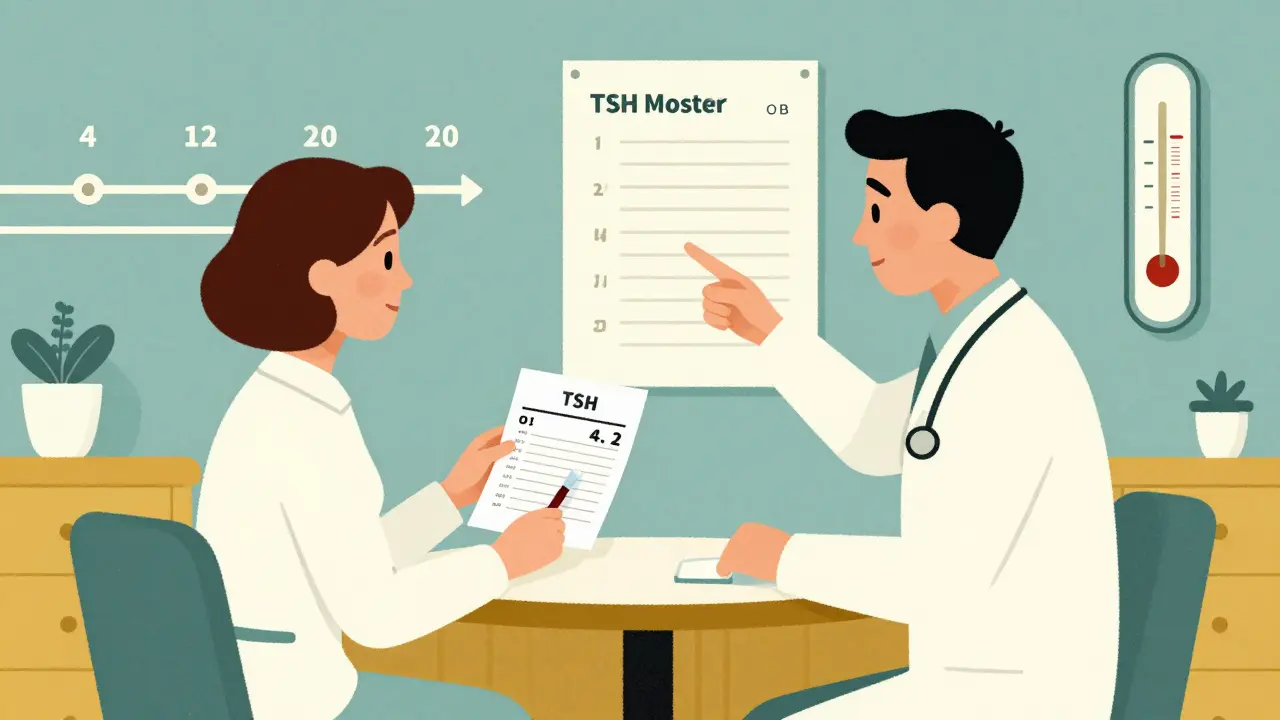
Not every provider follows the guidelines. Some OB/GYNs still think thyroid levels “don’t matter much” in pregnancy. Others assume your pre-pregnancy dose is “enough.” That’s outdated. A Reddit user shared: “I had to fight for 25 mcg more at 6 weeks. My OB said ‘wait and see.’ My TSH was 4.2. I was terrified.”
If your provider resists:
- Print out the 2017 ATA guidelines (available online).
- Ask for a referral to an endocrinologist.
- Use apps like MyThyroid, which 12,500 pregnant women have used since 2019 to track doses and reminders.
Remember: you’re the expert on your body. If you feel off-fatigued, cold, bloated, or depressed-your TSH might be too high. Don’t wait for symptoms to get worse.
What About Breastfeeding?
Good news: levothyroxine is safe while breastfeeding. Less than 1% of the dose passes into breast milk, and even that tiny amount doesn’t affect the baby’s thyroid. You can continue your pregnancy dose or even reduce it slightly after birth, since your body’s demand drops. Most women return to their pre-pregnancy dose within 6-8 weeks postpartum. Still, get your TSH checked 6 weeks after delivery. Hormones shift fast after birth, and your thyroid can get out of balance again.

Real Stories, Real Results
One woman on HealthUnlocked wrote: “My endocrinologist increased my dose the day I got a positive test. My TSH stayed perfect. My daughter scored in the 90th percentile for development at 18 months.”
Another shared: “I didn’t adjust my dose until 12 weeks. My baby was born at 36 weeks. I still worry about his focus.”
The difference? Timing. The science is clear: early, consistent dosing leads to better outcomes. You don’t need to be perfect. You just need to be proactive.
What’s New in 2025?
AI is starting to help. A 2022 study used algorithms to predict the exact dose a woman would need based on her pre-pregnancy TSH, weight, and antibody status. It improved TSH control by 28% compared to standard dosing. By 2026, tools like this may be built into electronic health records. Epic’s system already alerts doctors when a pregnant patient is on levothyroxine. But until then, you need to be your own advocate.
Global Access and Equity
Not everyone has access to levothyroxine. In low-income countries, only 22% of women can reliably get it. That’s why 15% of preventable developmental delays happen in these regions. The WHO added levothyroxine to its Essential Medicines List for maternal health in 2023. That’s progress. But if you’re in a country with good access, don’t take it for granted. Use it wisely.
Final Checklist
- ✅ Increase your dose by 20-30% the day you confirm pregnancy.
- ✅ Take levothyroxine on an empty stomach, 30-60 minutes before food.
- ✅ Avoid calcium, iron, and soy within 4 hours of your pill.
- ✅ Get TSH tested within 1-2 weeks of confirmation.
- ✅ Test every 4 weeks until 20 weeks, then at 24-28 and 32-34 weeks.
- ✅ Keep TSH below 2.5 mIU/L in the first trimester, under 3.0 later.
- ✅ Continue your dose while breastfeeding-no need to stop.
- ✅ Get TSH checked 6 weeks after delivery.
Thyroid medication in pregnancy isn’t complicated. It’s predictable. It’s science. And it’s one of the most effective ways to give your baby the best start possible. Don’t wait. Don’t assume. Act.


Write a comment