
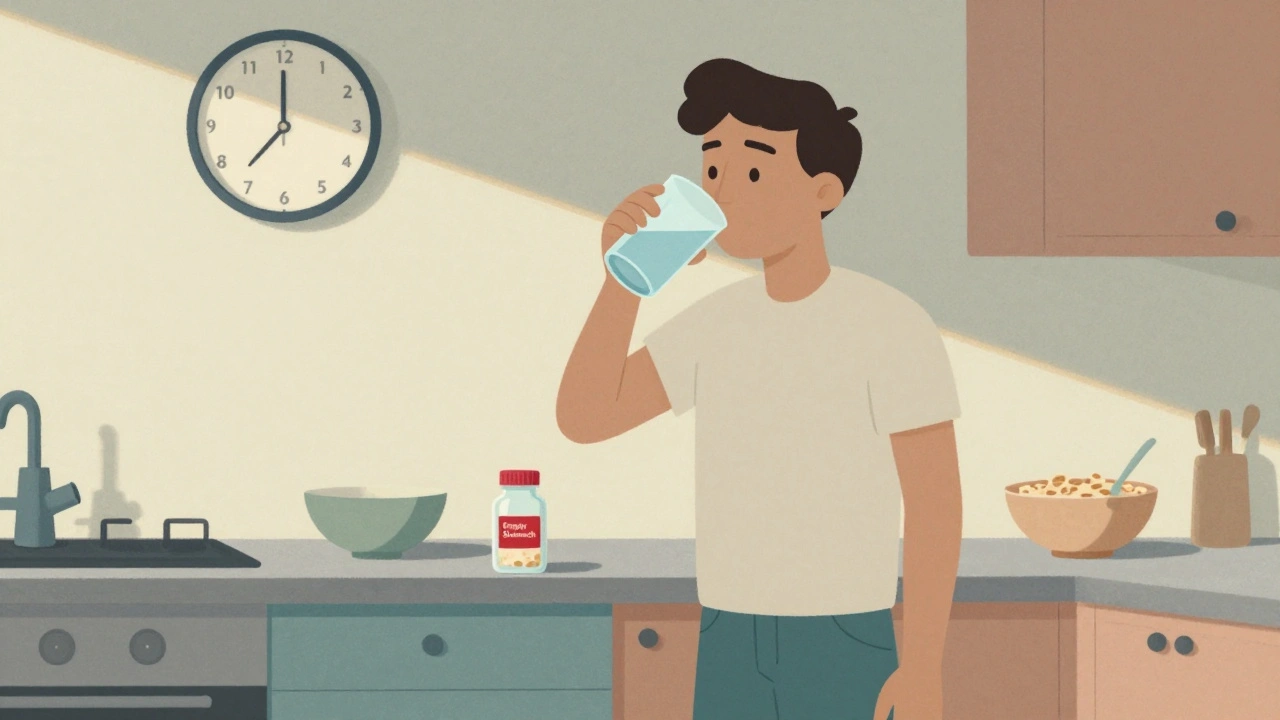
Have you ever looked at your prescription label and seen the small print: take on an empty stomach or take with food? It’s easy to ignore. Maybe you’re in a rush. Maybe you forgot. Maybe you thought it didn’t really matter. But here’s the truth: taking your medicine with or without food isn’t a suggestion-it’s a science. Get it wrong, and your drug might not work. Get it right, and you avoid side effects, save money, and stay healthier.
Why Food Changes How Your Medicine Works
Your stomach isn’t just a place where food breaks down. It’s a chemical factory. When you eat, your body releases acid, bile, and enzymes. Blood flow changes. Your gut moves slower. All of this affects how your pills are absorbed. Some medicines need that acid to dissolve properly. If you take them with food, the acid gets diluted, and the drug never makes it into your bloodstream the way it should. That’s why antibiotics like tetracycline and doxycycline lose up to half their strength if taken with dairy, antacids, or even a bowl of cereal. Calcium binds to them like glue. Other drugs need fat to get absorbed. Take the HIV drug saquinavir on an empty stomach, and your body might only absorb 20% of it. Take it with a high-fat meal-like eggs and avocado-and absorption jumps to 60%. That’s not a small difference. That’s the difference between the drug working or not working at all. Then there’s the timing. Levothyroxine, the medication for an underactive thyroid, is a perfect example. Take it with breakfast, and your body absorbs 20% to 55% less. That means your TSH levels stay high, you stay tired, your cholesterol doesn’t drop, and your doctor keeps adjusting your dose. But take it 30 to 60 minutes before breakfast, on an empty stomach, with a full glass of water? It works as designed.Medications That Must Be Taken with Food
Not all drugs hate food. Many actually need it. NSAIDs like ibuprofen, naproxen, and aspirin are the most common. These drugs irritate your stomach lining. Taking them on an empty stomach raises your risk of ulcers and bleeding. The UK’s NHS and German medical guidelines both recommend taking them after eating. A 2021 study in the Journal of Antimicrobial Chemotherapy found that taking Augmentin (amoxicillin/clavulanate) with food cut nausea by 20%. Same goes for nitrofurantoin and rifabutin. Food doesn’t make them stronger-it just makes them easier to tolerate. Many HIV medications like ritonavir and zidovudine (AZT) are notorious for causing nausea. Take them on an empty stomach? You’re likely to vomit. Take them with a small, high-fat snack-a handful of nuts, a spoonful of peanut butter, or even a banana-and nausea drops from 45% to 18%, according to patient reports on Reddit’s r/HIV community. Some cholesterol drugs like atorvastatin and rosuvastatin are absorbed better with food, though the effect isn’t as dramatic. Still, if your doctor says to take them with dinner, there’s a reason.Medications That Must Be Taken on an Empty Stomach
These are the ones you can’t afford to mess up. Tetracycline and doxycycline are the classic examples. Calcium in milk, cheese, yogurt, or even fortified orange juice binds to them. Result? You might as well be swallowing chalk. The same goes for iron supplements. Take them with food, and your body absorbs maybe 20% of what it should. Didanosine, an older HIV drug, is destroyed by stomach acid. Food triggers more acid. So you take it on an empty stomach-1 hour before or 2 hours after eating. Levothyroxine is non-negotiable. Studies in Endocrine Practice (2023) show food reduces absorption by up to 55%. That’s why doctors tell you to take it first thing in the morning, wait 30 to 60 minutes, then eat. Skip this, and you’re not just wasting your pill-you’re risking heart problems, weight gain, and depression. Bisphosphonates like alendronate (Fosamax), used for osteoporosis, require a 30- to 60-minute wait after taking them before eating or drinking anything except water. Why? Because if food or coffee touches the pill in your stomach, it won’t absorb into your bones. You’ll get the side effects-heartburn, stomach pain-and no benefit.The Confusing Middle Ground
Not every rule is clear-cut. Some guidelines contradict each other. Take NSAIDs again. The NHS says take them with food. But a 2015 review in Inflammopharmacology found no real benefit-just a slight delay in pain relief. The authors argued that if you’re taking ibuprofen for a headache, you want it fast. Food slows it down. So why the advice? Because long-term users, especially older adults, are at higher risk for stomach damage. The benefit isn’t in how well it works-it’s in how safe it is. Then there’s grapefruit juice. It’s not food, but it’s often grouped with meals. It blocks an enzyme in your gut called CYP3A4, which breaks down many drugs. The result? Higher blood levels. For some drugs, like simvastatin or certain blood pressure pills, that’s dangerous. It can lead to muscle damage or dangerously low blood pressure. Even one glass can affect you for 24 hours.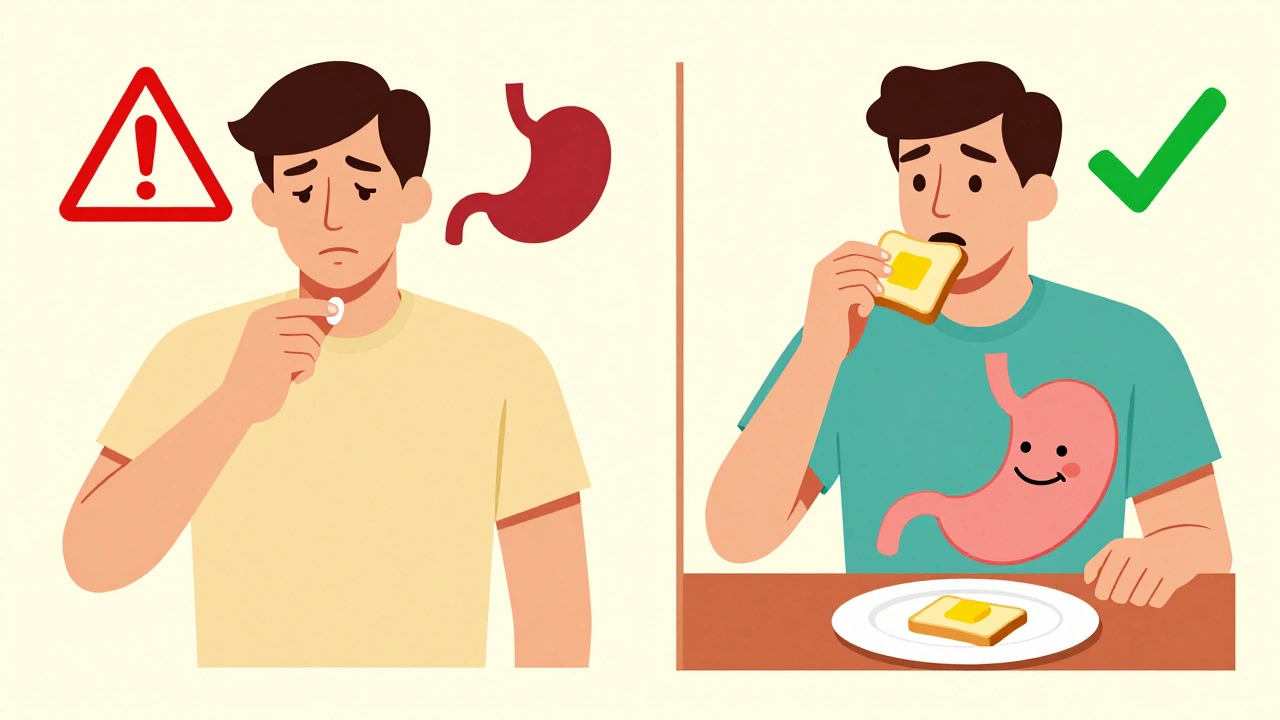
How to Get It Right Every Time
Here’s what works in real life:- Use color-coded labels. Pharmacists in Vancouver and across Canada are starting to use red stickers for empty stomach, green for with food, and yellow for with high-fat meal. Ask your pharmacist to add them to your bottles.
- Set phone alarms. If you take levothyroxine in the morning, set an alarm for 7 a.m. to take it, and another for 7:30 a.m. to eat. For evening meds, set a reminder 2 hours after dinner.
- Write it down. Keep a small card in your wallet: Levothyroxine: 30 min before breakfast. Doxycycline: 1 hour before or 2 hours after food. Ibuprofen: with food. Review it every Sunday.
- Ask your pharmacist. They’re the experts. Don’t assume your doctor told you everything. Ask: “Should I take this with or without food? What foods should I avoid?” They’ll give you a simple, clear answer.
- Don’t mix medications. If you take five pills a day, each with different rules, it’s easy to mess up. Use a pill organizer with separate compartments for morning, afternoon, and night. Label each one.
What Happens When You Ignore the Rules
You might feel fine. For a while. But here’s what really happens:- You take your thyroid med with coffee and oatmeal. Your TSH stays high. Your doctor increases your dose. You gain 10 pounds. You feel sluggish. You think it’s aging. It’s not. It’s your medicine not working.
- You take doxycycline with yogurt. Your acne doesn’t clear up. You go back to the dermatologist. They think you’re not following the regimen. You are-you just didn’t know how.
- You take ibuprofen on an empty stomach for your back pain. Three weeks later, you have stomach bleeding. You end up in the ER. You didn’t know it could happen.
Why This Matters More Than You Think
This isn’t just about pills and stomachs. It’s about cost, safety, and trust. If your medicine doesn’t work because you took it with milk, you might need more tests, higher doses, or even hospitalization. That’s thousands of dollars in extra care. The U.S. spends $300 billion a year on avoidable medication errors. Food-drug interactions are a big part of that. Hospitals now use electronic alerts in systems like Epic to flag food-drug conflicts when a doctor writes a prescription. Pharmacists are trained to catch them. But if you don’t know the rules, the system can’t protect you. The FDA now requires food-effect studies for 78% of new drugs approved in 2023. That’s up from 62% in 2018. Why? Because they’ve seen the data. Food matters.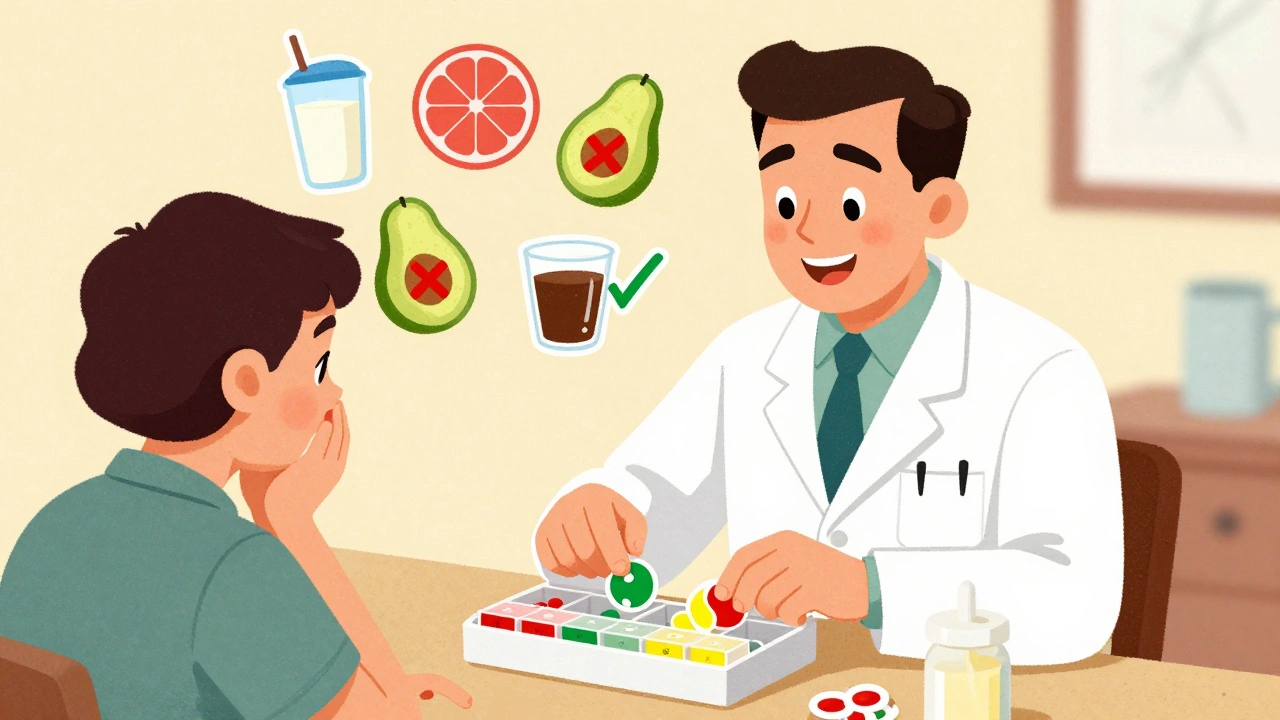
What You Can Do Today
Start now. Don’t wait.- Look at your current prescriptions. Find the ones with food instructions.
- Call your pharmacy. Ask: “Which of my meds need to be taken with or without food?”
- Set two alarms tomorrow: one for your morning meds, one for your evening ones.
- Keep a glass of water by your bed. Take your empty-stomach pills with water only-no coffee, no juice, no toast.
Frequently Asked Questions
Can I take my medicine with just a sip of water if it says "on an empty stomach"?
Yes. Water is fine. In fact, it’s recommended. The key is to avoid food, coffee, juice, milk, or anything else that might interfere. A full glass of water helps the pill move through your system and reduces irritation.
What if I forget and take my medicine with food? Should I take another dose?
Never take another dose unless your doctor or pharmacist tells you to. Taking extra can be dangerous. Instead, note what happened and talk to your provider at your next visit. For most drugs, one mistake won’t cause harm-but making it a habit will.
Does it matter what kind of food I eat with my medicine?
Yes. For drugs that need fat to absorb-like saquinavir or some cholesterol meds-a high-fat meal (avocado, nuts, eggs, cheese) works best. For NSAIDs, any food helps reduce stomach upset, but bland foods like toast or rice are gentler than spicy or greasy meals. Avoid grapefruit juice entirely if you’re on certain meds-it can be dangerous.
Why do some pills say "take with food" even if they don’t need it?
Sometimes it’s about side effects, not absorption. NSAIDs, for example, don’t work better with food-but they’re less likely to cause stomach ulcers. The goal isn’t always to make the drug stronger. It’s to make it safer.
Can I take my medicine with alcohol if it says "with food"?
No. Alcohol can interact with many medications, even if taken with food. It can increase drowsiness, raise blood pressure, or damage your liver. Always check with your pharmacist before mixing alcohol with any prescription drug.
I take multiple medications. How do I keep track of all the food rules?
Use a pill organizer with morning, afternoon, and night sections. Ask your pharmacist to label each compartment with a color code: red for empty stomach, green for with food, yellow for high-fat meal. Write the rules on a sticky note and put it on your bathroom mirror. Set phone alarms for each dose. Consistency beats memory every time.


Write a comment