
When you're bleeding, not all cases are the same. Some cuts stop on their own. Others? They need help now. If bleeding won't slow down, comes from deep inside, or happens without a clear cause, you might be facing something serious. Uncontrolled bleeding, any loss of blood that doesn't stop with pressure or happens suddenly without injury. Also known as hemorrhage, it's a medical emergency when it affects vital areas or overwhelms the body's ability to compensate. Your body can handle small losses, but when you lose more than a cup of blood—or it keeps coming from inside—you're at risk.
Not all bleeding is obvious. Internal bleeding, blood leaking into tissues, organs, or body cavities without breaking the skin. Also known as hidden hemorrhage, it can follow a fall, car crash, or even a bad cough. You might not see blood, but you'll feel it: dizziness, rapid heartbeat, cold skin, or sudden pain in your belly, chest, or head. This isn't something to wait out. Bleeding after injury, blood loss following trauma, whether from a cut, puncture, or blunt force. Also known as traumatic hemorrhage, it becomes dangerous when pressure doesn't help, blood soaks through bandages fast, or you're losing blood from a major artery. Think of it like a faucet—if you can't turn it off, you need the ER.
Some bleeding comes out of nowhere. A nosebleed that lasts over 20 minutes, vomiting blood that looks like coffee grounds, or bright red blood in stool? These aren't normal. Women with heavy vaginal bleeding outside of their period—especially if they're pregnant or on blood thinners—shouldn't wait. Even if you think it's "just a lot," if it's new, sudden, or getting worse, it's not something to Google at 2 a.m. Bleeding disorders, conditions where the body can't form clots properly, leading to prolonged or spontaneous bleeding. Also known as coagulopathy, they make even minor injuries risky. If you're on blood thinners like warfarin or Eliquis, any bleeding—even a small cut—is a bigger deal than it seems.
There's no single rule that fits every situation, but there are clear red flags: bleeding that won't stop after 10 minutes of direct pressure, blood spurting, confusion or fainting, chest or belly pain with bleeding, or vomiting or pooping blood. If you're unsure, call 911 or go. Waiting for "just one more hour" can turn a fixable problem into a life-threatening one. The ER isn't just for big accidents—it's for when your body screams for help and you can't ignore it anymore.
Below, you'll find real stories and facts from people who've been there—what they missed, what they did right, and how to spot the warning signs before it's too late.
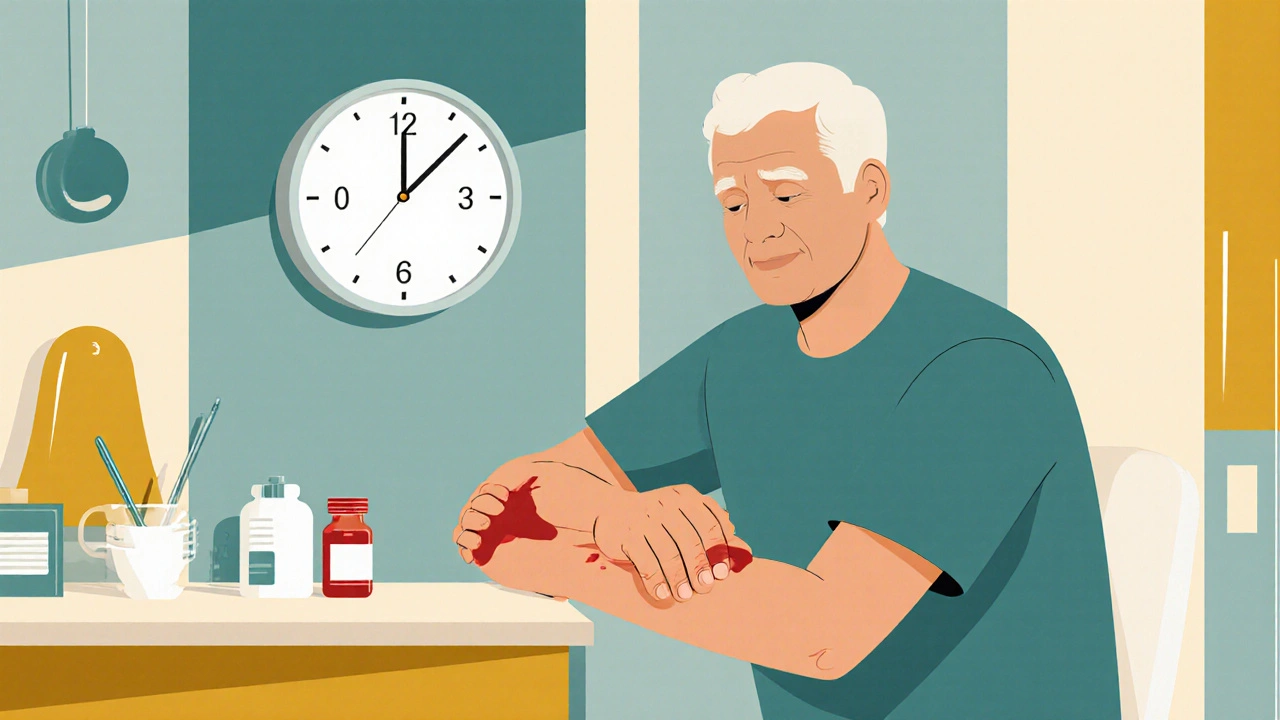
Knowing when bleeding from blood thinners is an emergency can save your life. Learn the warning signs, what to do at home, why stopping your meds is dangerous, and how new treatments are changing outcomes.