
When you take warfarin, a blood thinner used to prevent dangerous clots in people with atrial fibrillation, artificial heart valves, or a history of deep vein thrombosis. Also known as Coumadin, it’s one of the most prescribed anticoagulants in the world—but it’s not simple. Even small mistakes can lead to serious bleeding or clotting. Unlike newer blood thinners, warfarin doesn’t come with a fixed dose. Your body changes, your diet changes, and other meds you take can all shift how it works. That’s why INR monitoring, a blood test that measures how long it takes your blood to clot is non-negotiable. Most people need it every few weeks, sometimes even weekly, to stay in the safe zone.
Common warfarin side effects, include bruising easily, nosebleeds, and bleeding gums. These aren’t always emergencies, but they’re warning signs. More serious ones—like red or black stools, vomiting blood, or sudden severe headaches—mean you need help right away. Warfarin doesn’t just interact with other drugs. It reacts with vitamin K, a nutrient found in leafy greens like spinach, kale, and broccoli. Eat a salad one day and skip it the next? Your INR could swing wildly. That’s why consistency matters more than perfection. You don’t have to avoid these foods—you just need to keep your intake steady.
Many people on warfarin also take antibiotics, painkillers, or even herbal supplements like garlic or ginkgo, all of which can boost bleeding risk. Even a single dose of ibuprofen can throw things off. That’s why talking to your pharmacist before taking anything new is as important as taking the pill itself. Some side effects, like skin necrosis or purple toe syndrome, are rare but serious. And while newer anticoagulants exist, warfarin is still the go-to for many, especially those with mechanical heart valves or certain clotting disorders.
What you’ll find below isn’t just a list of side effects. It’s real stories and practical advice from people who’ve lived with warfarin—how they handle the diet changes, how they spot trouble early, and how they keep from quitting because the side effects felt too overwhelming. You’ll see how medication adherence isn’t about perfect memory—it’s about smart systems. You’ll learn what doctors don’t always tell you about interactions, what to do if you miss a dose, and how to talk to your care team when something feels wrong. This isn’t theory. It’s what works when your life depends on getting it right.
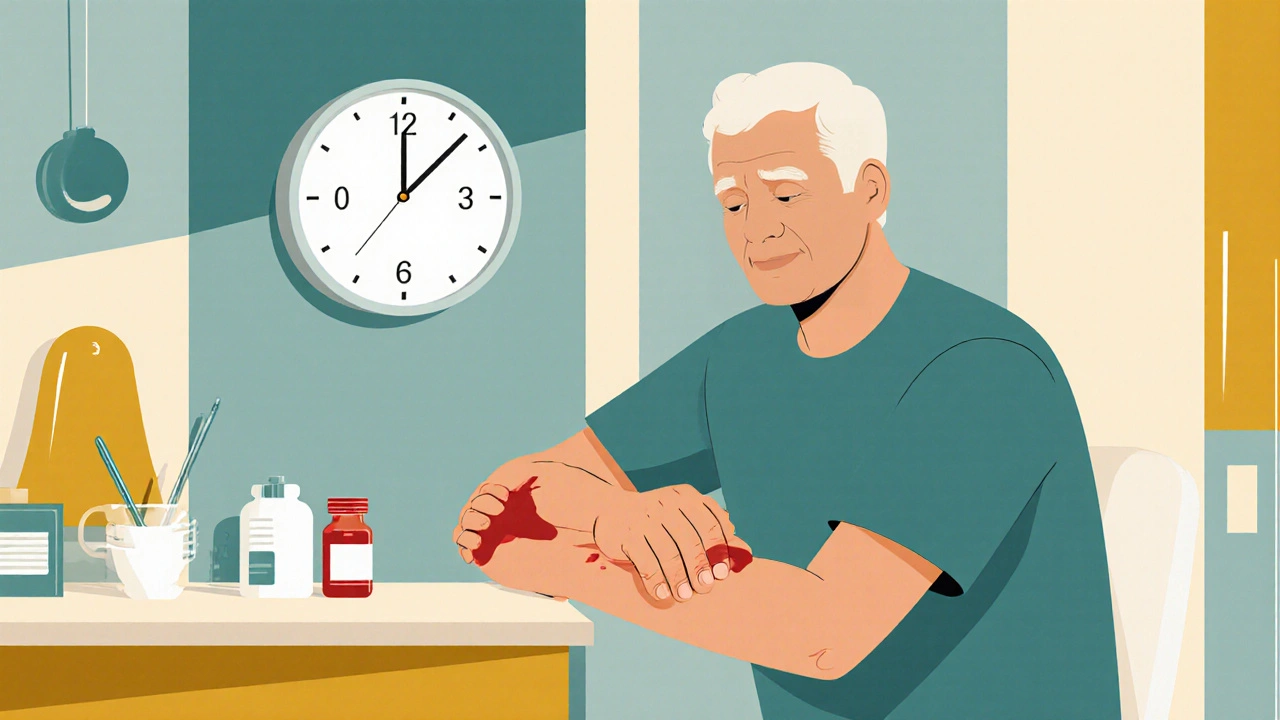
Knowing when bleeding from blood thinners is an emergency can save your life. Learn the warning signs, what to do at home, why stopping your meds is dangerous, and how new treatments are changing outcomes.