
When your vasculitis, a group of disorders where blood vessels become inflamed, often due to autoimmune activity. Also known as blood vessel inflammation, it can affect arteries, veins, or capillaries anywhere in the body—leading to reduced blood flow, tissue damage, and sometimes life-threatening organ failure. Unlike simple swelling, vasculitis isn’t just a reaction to injury—it’s your immune system attacking your own vessels. This is why it’s often linked to other autoimmune conditions like lupus or rheumatoid arthritis.
People with vasculitis are frequently treated with corticosteroids, powerful anti-inflammatory drugs like prednisone used to calm the immune system, or immunosuppressants, medications that reduce immune system activity to prevent further vessel damage. But these treatments come with trade-offs. Long-term steroid use can cause moon face, weight gain, and bone loss. Immunosuppressants raise infection risk and can trigger nerve damage or kidney issues. That’s why managing vasculitis isn’t just about controlling inflammation—it’s about balancing treatment side effects with long-term health.
Some forms of vasculitis, like giant cell arteritis or granulomatosis with polyangiitis, require urgent treatment. Others may flare up quietly, showing up as fatigue, joint pain, or skin rashes. The key is early recognition. If you’re on steroids or immunosuppressants and notice new numbness, vision changes, or unexplained bruising, it could be your body signaling something’s wrong. Your treatment plan needs to adapt—not just to the disease, but to how your body responds over time.
What you’ll find here are real, practical insights from people who’ve lived with vasculitis and the medications that manage it. From how corticosteroids affect your metabolism to why some drugs interact dangerously with supplements, these articles cut through the noise. You’ll learn what to watch for, how to talk to your doctor about side effects, and what alternatives exist when standard treatments don’t work—or cause more harm than good.
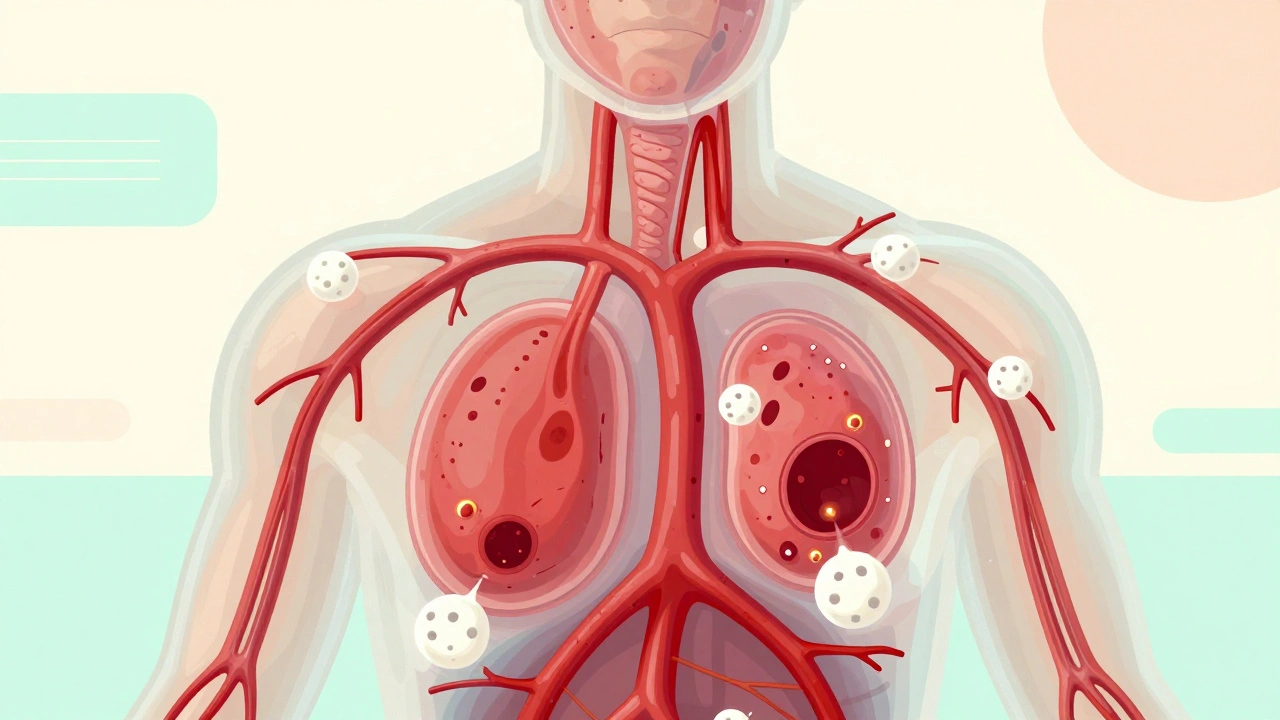
Vasculitis is an autoimmune condition where the immune system attacks blood vessels, causing inflammation and reduced blood flow. Learn the types, symptoms, diagnostic tests, and modern treatments-including steroid-sparing drugs like avacopan-that can prevent organ damage.