
When you hear UC symptoms, the signs of ulcerative colitis, a chronic inflammatory bowel disease that affects the colon and rectum. Also known as ulcerative colitis, it causes persistent inflammation that leads to diarrhea, rectal bleeding, abdominal pain, and fatigue. These aren’t just inconvenient—they can completely disrupt daily life. Unlike occasional stomach upset, UC symptoms don’t go away with rest or antacids. They come and go in waves, often triggered by stress, diet, or even certain medications.
Many people with UC are on long-term drugs like aminosalicylates, anti-inflammatory medications used to reduce flare-ups in the colon, or immunosuppressants, drugs that calm the immune system’s attack on the gut lining. But here’s the catch: some of these same drugs can cause side effects that mimic or worsen UC symptoms. For example, corticosteroids might help control inflammation but can lead to weight gain, mood swings, or even mask signs of infection. Meanwhile, antibiotics or NSAIDs—commonly taken for other issues—can trigger flare-ups in people who thought they were in remission.
It’s not just about the drugs, either. Gut health ties into everything: sleep, stress, even the supplements you take. Quercetin, for instance, might sound like a natural remedy, but it can interfere with how your body processes meds. And if you’re on blood thinners or have a sulfonamide allergy, mixing treatments without knowing the risks can turn a manageable condition into an emergency. That’s why understanding UC symptoms isn’t just about tracking diarrhea or cramps—it’s about knowing what’s causing them and what might make them worse.
You’ll find real stories here—not theory, not guesswork. Posts cover how prednisone affects your gut, why some antibiotics backfire, what happens when you mix supplements with prescription drugs, and how to tell if your symptoms are from UC or a side effect. There’s no fluff. Just what works, what doesn’t, and what your doctor might not have told you.
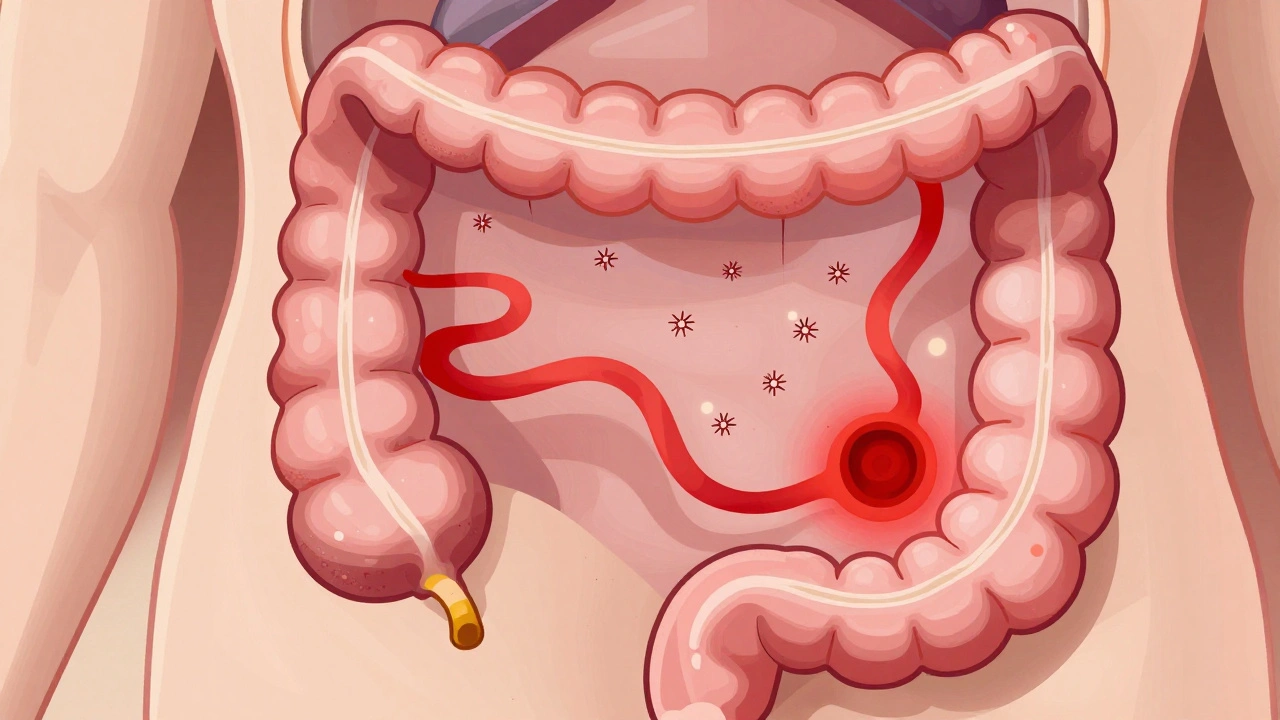
Ulcerative colitis is a chronic colon inflammation that causes bloody diarrhea, pain, and urgent bowel movements. Learn how to identify your type, manage flares, and achieve lasting remission with medication, diet, and monitoring.