
When doctors talk about tricyclic antidepressants, a class of prescription medications used to treat depression, anxiety, and chronic pain by balancing brain chemicals like serotonin and norepinephrine. Also known as TCAs, they were among the first drugs developed for mood disorders and are still used today—especially when newer options don’t work. Unlike SSRIs, which mostly target serotonin, tricyclics hit both serotonin and norepinephrine, which can make a difference for people with fatigue, low energy, or physical pain along with depression.
These drugs include amitriptyline, a common TCA often prescribed for nerve pain and sleep issues, nortriptyline, a metabolite of amitriptyline with fewer side effects, and imipramine, one of the earliest TCAs, still used for bedwetting in kids and depression in adults. They’re not first-line anymore because of side effects—dry mouth, drowsiness, weight gain, blurred vision, and sometimes heart rhythm changes. But for some, they’re the only thing that helps. People with treatment-resistant depression, fibromyalgia, or chronic nerve pain often turn to them after other meds fail.
Tricyclic antidepressants don’t work overnight. It usually takes 4 to 6 weeks to feel better, and many people quit before then because they don’t see immediate results. That’s why it’s so important to stick with them under a doctor’s watch. You can’t just stop taking them cold turkey—withdrawal can cause dizziness, nausea, and even rebound anxiety. Dosing is tricky too; doctors often start low and go slow, especially in older adults, because these drugs can build up in the body and cause dangerous side effects.
What’s interesting is how many of the posts here tie back to TCAs indirectly. You’ll find articles about serotonin syndrome, which can happen if TCAs are mixed with other antidepressants or supplements like quercetin. There are guides on medication adherence—because people often stop TCAs due to side effects. You’ll see warnings about drug interactions, especially with blood pressure meds or heart drugs. Even posts about generic drugs and adverse event reporting matter here, since many TCAs are available as cheap generics, and underreporting side effects can hide real risks.
If you’re on a tricyclic antidepressant—or considering one—know this: they’re not glamorous, but they’re proven. They’ve helped millions. The key is knowing your body, tracking side effects, and talking to your doctor before making any changes. The articles below cover exactly those real-life situations: how to manage the downsides, when to push back on your prescription, what to watch for, and how to stay safe while using these older but still powerful tools.
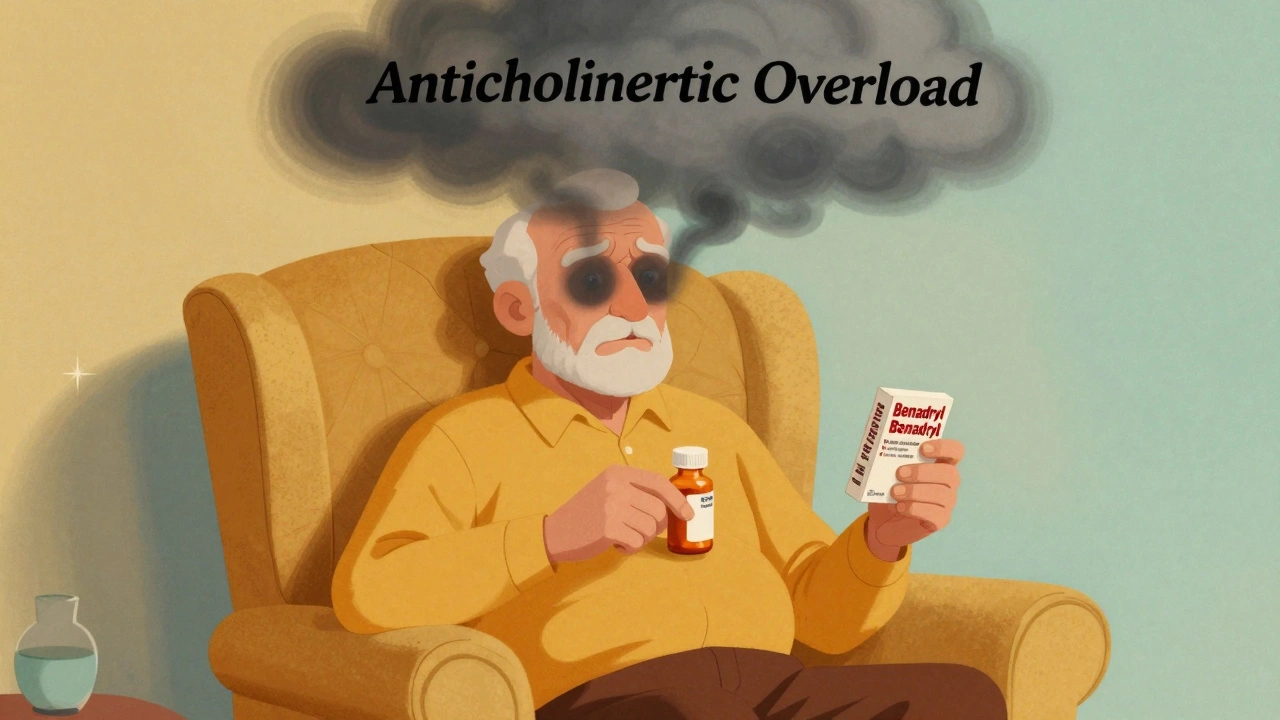
Combining tricyclic antidepressants like amitriptyline with antihistamines like Benadryl can cause anticholinergic overload - a dangerous, often missed condition that increases dementia risk and causes confusion, urinary issues, and delirium, especially in older adults.