
When you take a supplement medication interaction, a harmful or unexpected reaction between a dietary supplement and a prescription or over-the-counter drug. Also known as drug-supplement conflict, it can turn a safe routine into a medical emergency. Many people think natural means safe—but that’s not true. Garlic pills, St. John’s wort, or even vitamin K can mess with blood thinners, antidepressants, or heart meds in ways no one warns you about.
Take simvastatin, a common cholesterol-lowering statin. Also known as Zocor, it’s lifesaving—until you add grapefruit juice or certain herbal extracts. That combo can trigger rhabdomyolysis, a condition where muscle tissue breaks down and floods your kidneys with toxic byproducts. Or consider antihistamines, like Benadryl, often used for allergies or sleep. Also known as diphenhydramine, they’re everywhere—but when mixed with tricyclic antidepressants like amitriptyline, they cause anticholinergic overload: confusion, urinary retention, and a higher risk of dementia, especially in older adults. These aren’t rare cases. They show up in ERs every week.
It’s not just about what you take—it’s about how your body handles it. Some supplements affect liver enzymes that break down drugs. Others change how your gut absorbs them. A daily fish oil pill might thin your blood enough to make warfarin dangerous. Turmeric could boost the effect of diabetes meds and send your blood sugar crashing. Even something as simple as magnesium can interfere with antibiotics like tetracycline if taken at the same time.
And here’s the kicker: most doctors don’t ask about supplements. Patients don’t think to mention them. Pharmacies don’t always flag the risks. That’s why you need to be your own advocate. Write down everything you take—vitamins, herbs, teas, probiotics, even CBD. Bring that list to every appointment. Ask: "Could this mix with anything I’m on?"
What you’ll find below are real stories from people who learned the hard way. From ototoxic drugs that stole someone’s hearing to blood thinners that turned a minor cut into a crisis. You’ll see how generics aren’t always interchangeable, how prior authorization delays care, and why black box warnings exist. These aren’t theoretical risks. They’re documented, preventable, and happening right now to people just like you.
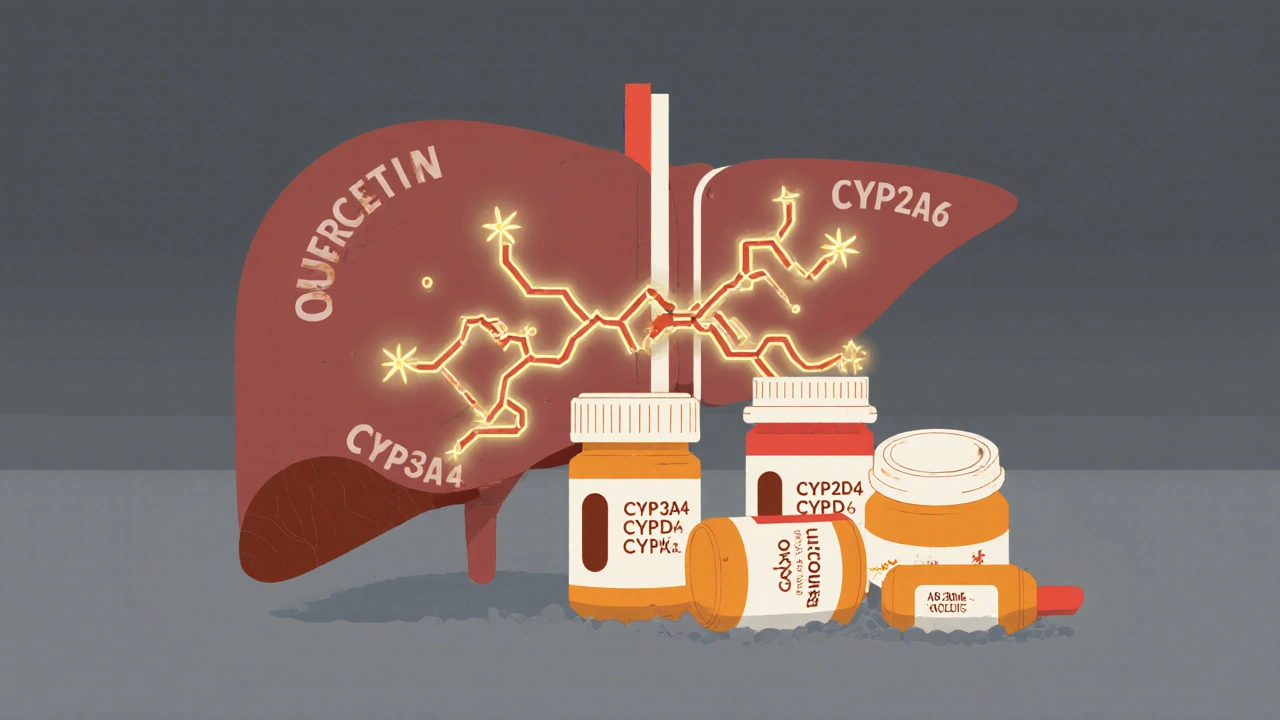
Quercetin supplements can dangerously raise levels of common medications by inhibiting liver enzymes. Learn which drugs are affected, who’s at risk, and what to do if you’re taking both.