
When you take quercetin, a natural flavonoid found in apples, onions, and capers that has anti-inflammatory and antioxidant properties. Also known as a plant-based compound with potential blood-thinning effects, it’s often taken as a supplement for allergies, inflammation, or immune support. But if you’re on blood thinners, medications like warfarin, apixaban, or rivaroxaban that prevent dangerous clots, mixing quercetin could quietly raise your risk of bleeding—without any obvious warning.
Quercetin doesn’t work like aspirin or prescription anticoagulants, but it can interfere with how your body processes them. Studies suggest it may inhibit enzymes in the liver (like CYP3A4 and CYP2C9) that break down blood thinners, causing levels to build up in your system. It also has mild antiplatelet activity, meaning it can reduce how well your blood clots on its own. For someone on warfarin, this double effect—slowing drug breakdown and reducing clotting—could push them into dangerous territory. You might not feel anything until you bruise easily, bleed longer from a cut, or notice blood in your stool or urine. That’s when it’s already too late.
Not everyone reacting to quercetin will have a problem, but if you’re over 65, have kidney issues, or take more than one blood thinner, your risk goes up. Even if your doctor hasn’t warned you about quercetin, that doesn’t mean it’s safe. Most healthcare providers don’t routinely ask about supplements unless you bring them up. And many people assume natural equals harmless. It’s not. The same goes for anticoagulants, a class of drugs that includes both older options like warfarin and newer ones like dabigatran. These aren’t casual medications—they require careful balancing, and quercetin can throw that balance off.
What you’ll find in the posts below isn’t just a list of warnings. It’s real-world insight from people who’ve dealt with drug interactions, bleeding risks, and hidden supplement dangers. You’ll see how quercetin and blood thinners can quietly overlap in ways that aren’t always labeled on bottles or taught in medical school. You’ll learn what symptoms to watch for, how to talk to your pharmacist about supplements, and why stopping your blood thinner on your own is never the answer—even if you think the supplement is the problem. This isn’t about fear. It’s about control. Knowing what’s in your body and how it interacts gives you power over your health—not guesswork.
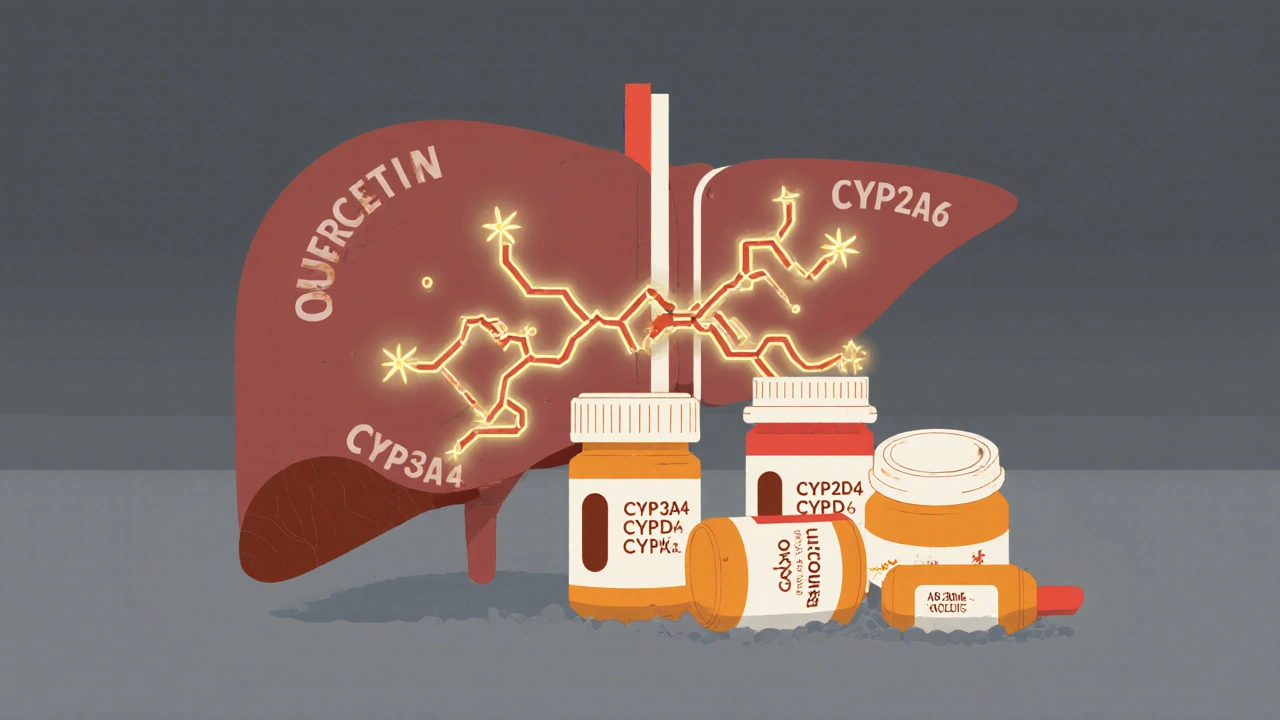
Quercetin supplements can dangerously raise levels of common medications by inhibiting liver enzymes. Learn which drugs are affected, who’s at risk, and what to do if you’re taking both.