
When we talk about MAOI drugs, monoamine oxidase inhibitors are a class of antidepressants that block the enzyme that breaks down key brain chemicals like serotonin, norepinephrine, and dopamine. Also known as monoamine oxidase inhibitors, they were among the first antidepressants developed and still hold a unique place in treating depression that doesn’t respond to other medications. Unlike SSRIs or SNRIs, which target one or two neurotransmitters at a time, MAOIs change the brain’s chemistry more broadly—making them effective but also more dangerous if misused.
These drugs don’t just interact with other antidepressants—they can clash dangerously with common foods, over-the-counter cold medicines, and even some herbal supplements. For example, eating aged cheese, cured meats, or tap beer while on an MAOI can trigger a sudden, life-threatening spike in blood pressure. That’s why people on these medications need to follow strict dietary rules. They also can’t be mixed with other serotonin-boosting drugs like SSRIs or even certain pain relievers, because of the risk of serotonin syndrome, a dangerous condition caused by too much serotonin in the brain, leading to confusion, rapid heart rate, muscle rigidity, and even seizures. Also known as serotonin toxicity, it’s a medical emergency that requires immediate treatment. Even stopping an MAOI too quickly can cause withdrawal symptoms like dizziness, nausea, and anxiety, so tapering off must be done under a doctor’s supervision.
MAOIs are not first-line treatment for most people. They’re usually tried only after other antidepressants have failed, or for specific types of depression like atypical depression, where mood improves with positive events. They’re also used for panic disorder, social anxiety, and sometimes treatment-resistant depression. But because of their risks, they’re not something you pick up at the pharmacy without careful monitoring. Your doctor will need to know every medication, supplement, and food you’re consuming. That’s why so many of the articles in this collection focus on drug interactions—like how quercetin can interfere with liver enzymes, or how tricyclic antidepressants and antihistamines can cause anticholinergic overload. These aren’t just side effects—they’re potential emergencies.
What you’ll find here are real, practical guides from people who’ve lived with these drugs, doctors who manage their use, and patients who’ve avoided serious mistakes. You’ll learn how to spot early signs of serotonin syndrome, why some people still choose MAOIs despite the restrictions, and how to safely switch from one antidepressant to another. These aren’t theoretical discussions—they’re based on clinical experience, patient reports, and hard data. Whether you’re considering MAOIs, currently taking them, or just trying to understand why your loved one has to avoid certain foods, this collection gives you the facts you need to stay safe and informed.
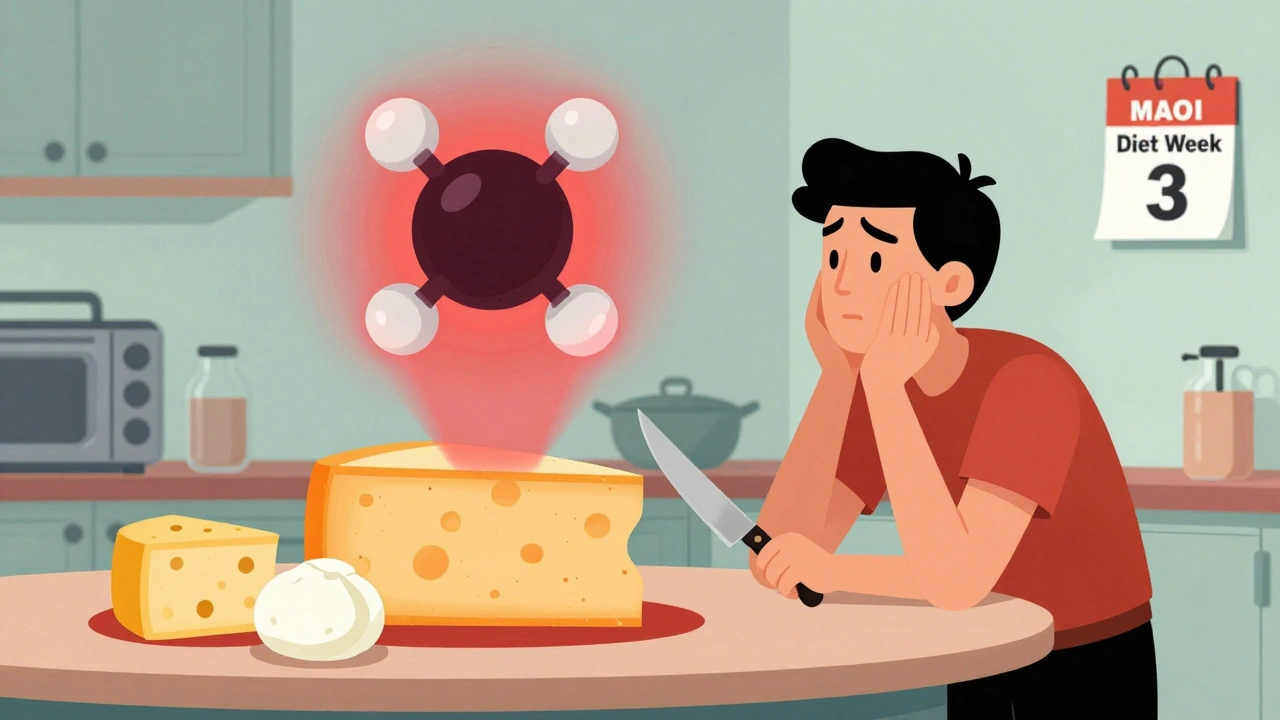
Aged cheeses and processed meats contain tyramine, which can trigger dangerous blood pressure spikes in people taking MAOI antidepressants. Learn which foods to avoid, safe alternatives, and how to manage this life-threatening interaction.