
MAOI Tyramine Calculator
This tool helps you determine if your food choices are safe while taking MAOI medications. Tyramine can cause dangerous blood pressure spikes when consumed with MAOIs.
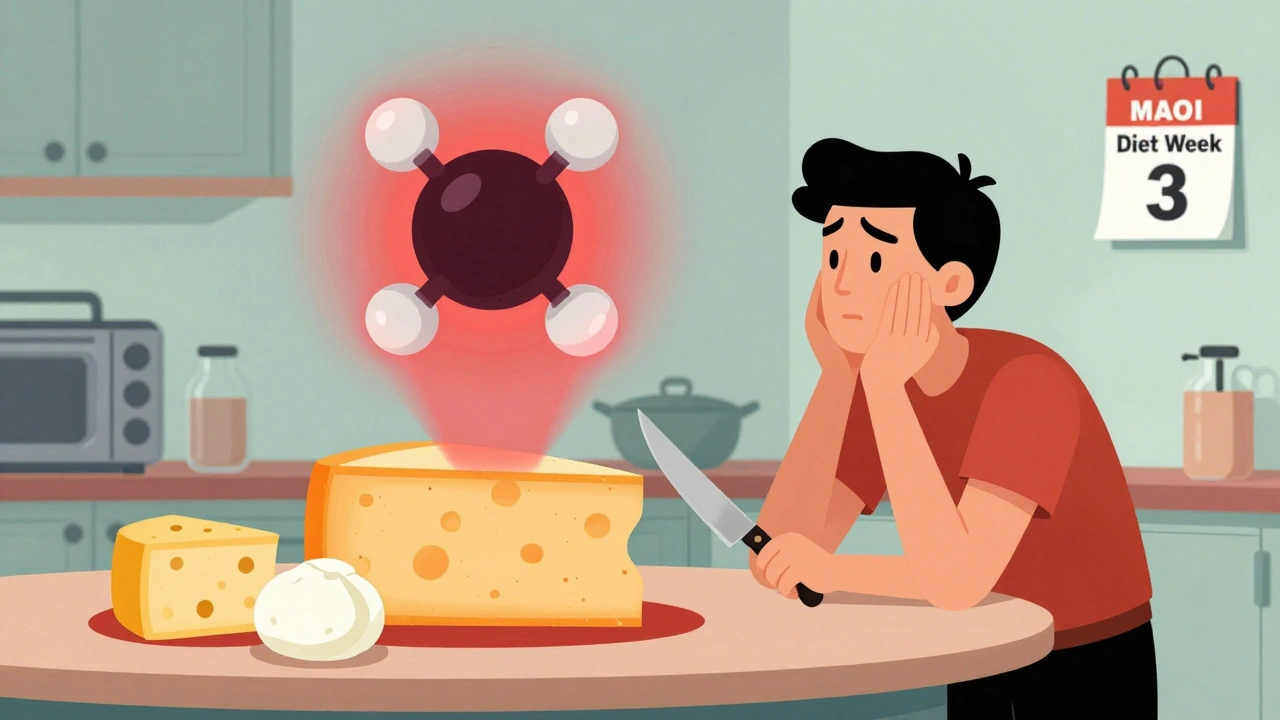
When you're on an MAOI antidepressant like Nardil or Parnate, your diet isn't just about nutrition-it's a safety issue. One bite of aged cheddar or a slice of pepperoni could send your blood pressure soaring, triggering a medical emergency. This isn't a myth or an old wives' tale. It's a well-documented, life-threatening interaction that affects about 1.4 million Americans each year. The culprit? Tyramine-a compound naturally found in aged and fermented foods. And while most people can process it without issue, if you're taking a monoamine oxidase inhibitor, your body can't break it down. That’s when things turn dangerous.
What Happens When Tyramine Meets MAOIs
MAOI medications work by blocking the enzyme monoamine oxidase, which normally breaks down excess neurotransmitters like serotonin, dopamine, and norepinephrine. But that same enzyme also breaks down tyramine, a substance found in aged cheeses, cured meats, and fermented sauces. When MAOIs are active in your system, tyramine builds up in your bloodstream. It then forces your nerve endings to release a flood of norepinephrine. That’s what causes your blood pressure to spike-sometimes within minutes.According to Mayo Clinic’s 2023 guidelines, systolic blood pressure can jump by 50 to 100 mmHg after consuming just a small amount of high-tyramine food. A reading of 180/120 mmHg or higher isn’t rare in these cases. That’s a hypertensive crisis. Symptoms include a crushing headache-often at the back of the head-sweating, rapid heartbeat, blurred vision, nausea, and chest pain. In severe cases, it can lead to stroke, heart attack, or death.
Which Cheeses Are Safe? Which Are Not?
Not all cheese is created equal when it comes to tyramine. The longer cheese ages, the more tyramine it develops. Bacteria and enzymes break down proteins over time, releasing tyramine as a byproduct. That’s why fresh cheeses are generally safe, while aged ones are high-risk.Here’s what you need to know:
- High-risk cheeses (avoid): Aged cheddar (72-953 mcg/g), Parmesan (610-1,400 mcg/g), Swiss (400-1,200 mcg/g), blue cheeses like Gorgonzola and Stilton (1,000-3,500 mcg/g), and brined feta (350-800 mcg/g). A single 30-gram serving of aged cheddar can contain up to 28.59 mg of tyramine-well above the 6 mg threshold that can trigger a reaction in sensitive individuals.
- Moderate-risk cheeses (use caution): Camembert, Brie (200-600 mcg/g), Gruyère, Edam (150-500 mcg/g). These aren’t as dangerous as blue or aged cheddar, but they still carry risk, especially if eaten in larger portions.
- Safe cheeses: Fresh mozzarella (under 25 mcg/g), ricotta (under 40 mcg/g), cottage cheese (under 30 mcg/g), cream cheese (under 20 mcg/g), and American cheese (under 50 mcg/g). These are made from pasteurized milk and aren’t aged long enough for tyramine to accumulate.
Some brands now offer “MAOI-safe” cheese lines. Sargento, for example, sells refrigerated fresh mozzarella cups labeled for MAOI users, with tyramine levels below 20 mcg/g. These products generated $14.7 million in sales in 2022-proof that demand is real and growing.
Processed Meats: The Hidden Danger
Processed meats are just as risky as aged cheeses-and often more confusing. The curing, smoking, and fermenting processes used to preserve these meats create the same conditions that build up tyramine.Here’s the breakdown:
- High-risk meats (avoid): Dry-cured sausages like salami (150-500 mcg/g), pepperoni (200-600 mcg/g), and summer sausage (300-900 mcg/g). These are fermented and aged for weeks or months.
- Moderate-risk meats (limit): Bacon (75-250 mcg/g), corned beef (60-180 mcg/g), and bologna (50-200 mcg/g). These have lower levels but still pose a risk if eaten regularly or in large amounts.
- Safe meats: Freshly cooked chicken, beef, pork, or fish. If it’s not cured, smoked, or aged, it’s generally safe. Even leftover roast chicken from yesterday is fine-as long as it’s refrigerated and eaten within a few days.
One common mistake? Assuming that “low-sodium” or “no nitrates added” means safer. That’s not true. Tyramine forms during fermentation and aging, not from additives. A “natural” pepperoni can still contain more tyramine than a regular one.
Other Surprising Sources of Tyramine
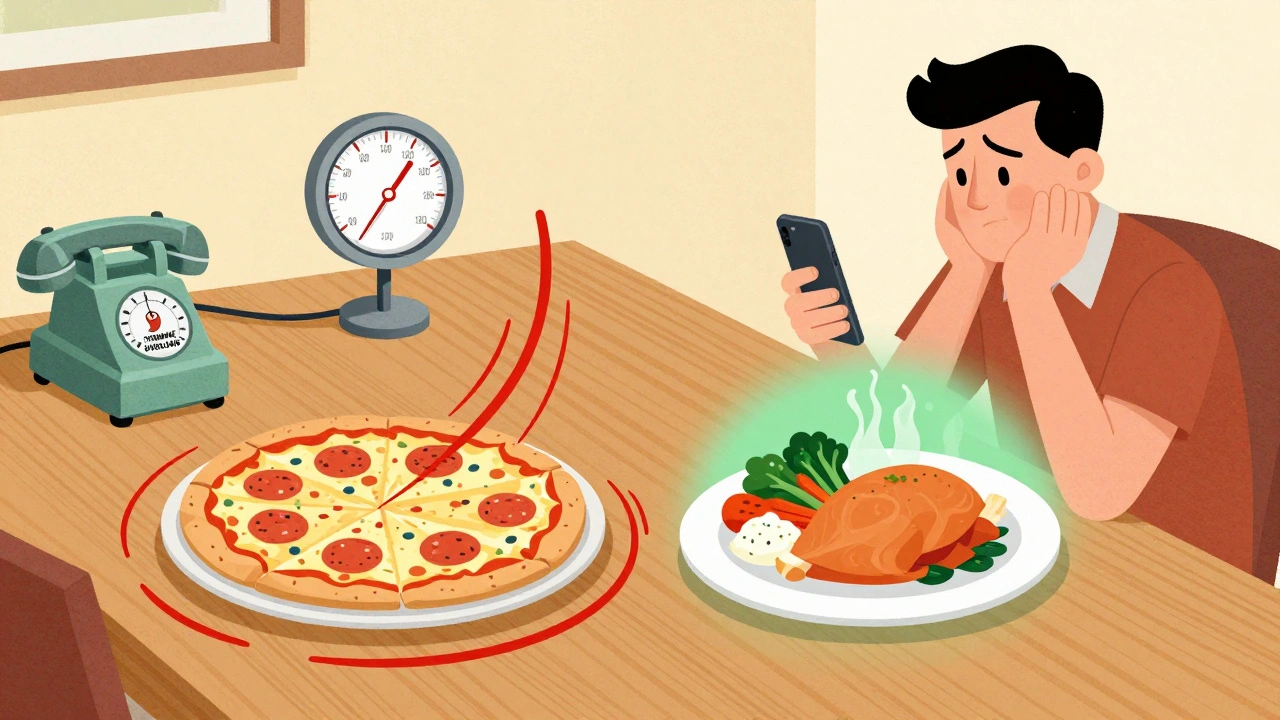
Cheese and meats aren’t the only culprits. Many people don’t realize how many everyday foods contain tyramine.- Fermented sauces: Soy sauce (1,000-2,500 mcg/g), miso (800-2,000 mcg/g), and fish sauce (1,200-3,000 mcg/g) are all high-risk. Even a tablespoon of soy sauce in stir-fry can push you over the limit.
- Alcohol: Tap beer, red wine, and liqueurs like Chianti and sherry can contain tyramine. Bottled or canned beer is usually safe, but draft beer is not.
- Fermented soy products: Beyond soy sauce, tempeh and fermented tofu are risky.
- Overripe or spoiled foods: Bananas, avocados, and chocolate can contain trace amounts, but only if they’re overripe. Fresh bananas have less than 10 mcg/g-safe. A brown-spotted banana? Not so much.
On the flip side, peanuts (75-200 mcg/g), chocolate (50-150 mcg/g), and properly stored pickled fish (100-300 mcg/g) are now considered safe in moderate amounts, according to updated 2023 guidelines from the American Heart Association.
How Much Is Too Much?
There’s no universal “safe” amount. Some people react to as little as 6 mg of tyramine. Others can tolerate up to 25 mg without issue. That’s why personalized tracking matters.The NSW Agency for Clinical Innovation recommends keeping servings under 6 mg of tyramine per meal. But here’s the catch: you can’t guess. A 30-gram slice of aged cheddar might have 15 mg of tyramine-or 28 mg. You don’t know unless you check the source or use a reliable app.
One user on Reddit, who’s been on MAOIs for five years, says his personal threshold is 15 grams of aged cheddar-about 1-2 mg of tyramine. That’s far below the average warning level. He keeps a food diary and checks his blood pressure twice daily. That’s the gold standard.
What to Do If You Accidentally Eat Something Risky
If you’ve eaten aged cheese or salami and start feeling a pounding headache, rapid heartbeat, or blurred vision, act fast.- Check your blood pressure immediately. If it’s above 160/100, call 911 or go to the ER.
- Don’t wait. Symptoms can escalate in minutes.
- Bring your medication list. Emergency staff need to know you’re on an MAOI.
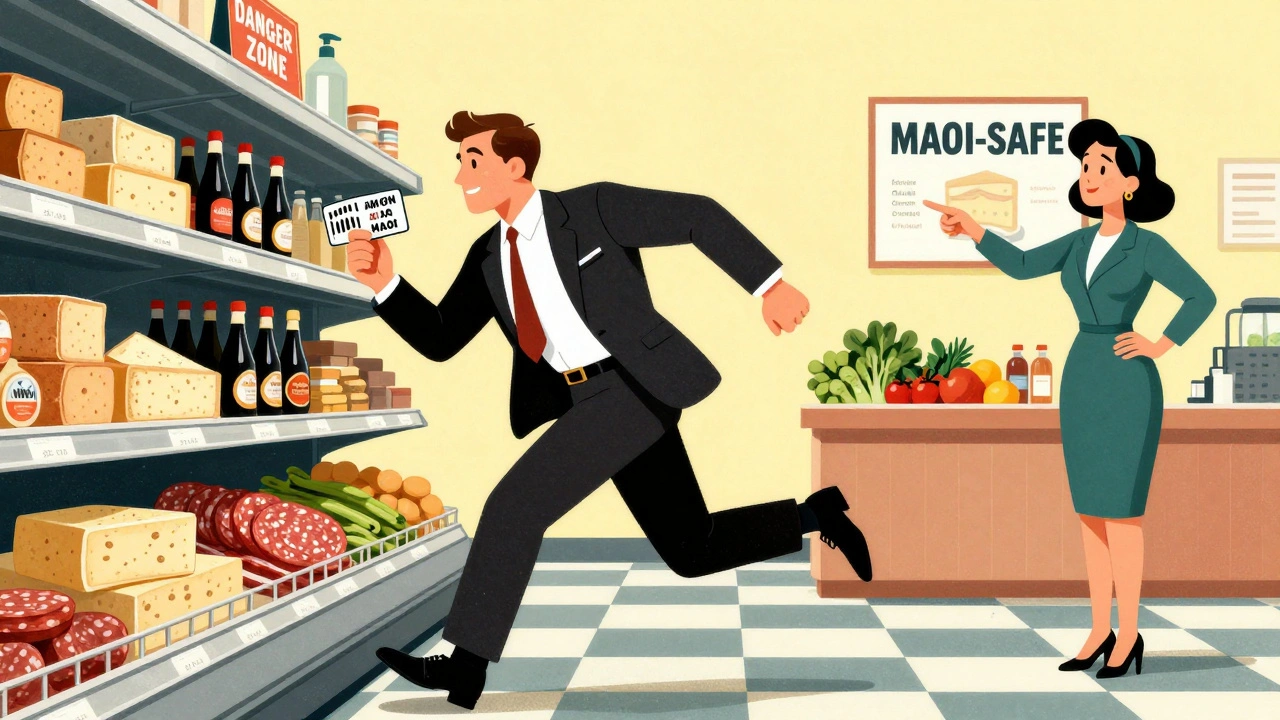
- Keep an emergency card in your wallet that says: “I am on an MAOI. Avoid tyramine-rich foods. Risk of hypertensive crisis.”
According to the GoodRx interaction tracker, 68% of all reported MAOI-food reactions involve cheese. And 41% of patients say they’ve had trouble sticking to the diet because of social pressure or lack of restaurant options. You’re not alone. But ignoring the risk isn’t an option.
How to Manage This Diet Long-Term
Sticking to this diet isn’t about deprivation-it’s about smart substitutions and planning.- Read labels. Look for “aged,” “fermented,” “cured,” or “dry-cured.” If it’s not labeled, assume it’s risky.
- Use fresh ingredients. Swap aged Parmesan for fresh mozzarella. Use fresh turkey instead of pepperoni on sandwiches.
- Track your intake. Keep a food and blood pressure journal. Note what you ate and how you felt. Patterns will emerge.
- Use tech tools. The Mayo Clinic’s “MAOI Diet Tracker” app, launched in early 2023, scans barcodes and flags high-tyramine foods with 89% accuracy. It’s now used by thousands of patients.
- Consult a dietitian. A registered dietitian who specializes in medication interactions can help you create a personalized plan. Studies show this cuts the learning curve from 4-6 weeks to just 2-3.
Also, remember: the restrictions don’t end when you stop taking the MAOI. Monoamine oxidase enzyme activity takes 14-21 days to fully recover. You must continue the diet for two to three weeks after your last dose.
The Future: Will This Interaction Ever Go Away?
There’s hope on the horizon. The NIH is funding a clinical trial (NCT05214387) testing a supplement that breaks down tyramine before it enters your bloodstream. Early results are promising.Food companies are also experimenting. Researchers at the National Institute of Mental Health predict genetically modified cheeses with lower tyramine levels could be available within five years. The American Pharmacists Association is pushing for voluntary tyramine labeling on food products by 2025.
But until then, the rules are clear: if it’s aged, fermented, or cured, treat it like a warning sign. Your life depends on it.
Can I eat blue cheese if I’m on an MAOI?
No. Blue cheeses like Gorgonzola, Stilton, and Roquefort contain 1,000-3,500 mcg of tyramine per gram. A single 30-gram serving can exceed 100 mg of tyramine-far above the dangerous threshold. Even small amounts can trigger a hypertensive crisis. Avoid all blue cheeses completely while on MAOIs.
Is feta cheese safe on MAOIs?
Feta cheese preserved in brine contains 350-800 mcg/g of tyramine, which means a small serving can contain 10-20 mg. That’s enough to trigger a reaction in many people. It’s not recommended. If you must have it, stick to less than 15 grams and check your blood pressure afterward. Fresh mozzarella is a much safer alternative.
Can I drink wine while on an MAOI?
Most wines, especially red and tap beer, contain tyramine. Red wine can have up to 1,000 mcg/g. Bottled or canned beer is usually safe, but draft beer is not. If you choose to drink, limit yourself to one small glass of white wine and monitor your blood pressure. Many patients avoid alcohol entirely to eliminate risk.
Do I need to avoid chocolate on MAOIs?
Regular chocolate contains 50-150 mcg/g of tyramine, which is generally safe in small amounts (under 30 grams). But avoid chocolate that’s been stored for months or is very dark and bitter-those may have higher levels. Also, avoid chocolate-covered raisins or nuts, which may contain aged or fermented ingredients. Fresh, milk chocolate in moderation is usually fine.
How long after stopping MAOIs can I eat aged cheese again?
You must wait at least two to three weeks after your last dose. Monoamine oxidase enzyme levels take 14-21 days to return to normal. Even if you feel fine, your body may still be vulnerable. Rushing back to aged cheeses too soon can still cause a dangerous reaction.
Are there any new medications that don’t have this food interaction?
Yes. Newer antidepressants like SSRIs (e.g., sertraline, fluoxetine) and SNRIs (e.g., venlafaxine) don’t interact with tyramine. If dietary restrictions are too difficult to manage, talk to your doctor about switching. MAOIs are usually reserved for treatment-resistant depression because of these strict dietary requirements.


Write a comment