
When you eat grapefruit, a citrus fruit known for its tart flavor and high vitamin C content. Also known as pomelo hybrid, it can interfere with how your body processes many common medications—sometimes with life-threatening results. This isn’t just a warning on a label. It’s a real, measurable, and avoidable risk that affects thousands of people every year.
The problem lies in something called the CYP3A4 enzyme, a liver and gut enzyme responsible for breaking down over half of all prescription drugs. Grapefruit blocks this enzyme. When that happens, drugs like simvastatin, a cholesterol-lowering statin used to prevent heart attacks and strokes. don’t get broken down the way they should. Instead, they build up in your blood. That’s why a single glass of grapefruit juice can raise simvastatin levels by up to 15 times. That kind of spike can cause rhabdomyolysis—a condition where muscle tissue breaks down, leaks into the bloodstream, and can lead to kidney failure.
You might think this only matters if you’re on high doses, but it doesn’t. Even low doses of simvastatin can become dangerous with grapefruit. And it’s not just simvastatin. Other statins like lovastatin and atorvastatin are also affected. So are blood pressure meds, anti-anxiety drugs, immunosuppressants, and even some painkillers. The effect lasts for hours—even if you take your medicine hours after eating grapefruit. It’s not about timing. It’s about the enzyme being knocked out for good.
Some people assume switching to orange juice is safe. It’s not. Seville oranges, pomelos, and even some tangelos carry the same risk. Regular sweet oranges? Those are fine. But if you’re unsure, check the label. If it says "citrus fruit," assume it’s risky. And if you’re on any long-term medication, talk to your pharmacist. They see these interactions every day. They can tell you what’s safe and what’s not.
There’s no magic workaround. No way to "neutralize" the grapefruit effect. No timing trick that makes it safe. The only reliable fix? Avoid it completely. If your doctor prescribed a drug that interacts with grapefruit, skipping the fruit is the easiest and most effective way to stay out of the hospital.
Below, you’ll find real, detailed posts that break down exactly which drugs are at risk, why grapefruit is so powerful, how to spot early signs of trouble, and what safer alternatives exist—without giving up your health or your breakfast.
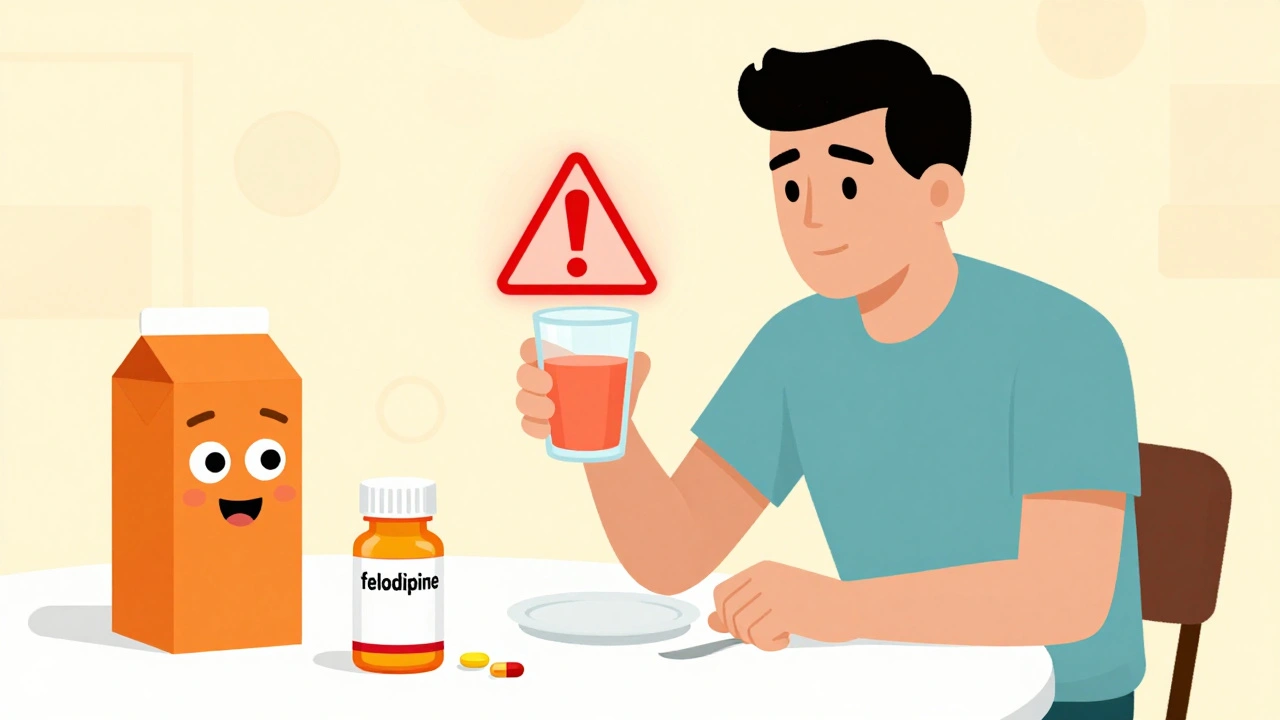
Grapefruit can dangerously increase levels of certain blood pressure medications like felodipine and nimodipine, leading to low blood pressure and dizziness. Learn which citrus fruits are safe, which to avoid, and what to do if you’ve already taken them together.