
When your doctor prescribes a medication, but your pharmacy says it’s not covered, you’re facing a formulary restriction, a rule set by insurance plans or pharmacy benefit managers that limits which drugs are covered and under what conditions. Also known as a drug formulary, it’s essentially a list of approved medications your plan will pay for—and many common drugs are left off it. These restrictions aren’t random. They’re designed to control costs, but they often end up making treatment harder, not cheaper.
Formulary restrictions show up in different ways. Some plans require you to try a cheaper drug first—this is called step therapy, a process where insurers force patients to fail on lower-cost options before approving the prescribed one. Others limit how much of a drug you can get each month, or only cover it if you have a specific diagnosis. For example, if you’re prescribed a brand-name blood pressure drug but your plan only covers the generic, you’ll pay more unless you get a prior authorization. Even then, approval isn’t guaranteed. These rules directly affect people managing chronic conditions like high blood pressure, diabetes, or autoimmune diseases—conditions covered in posts about lisinopril, thiazide diuretics, and tacrolimus. If your medication is on a restricted list, you might be stuck choosing between skipping doses or paying hundreds out of pocket.
It’s not just about cost. pharmacy benefits managers, companies hired by insurers to manage drug coverage and negotiate prices, decide what goes on the formulary. Their decisions are often based on rebates from drugmakers, not clinical effectiveness. That’s why you might see a cheaper, less effective drug covered while a better one isn’t. This creates a gap between what’s medically right and what’s financially allowed. Many patients don’t realize they can appeal these decisions. Some of the posts here, like those on penicillin allergy testing or sulfonamide allergies, show how mislabeling or restricted access can lead to riskier alternatives. If your medication is restricted, you’re not powerless. You can ask your doctor for a prior authorization, request a formulary exception, or look into patient assistance programs. The articles below cover real-world cases where formulary restrictions led to side effects, treatment delays, or dangerous substitutions—like switching from a safe antihypertensive to a riskier one, or using unverified online pharmacies for cheap generics. These aren’t theoretical problems. They’re daily realities for people trying to stay healthy in a system that often prioritizes cost over care.
What you’ll find here aren’t just drug guides—they’re battle plans for navigating the hidden rules that control your access to medicine. From managing side effects of restricted immunosuppressants to finding affordable alternatives for gout or muscle spasms, each post shows how formulary restrictions shape treatment outcomes. You’ll learn how to question your coverage, work with your pharmacist, and push back when your health is on the line.
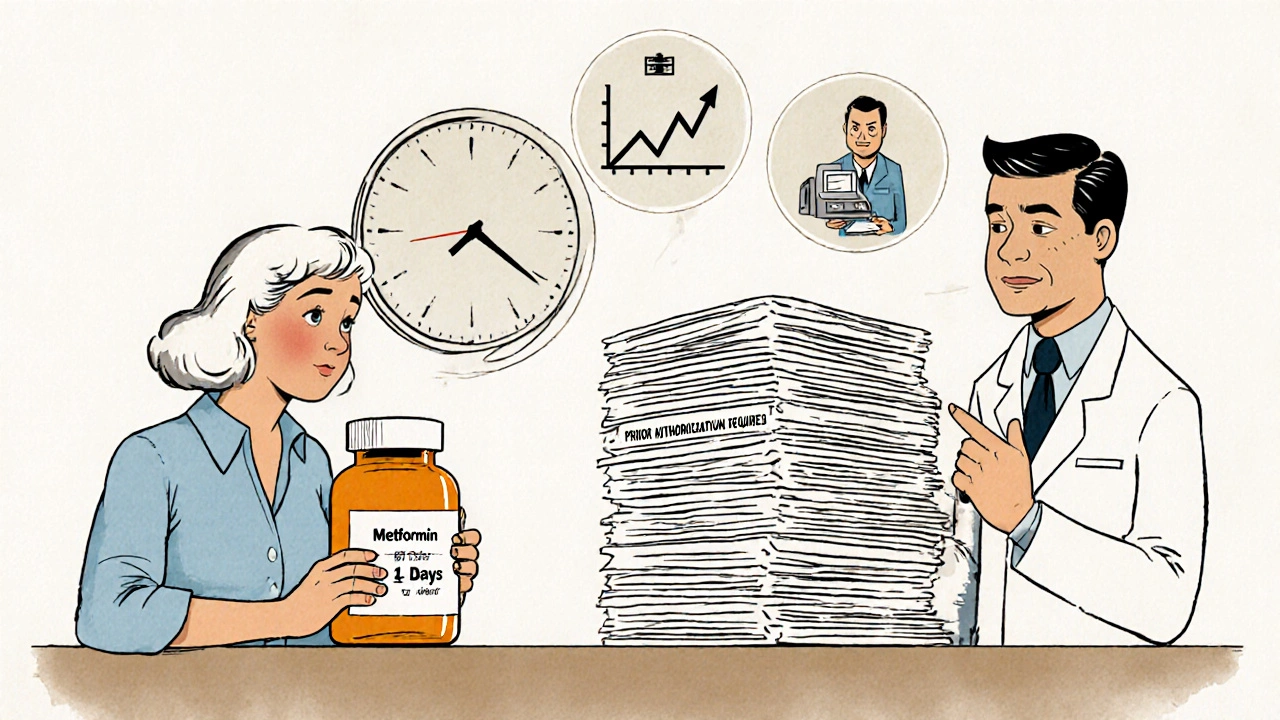
Why are insurance companies requiring approval for cheap generic medications? Learn how prior authorization delays care, increases costs, and what you can do to get your prescription faster.