
When your body holds onto too much fluid, it shows up as swelling—especially in your ankles, feet, or hands. This is called fluid retention, the abnormal buildup of fluid in tissues that leads to visible swelling. Also known as edema, it’s not a disease itself but a sign something else is off.
Many common medications can cause or worsen fluid retention. thiazide diuretics, drugs meant to remove excess fluid might seem like the fix, but they can sometimes backfire by messing with your salt and water balance. Meanwhile, drugs like tacrolimus, an immunosuppressant used after organ transplants, and even some blood pressure meds like lisinopril, an ACE inhibitor that can affect kidney function may lead to fluid buildup as a side effect. Even over-the-counter pain relievers like ibuprofen can trigger it in sensitive people.
Fluid retention doesn’t just come from pills. It’s tied to heart failure, kidney disease, liver problems, and even long periods of sitting or standing. If you notice sudden swelling, tight shoes, or skin that stays indented when you press it, that’s a red flag. It’s not always harmless—even if it feels like just puffiness, it could mean your body is struggling to manage fluids properly.
What you’ll find here are real, practical posts that break down how medications cause swelling, which ones to watch out for, and what steps you can take to reduce it without stopping your treatment. From how diuretics work to why some people get swollen ankles after starting a new blood pressure drug, this collection gives you the facts—not the fluff. You’ll learn what’s normal, what’s dangerous, and how to talk to your doctor about it without sounding alarmist.
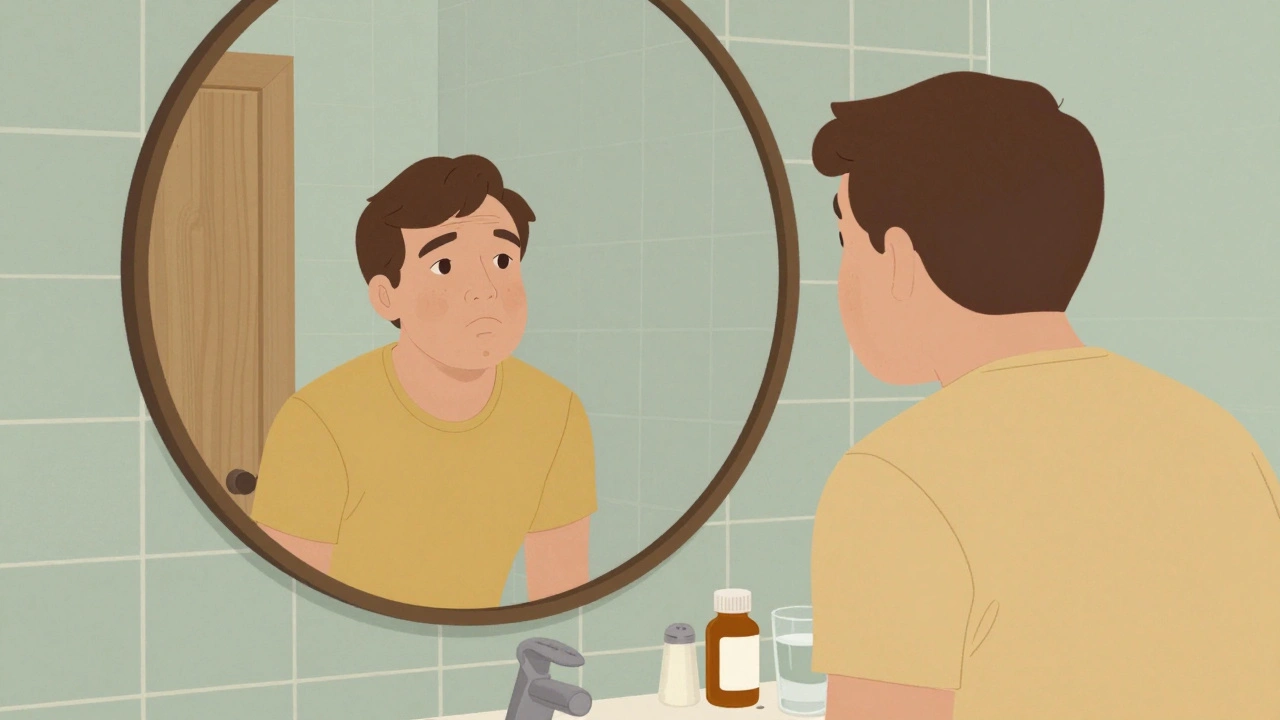
Learn how to manage weight gain and moon face caused by corticosteroids like prednisone. Discover diet tips, exercise strategies, and psychological support to reduce facial swelling and improve quality of life while staying on necessary medication.