
Moon Face Recovery Estimator
How to Use This Estimator
This tool provides an estimate of your moon face recovery timeline based on your dietary habits and steroid usage. Remember: This is not medical advice. Consult your doctor for personalized guidance.
Your Current Habits
Key Recommendations
For best results:
• Limit sodium to 1,500 mg daily
• Drink 2-3 liters water daily
• Increase potassium-rich foods
• Maintain light exercise
• Avoid sudden steroid discontinuation
The American Heart Association recommends no more than 2,300 mg sodium daily for most adults, but for moon face reduction, aim for 1,500 mg or less.
Estimated Recovery Timeline
These are estimated timeframes based on current medical research. Individual results vary based on metabolism, dose, and other factors.
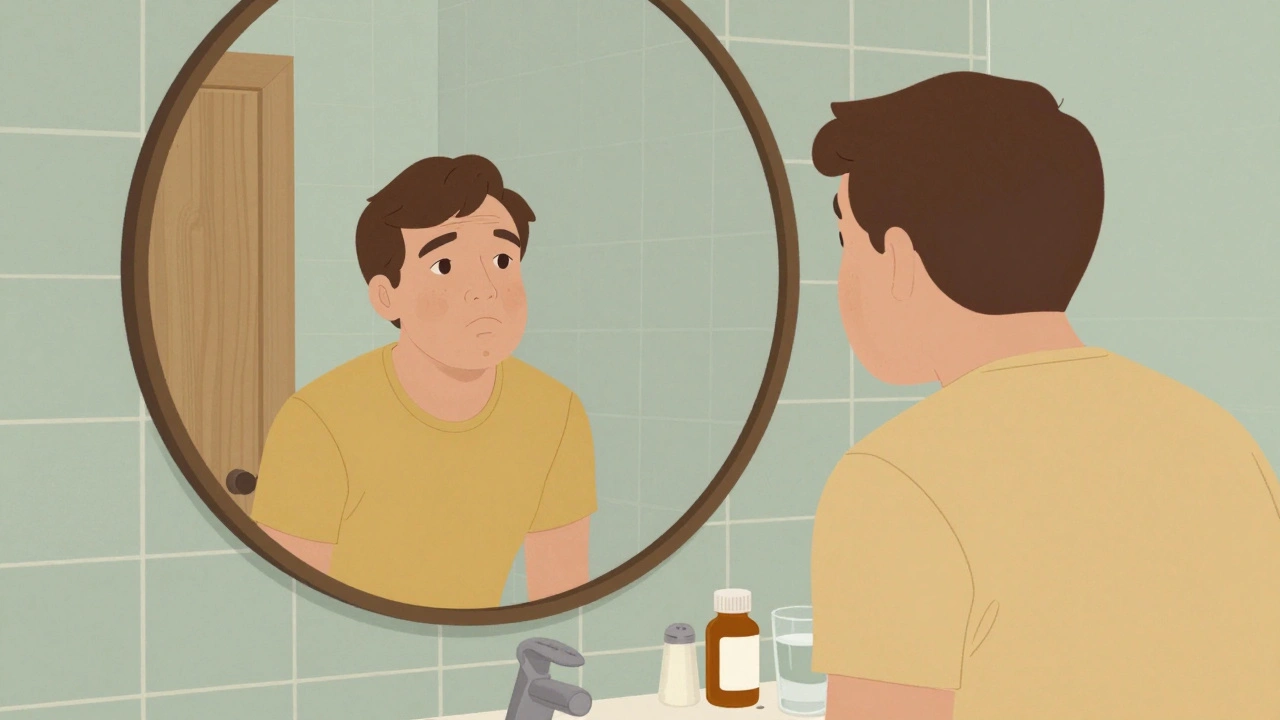
When you're taking corticosteroids like prednisone to manage a chronic condition-whether it's rheumatoid arthritis, Crohn’s disease, or lupus-you’re not just fighting inflammation. You’re also fighting your own reflection. The round, puffy face known as moon face doesn’t show up overnight. It creeps in over weeks or months, quietly changing how you look, how you feel about yourself, and sometimes, whether you keep taking the medicine you need.
Why Does Moon Face Happen?
Moon face isn’t just fat. It’s a mix of fat redistribution and fluid buildup caused by long-term corticosteroid use. These medications mimic cortisol, your body’s natural stress hormone. When you take them for months or longer, your body starts storing fat differently-especially around your cheeks, jawline, and neck. At the same time, steroids make your kidneys hold onto sodium and water. That’s why your face doesn’t just look fuller-it looks swollen. Studies show that about 25-30% of people on long-term steroid therapy develop this side effect. The risk goes up with higher doses. If you’re taking more than 7.5 mg of prednisone daily for three months or longer, your chances of getting moon face increase significantly. Women and younger adults are more likely to notice it, possibly because of how their bodies naturally store fat. It’s not dangerous on its own, but it’s deeply unsettling. People report avoiding mirrors, skipping social events, and feeling embarrassed even when their condition is under control. One patient on a Crohn’s disease forum said, “I looked in the mirror and didn’t recognize myself.” That kind of emotional toll can lead to stopping medication-something that can be life-threatening.Can You Prevent It?
No, you can’t fully prevent moon face if you need to be on steroids. But you can reduce how bad it gets. The key is working with your doctor to use the lowest effective dose for the shortest time possible. Many people stay on higher doses longer than needed because they’re afraid of flare-ups. But studies show that tapering slowly-under medical supervision-can minimize side effects without losing control of the disease. Your doctor might also consider newer steroid alternatives called SEGRMs (selective glucocorticoid receptor modulators). These are still in clinical trials but show promise-reducing moon face by over 60% compared to traditional steroids. Until they’re widely available, managing what you can is your best option.Diet: The Most Powerful Tool You Have
Diet doesn’t cure moon face, but it can make a real difference in how much swelling you see. The two biggest dietary triggers are salt and sugar. Sodium is the main culprit behind fluid retention. The NHS and Cleveland Clinic both recommend limiting sodium to under 1,500 mg per day. That’s less than one teaspoon of salt. Most people eat way more than that-processed foods, canned soups, bread, and restaurant meals are loaded with hidden sodium. Read labels. Cook at home. Avoid soy sauce, pickles, and deli meats. Swap salt for herbs, lemon, or vinegar. Water seems counterintuitive, but drinking more helps. When your body thinks it’s dehydrated, it holds onto water. Drinking 2-3 liters of water daily signals your kidneys to flush out excess sodium. One patient reported noticeable improvement in facial puffiness within two weeks after switching to 3 liters of water a day and cutting salt. Potassium helps balance sodium. Eat more bananas, spinach, sweet potatoes, avocados, and beans. These foods don’t directly melt fat, but they help your body release water naturally. Avoid sugary drinks and refined carbs. Corticosteroids raise blood sugar and can trigger insulin spikes, which promote fat storage-especially in the face and belly. Stick to whole foods: vegetables, lean proteins, and healthy fats.
Exercise: Move Smart, Not Hard
You might feel weak or tired on steroids. That’s normal. Steroids break down muscle over time. But avoiding movement makes it worse. Light resistance training-like bodyweight squats, wall push-ups, or resistance bands-helps preserve muscle mass. Muscle burns more calories than fat, even at rest. It also helps your body use sugar more efficiently, which can reduce fat buildup. Avoid intense cardio or high-impact workouts early on. They can increase cortisol levels and make fluid retention worse. Walking, swimming, or yoga are better choices. Aim for 30 minutes most days. Don’t push through fatigue. Listen to your body.When Will It Go Away?
The good news: moon face usually reverses after you stop steroids. But it takes time. Most people see improvement within 6-12 months after tapering off. The timeline depends on how long you were on steroids, your dose, and your metabolism. If you’re still on steroids, don’t expect quick fixes. You’re not failing. This isn’t about willpower. It’s about biology. Your body is responding to a powerful drug. Be patient. Focus on small wins: less puffiness around your eyes, a slightly slimmer jawline, clothes fitting better.Psychological Support Matters
This isn’t just a physical issue. It’s emotional. Studies show that people with moon face report higher levels of anxiety, depression, and social withdrawal. The American Psychological Association now recognizes steroid-induced body image disturbance as a real concern. Talk to your doctor about it. Ask for a referral to a counselor who specializes in chronic illness or body image. Support groups like the Cushing’s Support & Research Foundation have thousands of members who’ve been there. Hearing someone say, “I felt the same way,” can be more healing than any cream or pill.
When to Worry
Not all facial swelling is from steroids. If you notice other symptoms-like a fatty hump on your upper back, purple stretch marks, easy bruising, or unexplained weight gain around your midsection-you might be developing Cushing’s syndrome. This can happen from long-term steroid use or from a tumor producing too much cortisol. Also, watch for: very bad headaches, slow-healing cuts, or frequent infections. These could signal high cortisol levels or adrenal suppression. Call your doctor if you notice any of these.What Not to Do
Don’t stop your steroids cold turkey. That can trigger adrenal crisis-a life-threatening drop in blood pressure, vomiting, and confusion. Always taper under medical supervision. Don’t try miracle diets, detox teas, or “steroid reversal” supplements. There’s no pill or cream that melts steroid-induced fat. Some topical treatments are being studied, but they’re still experimental. Don’t isolate yourself. Stay connected. People who talk about their experience report better mental health and higher treatment adherence.Final Thoughts
Moon face is a visible sign of a powerful medicine doing its job. It doesn’t mean you’re doing something wrong. It means your body is reacting to something intense. The goal isn’t to look exactly like you did before. The goal is to manage your condition, stay healthy, and feel like yourself again-inside and out. With the right approach, moon face fades. Your strength, your resilience, and your identity don’t.How long does moon face last after stopping prednisone?
Moon face typically starts to improve within 6 months after stopping prednisone, with most people seeing significant reduction in facial puffiness by 12 months. The timeline depends on how long you were on the medication, your dose, and your metabolism. Some people notice changes in as little as 4-6 weeks after reducing their dose, especially if they also cut salt and drink more water.
Can I lose weight from steroids without stopping them?
Yes, you can reduce fluid retention and fat buildup while still on steroids. The most effective way is by lowering sodium intake to under 1,500 mg per day, drinking 2-3 liters of water daily, and eating potassium-rich foods like bananas and spinach. Avoiding sugar and processed carbs also helps. While you won’t lose all the weight until you taper off, many people see noticeable improvement in facial swelling within 2-4 weeks of making these changes.
Does moon face mean I have Cushing’s syndrome?
Not necessarily. Moon face is a common side effect of prescribed corticosteroids like prednisone. Cushing’s syndrome is a separate condition caused by your body making too much cortisol, usually due to a tumor. But if you have moon face along with other signs-like a buffalo hump, purple stretch marks, easy bruising, or high blood sugar-it could indicate Cushing’s syndrome. Talk to your doctor if you notice multiple symptoms. Blood and urine tests can tell the difference.
Why does my face swell more at night?
Fluid retention from steroids tends to build up overnight because your body isn’t moving. Gravity doesn’t help drain fluid from your face when you’re lying down. Eating salty foods in the evening or drinking less water during the day can make this worse. To reduce nighttime swelling, avoid salty snacks after dinner, drink most of your water in the morning and afternoon, and sleep with your head slightly elevated.
Will exercise help get rid of moon face faster?
Exercise won’t melt the fat directly, but it helps manage the underlying causes. Strength training preserves muscle, which improves metabolism and helps your body use sugar better-reducing fat storage. Cardio can help with overall weight, but intense workouts may increase fluid retention. Walking, swimming, and yoga are safest. The key is consistency, not intensity. Movement also reduces stress, which lowers cortisol levels naturally.
Are there any supplements that reduce steroid-induced facial swelling?
No supplements have been proven to reduce moon face. Some people try magnesium or dandelion root for water retention, but there’s no solid evidence they work for steroid-related swelling. In fact, some herbs can interfere with steroids or raise blood pressure. Stick to food-based strategies: lower sodium, drink water, eat potassium-rich foods. Always check with your doctor before taking any supplement while on steroids.
Can moon face come back after it’s gone?
If you restart corticosteroids, yes-moon face can return, especially if you go back to a high dose. Once you’ve recovered, your body may be more sensitive to steroid effects. To prevent recurrence, work with your doctor to use the lowest possible dose. If you need to restart steroids, start with a lower dose and increase slowly. Monitor your salt intake and hydration closely from day one.
Is moon face permanent?
No, moon face is not permanent. It’s a reversible side effect of corticosteroid therapy. Once the medication is tapered and stopped, your body gradually returns to normal fat distribution and fluid balance. In rare cases where steroid use was extremely long-term or high-dose, some minor changes might linger, but full recovery is the norm. Patience and consistent lifestyle habits make the biggest difference.


Write a comment