
When a pill says empty stomach medication, a drug that must be taken without food to ensure proper absorption and effectiveness. Also known as fasted state dosing, it’s not a suggestion—it’s a requirement for many drugs to work as intended. If you eat before or right after taking it, the medication might not get into your bloodstream the way it should. That doesn’t just mean it won’t help—it could make your condition worse or even cause side effects you didn’t expect.
Why does food interfere? Your stomach isn’t just a place to digest burgers or oatmeal. It’s a chemical factory. When you eat, your body releases acid, enzymes, and bile to break down food. That same environment can block, delay, or even destroy certain drugs. For example, antibiotics like tetracycline, a broad-spectrum antibiotic that binds to calcium and other minerals in food become useless if taken with dairy. Blood pressure meds like captopril, an ACE inhibitor that loses potency when mixed with food need an empty stomach to drop pressure quickly. Even some thyroid pills, like levothyroxine, won’t work right if you take them with coffee, fiber, or calcium supplements. The rules aren’t random—they’re based on real chemistry.
It’s not just about what you eat. Timing matters too. Some drugs need 1 hour before food, others 2 hours after. Skipping meals to take a pill isn’t smart if you’re dizzy or prone to low blood sugar. And if you’re on multiple meds, the order matters. One might need an empty stomach, another works best with food. That’s where food-drug interactions, when what you eat changes how a drug behaves in your body get dangerous. Grapefruit juice, for instance, can make cholesterol or blood pressure meds too strong. Aged cheese and MAOIs? That’s a recipe for a hypertensive crisis. These aren’t myths—they’re documented risks that show up in ERs every year.
You might think, "I’ve taken this pill with toast before and felt fine." But "fine" isn’t the same as "effective." You might be getting just enough to feel okay, but not enough to treat the root problem. Over time, that can lead to resistance, worsening symptoms, or the need for stronger, riskier treatments. The goal isn’t to be perfect—it’s to be informed. Know which of your meds need space from food, and why. Talk to your pharmacist. They’re the ones who see these interactions every day. Don’t guess. Don’t assume. Check the label. Ask. Your body will thank you.
Below, you’ll find real cases where timing made all the difference—whether it was a drug failing because of breakfast, or a life-threatening interaction avoided by knowing the rules. These aren’t theory pieces. They’re stories from people who learned the hard way—and the guides that helped them get it right.
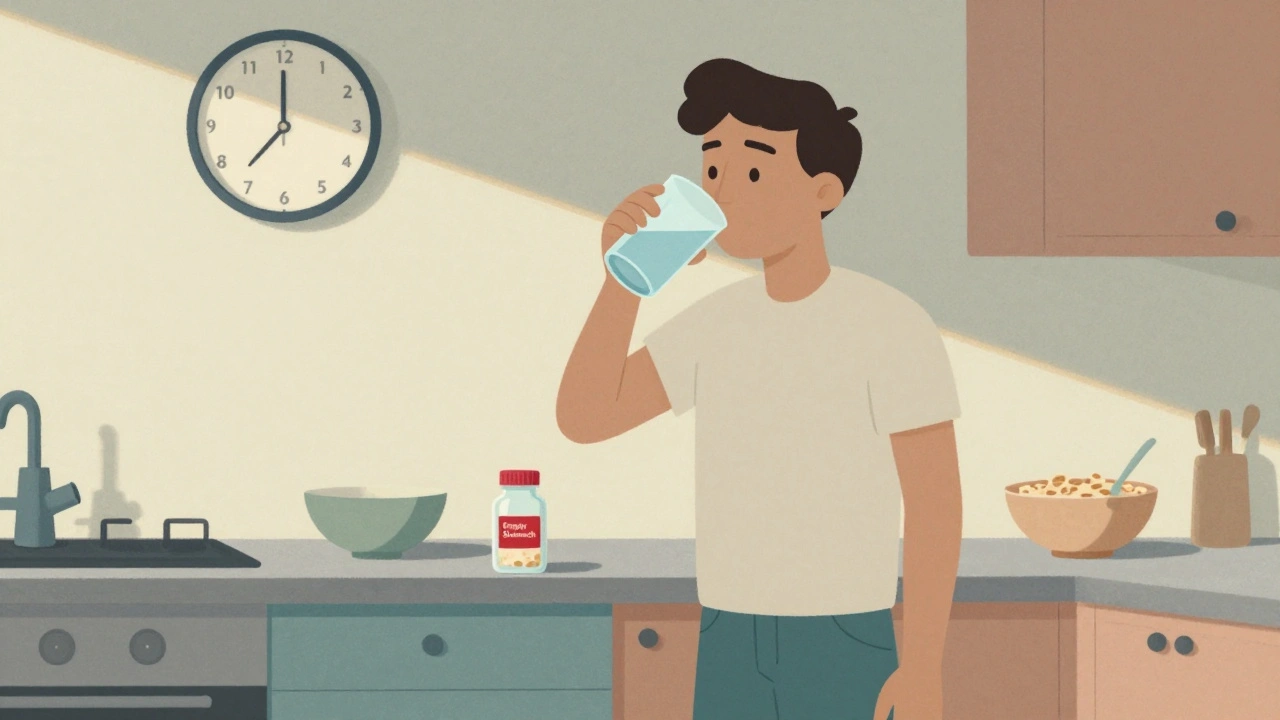
Learn why taking prescription medicine with or without food matters-how food affects absorption, which drugs need food, which must be taken empty-stomach, and how to avoid dangerous mistakes.