
When you swallow a pill, it doesn’t just disappear and start working. Drug absorption, the process by which a medication enters your bloodstream from its site of administration. Also known as medication absorption, it’s the make-or-break step that decides whether your drug will work at all, work too hard, or not work at all. A drug might be perfectly formulated, but if your body doesn’t absorb it properly, you’re wasting your time—and money.
What affects absorption? A lot. Eating grapefruit with your blood pressure pill can spike drug levels dangerously high. That’s because grapefruit blocks enzymes in your gut that normally break down meds. First-pass metabolism, the liver’s role in filtering drugs before they reach circulation plays a huge part too. Some pills get broken down so fast by the liver that only a fraction makes it into your system. That’s why some drugs need higher doses or special delivery methods, like patches or injections.
Then there’s bioavailability, the percentage of a drug that actually enters circulation and becomes active. Two pills with the same label can have wildly different bioavailability. One might be absorbed at 90%, another at 30%. That’s why generics aren’t always interchangeable without a doctor’s input. Food can help or hurt absorption too. Aged cheeses and MAOI antidepressants don’t mix because of tyramine—but that’s not about absorption, it’s about dangerous reactions. Meanwhile, some antibiotics work better on an empty stomach, while others need fat to be absorbed properly.
Drug absorption isn’t just about what you take—it’s about when, how, and with what. A person with ulcerative colitis or celiac disease might absorb meds poorly because their gut lining is damaged. Someone on tacrolimus after a transplant needs tight blood level control because even small changes in absorption can mean rejection. And if you’re taking quercetin supplements, you might be accidentally blocking the enzymes that clear your other meds, causing them to build up to unsafe levels.
It’s not magic. It’s biology. And it’s personal. Your age, your gut health, your other meds, even your genetics—all shape how your body handles what you swallow. That’s why two people on the same drug can have totally different results. One feels better right away. The other wonders why it’s not working. The answer often lies in absorption.
Below, you’ll find real-world examples of how drug absorption impacts treatment. From grapefruit warnings to statin risks, from MAOIs and cheese to how your liver handles meds—you’ll see how this hidden process affects everything from your blood pressure to your hearing. These aren’t theory articles. These are stories of what happens when absorption goes wrong—and how to keep it right.
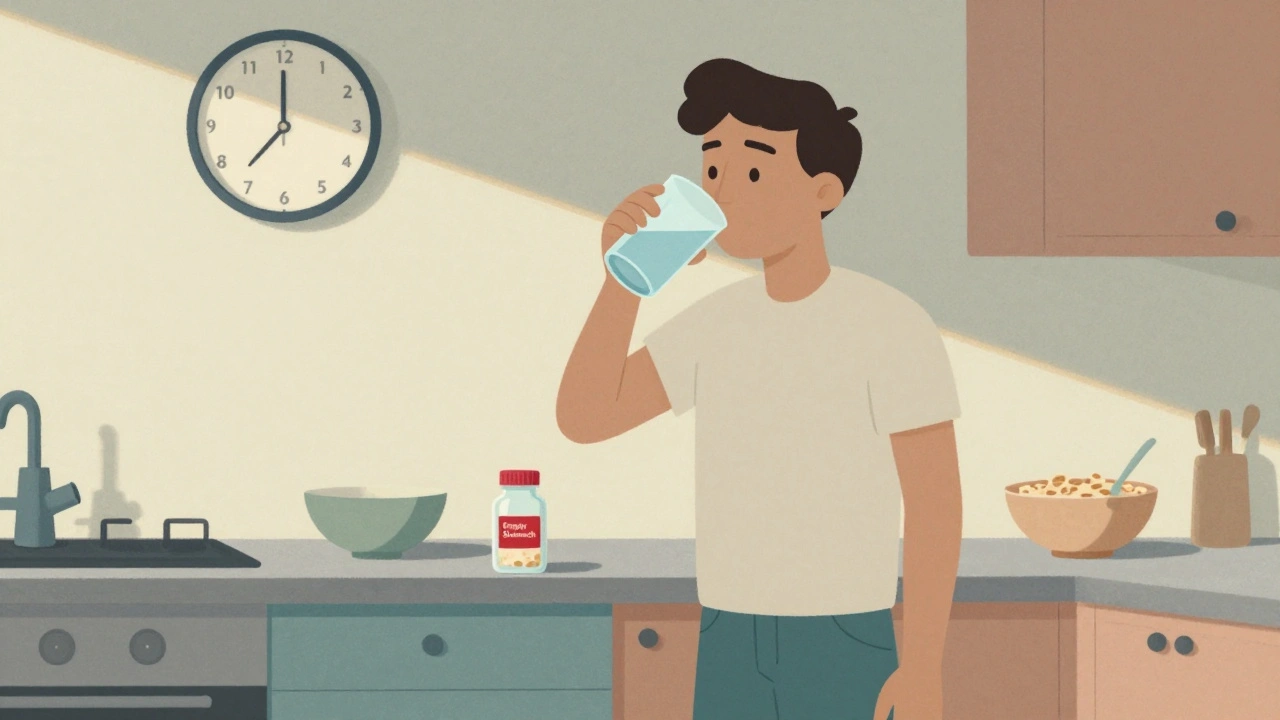
Learn why taking prescription medicine with or without food matters-how food affects absorption, which drugs need food, which must be taken empty-stomach, and how to avoid dangerous mistakes.