
When you take a DOAC, Direct Oral Anticoagulant. Also known as novel oral anticoagulant, it's a type of blood thinner designed to prevent clots without the need for regular blood tests. Unlike older drugs like warfarin, DOACs are simpler to use—but they still carry a real risk of DOAC bleeding, which can turn dangerous fast if not handled right. These medications include apixaban, rivaroxaban, dabigatran, and edoxaban. They work by blocking specific clotting factors in your blood, making it harder for dangerous clots to form in your heart, legs, or brain. But that same mechanism means if you get cut, fall, or have internal bleeding, your body can’t stop it as easily.
Not everyone on DOACs will bleed, but some people are at higher risk. Older adults, people with kidney problems, those taking other medications like NSAIDs or aspirin, and anyone who drinks alcohol heavily are more vulnerable. Even a minor bump can lead to a big bruise. A nosebleed that won’t stop, blood in your urine, or dark, tarry stools aren’t normal—they’re warning signs. You don’t need to panic, but you do need to act. Emergency rooms now have specific reversal agents, drugs that can quickly undo the effect of DOACs in life-threatening bleeding. For example, andexanet alfa reverses factor Xa inhibitors like rivaroxaban, while idarucizumab works on dabigatran. These aren’t available everywhere, but knowing they exist can save your life. And if you’re unsure whether your symptoms are serious, call your doctor or go to the ER. Don’t wait.
Managing DOAC bleeding isn’t just about emergency response—it’s about prevention. Talk to your doctor before starting any new medicine, even over-the-counter ones. Avoid NSAIDs like ibuprofen unless absolutely necessary. If you’re scheduled for surgery or a dental procedure, ask if you need to pause your DOAC. Some people can stay on it safely; others need a short break. Your kidney function matters too—regular blood tests help your doctor adjust your dose. And if you’ve had bleeding before, your doctor might switch you to a different DOAC or even back to warfarin, depending on your situation.
What you’ll find in the articles below isn’t just theory. Real people have dealt with bleeding on these drugs. Others have learned how to recognize the signs early. Some discovered dangerous interactions with common meds. And a few found out that what they thought was just a bruise was actually internal bleeding. These stories aren’t meant to scare you—they’re meant to help you stay safe. Whether you’re on a DOAC now, considering one, or caring for someone who is, the information here gives you the tools to ask better questions, spot trouble faster, and make smarter choices with your doctor.
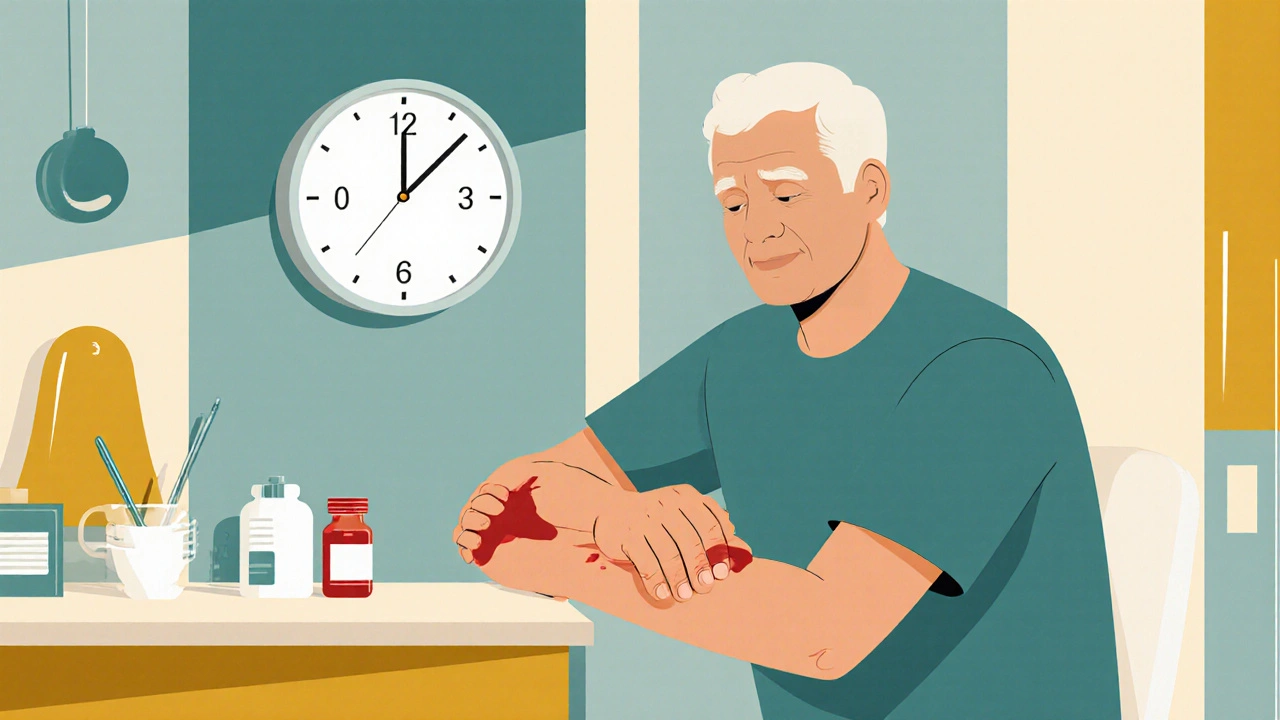
Knowing when bleeding from blood thinners is an emergency can save your life. Learn the warning signs, what to do at home, why stopping your meds is dangerous, and how new treatments are changing outcomes.