
When you reach for a sleep aid or an allergy pill, you might be grabbing diphenhydramine, a first-generation antihistamine that blocks histamine to reduce allergy symptoms and causes drowsiness as a side effect. Also known as Benadryl, it’s one of the most widely used over-the-counter drugs in the U.S.—but that doesn’t mean it’s harmless. People take it for sneezing, itchy skin, runny nose, or to fall asleep faster. But using it regularly? That’s where things get risky.
Diphenhydramine doesn’t just make you sleepy—it affects your brain in ways you might not realize. It crosses the blood-brain barrier and blocks acetylcholine, a chemical your brain uses for memory and focus. That’s why older adults who take it often feel foggy, confused, or even develop symptoms that look like dementia. Studies show long-term use is linked to higher dementia risk in people over 65. It’s also a common culprit in accidental overdoses, especially when mixed with other sedatives, alcohol, or even some cold medicines. And while it’s sold as a sleep aid, your body builds tolerance fast. What once helped you drift off now leaves you groggy all day, with no real improvement in sleep quality.
It’s not just about sleep or allergies. Diphenhydramine shows up in dozens of combination products—cough syrups, motion sickness pills, nighttime pain relievers. You might not even know you’re taking it. That’s why checking labels is critical, especially if you’re on other meds. It can dangerously raise levels of antidepressants, blood pressure drugs, and even some heart medications. If you’re taking anything for anxiety, depression, or heart issues, you need to know if diphenhydramine is safe for you.
There’s a reason so many posts here talk about drug interactions, side effects, and hidden risks. From serotonin syndrome to muscle weakness and urinary retention, diphenhydramine’s side effects are broad and often ignored. It’s not a harmless nightcap. It’s a powerful drug with real consequences. The articles below break down exactly how it affects different people, what to watch for, and safer alternatives when you need relief without the trade-offs.
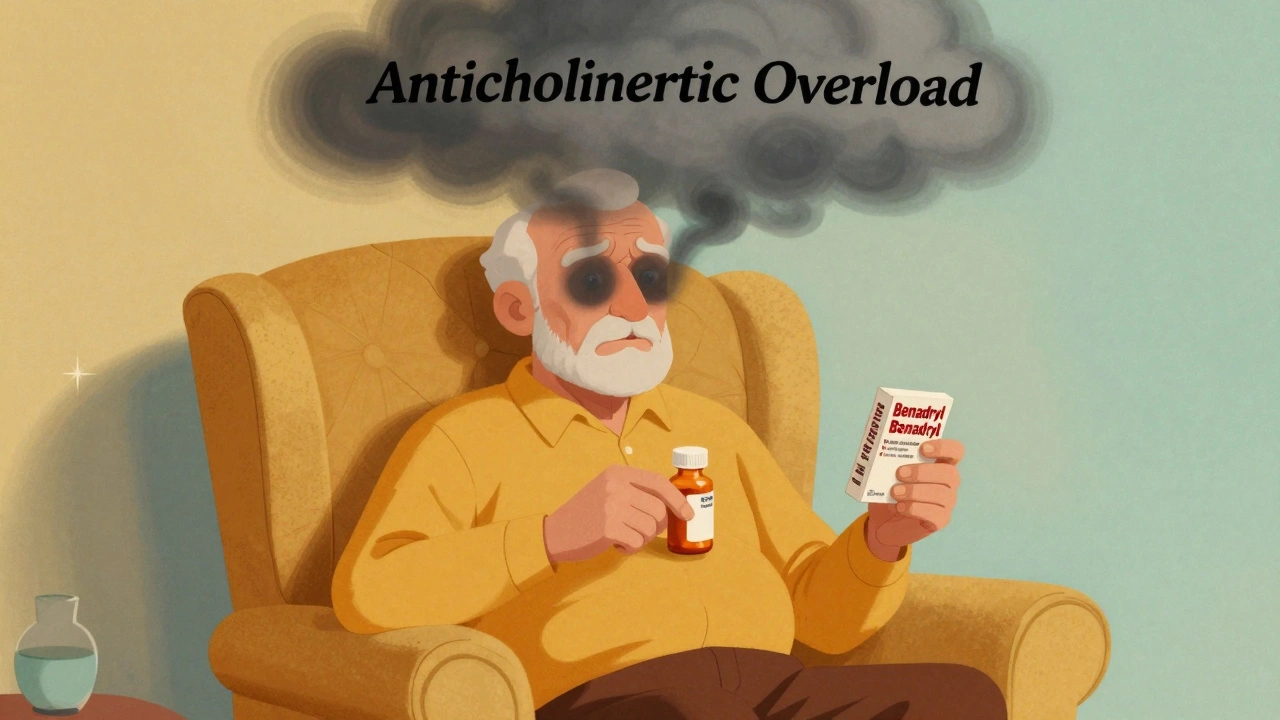
Combining tricyclic antidepressants like amitriptyline with antihistamines like Benadryl can cause anticholinergic overload - a dangerous, often missed condition that increases dementia risk and causes confusion, urinary issues, and delirium, especially in older adults.