
When you eat citrus fruits, a group of fruits including grapefruit, oranges, and Seville oranges that contain compounds affecting how your body processes certain drugs. Also known as citrus juice interactions, these fruits can interfere with medications in ways that are often invisible until something goes wrong. It’s not just grapefruit—other citrus fruits like pomelo and bitter orange can do the same thing. This isn’t about allergies or stomach upset. It’s about your liver and gut working differently because of natural chemicals in the fruit.
The real culprit is something called CYP3A4 enzyme, a key liver and intestinal enzyme responsible for breaking down over half of all prescription drugs. Citrus fruits block this enzyme. When it’s blocked, your body can’t break down drugs like statins, blood pressure meds, or anti-anxiety pills the way it should. That means more of the drug stays in your system—sometimes way more. A single glass of grapefruit juice can keep this effect going for over 24 hours. That’s why taking your pill at night and drinking juice in the morning doesn’t help. The damage is already done.
Some drugs are fine with citrus. Others? Deadly. Simvastatin and atorvastatin can cause muscle breakdown. Felodipine and nifedipine might drop your blood pressure too low. Buspirone and sertraline can flood your system with serotonin. Even some cancer drugs and immunosuppressants like tacrolimus are affected. If you’re on a daily medication, check the label or ask your pharmacist. If it says "avoid grapefruit," don’t test it. A single orange won’t hurt most people, but if you’re on a sensitive drug, even a small amount of juice can be risky.
And it’s not just juice. Whole fruit, peel, even some supplements made from citrus can cause the same problem. If you love your morning smoothie, swap out grapefruit for pineapple or berries. If you take cholesterol meds, ask your doctor about switching to rosuvastatin—it’s not affected by citrus. The goal isn’t to fear fruit. It’s to know which ones to avoid with your specific meds. You don’t need to give up citrus forever—just the ones that clash with your treatment.
Below, you’ll find real cases where citrus fruits messed with prescriptions, what doctors are telling patients now, and how to spot the warning signs before it’s too late. These aren’t theories. They’re stories from people who learned the hard way—and the fixes that actually work.
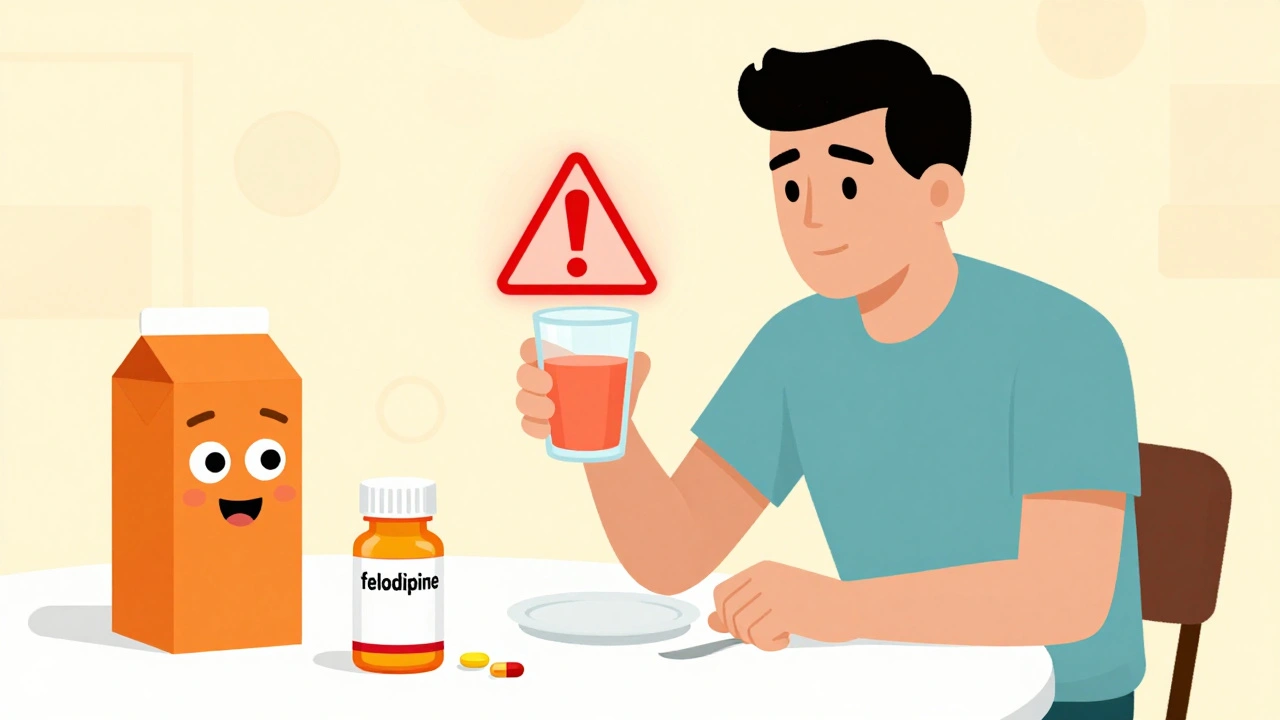
Grapefruit can dangerously increase levels of certain blood pressure medications like felodipine and nimodipine, leading to low blood pressure and dizziness. Learn which citrus fruits are safe, which to avoid, and what to do if you’ve already taken them together.