
When you take multiple medications that block acetylcholine, you might be heading for anticholinergic overload, a condition caused by the cumulative effect of drugs that reduce the activity of acetylcholine, a key brain and nerve chemical. Also known as anticholinergic burden, it doesn’t always show up on lab tests—but it can quietly wreck your memory, balance, and ability to think clearly. This isn’t rare. It happens to older adults on multiple prescriptions, but also to younger people using over-the-counter sleep aids, allergy meds, or even some stomach remedies without realizing the risk.
Drugs like diphenhydramine (Benadryl), oxybutynin (for overactive bladder), and even some antidepressants and Parkinson’s meds all carry anticholinergic effects. When you stack them—say, taking a sleep aid at night, an antihistamine for allergies during the day, and a bladder control pill—you’re not just doubling up. You’re multiplying the risk. The brain doesn’t handle this well. Studies show people with high anticholinergic load have up to a 50% higher chance of developing dementia over time. And it’s not just memory. You might feel dizzy, constipated, dry-mouthed, or confused—symptoms that get written off as "just aging" when they’re actually drug-induced.
It’s not just about pills. Some herbal supplements and even certain skin creams contain hidden anticholinergic ingredients. And here’s the catch: your doctor might not know you’re taking them. A 70-year-old on five prescriptions might be fine—until someone adds a new OTC med without checking the list. That’s why tracking every medication, even the "harmless" ones, matters. You don’t need to stop everything. You just need to know what’s in your system and whether the benefits outweigh the risks.
There’s a better way. Many anticholinergic drugs have safer alternatives. For sleep, melatonin or behavioral changes work better than diphenhydramine. For overactive bladder, mirabegron is a non-anticholinergic option. For allergies, second-gen antihistamines like loratadine have almost no anticholinergic effect. The key is asking: "Is this drug really necessary?" and "Is there a safer version?"
Below, you’ll find real-world guides on how to spot these hidden risks in your meds, what to do if you’re already on too many, and how to talk to your pharmacist about alternatives. Some posts cover specific drugs like tacrolimus and domperidone that can contribute to this burden. Others show how to avoid dangerous combinations—like mixing a muscle relaxant with an antihistamine—before it’s too late. This isn’t theoretical. It’s about protecting your brain, your balance, and your independence.
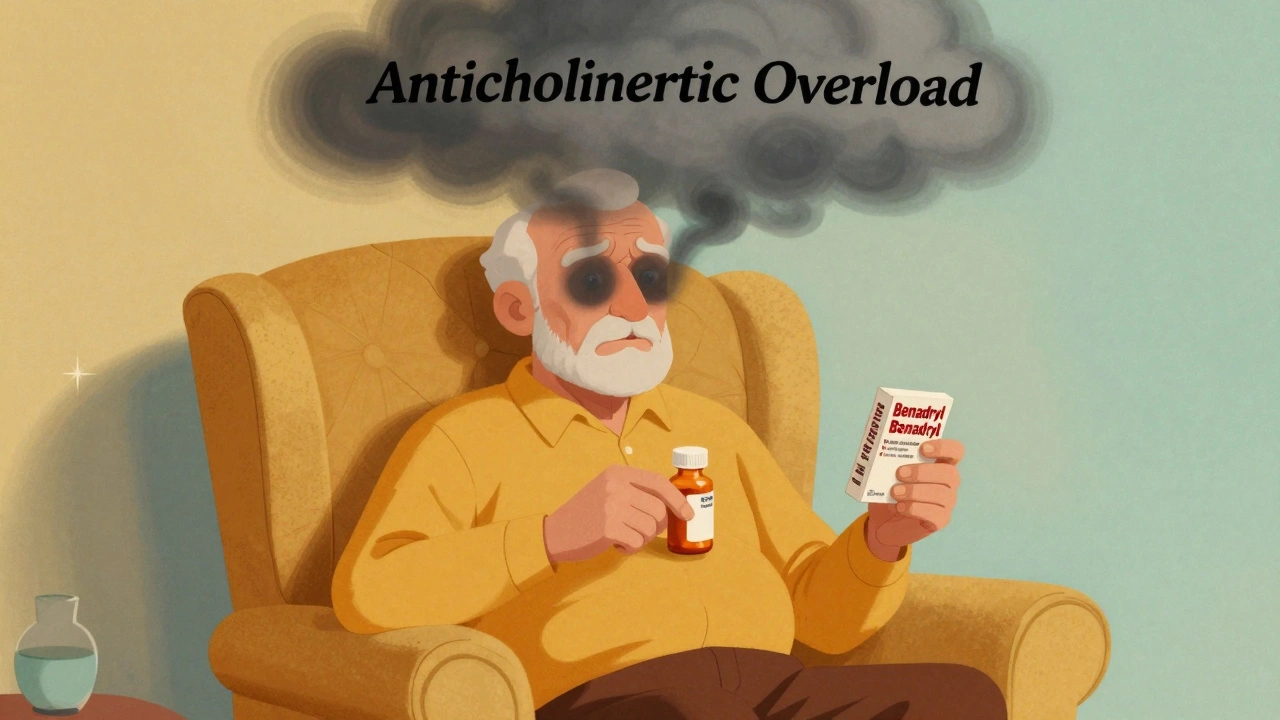
Combining tricyclic antidepressants like amitriptyline with antihistamines like Benadryl can cause anticholinergic overload - a dangerous, often missed condition that increases dementia risk and causes confusion, urinary issues, and delirium, especially in older adults.