
When you hear amitriptyline, a tricyclic antidepressant originally developed in the 1960s to treat depression but now widely used for nerve pain and sleep disorders. It’s not a new drug, but it’s still one of the most prescribed in its class—especially for people who haven’t responded to newer antidepressants. Unlike SSRIs or SNRIs, amitriptyline works by boosting both serotonin and norepinephrine in the brain, which helps lift mood and dull chronic pain signals. But because it affects so many systems in the body, side effects are common—and sometimes serious.
People taking amitriptyline often report dry mouth, drowsiness, weight gain, or blurred vision. But the bigger risks? serotonin syndrome, a dangerous reaction that can happen when amitriptyline is mixed with other drugs that raise serotonin, like certain pain meds or supplements, and heart rhythm changes, especially at higher doses or in older adults. That’s why doctors don’t just hand it out—they monitor blood levels, check for drug interactions, and watch for early signs of trouble. If you’re on amitriptyline and suddenly feel confused, have a rapid heartbeat, or start sweating uncontrollably, it’s not just a bad day—it could be serotonin syndrome, and you need help fast.
It’s also not just for depression. Many patients take it for fibromyalgia, migraines, or nighttime pain that keeps them awake. That’s why you’ll find articles here about how it stacks up against other meds, what to do when side effects make you quit, and how to spot dangerous combinations with things like quercetin or blood thinners. You’ll also see real advice on managing drowsiness, avoiding falls, and knowing when to push back on your doctor if the risks outweigh the benefits.
There’s no magic pill, and amitriptyline isn’t for everyone. But for some, it’s the only thing that brings relief. The key is knowing how it works, what to watch for, and how to use it safely. Below, you’ll find real stories and practical guides from people who’ve been there—on when to call 911, how to talk to your pharmacist about interactions, and what alternatives might work better for your body.
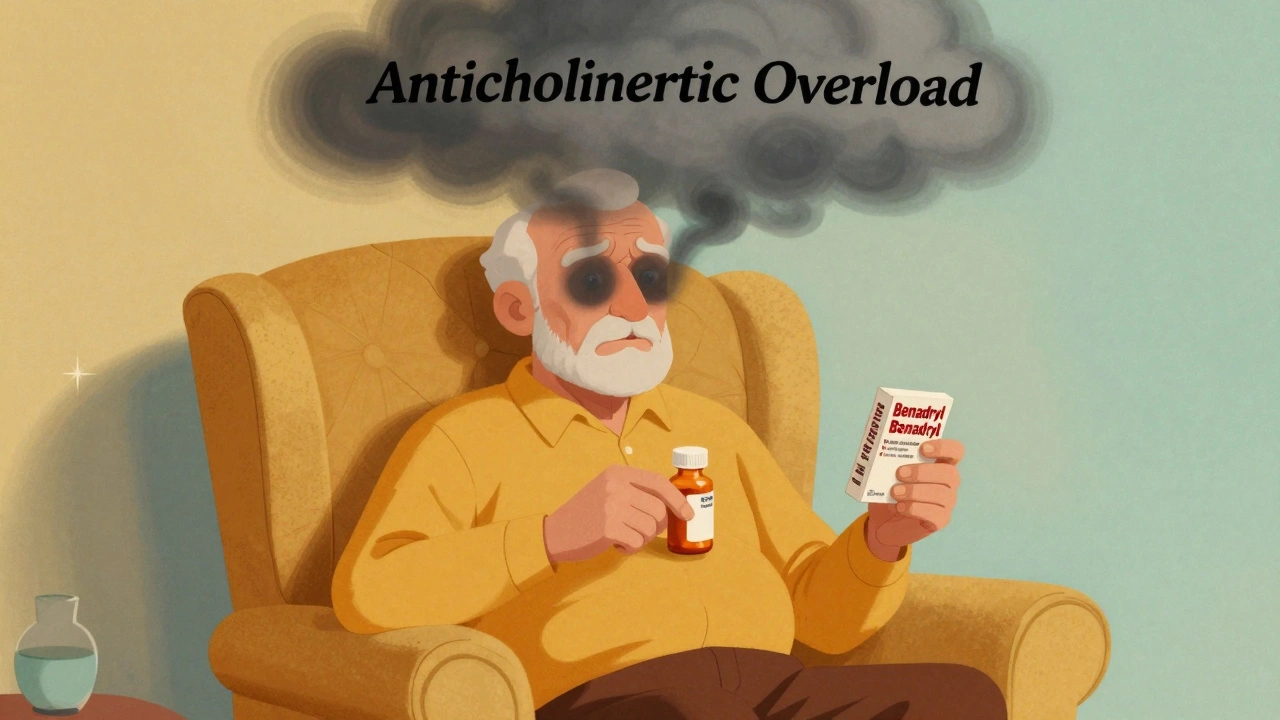
Combining tricyclic antidepressants like amitriptyline with antihistamines like Benadryl can cause anticholinergic overload - a dangerous, often missed condition that increases dementia risk and causes confusion, urinary issues, and delirium, especially in older adults.