

Photosensitivity Protection Calculator
Your Protection Factors
Protection Assessment
When the sun comes out, most people enjoy a little warmth. But for those with photosensitivity, even a short walk outside can trigger a painful reaction - redness, blisters, itching, or a rash that lasts for days. This isn’t just a bad sunburn. It’s your skin reacting abnormally to ultraviolet (UV) light, often because of a medication, autoimmune condition, or genetic trait. The good news? You can prevent these reactions. Not with luck, not with guesswork, but with a clear, science-backed plan.
What Exactly Is Photosensitivity?
Photosensitivity means your skin is overly reactive to sunlight. It’s not one condition - it’s a range of reactions. The two main types are phototoxic and photoallergic. Phototoxic reactions look like a severe sunburn. They happen fast, usually within minutes or hours of sun exposure, and they’re caused by chemicals in your body - often from medications like doxycycline, hydrochlorothiazide, or even ibuprofen. Photoallergic reactions are rarer. They’re immune-driven, like an allergic rash, and can show up a day or two later. Both types mean you’re at higher risk for skin damage, and over time, that increases your chance of skin cancer.
According to the National Institutes of Health, about 10 to 20% of people experience some level of photosensitivity. If you’re taking antibiotics, diuretics, or certain NSAIDs, your risk jumps. Even some skincare products - like those with retinol, alpha-hydroxy acids, or bergamot oil - can make you more sensitive. The key is knowing what’s in your system and how it reacts to light.
Why Regular Sunscreen Isn’t Enough
Many people think SPF 30 sunscreen is enough. For most, it is. But for someone with photosensitivity, it’s not. SPF measures protection against UVB rays - the ones that burn. But UVA rays - the deeper, aging rays - are just as dangerous, and they pass right through glass. Standard windows block 97% of UVB, but only 37% of UVA. That means you can get a reaction sitting near a window, driving in a car, or working at a desk with sunlight coming in.
SPF 30 blocks about 97% of UVB. SPF 50 blocks 98%. That 1% difference matters when your skin is this sensitive. Clinical guidelines from the NCBI Bookshelf recommend SPF 50+ for photosensitive patients. And not just any sunscreen. You need broad-spectrum, water-resistant formulas with physical blockers - zinc oxide or titanium dioxide. These sit on top of your skin and reflect UV rays. Chemical sunscreens absorb UV, but they can irritate sensitive skin or even trigger reactions themselves. Stick to mineral-based. Look for labels that say “non-comedogenic” and “fragrance-free.”
The Real Winner: UPF 50+ Clothing
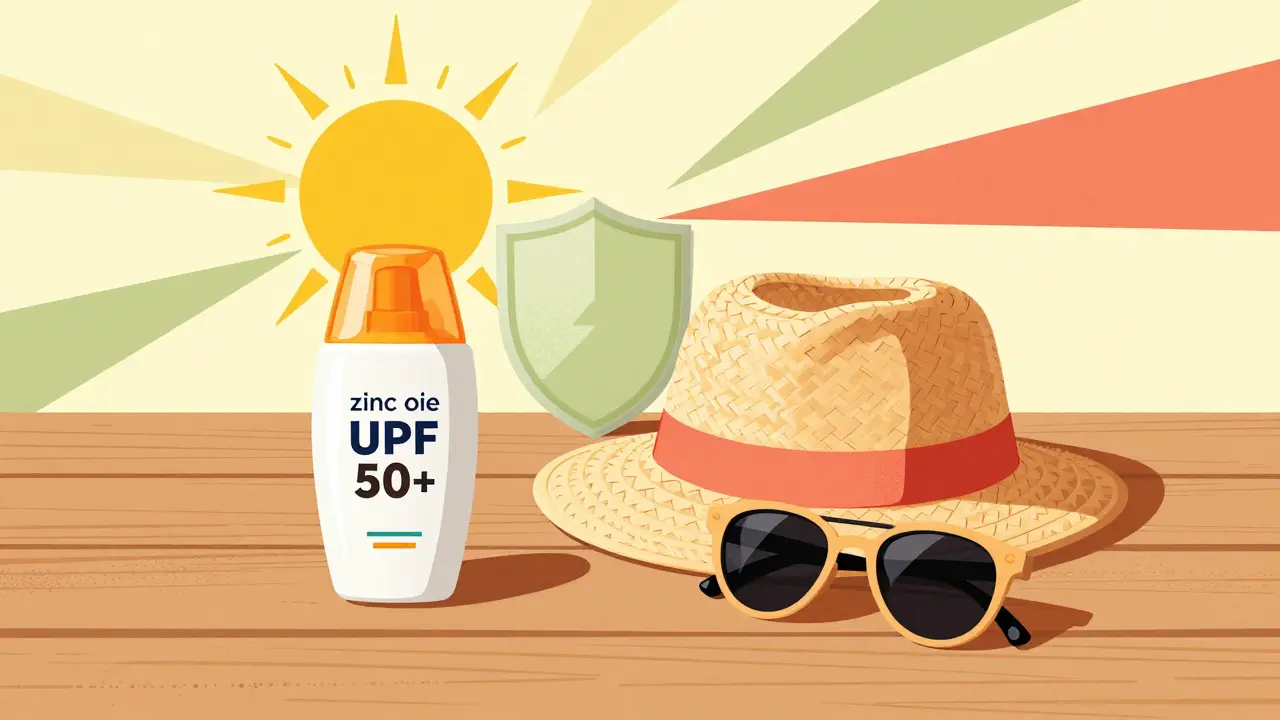
Here’s something most people don’t know: clothing can be your best defense. UPF - Ultraviolet Protection Factor - measures how much UV radiation a fabric blocks. UPF 50 means only 1/50th (2%) of UV gets through. That’s better than most sunscreens. And unlike sunscreen, it doesn’t wash off, sweat off, or wear thin over time. A UPF 50+ long-sleeve shirt, wide-brimmed hat, and UV-blocking sunglasses are non-negotiable for anyone with photosensitivity.
Not all fabrics are equal. Thick, tightly woven polyester, denim, or wool offer the best protection. Light-colored cotton or linen? They’re comfy, but they let through more UV. Darker colors absorb UV better, so a black UPF-rated shirt is smarter than a white one. You can even buy UPF-rated swimwear, hats, and gloves. Brands like Coolibar, Solbari, and Columbia have tested, certified options. The global market for sun-protective clothing is growing fast - it hit $3.2 billion in 2023. That’s because people are finally realizing: clothing isn’t just fashion. It’s medicine.
When and Where the Sun Is Most Dangerous
UV intensity isn’t the same all day. It peaks between 10 a.m. and 4 p.m. - when your shadow is shorter than you are. That’s when you need to be most careful. Plan outdoor time for early morning or late afternoon. If you have to go out midday, seek shade. But don’t rely on it. Shade reduces UV exposure by 50% to 95%, depending on trees, umbrellas, or awnings. A simple beach umbrella might block 80%, but reflected UV from sand, water, or concrete can still hit you. That’s why you need layered protection: hat, shirt, sunglasses, sunscreen.
Altitude matters too. For every 1,000 meters you go up, UV exposure increases by 5-10%. So hiking in the Rockies or skiing in Whistler? Double your protection. Snow reflects up to 80% of UV. Even on cloudy days, up to 80% of UV rays penetrate clouds. Don’t be fooled by the weather.
Windows, Screens, and Hidden UV Sources
Most people think they’re safe indoors. They’re wrong. Standard glass blocks UVB, but lets 75% of UVA through. That’s why some photosensitive patients get rashes while working near a window or driving. The solution? UV-blocking window film. It’s affordable - $5 to $15 per square foot - and blocks up to 99% of UVA. Install it on home windows, car windows, and even office glass. Some films are clear, so you won’t even notice them. For those with severe sensitivity, some patients even sleep during the day and work night shifts. It’s extreme, but it works.
And what about your phone? The Skin Cancer Foundation’s 2024 guidelines now mention blue light from screens as a potential trigger for certain photosensitive conditions. While the risk is low, if you’re already sensitive, minimizing screen time in direct sunlight might help. Use night mode, keep screens dim, and avoid using devices with sunlight hitting the screen directly.
Supplements and Oral Protection
There’s growing evidence that some supplements can help. Polypodium leucotomos, an extract from a Central American fern, has been shown to provide the equivalent of SPF 3-5 when taken orally. It’s not a replacement for sunscreen, but it adds a layer of internal defense. Carotenoids like astaxanthin and beta-carotene also offer mild antioxidant protection.
The strongest evidence, though, is for nicotinamide - a form of vitamin B3. A landmark study published in the New England Journal of Medicine in 2015 found that taking 500mg twice daily reduced new non-melanoma skin cancers by 23% in high-risk patients. That’s not just prevention - it’s a proven medical intervention. Talk to your doctor before starting. It’s not a magic pill, but for those with chronic photosensitivity, it’s a powerful tool.
Your Daily Routine: A Simple Checklist
Managing photosensitivity isn’t complicated. It’s consistent. Here’s what works:
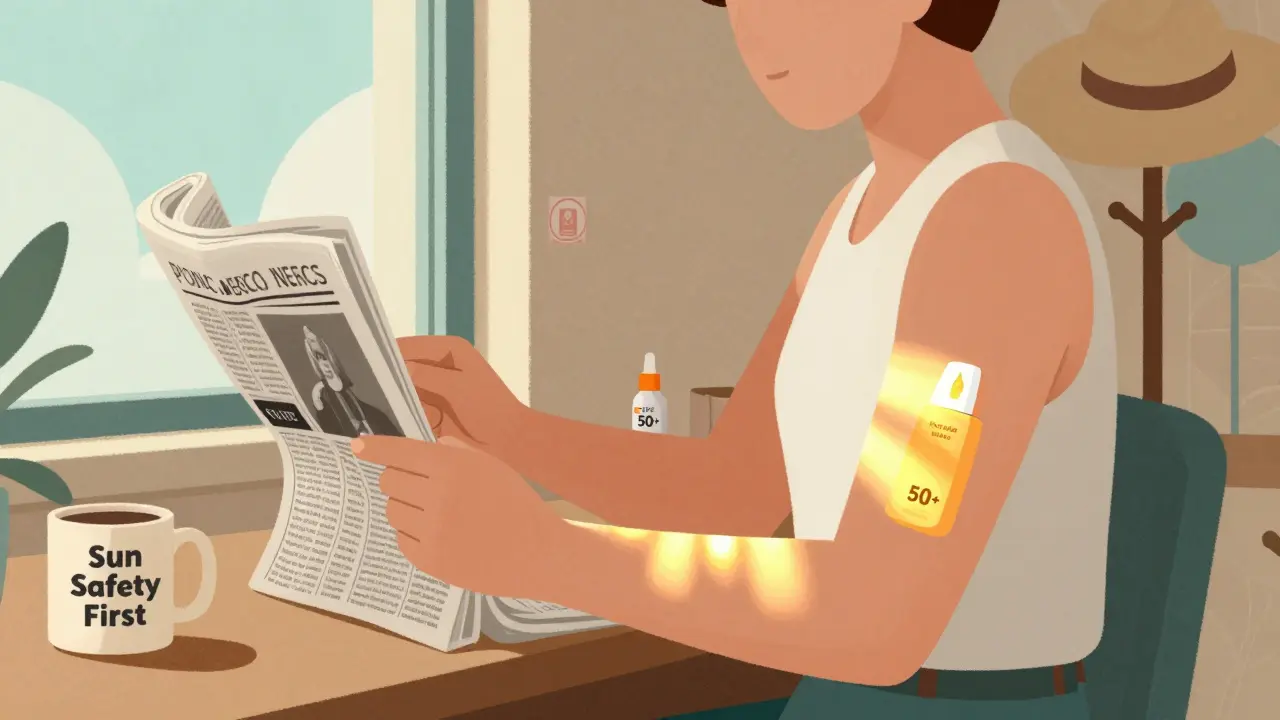
- Morning: Apply a thick layer of SPF 50+ mineral sunscreen to all exposed skin - including ears, neck, hands, and feet. Use about 1 ounce (a shot glass full) for your whole body.
- Before going out: Put on UPF 50+ clothing, wide-brimmed hat, and UV-blocking sunglasses. Don’t skip the hat. Your scalp and ears are common sites for skin cancer.
- Every 2 hours: Reapply sunscreen. If you sweat or swim, reapply immediately. Set phone reminders if you have to.
- At home: Install UV-blocking film on windows. Keep curtains closed during peak sun hours.
- At night: Check all medications and skincare products. If you’re on doxycycline, hydrochlorothiazide, or NSAIDs, confirm with your pharmacist if they’re photosensitizing.
What to Avoid
Some things seem harmless but aren’t:
- Tanning lotions: Dihydroxyacetone (DHA) in self-tanners gives only SPF 3 - barely any protection.
- Essential oils: Bergamot, lime, lemon, and other citrus oils can cause phototoxic reactions.
- Exfoliating acids: Glycolic, lactic, and salicylic acid increase sun sensitivity. Use them at night only.
- Skipping reapplication: Sunscreen wears off. It’s not magic.
What’s Next?
The future of photosensitivity care is personal. Researchers are moving toward tailored protection based on genetic risk, medication profiles, and even real-time UV sensors woven into clothing. Imagine a shirt that changes color when UV exposure is too high. Or apps that alert you when your local UV index hits danger levels. Climate change is making this more urgent - surface UV radiation has increased 1-2% per decade since the 1980s. What was once a niche concern is now a growing public health issue.
But you don’t have to wait for the future. Right now, you have everything you need: high-SPF sunscreen, UPF clothing, window film, and smart habits. It’s not about avoiding the sun forever. It’s about enjoying it safely - without pain, without damage, without fear.
Can you outgrow photosensitivity?
Sometimes, yes - especially if it’s caused by a temporary medication. Once you stop taking the drug, the sensitivity often fades over weeks or months. But if it’s due to an autoimmune condition like lupus, it’s usually lifelong. Even if you think you’ve outgrown it, always test your skin’s reaction before assuming you’re safe. A single sunburn can trigger long-term damage.
Is a higher SPF really worth it?
For someone with photosensitivity, absolutely. SPF 30 blocks 97% of UVB. SPF 50 blocks 98%. That extra 1% means your skin gets far less cumulative damage over time. With photosensitivity, small differences matter. High SPF, combined with physical blockers like zinc oxide, gives you the safest margin. Don’t settle for less.
Do I need to protect my eyes?
Yes. UV exposure increases your risk of cataracts and macular degeneration. Wear sunglasses labeled UV400 or 100% UV protection. Wrap-around styles are best because they block side rays. Don’t assume dark lenses mean protection - some cheap sunglasses have dark lenses but no UV filter. Always check the label.
Can I use tanning beds if I have photosensitivity?
Never. Tanning beds emit UVA and UVB radiation at levels far higher than the midday sun. For someone with photosensitivity, they can cause severe burns, blistering, and long-term skin damage in minutes. They also increase skin cancer risk dramatically. There is no safe use of tanning beds if you’re photosensitive.
What if I’m on a medication I can’t stop?
Then you double down on protection. Work with your doctor to confirm the drug’s photosensitizing potential. Then build a full defense: UPF 50+ clothing, SPF 50+ mineral sunscreen, UV film on windows, and avoid midday sun entirely. Some patients with chronic conditions like lupus or transplant recipients live this way - and they thrive. It’s not about giving up life. It’s about protecting it.


Write a comment