
Sulfonylurea Weight Gain Calculator
Estimated Weight Change
How Your Medication Compares
When you're managing type 2 diabetes, keeping blood sugar under control is just half the battle. The other half? Keeping your weight in check. That’s where sulfonylureas become tricky. These older, affordable diabetes pills have been helping millions since the 1950s, but they come with a quiet side effect that sneaks up on people: weight gain. And over time, that gain doesn’t just affect your clothes-it can undo progress on your blood sugar, heart health, and overall well-being.
How Sulfonylureas Work (and Why They Make You Gain Weight)
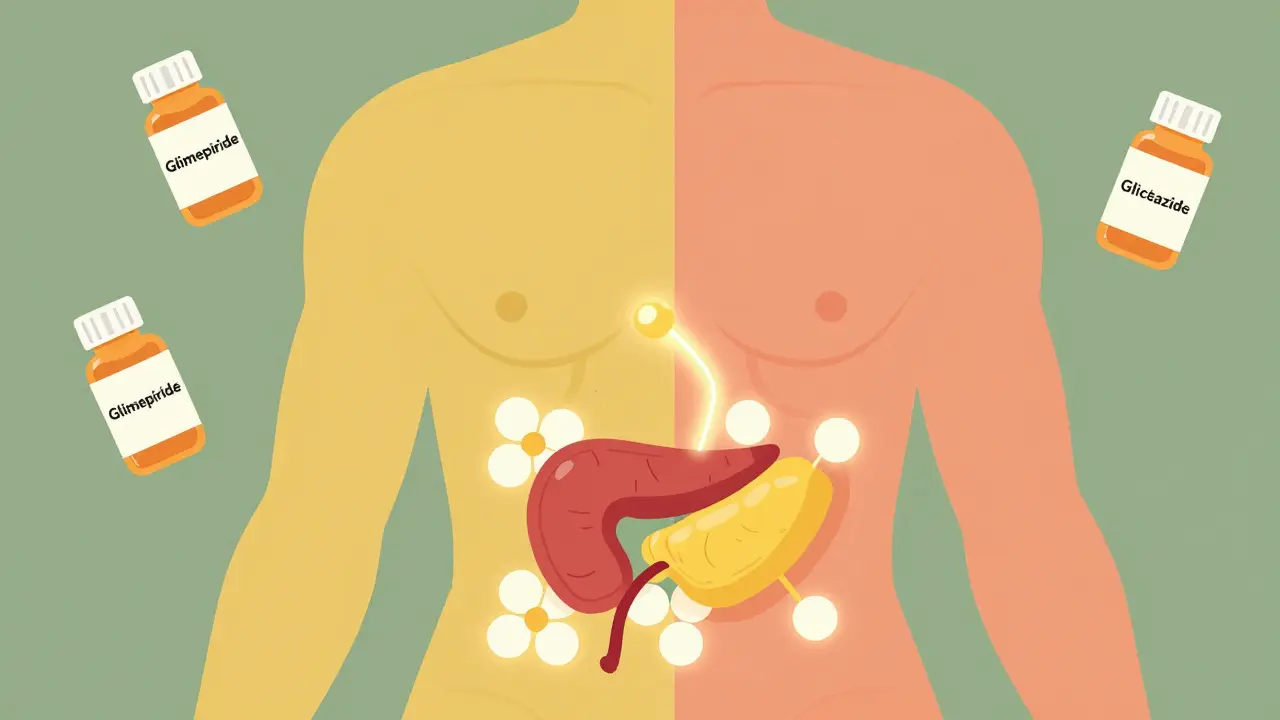
Sulfonylureas like glipizide, glyburide, and glimepiride work by forcing your pancreas to release more insulin. More insulin means your body pulls glucose out of your blood faster. That’s good for lowering sugar. But insulin isn’t just a glucose shuttle-it’s also a fat-storage hormone. When your body is flooded with extra insulin, it starts storing more fat, especially around your belly. It’s not about eating more. It’s about how your body responds to the drug.
Research from the 2016 Farmacia Journal study tracked 51 patients on different sulfonylureas and found weight gain wasn’t random. Nearly 26% gained measurable weight, and most of it-over 60%-happened in those taking glimepiride. Meanwhile, patients on gliclazide saw little to no gain. Why? Because different sulfonylureas bind to different receptors on fat cells. Glimepiride activates the ones that turn on fat-making pathways. Gliclazide? It doesn’t. That’s a huge difference, and most people don’t know it.
The Numbers Don’t Lie-But They’re Not the Whole Story
Clinical trials say you might gain 2 to 5 kilograms (4.5 to 11 pounds) on sulfonylureas over a year. That sounds manageable. But real-world data tells another story. On online forums like the American Diabetes Association Community and Reddit’s r/diabetes, users report averages closer to 4.5 to 6 kilograms over 18 months. One user, "Type2Warrior87," gained 12 pounds on glipizide despite eating the same and working out. Switched to metformin? Lost it all in six months.
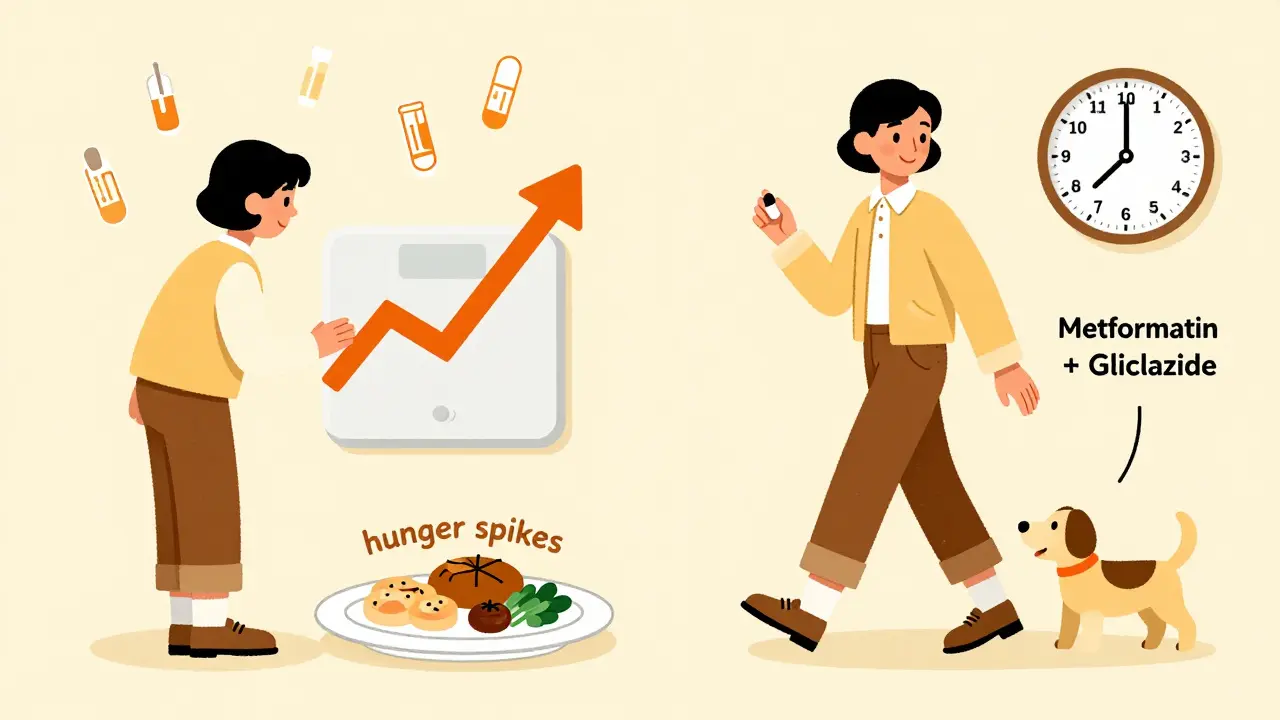
Why the gap? Clinical trials often involve people who are closely monitored, eat under guidance, and aren’t typical of the average patient. Real people are juggling jobs, stress, sleep issues, and food insecurity. Insulin spikes from sulfonylureas can trigger hunger, cravings, and even nighttime snacking. You don’t eat more because you’re greedy-you eat more because your body is screaming for fuel after being forced into overdrive.
Not All Sulfonylureas Are Created Equal
This is the part most doctors skip over. You can’t treat sulfonylureas like one big group. They’re not interchangeable. Here’s what the data shows:
- Glimepiride: Highest risk of weight gain. 62.7% of weight gain cases in the Farmacia study were on this drug.
- Glyburide: Strong insulin stimulator. Often linked to hypoglycemia and weight gain together.
- Glipizide: Moderate risk. Shorter-acting, so less constant insulin push.
- Gliclazide: The outlier. Multiple studies, including one from 1988, show it may cause no weight gain-or even slight weight loss. It’s not widely used in the U.S., but it’s common in Europe and Canada.
If you’re on a sulfonylurea and gaining weight, switching from glimepiride to gliclazide could be the fix. Not all doctors know this. But if you’ve been told "all sulfonylureas cause weight gain," that’s outdated. Gliclazide breaks the pattern.
How They Compare to Other Diabetes Drugs
Here’s where sulfonylureas really start to look outdated:
| Medication Class | Average Weight Change (12 Months) | Notes |
|---|---|---|
| Sulfonylureas (glimepiride, glyburide) | +2 to +5 kg (+4.5 to +11 lbs) | Insulin-driven fat storage |
| Gliclazide | 0 to -1 kg (neutral to slight loss) | Unique among sulfonylureas |
| Metformin | -2 to -3 kg (-4.5 to -6.5 lbs) | Weight-neutral or loss |
| GLP-1 RAs (semaglutide, liraglutide) | -3 to -7 kg (-6.5 to -15 lbs) | Reduces appetite, slows digestion |
| SGLT2 Inhibitors (empagliflozin, canagliflozin) | -2 to -5 kg (-4.5 to -11 lbs) | Excretes sugar through urine |
| TZDs (pioglitazone) | +1.5 to +4 kg (+3 to +9 lbs) | Fluid retention and fat gain |
Look at that. Metformin helps you lose weight. GLP-1 agonists like Ozempic and Wegovy help you lose a lot. SGLT2 inhibitors like Jardiance? Also weight loss. Sulfonylureas? You’re likely to gain. And yet, they’re still prescribed as a second-line drug after metformin in the U.S. Why? Cost. A month of glimepiride costs $5. A month of semaglutide? Over $1,000.
What Experts Are Saying
There’s a divide among top diabetes doctors. Dr. John B. Buse says sulfonylureas create a "therapeutic paradox"-you lower blood sugar but hurt your metabolic health. The American Association of Clinical Endocrinologists warns against using them in people with BMI over 35. But Dr. Ralph A. DeFronzo argues the weight gain is often overstated. His real-world data shows most people gain just 1.8 to 2.7 kg over two years.
The truth? It depends on the drug, the person, and the dose. Someone on low-dose gliclazide might gain nothing. Someone on high-dose glimepiride might gain 10 pounds in six months. And if they’re already overweight? That gain pushes them into higher-risk territory for heart disease and fatty liver.

How to Manage or Avoid Weight Gain on Sulfonylureas
If you’re stuck on a sulfonylurea-for cost, access, or insurance reasons-here’s what actually works:
- Switch to gliclazide if available. It’s not sold everywhere, but it’s approved in Canada and Europe. Ask your pharmacist.
- Combine with metformin. The Farmacia study showed patients on sulfonylurea + metformin gained 1.2 kg less than those on sulfonylureas alone.
- Move more. 150 minutes of brisk walking or cycling per week cuts weight gain by over 60%, according to VA trials.
- Try time-restricted eating. A 2024 ADA study found eating only during an 8-hour window (like 10 a.m. to 6 p.m.) reduced weight gain by 78% in sulfonylurea users.
- Track your weight monthly. If you gain more than 3% of your starting weight in six months, talk to your doctor. That’s your signal to switch.
The Bigger Picture: Why This Matters
Sulfonylureas are being phased out-not because they don’t work, but because they work too well at lowering sugar while damaging other parts of your health. The FDA added weight gain as a "common adverse reaction" in 2015. Sales have dropped from 26% of the oral diabetes market in 2015 to 18% in 2022. Meanwhile, GLP-1 drugs jumped from 8% to 22% in the same period.
But here’s the hard truth: 85% of low-income diabetes patients globally still rely on sulfonylureas. They’re cheap. They’re available. And for many, there’s no alternative. That’s why experts like Dr. Matthew Riddle say we shouldn’t abandon them-we should improve them. New combo pills like glyburide-metformin XR are now being tested to reduce weight gain. And research into modified sulfonylureas that don’t trigger fat storage is underway.
For now, the message is clear: If you’re on a sulfonylurea and gaining weight, it’s not your fault. It’s the drug. And you have options-even if they’re not the ones you were told to expect.
Do all sulfonylureas cause weight gain?
No. While most sulfonylureas like glimepiride and glyburide are linked to weight gain, gliclazide is a notable exception. Studies show it causes little to no weight gain, and in some cases, patients even lose a small amount of weight. This makes gliclazide a better choice if it’s available and appropriate for your condition.
Can I lose the weight gained from sulfonylureas?
Yes. Many people who switch from sulfonylureas to metformin, GLP-1 agonists, or SGLT2 inhibitors lose the extra weight within months. Lifestyle changes like regular exercise and time-restricted eating also help. The key is changing your medication or adding a weight-neutral drug like metformin to counteract the insulin-driven fat storage.
Why do doctors still prescribe sulfonylureas if they cause weight gain?
Cost and access. Sulfonylureas cost as little as $5 a month, while newer drugs like semaglutide can cost over $1,000. For patients without insurance or with limited income, sulfonylureas are often the only affordable option. They’re also very effective at lowering blood sugar, which is critical for preventing complications like nerve damage and kidney disease.
Is there a sulfonylurea that doesn’t cause weight gain?
Yes-gliclazide. Unlike glimepiride or glyburide, gliclazide doesn’t strongly activate fat cell receptors. Multiple studies, including one from 1988, show it doesn’t lead to weight gain and may even result in slight weight loss. It’s not widely available in the U.S., but it’s commonly used in Canada, Europe, and Australia.
Should I stop taking sulfonylureas if I’m gaining weight?
Don’t stop on your own. Talk to your doctor. If you’ve gained more than 3% of your body weight in six months, it’s time to reconsider. You may be able to switch to a different sulfonylurea like gliclazide, add metformin, or move to a newer drug if cost or insurance allows. Your doctor can help you balance blood sugar control with weight management.


Write a comment