
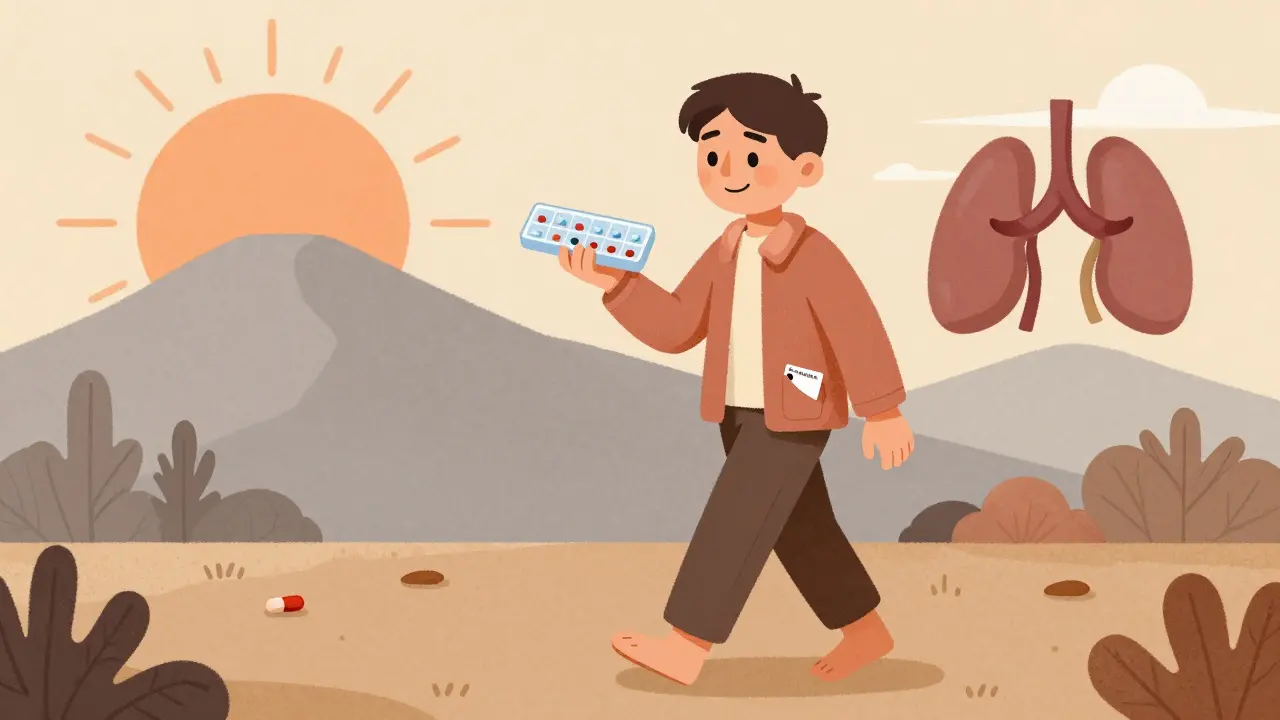
Stopping steroids suddenly can be dangerous-especially if you’ve been on them for more than a few weeks. Your body stops making its own cortisol because the medication is doing the job for you. If you cut the dose too fast, your adrenal glands can’t snap back in time. That’s when you risk steroid tapering failures: extreme fatigue, low blood pressure, joint pain, or even a full-blown adrenal crisis. Worse, your autoimmune disease might come roaring back, harder than before.
Why Steroid Tapering Isn’t Just a Suggestion
Glucocorticoids like prednisone, methylprednisolone, or hydrocortisone are powerful. They calm inflammation, silence overactive immune systems, and can be life-saving for conditions like rheumatoid arthritis, lupus, or inflammatory bowel disease. But they also shut down your body’s natural cortisol production. After three to four weeks of regular use, your adrenal glands go into standby mode. If you stop the pills cold, your body has no backup. That’s not a side effect-it’s a physiological emergency.
Studies show that 18% of emergency visits from recently tapered patients happen because they got sick-like the flu or an infection-and didn’t increase their steroid dose. Your body needs extra steroids during stress. If you’re not prepared, you could collapse. That’s why every patient on long-term steroids must know their “sick day rules.”
How Fast Should You Taper?
There’s no one-size-fits-all schedule. It depends on how long you’ve been on steroids, the dose, your disease, and how your body responds. But most protocols follow a clear pattern.
For people on high doses-over 20-40 mg of prednisone per day-doctors usually start with a faster drop: reduce by 5-10 mg every week until you hit 20 mg. Once you’re below that, the pace slows. From 20 mg down to 10 mg, drop by 5 mg every two weeks. Then, from 10 mg to 5 mg, cut by 2.5 mg every two weeks. After that, you’re in the final stretch: going from 5 mg to 2.5 mg, then 1.25 mg, then zero. This part can take weeks or even months.
Some patients on long-term therapy (six months or more) need 3-6 months to fully taper. Rushing this phase is the most common mistake. One patient on Reddit described dropping from 7.5 mg to 5 mg and getting hit with severe joint pain. They had to hold at 7.5 mg for two full weeks before trying again. That’s not failure-it’s normal.
What Happens When You Go Too Fast?
Withdrawal isn’t just feeling tired. It’s a real condition called glucocorticoid withdrawal syndrome (GWS). Symptoms include:
- Overwhelming fatigue (reported by 42% of patients)
- Joint and muscle pain (37%)
- Low appetite and nausea
- Sleep problems (29%)
- Anxiety or mood swings
These aren’t “in your head.” They’re signs your adrenal glands are struggling to restart. Some patients call this phase “taper tantrums”-a sudden return of symptoms that feel like the original disease flaring up. But it’s not the disease. It’s your body asking for more time.
And if you push through? You risk a disease rebound. For someone with ulcerative colitis, that means bloody diarrhea returning. For someone with polymyalgia rheumatica, it’s waking up stiff and in pain again. In some cases, the flare is worse than the original, forcing doctors to restart steroids at a higher dose than before.
Should You Switch to Hydrocortisone?
Some doctors suggest switching from prednisone to hydrocortisone before the final steps. Hydrocortisone is closer to your body’s natural cortisol and has a shorter half-life. The idea is that it might help your adrenal glands wake up faster.
But here’s the catch: most studies show it doesn’t make a big difference. A 2021 study found patients successfully tapered off prednisone directly without switching. The Australian Prescriber notes this approach has “limited evidence.” If your doctor suggests it, ask why. For most people, sticking with prednisone through the entire taper is simpler and just as effective.

What You Can Do to Make Tapering Easier
You can’t control your adrenal glands-but you can control your habits. Research shows lifestyle changes reduce withdrawal symptoms by up to 32%.
- Move gently. A 10-15 minute walk twice a day reduces joint stiffness by 57% compared to staying in bed. Swimming in warm water helps too.
- Practice calm. Ten minutes of daily meditation lowers anxiety symptoms by 43%. Breathing exercises work too.
- Stay consistent. Take your pills at the same time every day. Even a few hours off schedule can throw off your cortisol rhythm.
- Track symptoms. Keep a simple log: “Day 12: 5 mg, feeling tired, no pain.” This helps your doctor adjust your plan.
One patient on GoodRx successfully tapered from 40 mg to zero over 14 weeks by reducing 10% every two weeks. No major symptoms. Why? Because they didn’t rush. They listened to their body.
When to Call Your Doctor
Not every symptom means you need to stop tapering. But some signs are red flags:
- Feeling dizzy or faint when standing up
- Severe nausea or vomiting
- Confusion or trouble thinking clearly
- Fever over 101°F (38.3°C) with no other cause
These could mean adrenal insufficiency. If you feel this way, take your next dose immediately and call your doctor. Don’t wait. Adrenal crisis is rare-but it can be fatal if untreated.
What to Do After You Finish Tapering
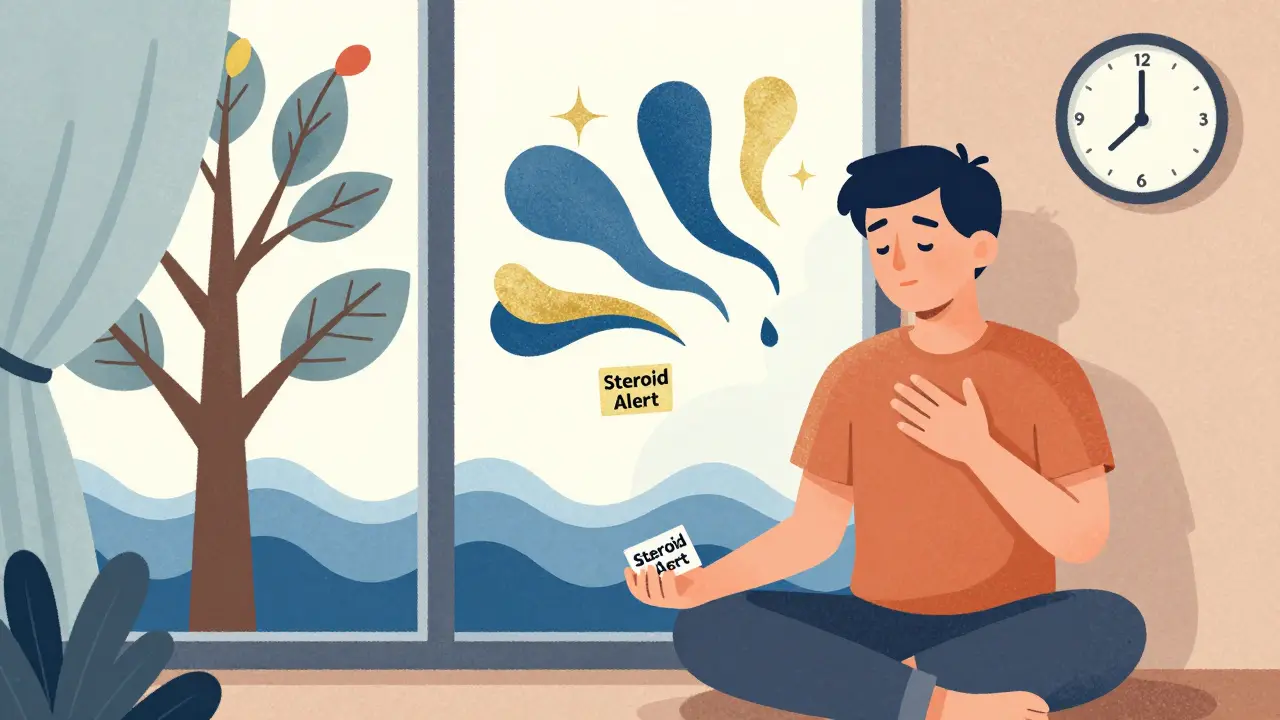
Even after you stop taking steroids, your body isn’t fully back to normal. Your adrenal glands can take up to 18 months to recover fully. That’s why you need to carry a steroid alert card for at least a year. It’s a small plastic card (or even a phone note) that says: “I’ve taken systemic steroids. In an emergency, I need hydrocortisone.”
Emergency responders don’t know your history. If you’re in a car accident or get pneumonia, they might not realize you’re at risk. The card saves lives.
Also, remember your sick day rules. If you get sick-even a bad cold-double your last steroid dose for a few days. If you’re vomiting or can’t keep food down, go to urgent care. Don’t try to tough it out.
The New Way: Tapering Based on Disease Activity
Old guidelines said: “Reduce by 5 mg every two weeks, no matter what.” New ones say: “Taper based on how your disease is doing.”
For example, if you have rheumatoid arthritis, your doctor might use a DAS28 score (a measure of joint swelling and pain) to decide when to reduce. If your score stays low for three months, you can taper faster. If it creeps up, you hold the dose. This personalized approach is now recommended by the American College of Rheumatology and the European League Against Rheumatism.
Some clinics are even testing blood markers like CRH stimulation or morning cortisol levels to predict if your adrenal glands are ready. But these tools are still mostly in research centers-not your local pharmacy.
What About New Drugs? Will Steroids Go Away?
Biologics and targeted therapies are changing autoimmune care. They’re expensive, but they don’t suppress your whole immune system like steroids do. Many patients hope to ditch steroids completely.
But here’s the truth: steroids still win when speed matters. If you’re having a sudden flare-your kidneys are failing, your lungs are inflamed, your vision is blurring-nothing works as fast as prednisone. Even in 2025, steroids remain the first-line rescue tool. That means tapering won’t disappear. It’s here to stay.
Final Advice: Patience Is Your Best Medicine
Steroid tapering isn’t a race. It’s a careful dance between your body’s recovery and your disease’s stability. Rushing it risks hospitalization. Moving too slow feels frustrating-but it’s safer.
Listen to your body. Keep your doctor in the loop. Track your symptoms. Use movement and mindfulness to ease the transition. And never, ever skip your sick day rules.
Thousands of people have successfully tapered off steroids. You can too. But only if you treat it like the medical process it is-not a chore to get through.
Can I stop steroids cold turkey if I’ve only been on them for two weeks?
If you’ve been on steroids for less than three weeks, your body likely hasn’t shut down cortisol production enough to cause adrenal insufficiency. Most guidelines say you can stop without a taper in this case. But always check with your doctor first. Even short-term use can trigger a rebound in autoimmune conditions like vasculitis or lupus.
Why do I feel worse when I lower my steroid dose, even though my disease is under control?
That’s glucocorticoid withdrawal syndrome, not a disease flare. Your body is adjusting to making its own cortisol again. Symptoms like fatigue, joint pain, and mood changes are common during tapering, especially below 10 mg of prednisone. It’s not your disease coming back-it’s your adrenal glands waking up. Slowing the taper or holding at your current dose for a couple of weeks often helps.
Is it safe to use over-the-counter supplements to help with steroid withdrawal?
No supplements have been proven to replace or speed up adrenal recovery. Vitamins, herbs, or adrenal support blends won’t restart your cortisol production. Some, like licorice root, can even interfere with steroid metabolism. Stick to proven methods: slow tapering, gentle exercise, and stress management. If you’re considering supplements, talk to your doctor first.
How do I know if my adrenal glands are working again?
There’s no simple home test. Doctors can check your morning cortisol level or do a CRH stimulation test, but these aren’t routine. Most often, recovery is judged by how you feel. If you’ve been off steroids for 6-12 months and have no withdrawal symptoms-even during stress-you’re likely recovered. If you’ve had an adrenal crisis in the past, your doctor may recommend long-term monitoring.
What if I miss a dose during tapering?
If you miss one dose, take it as soon as you remember-if it’s within a few hours. If it’s been longer, don’t double up. Just take your next scheduled dose. Don’t panic. One missed dose rarely causes crisis. But if you miss multiple doses or feel unwell, contact your doctor. Consistency matters more than perfection.
Are there apps that help with steroid tapering?
Yes. Apps like the Prednisone Taper Assistant (launched in 2023) let you log your dose, symptoms, and mood. They adjust your schedule based on your input and send reminders. In pilot studies, users who used the app had 82% better adherence than those using paper schedules. These tools aren’t magic, but they help you stay on track.
Can I taper steroids if I have diabetes or high blood pressure?
Yes-but it’s more complex. Steroids raise blood sugar and blood pressure. As you taper, those numbers may drop suddenly. Your doctor will likely adjust your diabetes or blood pressure meds as your steroid dose goes down. Monitor your levels closely and report big changes. Tapering can improve these conditions long-term, but it needs careful management in the short term.


Write a comment