
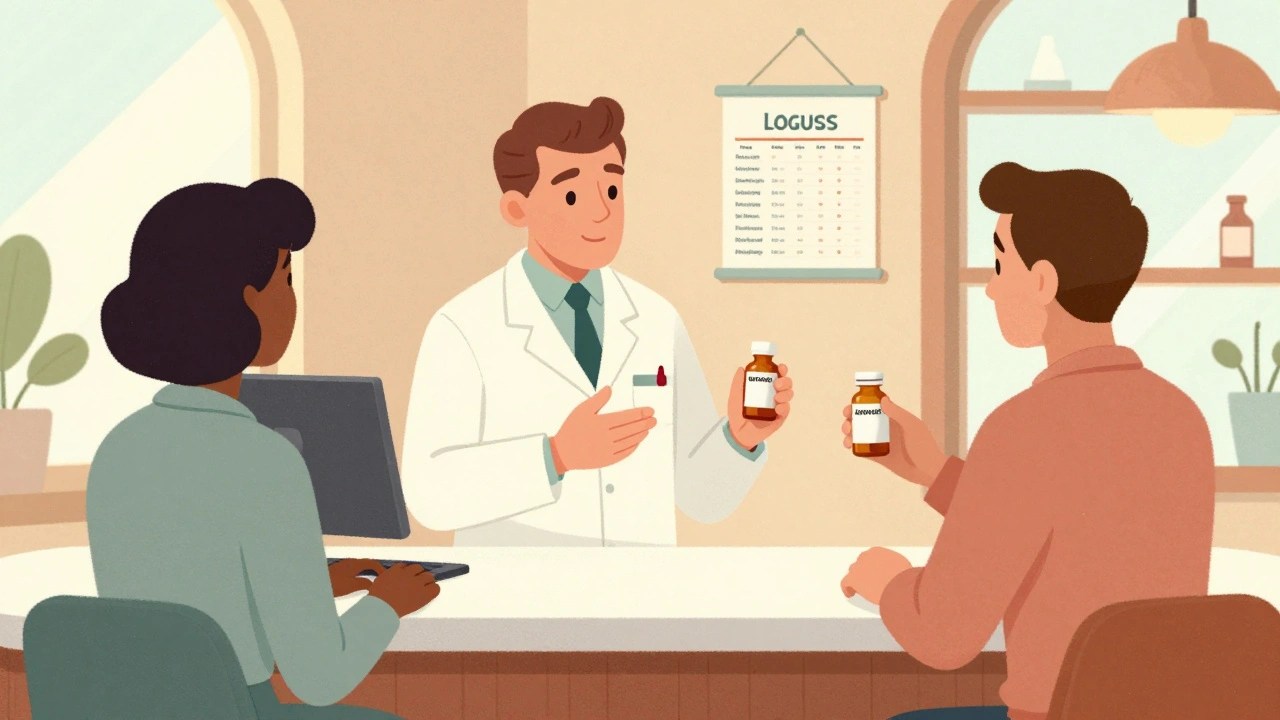
When a patient with multiple sclerosis switches from a $78,000-a-year brand-name drug to a $45,000 generic version, it’s not just a cost saving-it’s a clinical decision with real consequences. Specialty pharmacies handle medications like these every day: high-cost, complex drugs for chronic conditions such as cancer, HIV, hepatitis C, and autoimmune diseases. Unlike your local pharmacy, where 90% of prescriptions are generics, specialty pharmacies often deal with drugs that have no generic alternative at all. But when generics-or biosimilars-do become available, the practice of managing them gets complicated fast.
What Makes Specialty Pharmacy Different?
Specialty pharmacy isn’t just about expensive drugs. It’s about drugs that demand special handling. Many are biologics, made from living cells, not chemicals. These need refrigeration between 2°C and 8°C. They’re given by injection or infusion, not swallowed as a pill. And they require constant monitoring: blood tests, symptom tracking, and frequent check-ins with pharmacists. These aren’t medications you pick up and go. They’re part of a care plan.Traditional pharmacies swap out brand-name drugs for generics whenever they can. In specialty pharmacy, that’s rare. As of 2023, over 80% of specialty drugs still have no generic version. When they do, it’s not automatic. A generic glatiramer acetate (Copaxone) might cut costs by nearly 40%, but switching a patient who’s stable on the brand requires careful thought. Why? Because even if the active ingredient is identical, the excipients-fillers, stabilizers, dyes-can be different. And for some patients, those differences matter.
Generics Aren’t All the Same
The FDA says generics must be bioequivalent to the brand. That means they deliver the same amount of drug into the bloodstream at the same rate. For most drugs, that’s enough. But for narrow therapeutic index (NTI) drugs-where small changes in blood levels can cause side effects or treatment failure-switching isn’t so simple.Levothyroxine, used for hypothyroidism, is a classic example. Patients on a specific brand may feel fine. Then they get switched to a different generic manufacturer. Suddenly, they’re fatigued, gaining weight, or having heart palpitations. Their TSH levels shift. Pharmacists tell them it’s the same drug. But patients don’t care about bioequivalence studies. They care that they feel different.
Specialty pharmacies see this daily. A 2022 survey found that 78% of staff spent significant time calming patient fears after a generic switch. One patient on a specialty generic for rheumatoid arthritis reported rashes and joint pain after switching from one manufacturer to another. The pharmacist checked the FDA’s bioequivalence data-it was fine. But the patient’s body reacted differently. That’s not a failure of science. It’s a reminder that medicine isn’t just chemistry. It’s biology. And biology is personal.
Biosimilars: The Next Frontier
Biosimilars are the generic version of biologics. They’re not exact copies-because biologics are too complex to replicate perfectly. But they’re highly similar, with no clinically meaningful differences in safety or effectiveness. The FDA approved its first interchangeable biosimilar, Semglee (for insulin glargine), in 2021. By late 2023, 35 biosimilars were on the market, including options for Humira, Enbrel, and Remicade.But here’s the catch: just because a biosimilar is approved doesn’t mean it’s used. PBMs (Pharmacy Benefit Managers) often place them on higher cost tiers, making patients pay more out-of-pocket than they would for the brand. Some even require step therapy-forcing patients to try the brand first. That’s counterintuitive. Why force someone to pay $20,000 for a drug when a biosimilar costs $12,000 and works just as well?
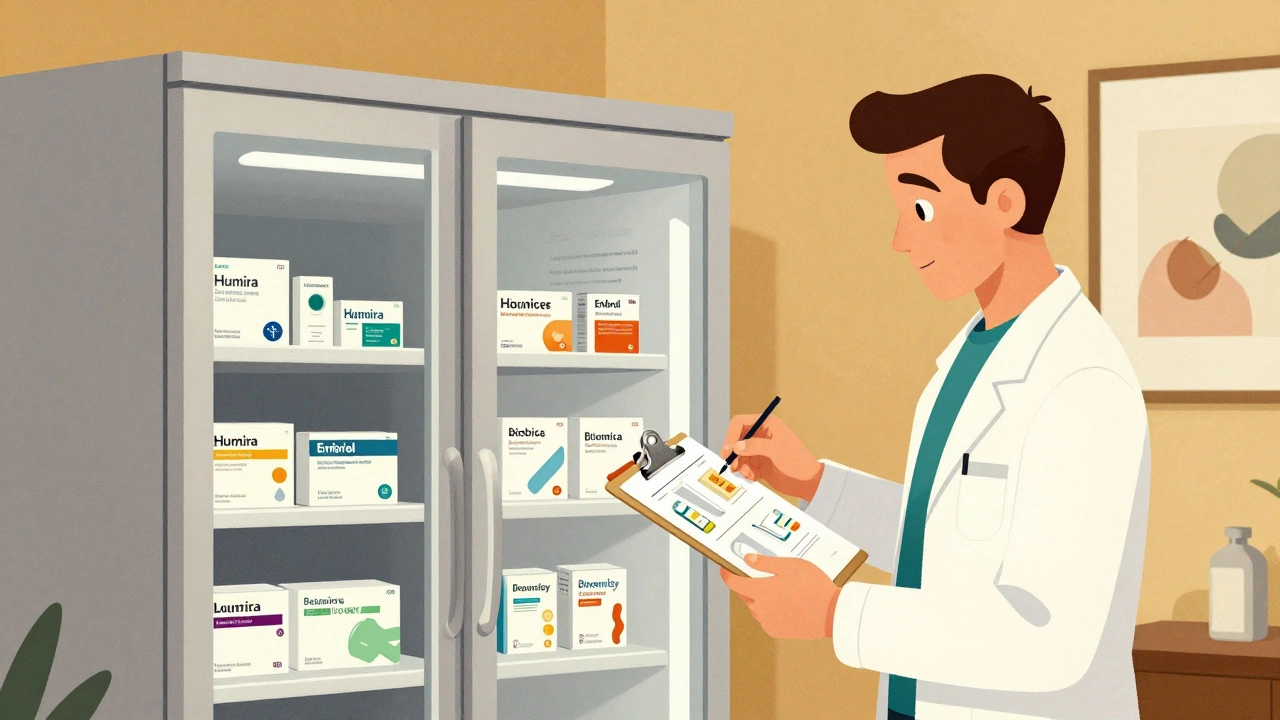
Specialty pharmacies are on the front lines of this battle. They’re the ones educating patients, navigating prior authorizations, and explaining why a biosimilar isn’t just a “cheap version.” They’re also managing inventory for multiple manufacturers of the same drug. One specialty pharmacy might stock three different biosimilars for Humira, each with different storage requirements, labeling, and billing codes. It’s a logistical nightmare.
Operational Headaches: PBMs and Reimbursement
Specialty pharmacies operate on razor-thin margins. Many are paid less by PBMs than they pay to buy the drug. That’s not a typo. Some specialty drugs are reimbursed below acquisition cost. That’s unsustainable. To make up the difference, PBMs track something called the Generic Dispensing Ratio (GDR). If a specialty pharmacy dispenses fewer than 80% generics, they get penalized-even if 90% of their drugs have no generic version.Imagine a pharmacy that only dispenses biologics for cancer. There are no generics. But the PBM still demands a 75% GDR. The pharmacy is labeled “non-compliant.” Their contract is at risk. This isn’t about patient care. It’s about financial metrics that ignore clinical reality.
And then there’s supply chain chaos. Sourcing generics from multiple distributors means inconsistent packaging, different expiration dates, and mismatched inventory systems. One batch of a generic hepatitis C drug might come in vials. Another in pre-filled syringes. Both are the same drug. But for a patient on a complex regimen, changing the delivery system can cause confusion, delays, and errors.
What Should Specialty Pharmacies Do?
There’s no one-size-fits-all solution. But best practices are emerging:- Start with your top therapies. Focus on the 5-10 drugs that make up 70% of your volume. Identify which have generics or biosimilars. Align substitutions with clinical guidelines.
- Standardize. Pick one manufacturer for each generic or biosimilar. Avoid juggling five versions of the same drug. It reduces errors and simplifies training.
- Document exceptions. Some patients can’t switch. Maybe they’re allergic to a dye. Maybe they had a bad reaction before. Track that in your system. Don’t rely on memory.
- Monitor after switch. For NTI drugs, check labs within 30 days. Call the patient. Ask how they feel. Don’t assume everything’s fine.
- Educate, don’t just inform. Don’t hand a patient a sheet of paper. Sit down. Show them the difference in packaging. Explain why the color changed. Answer their fears. This isn’t a transaction. It’s a relationship.
McKesson Medical-Surgical recommends working with a single, reliable distributor for generics. Why? Because complexity kills efficiency. One distributor means one set of labels, one set of training materials, one point of contact for recalls. That’s not just smart logistics-it’s patient safety.
The Patient Perspective
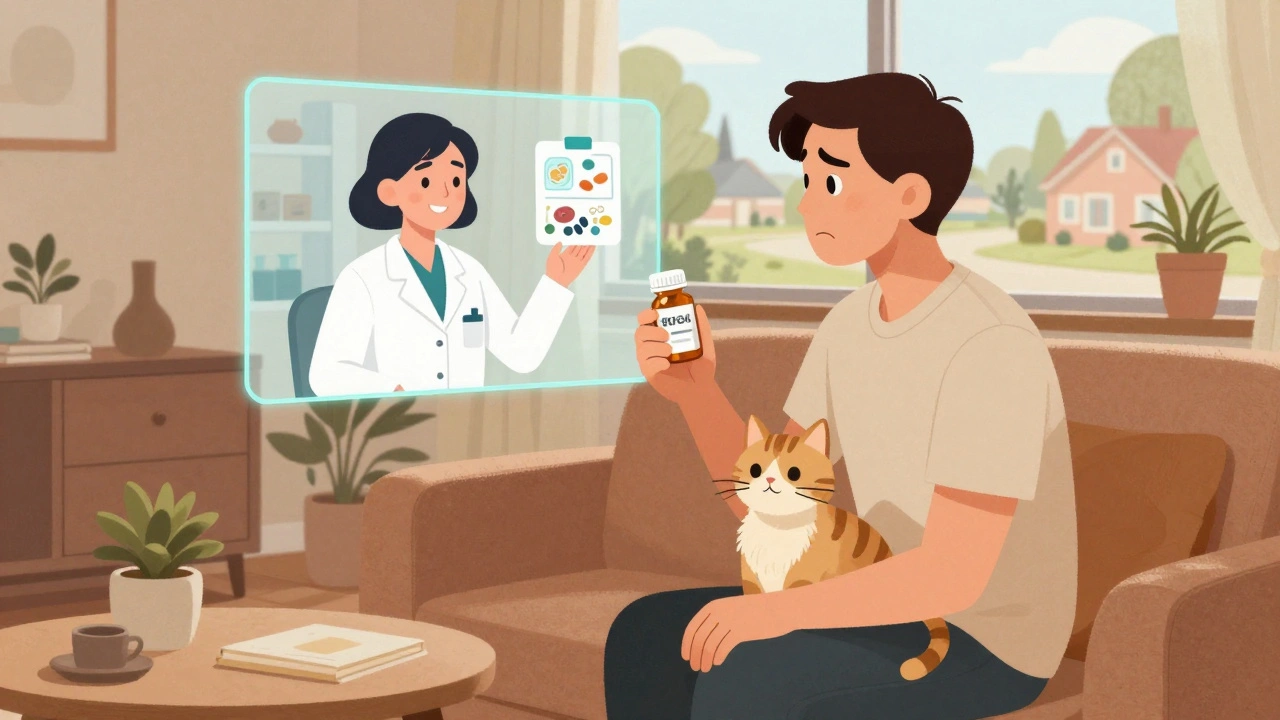
Patients don’t care about FDA approvals or PBM contracts. They care about whether their treatment works and whether they can afford it. Many are grateful for lower costs. Others feel betrayed when their medication changes color or shape. One Reddit user wrote: “I’ve been on the same MS drug for 8 years. Last month, I got a different pill. I panicked. I thought I had the wrong drug. My pharmacist said it’s the same. But I felt worse. Now I’m scared to take it.”Specialty pharmacies have the unique power to turn that fear into trust. They’re not just dispensers. They’re care coordinators. They’re the ones who call patients every week to ask if they’re having side effects. They’re the ones who help with insurance appeals. They’re the ones who remember that a pill is more than a chemical-it’s a lifeline.
The Road Ahead
More biologics will lose patent protection over the next five years. Humira biosimilars are now available. More are coming. The Congressional Budget Office estimates biosimilars could save the U.S. system $54 billion over the next decade. But savings won’t happen unless the system changes.Specialty pharmacies need fair reimbursement. They need PBMs to stop penalizing them for not having generics. They need clear rules for biosimilar substitution. And they need support to manage the growing complexity.
For patients, the future should be simpler: lower costs, same outcomes, fewer surprises. That’s possible. But only if pharmacy practice evolves-not just to cut costs, but to protect care.
Can generic drugs be substituted for specialty medications safely?
Yes-but only after careful evaluation. For most specialty drugs, generics don’t exist yet. When they do, substitution is safe for most patients, especially if the drug isn’t narrow therapeutic index (NTI). For NTI drugs like levothyroxine or certain immunosuppressants, switching can cause clinical instability. Always review patient history, check for prior adverse reactions, and monitor closely after the switch.
Why do some patients feel worse after switching to a generic?
The active ingredient is the same, but inactive ingredients (excipients) like dyes, fillers, or preservatives can differ between manufacturers. Some patients are sensitive to these changes. For example, a dye in one generic version might trigger a rash, or a different binder might alter how quickly the drug is absorbed. This doesn’t mean the generic is unsafe-it means individual biology varies. Patient reports should be taken seriously, even if lab results look normal.
What’s the difference between a generic and a biosimilar?
Generics are chemically identical copies of small-molecule drugs, like metformin or lisinopril. Biosimilars are highly similar-but not identical-copies of complex biologic drugs, like Humira or Enbrel. Because biologics are made from living cells, exact replication is impossible. Biosimilars must show no clinically meaningful differences in safety or effectiveness, but they may have minor structural variations. They’re not interchangeable unless FDA-designated as such.
Why do PBMs penalize specialty pharmacies for low generic dispensing rates?
PBMs use Generic Dispensing Ratio (GDR) as a cost-control metric, assuming all pharmacies should dispense generics when possible. But specialty pharmacies often handle drugs with no generic alternatives-like biologics for cancer or MS. Penalizing them for this ignores clinical reality. It’s a flawed metric that prioritizes financial targets over patient needs. Specialty pharmacies need tailored performance measures that reflect their unique drug portfolio.
How can specialty pharmacies improve adoption of biosimilars?
Start with education-for both patients and providers. Many clinicians and patients still believe biosimilars are inferior. Share FDA data, real-world outcomes, and cost savings. Standardize your inventory to one manufacturer per biosimilar. Work with PBMs to negotiate better formulary placement. Track patient outcomes after switch. And never assume a patient understands why they’re being switched-explain it clearly, in plain language.


Write a comment