

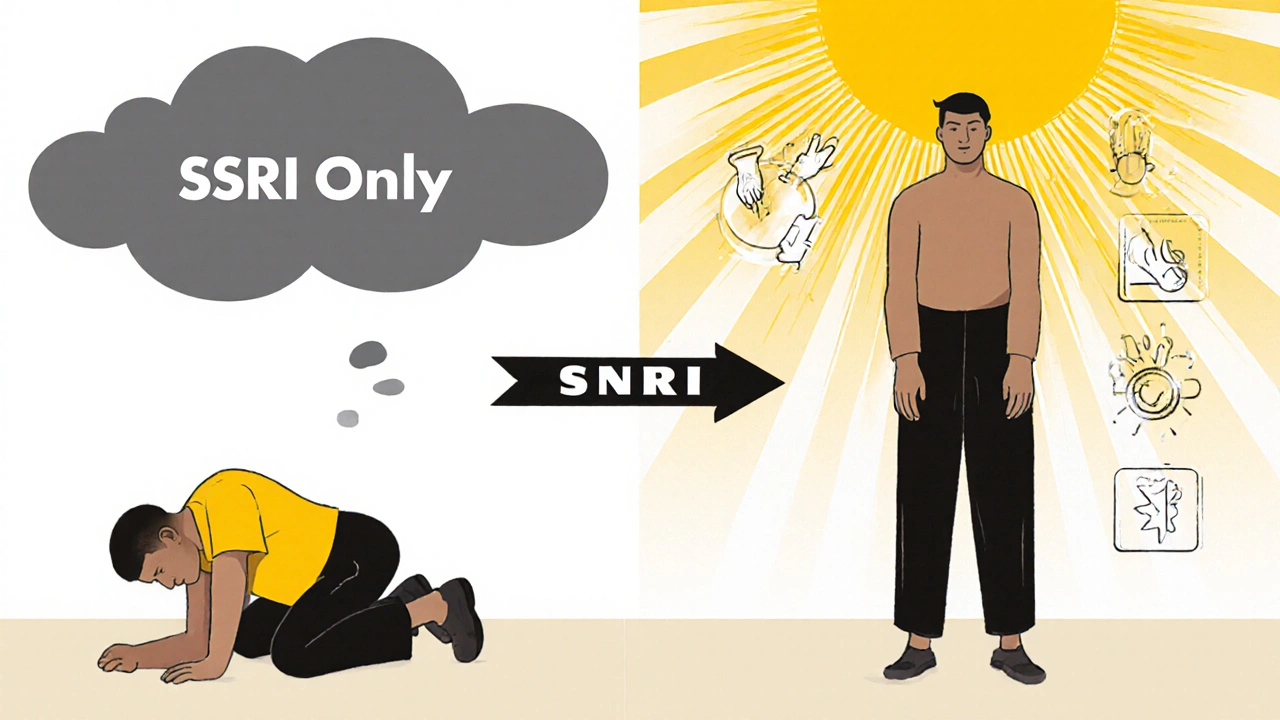
When depression doesn’t respond to the first medication you try, it’s not always because you’re doing something wrong. Sometimes, the issue is that your brain needs a different kind of support. That’s where SNRI medications come in. Unlike older antidepressants that only target serotonin, SNRIs work on two key brain chemicals at once: serotonin and norepinephrine. This dual action makes them especially useful for people who struggle with depression along with fatigue, brain fog, or chronic pain.
What Exactly Are SNRIs?
SNRI stands for Serotonin and Norepinephrine Reuptake Inhibitor. These drugs block the brain’s ability to reabsorb serotonin and norepinephrine after they’re released. This lets more of these neurotransmitters stay active in the spaces between nerve cells, helping improve mood, energy, focus, and even pain perception.The first SNRI approved in the U.S. was venlafaxine (Effexor XR) in 1993. Since then, four others have joined the list: duloxetine (Cymbalta, Drizalma Sprinkle), desvenlafaxine (Pristiq), levomilnacipran (Fetzima), and venlafaxine extended-release. Each has slightly different dosing and side effect patterns, but they all follow the same core mechanism.
One important detail: venlafaxine and desvenlafaxine act mostly like SSRIs at low doses (under 75 mg/day). Only when the dose goes up do they start strongly blocking norepinephrine reuptake. Duloxetine, on the other hand, affects both chemicals evenly from the start. This matters because it means your doctor might start you on a lower dose and adjust based on how you respond.
Why Choose SNRIs Over Other Antidepressants?
SSRIs like sertraline or escitalopram are usually the first choice for depression. They’re effective for many and tend to have fewer side effects. But if you’ve tried one or two SSRIs and still feel stuck-low energy, no motivation, persistent body aches-SNRIs often become the next step.Studies show SNRIs have response rates between 55% and 65% for major depression, similar to SSRIs. But where they really stand out is in cases where depression comes with physical symptoms. For example:
- Duloxetine is FDA-approved for diabetic nerve pain, fibromyalgia, and chronic back pain.
- Patients with fibromyalgia who take duloxetine report about a 50% drop in pain intensity, compared to only 20-25% with placebo.
- People with depression and chronic pain are more likely to feel better on an SNRI than on an SSRI alone.
Dr. David Mischoulon from Massachusetts General Hospital says SNRIs are particularly helpful when fatigue and pain are part of the picture. If your depression leaves you exhausted and achy, an SNRI might be the right tool.
How Long Does It Take to Work?
Don’t expect instant results. Like most antidepressants, SNRIs take time. Most people start noticing small improvements after 4 to 6 weeks. For some, it takes up to 12 weeks to feel the full effect. This isn’t unusual-it’s the same timeline for SSRIs.What you might notice first: better sleep, less irritability, or more clarity during the day. Energy levels often improve before mood lifts completely. If you don’t feel anything after 8 weeks, talk to your doctor. It doesn’t mean you’re broken-it just means it might be time to adjust the dose or switch medications.
Dosing and How It’s Adjusted
Doctors don’t start you on the highest dose. They begin low and go slow. For example:- Venlafaxine XR: starts at 37.5 mg daily, increases every 4-7 days up to 75-225 mg
- Duloxetine: starts at 30 mg daily, often increased to 60 mg after a week, up to 120 mg if needed
- Desvenlafaxine: starts at 50 mg daily, can go up to 100 mg
- Levomilnacipran: starts at 40 mg, increases to 80-120 mg
Why the slow start? To reduce side effects. Nausea is the most common one-about 25% of people on duloxetine feel sick at first. But for most, it fades after 1-2 weeks. Taking the pill with food helps. If nausea sticks around, your doctor might lower the dose or switch you to another SNRI.
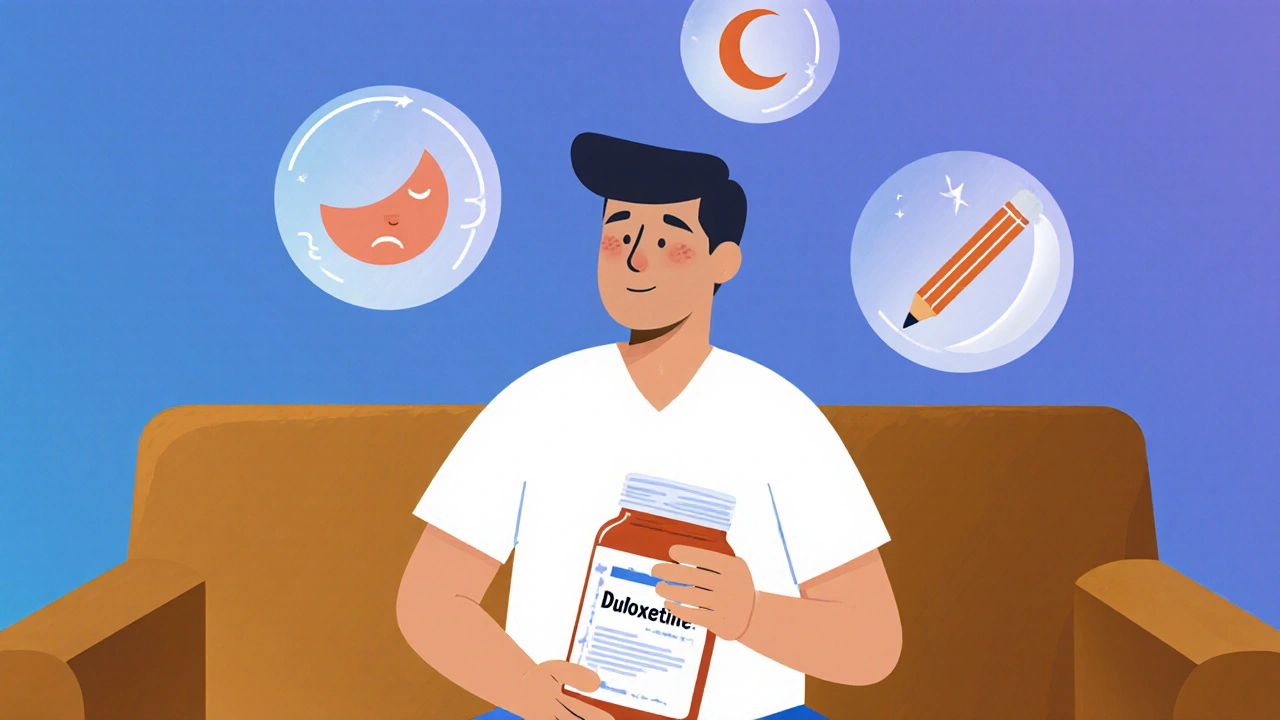
Side Effects and Risks
All medications have trade-offs. SNRIs are generally better tolerated than older antidepressants like tricyclics, which cause dry mouth, constipation, and drowsiness in over half of users. SNRIs cause these in only 10-20% of people.Still, here are the side effects you should watch for:
- Nausea: Most common at the start, usually goes away
- Dizziness: Especially when standing up quickly-move slowly
- Insomnia: Take it in the morning if this happens
- Sexual side effects: Lowered libido, delayed orgasm-happens in 20-30% of users
- Blood pressure rise: SNRIs can increase blood pressure in 2-3% of users. Your doctor will check it every few weeks at first
- Withdrawal symptoms: If you stop suddenly, you might get brain zaps, dizziness, or flu-like feelings
Stopping SNRIs cold turkey is risky. A 2021 study found that tapering slowly over 4-6 weeks cuts withdrawal symptoms from 28% down to just 9%. Always work with your doctor to come off safely.
SNRIs vs. SSRIs: What’s the Real Difference?
It’s not as simple as “one is better.” SSRIs are still first-line because they’re gentler on the body. But SNRIs aren’t just “SSRIs with extra power.” They’re different tools for different needs.Here’s what the data says:
| Feature | SSRIs | SNRIs |
|---|---|---|
| Response rate for depression | 50-60% | 55-65% |
| Best for fatigue or low energy | Moderate | Strong |
| Best for chronic pain | Weak | Strong |
| Common side effects | Nausea, sexual issues | Nausea, dizziness, BP rise |
| Withdrawal risk | 15-25% | 20-30% |
| Typical first choice? | Yes | No-usually second-line |
So if your main problem is sadness and anxiety, an SSRI is still a solid first try. But if you’re also dealing with constant pain, low energy, or trouble concentrating, SNRIs often deliver better results.
Real People, Real Experiences
Online forums like Reddit and Drugs.com are full of stories. One user wrote: “I tried four SSRIs. Nothing worked. Then I started duloxetine. My pain vanished. I slept through the night for the first time in years.” Another said: “I got brain zaps when I stopped too fast. Never do that again.”On Drugs.com, duloxetine has a 6.1/10 rating. The positives? “Finally effective after 3 failed SSRIs.” The negatives? “Terrible nausea at first,” and “withdrawal was hell.”
A 2022 survey found that 58% of SNRI users stayed on the medication past six months. That’s lower than SSRIs (65%), mostly because side effects made people quit-not because the drug didn’t work.
Combining SNRIs With Therapy
Medication alone isn’t always enough. A 2022 clinical trial found that people who took an SNRI and did cognitive behavioral therapy (CBT) had a 73% chance of achieving full remission. Those on medication only? Only 48%.Therapy helps you build skills to manage negative thoughts, cope with stress, and change behaviors that feed depression. Medication helps your brain function better. Together, they’re stronger than either alone.
What’s New in 2025?
The field is moving fast. In 2022, the FDA approved Drizalma Sprinkle-a new form of duloxetine that comes as granules you can sprinkle on food. It’s easier for people who have trouble swallowing pills, and it’s now approved for kids with anxiety.Researchers are also looking at how your genes affect how you respond to SNRIs. Variants in the CYP2D6 and CYP2C19 genes can tell doctors if you’re likely to metabolize the drug too fast or too slow. Testing isn’t routine yet, but it’s becoming more common in specialized clinics.
Another promising area: combining SNRIs with digital tools. A 2023 study showed that using a cognitive training app alongside duloxetine improved focus and memory in depressed patients by 35% more than the drug alone.
Still, about 30-40% of depression cases don’t respond to any medication, including SNRIs. That’s why new treatments like ketamine-assisted therapy are being tested. But for now, SNRIs remain one of the most reliable second-line options.
When to Consider SNRIs
You might want to talk to your doctor about SNRIs if:- You’ve tried at least one SSRI and didn’t get enough relief
- You have depression plus chronic pain, fibromyalgia, or nerve pain
- You feel mentally foggy, exhausted, or unmotivated despite trying other meds
- You’re okay with potentially more side effects for better results
They’re not for everyone. If you have uncontrolled high blood pressure, liver problems, or a history of seizures, your doctor may avoid them.
Final Thoughts
SNRIs aren’t magic pills. They’re tools-useful, sometimes life-changing, but not without trade-offs. They work best when used with care: started low, increased slowly, paired with therapy, and stopped gradually. If you’ve hit a wall with other antidepressants, they might be the next step. But don’t rush into them. Talk to your provider, track your symptoms, and give it time.What matters most isn’t which drug you take-it’s that you keep trying until you find what works for you.
Are SNRIs better than SSRIs for depression?
Not necessarily for pure depression. SSRIs are still the first choice because they’re gentler. But SNRIs can be more effective if you also have fatigue, low energy, or chronic pain. Studies show only a small edge in depression response-about 5-10% better-but a much bigger advantage when pain is involved.
How long do SNRI side effects last?
Most side effects like nausea, dizziness, or insomnia appear in the first 1-2 weeks and fade as your body adjusts. Sexual side effects and increased blood pressure may last longer. If side effects don’t improve after 4 weeks or get worse, talk to your doctor about adjusting the dose or switching.
Can I stop taking SNRIs if I feel better?
Don’t stop suddenly. Even if you feel fine, stopping abruptly can cause withdrawal symptoms like brain zaps, dizziness, nausea, or anxiety. Always taper off slowly under your doctor’s guidance-usually over 4 to 6 weeks. Most people need to stay on SNRIs for at least 6-12 months after symptoms improve to prevent relapse.
Do SNRIs cause weight gain?
Unlike some older antidepressants, SNRIs are less likely to cause weight gain. In fact, some people lose a small amount of weight at first due to reduced appetite. Long-term weight changes vary by person, but overall, SNRIs have a lower risk of weight gain than SSRIs like paroxetine or mirtazapine.
Is it safe to take SNRIs long-term?
Yes, for most people. SNRIs have been used for over 30 years with no evidence of lasting organ damage. Long-term use requires monitoring blood pressure and liver function, especially if you’re on higher doses. Many patients stay on them for years with no issues, especially when benefits outweigh side effects.
Can SNRIs be used for anxiety?
Yes. All FDA-approved SNRIs are also used off-label or approved for anxiety disorders like generalized anxiety disorder (GAD), social anxiety, and panic disorder. Duloxetine and venlafaxine are commonly prescribed for anxiety, especially when it’s tied to physical symptoms like muscle tension or restlessness.
What happens if an SNRI doesn’t work?
If you’ve tried one SNRI at the right dose for 8-12 weeks and still don’t improve, your doctor may try a different SNRI or switch to another class like bupropion or mirtazapine. Combination therapy (two antidepressants) or adding therapy is also common. For treatment-resistant cases, newer options like ketamine or transcranial magnetic stimulation (TMS) may be considered.


Write a comment