
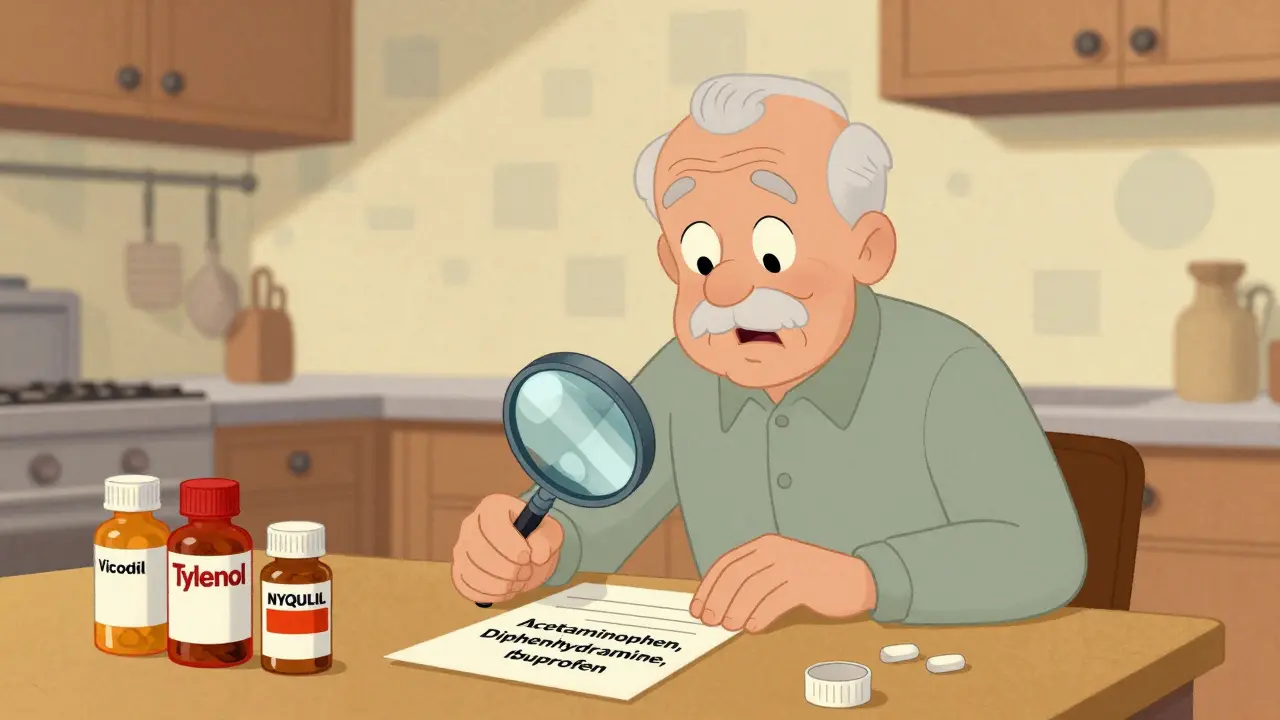
Every year, tens of thousands of people end up in the emergency room because they didn’t realize they were taking the same medicine twice. Not because they were careless - but because they didn’t know acetaminophen was in their painkiller, their cold medicine, and their sleep aid. This isn’t rare. It’s common. And it’s preventable.
What Are Double Ingredients?
Double ingredients happen when you take two or more medications that contain the same active ingredient. It’s not about drug interactions - it’s about duplication. You might be taking a prescription painkiller like Vicodin, which has acetaminophen, and also taking Tylenol for a headache. Or you might be using a cold medicine with diphenhydramine for sleep, and a separate allergy pill with the same ingredient. The result? You’re getting way more of that ingredient than is safe. The most dangerous common culprit is acetaminophen. The National Institutes of Health reports over 56,000 emergency room visits each year from unintentional acetaminophen overdose. That’s more than from any other OTC drug. The liver can’t handle more than 4,000 milligrams in a day - and it’s easy to hit that limit without realizing it. One extra pill here, a nighttime cold remedy there, and you’re past the safe line. Other high-risk ingredients include:- Diphenhydramine - found in Benadryl, NyQuil, ZzzQuil, and many sleep aids
- Pseudoephedrine - in Sudafed, Claritin-D, and many cold medicines
- NSAIDs like ibuprofen and naproxen - in Advil, Aleve, and prescription pain meds
Who’s at Risk?
Older adults are the most vulnerable. About 40% of people over 65 in the U.S. take five or more medications regularly - a condition called polypharmacy. The CDC says adults 65+ make up 65% of hospitalizations from double ingredient errors. Why? Because they’re more likely to see multiple doctors, use OTC meds for aches and sleep, and may not realize their prescription and store-brand pills share the same active ingredient. But it’s not just seniors. Anyone taking more than three medications - prescription or not - is at risk. A MedlinePlus survey found that 32% of adults on five or more meds have accidentally taken a double ingredient. And 49% of these cases happen when people take multiple OTC products at once, thinking they’re harmless.Why Does This Keep Happening?
The problem isn’t just confusion. It’s systems that don’t talk to each other. Prescription labels rarely mention if the same ingredient is in common OTC products. A 2022 FDA review found that 45% of prescription labels don’t warn about overlapping ingredients. Meanwhile, OTC Drug Facts labels - meant to make things clearer - still confuse 41% of people, according to a 2023 Government Accountability Office report. Brand names hide the truth. You might think “Tylenol” and “Excedrin” are different, but both contain acetaminophen. You might think “Unisom” and “NyQuil” are for different things - but they both have diphenhydramine. Another big issue? People don’t tell their doctors about OTC meds. The World Health Organization says 68% of patients don’t mention herbal supplements, vitamins, or cold medicines during appointments. That means doctors can’t see the full picture. And even when they do, most electronic health records don’t track OTC use properly. A 2022 KLAS report found that only 43% of EHR systems even record non-prescription meds.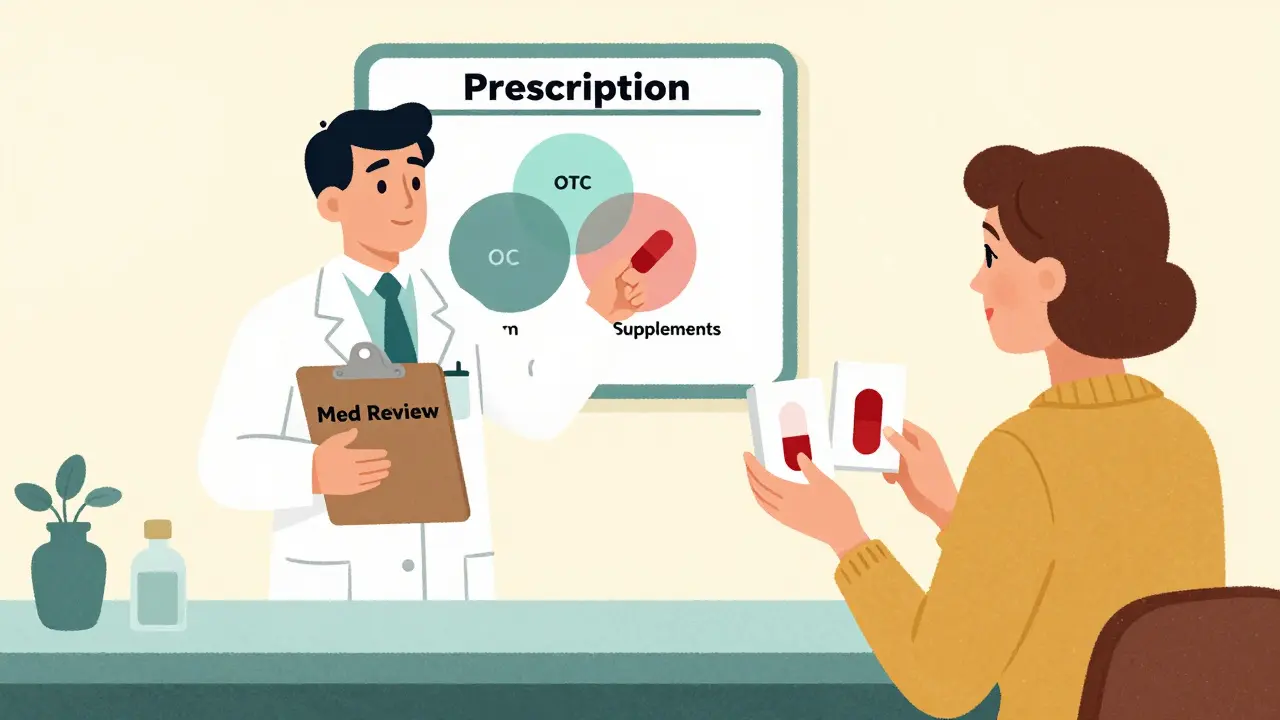
How to Protect Yourself
You don’t need a pharmacy degree to avoid double ingredients. You just need to be smart about your meds. 1. Make a complete, updated list of everything you take. This includes:- All prescription drugs
- All OTC pills - even the ones you only take once in a while
- Vitamins, herbs, and supplements
- Topical creams or patches with active ingredients
What to Do If You Think You’ve Taken Too Much
If you’ve accidentally taken too much acetaminophen, call Poison Control at 1-800-222-1222 immediately - don’t wait for symptoms. Early treatment can prevent liver damage. Symptoms of overdose include:- Nausea or vomiting
- Loss of appetite
- Upper right belly pain
- Dark urine or yellow skin/eyes
- Extreme drowsiness or confusion
- Severe drowsiness
- Difficulty urinating
- Rapid heartbeat
- Slowed breathing
What’s Being Done to Fix This
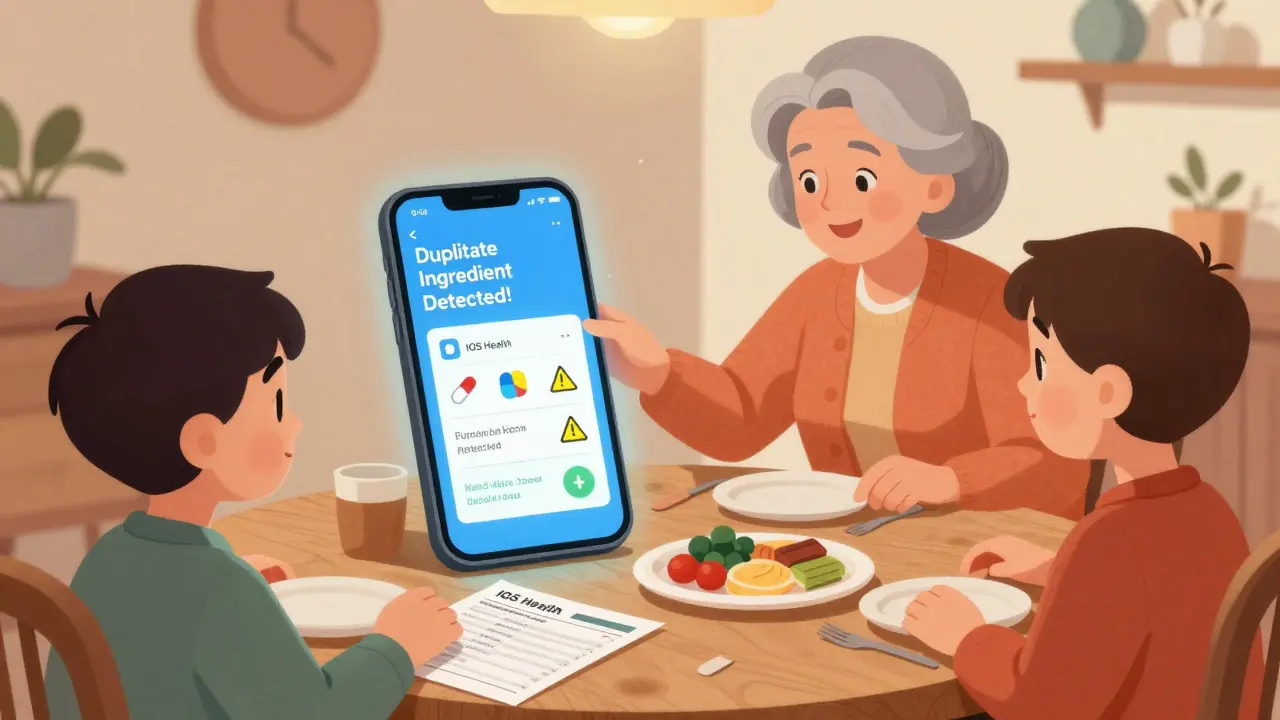
There’s progress. The FDA’s new OTC Drug Facts Label Modernization Initiative, rolling out through 2025, requires clearer, standardized active ingredient displays. Big EHR systems like Epic and Cerner now have built-in double ingredient checks that flag risks in 92% of cases. Medicare Part D plans now use the Pharmacy Quality Alliance’s Drug-Drug Interactions measure - which has already cut senior hospitalizations from double ingredients by 28%. Apple Health, integrated into iOS 17, now alerts users if they’re adding a new med that duplicates an existing one. But technology alone won’t fix this. The real solution is you - knowing your meds, asking questions, and refusing to assume anything is safe just because it’s “over the counter.”Real Stories, Real Risks
One Reddit user, ‘MedSafety101’, shared how they took three different cold medicines - all containing pseudoephedrine - and ended up in the ER with dangerously high blood pressure. Another patient at UCLA Health developed liver damage because they didn’t know their prescription painkiller and their store-brand sleep aid both had acetaminophen. These aren’t isolated cases. A 2021 study in the Journal of the American Geriatrics Society found that 82% of older adults who had double ingredient issues had seen multiple doctors in the past six months - and 67% said no one ever asked about their OTC meds. You’re not alone. But you’re also not powerless.Final Checklist: Your Daily Medication Safety Plan
- ✅ Keep a written list of every medication - prescription, OTC, and supplement
- ✅ Carry it with you - wallet, purse, phone notes
- ✅ Update it every time you start or stop something
- ✅ Fill all prescriptions at the same pharmacy
- ✅ Read the “Active Ingredients” line on every OTC box - not the brand name
- ✅ Ask your pharmacist: “Does this have the same ingredient as anything else I take?”
- ✅ Tell every doctor you see about every OTC med you use
- ✅ Schedule a yearly med review with your primary doctor


Write a comment