
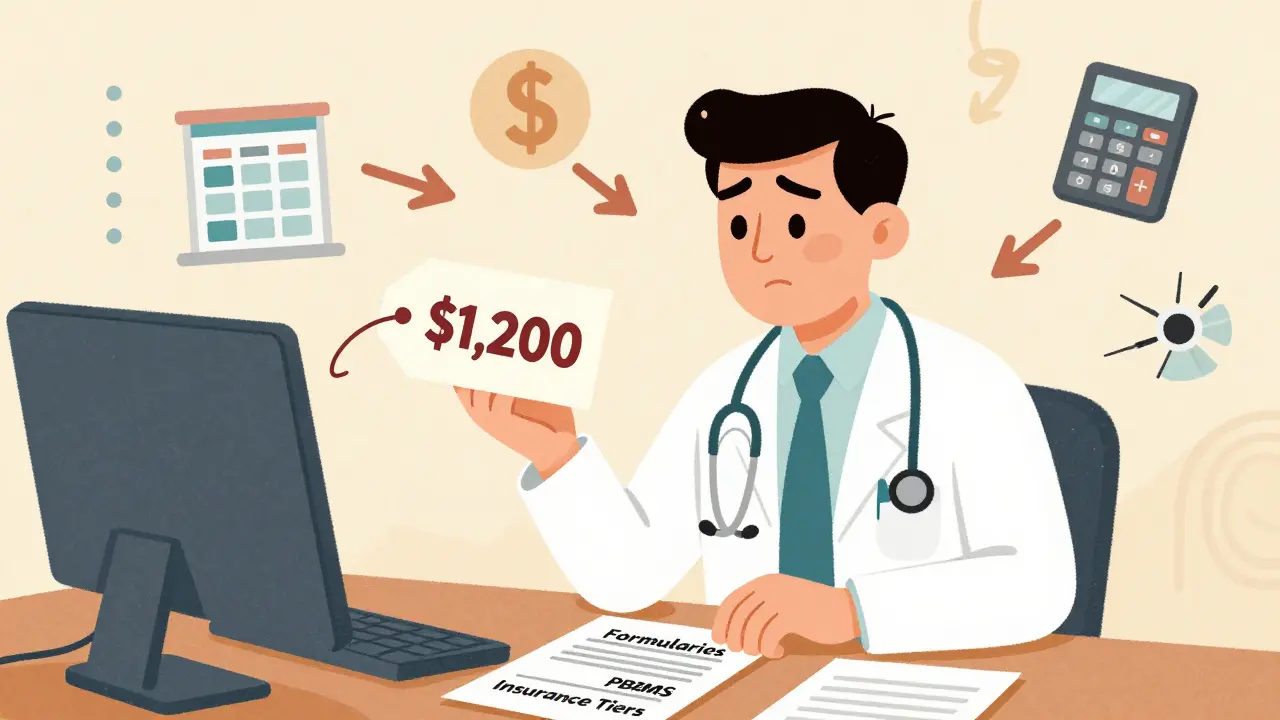
Doctors don’t know how much their prescriptions cost. Not even close.
It’s not because they’re careless. It’s because the system doesn’t give them the tools to know. A 2016 study of 254 medical students and doctors found that only 5.4% of generic drug prices and 13.7% of brand-name drug prices were estimated within 25% of the actual cost. That means for nearly 9 out of 10 prescriptions, the doctor has no idea if the patient will be able to afford it - until the patient shows up at the pharmacy and walks out empty-handed.
This isn’t just a gap in knowledge. It’s a gap in care.
Why Clinicians Don’t Know Drug Prices
Most physicians weren’t taught drug pricing in medical school. Only 44% of medical students understand that drug prices have almost nothing to do with research and development costs. The public thinks high prices mean high innovation - but that’s not how it works. A drug can cost $1,200 a month because the manufacturer raised the price by 4.7% last year with no new clinical benefit. That’s what happened with Humira. Doctors, meanwhile, are taught to focus on efficacy, side effects, and guidelines - not the sticker price.
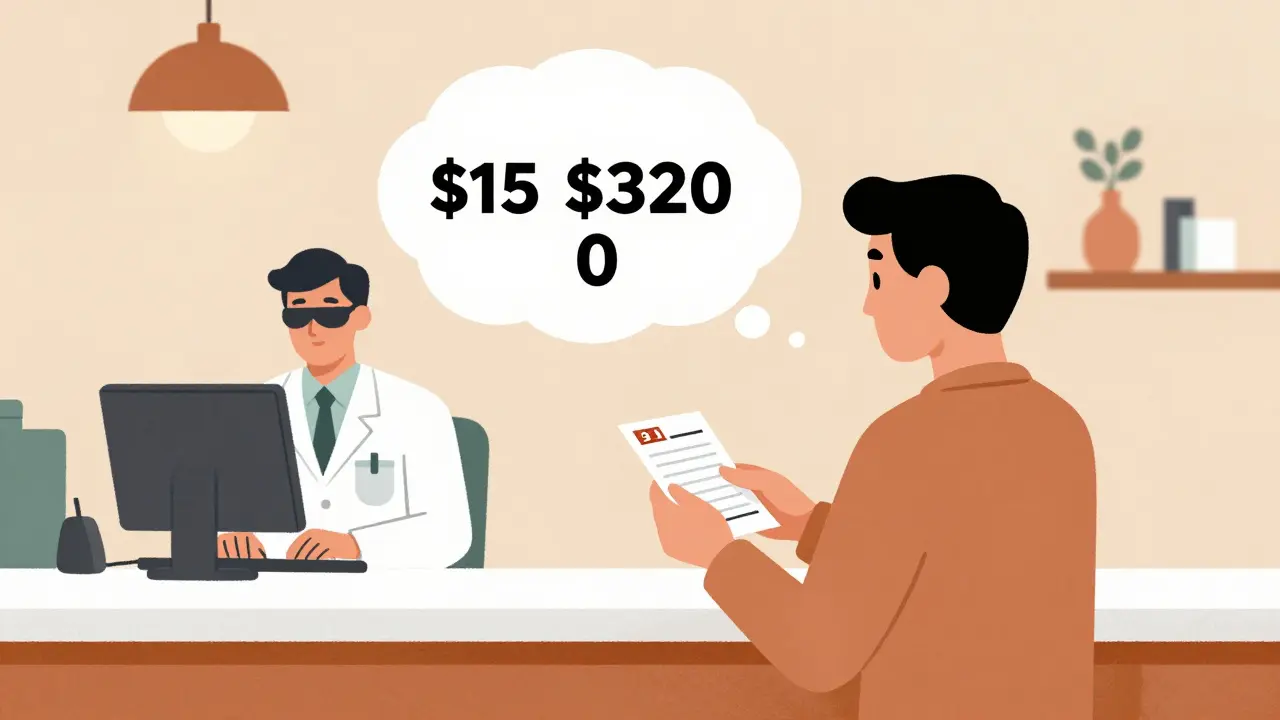
Even when they want to know, the information is scattered. A 2007 review of 29 studies found that 92% of doctors wanted cost information at the point of care - but couldn’t find it. Today, it’s still true. Some hospitals have internal price lists. Others rely on Medicare Part D formularies that change monthly. Pharmacy benefit managers (PBMs) have their own pricing tiers. And then there’s the patient’s insurance - which can make the same drug cost $15 at one pharmacy and $320 at another.
One primary care physician in a Reddit thread described checking drug costs as taking 3 to 5 minutes per prescription. That’s 30 extra minutes in a packed clinic day. No wonder many just prescribe the first option that comes to mind.
What Happens When Doctors Guess Wrong
Doctors consistently overestimate the cost of cheap drugs and underestimate expensive ones. A 2007 systematic review showed physicians overestimated low-cost generics by 31% and underestimated high-cost drugs by 74%. That means a $5 generic might be assumed to cost $6.50 - no big deal. But a $1,000 specialty drug might be thought to cost $250. The patient gets the script, fills it, and then drops out of treatment because they can’t pay.
That’s not theoretical. In 2023, 28% of U.S. adults reported skipping doses or not filling prescriptions because of cost. That’s 1 in 4 people. And doctors often don’t find out until the next visit, when the condition has worsened. By then, the patient may need hospitalization - costing ten times more than the drug they couldn’t afford.
It’s not just about money. It’s about trust. When patients feel their doctor didn’t consider their ability to pay, they disengage. They stop asking questions. They stop showing up. And the cycle continues.
How EHRs Are Changing the Game
Some places are fixing this - and it’s working.
At UCHealth, doctors started seeing real-time out-of-pocket cost estimates right inside their electronic health record (EHR). The system showed not just the drug’s list price, but what the patient’s insurance would actually cover. Within months, one in eight physicians changed a prescription because of the alert. When potential savings were over $20, the rate jumped to one in six.
That’s not a small number. It’s a shift in clinical behavior.
Studies published in JAMA Network Open and JAMA Internal Medicine confirmed this: physicians with cost data in their EHR were significantly better at estimating prices. And more importantly, patients paid less. One 2023 study found that cost-aware prescribing reduced patient out-of-pocket expenses by $187 per year - on average.
But it’s not perfect. One internal medicine resident on Reddit pointed out that the cost alerts in their Epic system show insurer-specific pricing - but not patient-specific copays. So if a patient has a high deductible or hasn’t met their out-of-pocket maximum, the alert is misleading. That’s a flaw in the design, not the idea.
Who’s Getting It Right - and Who’s Falling Behind
Not all health systems are equal. Mayo Clinic’s Drug Cost Resource Guide, updated quarterly since 2019, has a 4.7/5 rating from over 1,200 physicians. Meanwhile, the generic Medicare Part D formulary gets a 2.8/5 from 850 users on Doximity. The difference? One is tailored, current, and easy to use. The other is a static, bureaucratic document.
Age matters too. Physicians under 40 are 78% more likely to adopt cost-aware prescribing tools than those over 55. Why? They grew up with digital tools. They expect information to be instant. Older doctors, trained in a time when drug pricing was simpler and less visible, often feel overwhelmed by the complexity.
Medical students are slowly catching up. One 2021 study showed their knowledge improves with each year of training - but they still score only 6 out of 10 on basic pricing questions. And only 17% of U.S. medical schools have a formal curriculum on drug pricing. That’s not enough.
The Bigger Picture: Politics, Profit, and Patient Harm
This isn’t just a clinical issue. It’s a systemic one.
In 2023, the net prices of five major drugs rose without any clinical justification - according to the American Hospital Association. The same drugs that cost $500 in 2020 were priced at $800 in 2023. No new data. No new benefit. Just a price hike.
The 2022 Inflation Reduction Act gave Medicare the power to negotiate prices for a handful of high-cost drugs. It’s a start. And 83% of Democrats and 76% of Republicans support it. That’s rare bipartisan agreement in today’s politics.
But even with negotiation, the problem won’t vanish. Why? Because 82% of U.S. adults say drug prices are unreasonable. That’s not just about Medicare. That’s about private insurance, cash payers, and the uninsured.
And here’s the uncomfortable truth: the system rewards high prices. Drug manufacturers make more money selling expensive drugs. PBMs get rebates based on list prices. Pharmacies profit from dispensing fees. Everyone wins - except the patient.
What Needs to Change
There are three clear steps forward.
- Integrate real-time cost data into EHRs - not as a side feature, but as a mandatory part of prescribing. It should show the patient’s actual out-of-pocket cost, not just the wholesale price.
- Teach drug pricing in medical school - not as an elective, but as core curriculum. Students need to understand why drugs cost what they do, how insurance tiers work, and how to find alternatives.
- Hold manufacturers accountable - if a drug’s price goes up without clinical benefit, there should be consequences. The 2023 CMS rule requiring manufacturers to report out-of-pocket estimates is a step in that direction.
Some institutions are already doing this. UCHealth, Harvard, and Mayo Clinic are leading the way. But only 37% of U.S. health systems have real-time benefit tools in place as of late 2024. That’s not scale. That’s a pilot program.
And yet - when cost data is visible, behavior changes. Prescriptions get switched. Patients stay on treatment. Costs go down. It’s not magic. It’s just information.
Doctors want to do the right thing. They just need the right tools.
What Patients Can Do
While the system catches up, patients aren’t powerless.
Ask your doctor: “Is there a cheaper alternative?” or “Can we check what this will cost my insurance?” Many don’t think to ask - but they should. You’re not being difficult. You’re being smart.
Use tools like GoodRx or SingleCare. Compare prices at nearby pharmacies. Call your insurer. Even a $50 difference matters when you’re paying out of pocket.
And if your doctor doesn’t know the cost - help them. Bring up the issue. It’s not their fault. But it’s your health.
Do doctors know how much prescriptions cost?
Most don’t. Studies show doctors overestimate low-cost drugs by 31% and underestimate high-cost ones by 74%. Only 5.4% of generic drug prices and 13.7% of brand-name drug prices are estimated accurately within a 25% margin. This isn’t due to ignorance - it’s because pricing information is fragmented, outdated, or not available at the point of care.
Why don’t medical schools teach drug pricing?
Medical education has historically focused on clinical efficacy, safety, and guidelines - not economics. Only 44% of medical students understand that drug prices aren’t tied to research and development costs. Just 17% of U.S. medical schools have a formal curriculum on drug pricing. That’s changing slowly, but it’s still not a priority in most programs.
Can EHR cost alerts actually change prescribing habits?
Yes. Studies show that when real-time out-of-pocket cost estimates are embedded in EHRs, one in eight physicians change a prescription - rising to one in six when savings exceed $20. UCHealth’s system led to a 12.5% reduction in high-cost prescriptions. Patients paid $187 less per year on average. The key is accuracy: alerts must reflect the patient’s specific insurance and pharmacy, not just list prices.
Why do drug prices vary so much between pharmacies?
Drug pricing is a complex web of manufacturer list prices, pharmacy benefit manager rebates, insurance contracts, and pharmacy dispensing fees. The same drug can cost $15 at one pharmacy and $320 at another because of how insurers negotiate with PBMs. Cash prices are often higher than insured prices - and neither is transparent. This fragmentation makes it nearly impossible for doctors to know the true cost without real-time data.
Is the Inflation Reduction Act helping with drug pricing?
It’s a start. The 2022 law lets Medicare negotiate prices for 10 high-cost drugs - a historic shift. But it only affects Medicare Part D beneficiaries, not private insurance or cash payers. Still, 80% of Americans support this move, and it’s setting a precedent. The real impact will come when private insurers are forced to follow similar rules - which may happen as pressure grows.
What can patients do if their doctor prescribes an expensive drug?
Ask if there’s a generic, alternative, or lower-cost option. Use tools like GoodRx to compare prices at nearby pharmacies. Call your insurance to ask about your out-of-pocket cost before filling the script. If your doctor doesn’t know the price, offer to help - bring up the issue. You’re not being difficult; you’re protecting your health and your wallet.


Write a comment