

Every winter, millions of people reach for OTC cold and flu combinations thinking they’re making things easier. One pill for fever, one for cough, one for congestion - all in a single box. Sounds smart. But here’s the problem: you might be accidentally poisoning yourself without even knowing it.
Why Combination Cold Medicines Are Risky
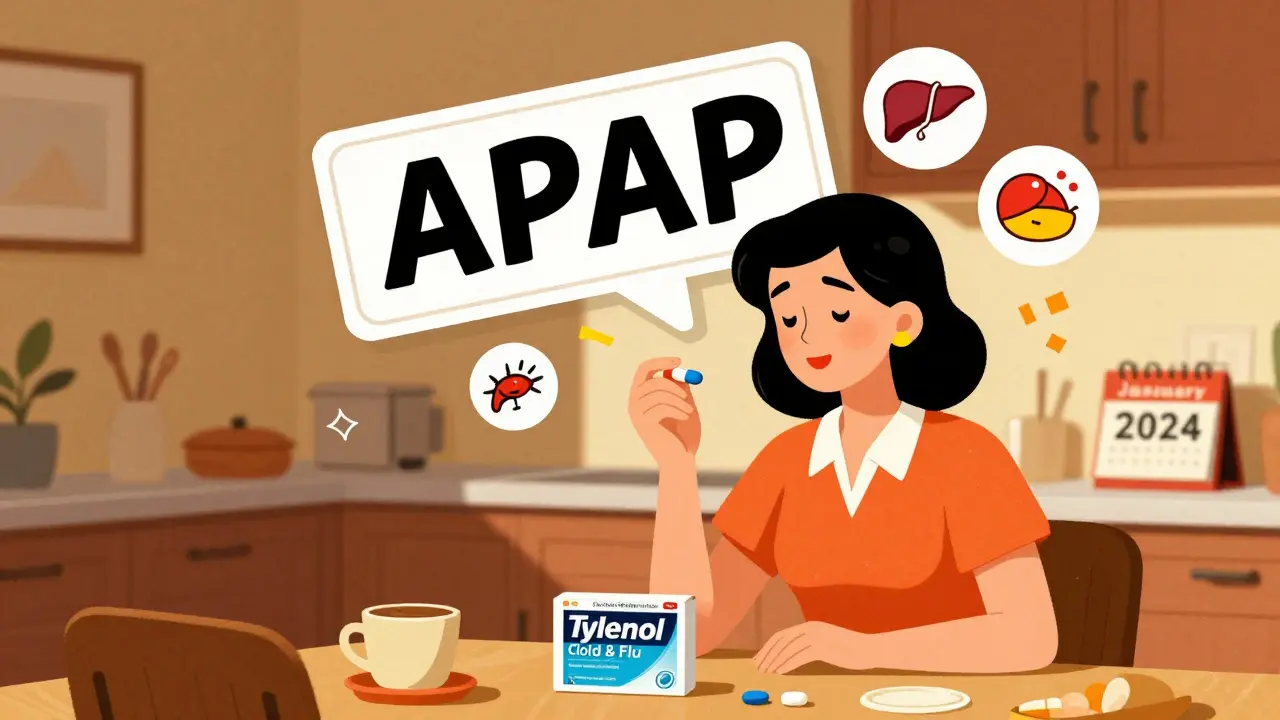
OTC cold and flu products like DayQuil, NyQuil, Theraflu, and Tylenol Cold & Flu aren’t magic bullets. They’re mixtures of multiple active ingredients - usually four or five - packed into one tablet or liquid. The idea is convenience: treat everything at once. But if you’re already taking acetaminophen for a headache, or ibuprofen for muscle pain, and then grab a cold medicine that also contains those same ingredients, you’re stacking doses. And that’s where things go wrong.The most dangerous ingredient in these combos is acetaminophen. It’s in 73% of all OTC cold and flu products. You’ll see it listed as acetaminophen, APAP, or sometimes paracetamol. It’s fine on its own - up to 3,250mg per day is safe for most adults. But if you take one Tylenol Cold & Flu caplet (325mg), then another for your fever, then a regular Tylenol tablet (500mg) for your back pain, you’ve already hit 1,150mg in under an hour. Do that three more times and you’re over 4,000mg - the FDA’s daily limit. Go beyond that, and you risk liver damage. Some people don’t even feel symptoms until it’s too late.
What’s Actually in Your Cold Medicine?
Not all cold medicines are the same. Even products that look similar can have wildly different ingredients. Here’s what you’re likely to find:- Acetaminophen (APAP) - for pain and fever
- Dextromethorphan (DM) - for cough suppression
- Phenylephrine - nasal decongestant (but studies show it doesn’t work well at OTC doses)
- Doxylamine or chlorpheniramine - antihistamines that cause drowsiness (used in nighttime formulas)
- Ibuprofen - in some brands like Advil Cold & Flu, instead of acetaminophen
DayQuil and NyQuil both come from the same brand, but they’re not interchangeable. DayQuil has phenylephrine and dextromethorphan - no sleep aid. NyQuil adds doxylamine, which knocks you out. If you take NyQuil in the morning thinking it’s just a cold medicine, you’ll be dragging all afternoon. And if you take both? You’ve doubled up on dextromethorphan and possibly acetaminophen.
Even the dosing schedules are different. DayQuil says take every 4 hours. NyQuil says every 6. If you’re mixing them, you might end up taking 6 doses of one and 4 of the other - way over the safe limit.
Real People, Real Mistakes
You don’t have to be a medical professional to mess this up. A Reddit thread from January 2024 had over 140 comments from pharmacists sharing stories of patients showing up with liver enzyme spikes - all because they took Tylenol Cold & Flu and regular Tylenol together. One woman took NyQuil for her cough and fever, then took Benadryl later because she couldn’t sleep. She didn’t know doxylamine and diphenhydramine are both antihistamines. She ended up in the ER with extreme drowsiness and confusion.On Drugs.com, out of 1,287 reviews for DayQuil, more than 200 people admitted to accidentally taking too much acetaminophen. One user wrote: “I took DayQuil for my cold, then took extra Tylenol because my head hurt. I didn’t realize they had the same thing in them. I felt fine - until my doctor told me my liver was stressed.”
Consumer Reports found that 41% of adults have accidentally double-dosed on OTC cold medicine ingredients. Acetaminophen was the culprit in 68% of those cases. The rest? Mixing decongestants, antihistamines, or cough suppressants from multiple products.
Why You Should Think Twice About “All-in-One” Solutions
Doctors and pharmacists aren’t against combination products. They’re against unnecessary exposure. If you only have a cough, you don’t need acetaminophen and phenylephrine too. If you only have a stuffy nose, you don’t need a sleep aid. Taking extra ingredients doesn’t help - it just adds risk.A 2022 survey of 1,200 pharmacists found that 68% recommended single-ingredient products over combinations. Why? Fewer side effects. Fewer interactions. Less chance of overdose. A standalone cough suppressant like dextromethorphan (Robitussin DM) lets you control the dose. A standalone decongestant like pseudoephedrine (Sudafed) works better than phenylephrine - and you can control when you take it.
And here’s something most people don’t know: phenylephrine, the main decongestant in most cold medicines, doesn’t work well at the doses sold over the counter. In November 2024, the FDA proposed removing it from the OTC monograph because studies show it’s ineffective at 10mg. That means the next generation of cold medicines will likely ditch it - but until then, you’re still paying for something that doesn’t help.
How to Stay Safe: A Simple 3-Step Rule
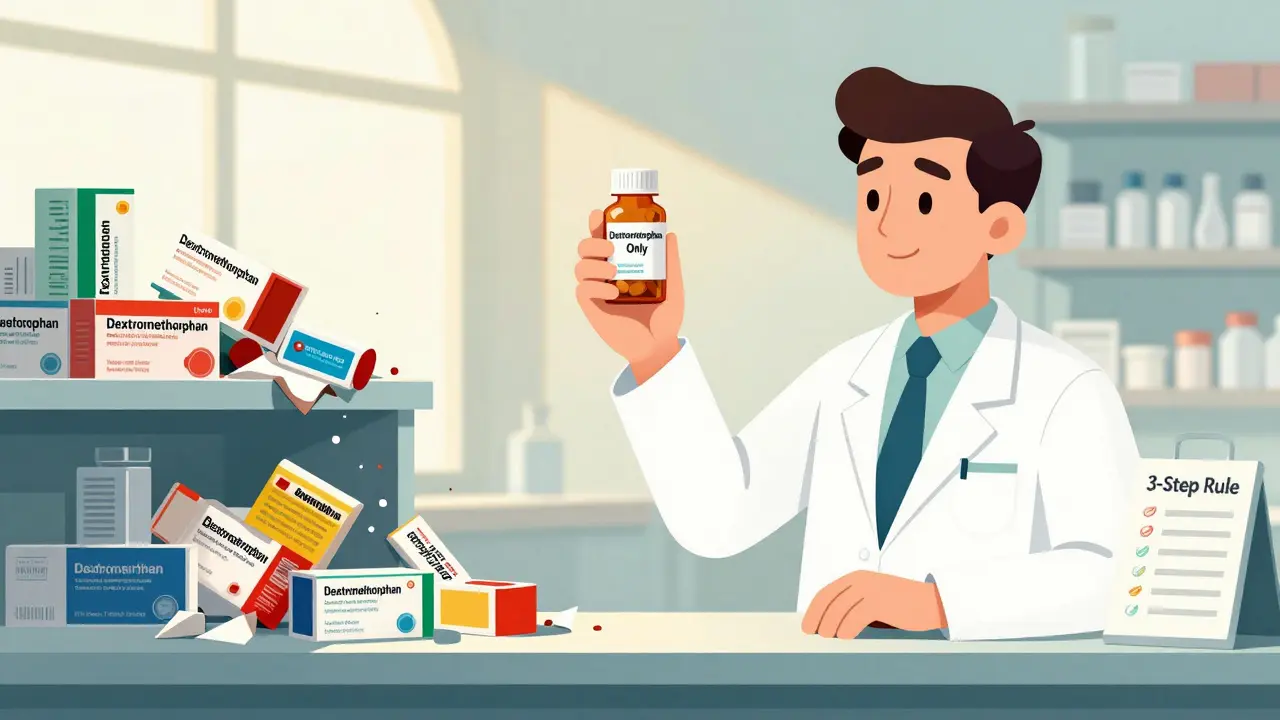
You don’t need to be a pharmacist to avoid double dosing. Just follow this:- Read the Drug Facts label - every time. Don’t just look at the brand name. Look at the Active Ingredients section. That’s where the truth is. If you see acetaminophen, APAP, or paracetamol - write it down.
- Don’t mix products with the same active ingredient. If you’re taking Tylenol Cold & Flu, don’t take any other product with acetaminophen. That includes prescription painkillers like Percocet, which also contain acetaminophen. Check everything.
- Use single-ingredient products when you can. Got a fever? Take acetaminophen alone. Cough? Use plain dextromethorphan. Congestion? Try a saline spray or a single decongestant. You’ll take less medicine, feel better faster, and avoid the hidden risks.
It takes 2-3 minutes to read a label. But that 3 minutes could save your liver.
What to Do If You’re Unsure
If you’re taking multiple medications - even vitamins or supplements - don’t guess. Talk to a pharmacist. Most chain pharmacies offer free medication reviews. CVS, Walgreens, and Shoppers Drug Mart all have pharmacists on staff who can check your entire list and flag any overlaps. They’ll spot that your multivitamin has iron, your cold medicine has acetaminophen, and your prescription for migraines has another painkiller - and warn you before you take a dangerous combo.Use the FDA’s free “Safe Use of Acetaminophen” guide. It’s updated every year and explains exactly how much is too much. Or call Poison Control at 1-800-222-1222. They’re available 24/7, and they don’t judge. They just help.
What’s Changing in 2025
The OTC cold medicine market is shifting. Sales of combination products grew just 2.3% in 2023, while single-ingredient acetaminophen sales jumped 12.7%. More people are learning the hard way that “more ingredients” doesn’t mean “better.”Manufacturers are already adapting. Johnson & Johnson is testing new formulas without phenylephrine, replacing it with guaifenesin (an expectorant). Some new products are coming with split-dose packaging - one tablet for daytime, one for nighttime - but still keeping the active ingredients separate so you can’t accidentally take two at once.
By 2028, experts predict most combination cold medicines will have no more than three ingredients, down from the current average of 4.2. That’s good news - if you’re paying attention.
Final Thought: Convenience Isn’t Worth the Risk
It’s tempting to grab a box that promises to fix everything. But colds don’t come with instructions. Your body doesn’t care if you took “one pill for everything.” It only cares if you gave it too much acetaminophen, too much dextromethorphan, or too many antihistamines.Next time you’re sick, pause. Look at the label. Ask yourself: do I really need all of this? Chances are, you don’t. And if you’re not sure - ask someone who knows. A pharmacist, a doctor, even a friend who’s been through it. Better to take two simple pills than one dangerous one.
Can I take OTC cold medicine with my prescription painkiller?
It depends. Many prescription painkillers like Percocet, Vicodin, and Tramadol-APAP contain acetaminophen. If your cold medicine also has acetaminophen, you’re doubling up. Always check the active ingredients on both labels. If you’re unsure, call your pharmacist or doctor before combining them.
Is phenylephrine still in cold medicines?
Yes - for now. But the FDA proposed removing it from the OTC monograph in November 2024 because studies show it doesn’t work at standard doses (10mg). Manufacturers have 18 months to reformulate products if the rule is finalized. Until then, phenylephrine is still in most cold medicines, but it’s unlikely to help your congestion.
What’s the difference between doxylamine and diphenhydramine?
Both are antihistamines that cause drowsiness. Doxylamine is in NyQuil and lasts 6-8 hours. Diphenhydramine is in Benadryl and lasts 4-6 hours. They’re not the same, but taking both together can lead to excessive drowsiness, confusion, or even trouble breathing. Never mix them unless a doctor says it’s safe.
How do I know if I’ve taken too much acetaminophen?
You might not feel anything at first. Early signs include nausea, vomiting, loss of appetite, and sweating. But liver damage can develop silently over days. If you’ve taken more than 4,000mg in 24 hours - even if you feel fine - call Poison Control at 1-800-222-1222 immediately. Don’t wait for symptoms.
Are children’s cold medicines safer?
No - and they’re often more dangerous. Children’s cold medicines still contain acetaminophen, dextromethorphan, and antihistamines. The dosing is based on weight, not age, and many parents accidentally give too much by using adult dosing charts. The FDA doesn’t recommend OTC cold medicines for children under 6. For kids, stick to saline drops, humidifiers, and hydration.


Write a comment