
When you think of generic drugs, you probably picture a small, cheap pill that does the same thing as the brand-name version. It’s simple: same chemistry, same effect. But biosimilars aren’t like that. They’re not copies-they’re near-matches. And making them is one of the most complex tasks in modern medicine.
Why Biosimilars Can’t Be Made Like Regular Generics
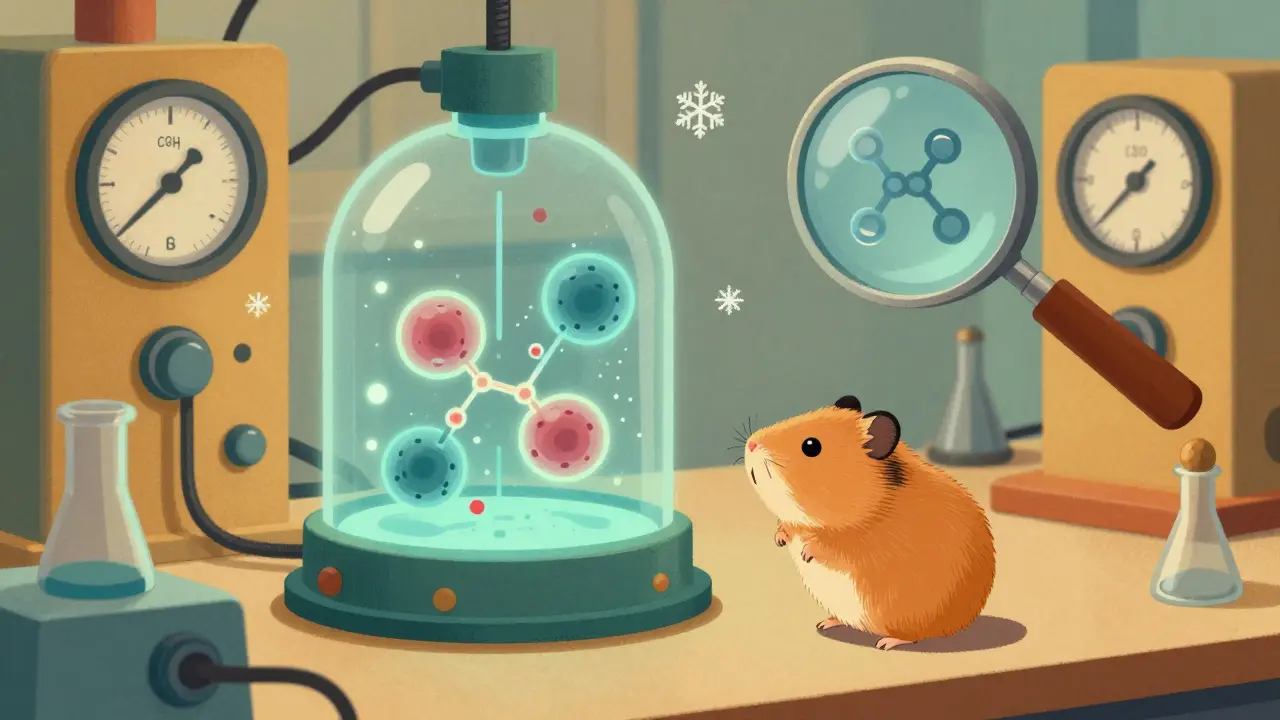
Small-molecule generics are made in labs using chemical reactions. You mix the right ingredients, follow the steps, and you get the exact same molecule every time. It’s like baking cookies from a recipe-you get the same taste and texture every batch. Biosimilars are different. They’re made inside living cells-usually Chinese hamster ovary cells or bacteria. These cells are like tiny factories that produce huge, tangled protein molecules. The final product isn’t just a chemical formula. It’s a living system’s output. Even tiny changes in temperature, pH, or nutrient levels can alter the molecule’s shape, folding, or sugar attachments. That’s why you can’t just reverse-engineer the reference drug like you would with aspirin or metformin. The industry calls this the "process defines the product" rule. It means the way you grow the cells, feed them, stir them, and purify the protein determines what the final drug looks like. If you change the process even slightly, the molecule changes. And if the molecule changes, the drug might not work the same way-or worse, it might trigger an immune reaction.The Glycosylation Problem: Sugar Molecules That Change Everything
One of the biggest headaches in biosimilar manufacturing is glycosylation. That’s the process where sugar chains (called glycans) attach to the protein backbone. These sugars aren’t just decoration. They control how long the drug lasts in your body, how well it binds to its target, and whether your immune system sees it as foreign. Think of it like a key. The protein part is the blade. The sugars are the teeth. If the teeth are wrong, the key won’t turn in the lock-even if the blade looks perfect. And here’s the catch: glycosylation depends on the cell line, the nutrients in the culture media, the oxygen levels, the speed of the bioreactor, even the type of water used. A difference of 0.1% in sugar structure can change how fast the drug clears from the bloodstream. Originator companies spend years optimizing this. Biosimilar makers have to guess it. They don’t get the recipe. They get a vial of the finished drug and have to reverse-engineer the entire production process from scratch. It’s like trying to rebuild a Ferrari by only driving one for a week and taking photos.Scaling Up Is Like Moving a Kitchen from a Studio Apartment to a Restaurant
Making a few liters of biosimilar in a lab is one thing. Making 20,000 liters for thousands of patients is another. When you scale up, the physics change. In a small bioreactor, oxygen mixes evenly. In a giant one, it doesn’t. Stirring too fast can shear the delicate protein. Too slow, and cells starve. Temperature gradients form. Bubbles form differently. Cells behave differently. This isn’t just theory. In 2021, a major biosimilar candidate failed Phase III trials because the scaled-up batch had a 12% difference in glycosylation compared to the lab batch. The company had to scrap the entire process and start over-losing over $200 million. Smaller manufacturers struggle even more. Installing a 2,000-liter bioreactor requires new infrastructure, specialized staff, and millions in capital. Many don’t have the space, the budget, or the regulatory experience to make the jump from pilot to commercial scale.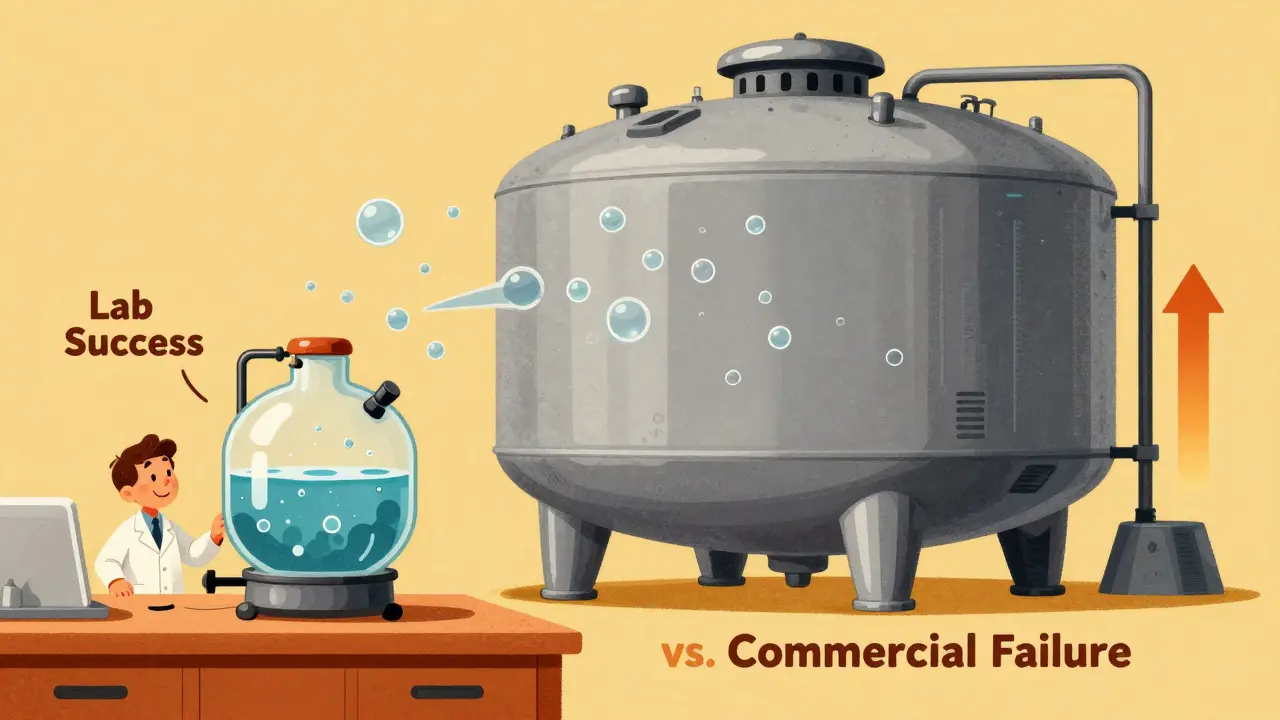
Cold Chain Nightmares and the Cost of One Broken Bag
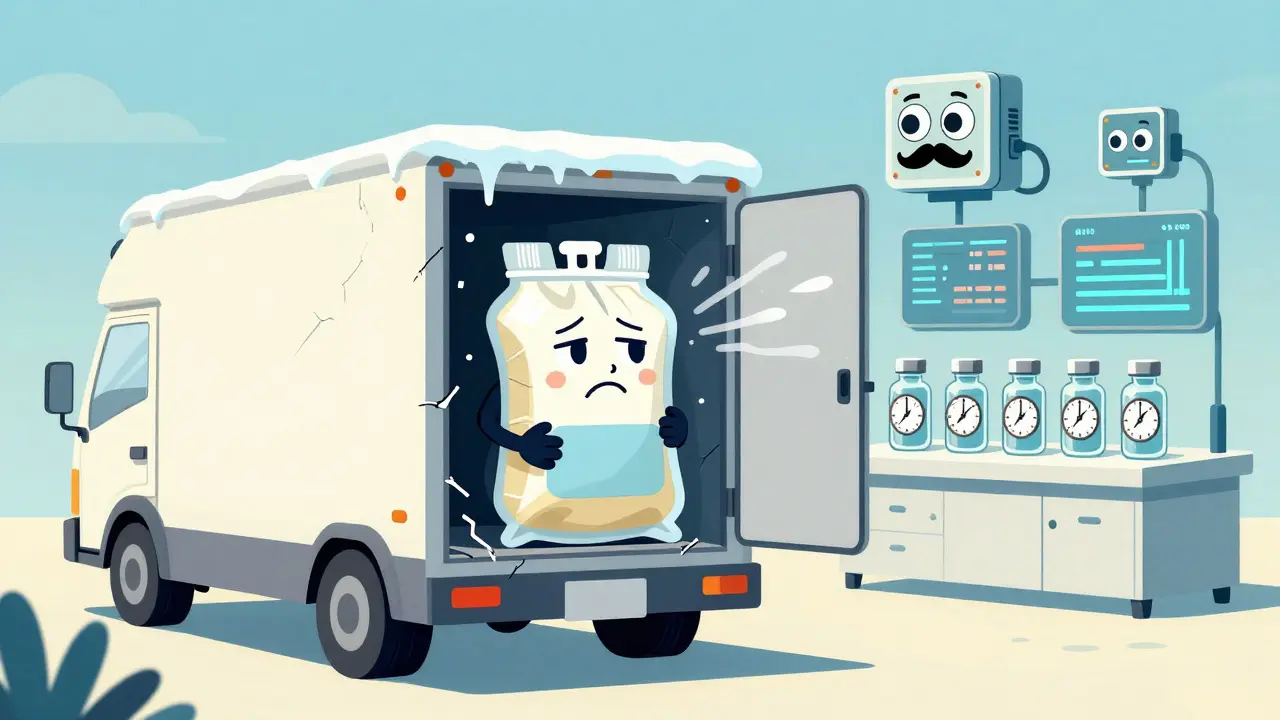
Biosimilars are fragile. They can’t be left out of the fridge. They can’t be shaken. They can’t be exposed to light or air for too long. The entire supply chain-from the bioreactor to the hospital-is a cold chain. One broken refrigerated truck. One torn storage bag. One delayed shipment. And you lose an entire batch worth hundreds of thousands of dollars. Unlike generics, which can sit on a shelf for years, biosimilars have tight expiration windows. Some need to be used within 48 hours of being filled. That’s why many companies now use single-use bags and closed systems. These aren’t just convenient-they’re essential. They reduce contamination risk, eliminate cleaning validation (which takes weeks), and cut down on human error. But even then, mistakes happen. In 2023, a European biosimilar manufacturer lost a $45 million batch because a filling line malfunction caused air bubbles to form in the vials. The protein degraded. The batch was unusable. No one got sick. But no one got the drug either.Regulatory Hurdles: Proving You’re Similar Enough
The FDA and EMA don’t just want you to say your biosimilar is similar. They want proof. And not just one kind of proof. You need:- Structural analysis: mass spectrometry, NMR, chromatography to prove the protein is the same shape
- Functional assays: does it bind to the target receptor? Does it trigger the same immune response?
- Preclinical studies: animal tests for toxicity and pharmacokinetics
- Clinical trials: head-to-head studies in patients to prove safety and efficacy
How the Industry Is Fighting Back
Manufacturers aren’t giving up. They’re getting smarter. Single-use technology is now standard. Bioreactors, filters, and tubing are all disposable. No more cleaning validation. No more cross-contamination. Faster changeovers. This lets one facility produce multiple biosimilars without reconfiguring the whole line. Process analytical technology (PAT) lets companies monitor the process in real time. Sensors track pH, temperature, dissolved oxygen, and even protein quality as the batch runs. If something drifts, the system adjusts automatically. It’s like having a co-pilot that never sleeps. AI and machine learning are being used to predict how changes in culture media or mixing speed will affect glycosylation. One company in Germany reduced batch failures by 40% in two years by training an AI on 12 years of production data. Continuous manufacturing is the next frontier. Instead of making one batch at a time, you run the whole process nonstop-like a conveyor belt. This reduces variability, cuts production time, and lowers costs. The FDA is encouraging it. But it’s hard to implement. You need flawless integration of every step, from cell culture to purification to filling.The Market Is Growing-but Only for the Strong
The global biosimilars market was worth $7.9 billion in 2022. By 2030, it’s expected to hit $58.1 billion. That’s a 28% annual growth rate. The reason? Big biologics like Humira, Enbrel, and Rituxan are losing patents. Insurers and governments want cheaper options. But here’s the catch: only 15 companies worldwide have successfully brought a biosimilar to market. Most are big players like Amgen, Novartis, or Samsung Bioepis. Smaller firms are getting squeezed. The cost of compliance, the risk of failure, the need for cutting-edge labs-it’s too much for many. The result? Consolidation. Bigger companies are buying up smaller ones with niche tech. New entrants need deep pockets, expert teams, and a tolerance for failure. It’s not a market for hobbyists.What’s Next for Biosimilars?
The next wave of biosimilars won’t be simple monoclonal antibodies. They’ll be complex: bispecific antibodies, antibody-drug conjugates, fusion proteins. These have multiple protein chains, extra chemical attachments, and even more steps in purification. One mistake in refolding a chain, and the whole molecule misfires. The future belongs to manufacturers who treat biosimilar production like a high-stakes engineering challenge-not just a chemistry problem. It’s about controlling chaos. It’s about turning biological variability into predictable consistency. The payoff? Cheaper drugs for patients. Better access. Lower healthcare costs. But it won’t happen by accident. It will happen because someone figured out how to make a living cell behave like a perfectly tuned machine.Why can’t biosimilars be exact copies like generics?
Biosimilars are made from living cells, not chemical reactions. Even tiny changes in the manufacturing process-like temperature or nutrient levels-alter the protein’s shape, sugar attachments, or folding. Unlike generics, which are chemically identical to the original, biosimilars are "highly similar" but not identical. The body can detect even small differences, so regulators require extensive testing to prove they work the same way.
What’s the biggest technical hurdle in making biosimilars?
Glycosylation-the attachment of sugar molecules to the protein-is the biggest challenge. These sugars control how the drug behaves in the body: how long it lasts, how it binds to targets, and whether it triggers immune reactions. Because glycosylation depends on the cell’s environment, and manufacturers don’t know the originator’s exact process, replicating the exact sugar profile is like solving a puzzle with half the pieces missing.
Why is scaling up biosimilar production so difficult?
In small lab bioreactors, conditions are easy to control. In large commercial ones, oxygen doesn’t mix evenly, temperature gradients form, and cell stress changes. What works in a 10-liter tank might fail in a 2,000-liter one. Many companies have lost millions because their scaled-up batches didn’t match the lab version. It’s not just bigger-it’s fundamentally different physics.
How do regulators ensure biosimilars are safe?
Regulators like the FDA and EMA require a "totality of evidence" approach. That means deep analytical testing (mass spectrometry, chromatography), functional assays (does it bind correctly?), animal studies, and often clinical trials comparing the biosimilar directly to the original drug. You can’t just claim similarity-you have to prove it across dozens of quality attributes.
Are biosimilars cheaper than the original biologics?
Yes-but not because they’re easy to make. Biosimilars cost 15-35% less than the original biologic, even though their development and manufacturing cost 10-30 times more than a small-molecule generic. The savings come from competition and regulatory pathways that reduce the need for full clinical trials. But the high cost of production means only well-funded companies can enter the market.
What’s the future of biosimilar manufacturing?
The future lies in continuous manufacturing, AI-driven process control, and single-use systems. Instead of making batches, companies are moving toward constant production lines that reduce variability. AI predicts quality issues before they happen. Single-use tech cuts contamination risk and speeds up changeovers. Complex biosimilars like antibody-drug conjugates will push these technologies even further, making manufacturing more precise-but also more expensive.


Write a comment