
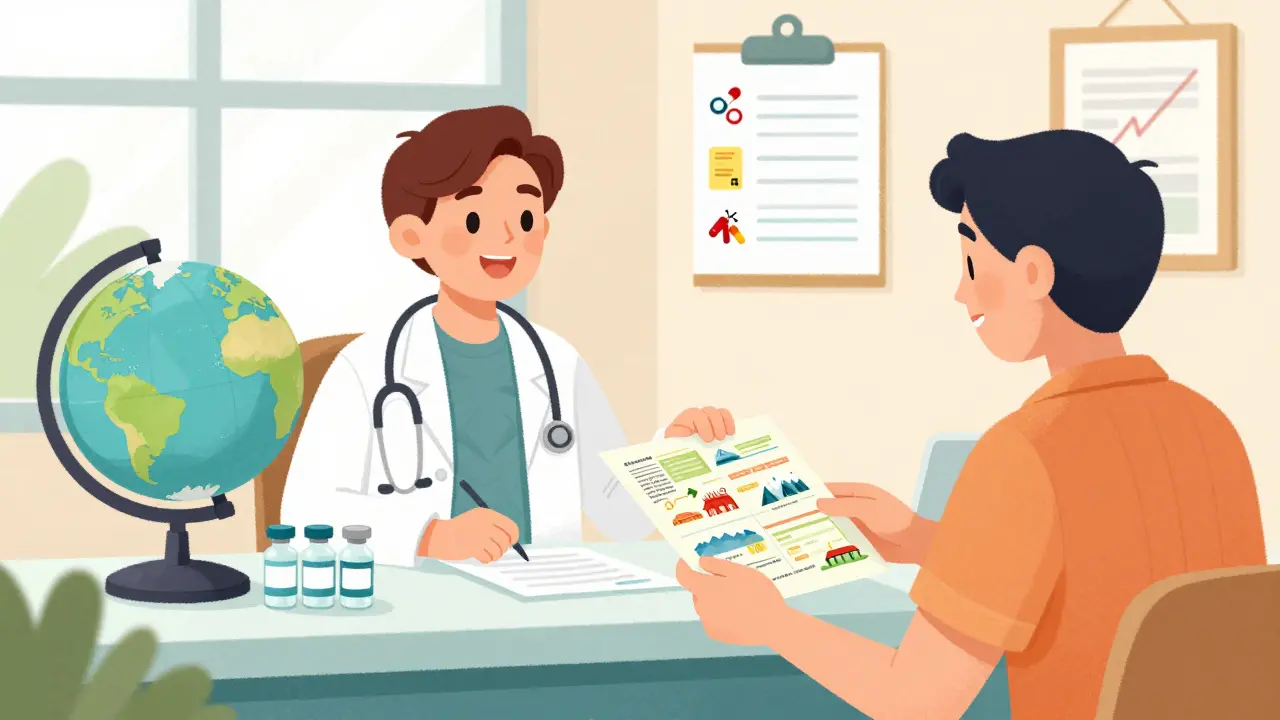
Planning a trip abroad? Don’t just pack your bags and hope for the best. Many travelers get sick because they didn’t plan their medications ahead of time. A travel health clinic isn’t just another doctor’s visit-it’s your best shot at staying healthy overseas. These clinics specialize in one thing: keeping travelers safe by tailoring medications and vaccines to where you’re going, how long you’ll stay, and even what you’ll be doing there.
Why Travel Health Clinics Are Different
Most family doctors aren’t trained to handle travel-specific risks. They might give you a general warning like "watch your food" or "drink bottled water," but they won’t know that atovaquone-proguanil (Malarone) is the preferred malaria drug in parts of Ghana because resistance to older drugs like chloroquine is common. They might not realize that yellow fever vaccine needs to be given at least 10 days before travel to work, or that you can’t get it just anywhere-it must be administered at a CDC-registered clinic.Travel health clinics do the legwork for you. They use up-to-date databases from the CDC and WHO to check current disease outbreaks, drug resistance patterns, and vaccination requirements. A 2022 study in the Journal of Travel Medicine found that travelers who visited specialized clinics had up to 72% fewer illnesses than those who didn’t. That’s not luck-it’s planning.
What Happens During a Consultation
A typical visit lasts 30 to 45 minutes. You’ll walk in with your itinerary, and they’ll ask questions like:- Which countries are you visiting?
- How long will you stay in each place?
- Are you staying in hotels or camping in rural areas?
- Will you be hiking, swimming, or eating street food?
- Do you have chronic conditions like diabetes, asthma, or a weakened immune system?
This isn’t a one-size-fits-all appointment. If you’re going to Nepal and plan to trek above 3,000 meters, they’ll likely prescribe acetazolamide (Diamox) to prevent altitude sickness-125 mg twice daily, starting 24 to 48 hours before ascent. If you’re heading to Southeast Asia, they’ll give you a prescription for azithromycin (500 mg) to treat traveler’s diarrhea on the spot. No waiting for a pharmacy. No guessing when symptoms hit.
They’ll also check your vaccine history. Maybe you got hepatitis A as a kid-but did you get the second dose? Are you up to date on typhoid? Do you need a yellow fever shot? Some countries won’t let you in without proof. The certificate you get is valid for life, but you can only get it from authorized clinics. In the U.S., there are 256 of them as of January 2024.
Medications You Might Get
Here’s what’s commonly prescribed, based on real clinic protocols:- Malaria prevention: Depending on your destination, you might get Malarone (take daily, starting 1-2 days before travel), doxycycline (daily, start 1-2 days before), or mefloquine (weekly, start 2-3 weeks before). Timing matters. Starting too late can leave you unprotected.
- Traveler’s diarrhea treatment: Azithromycin (500 mg once daily for 3 days) or ciprofloxacin. They’ll tell you exactly when to take it-only if you have watery diarrhea, not just stomach upset.
- Altitude sickness: Acetazolamide (Diamox) for high-altitude trips. Some clinics even recommend starting it before you leave home.
- Antiemetics: For motion sickness or nausea, they might give you ondansetron or dimenhydrinate.
- Antibiotics for specific risks: Like doxycycline for tick-borne diseases in Eastern Europe, or rifaximin for certain regions in India.
And yes-they’ll give you written instructions. Not just a prescription. They’ll tell you how many pills to take, when, and what to do if you lose them. Some even give you a backup supply in a separate bag.
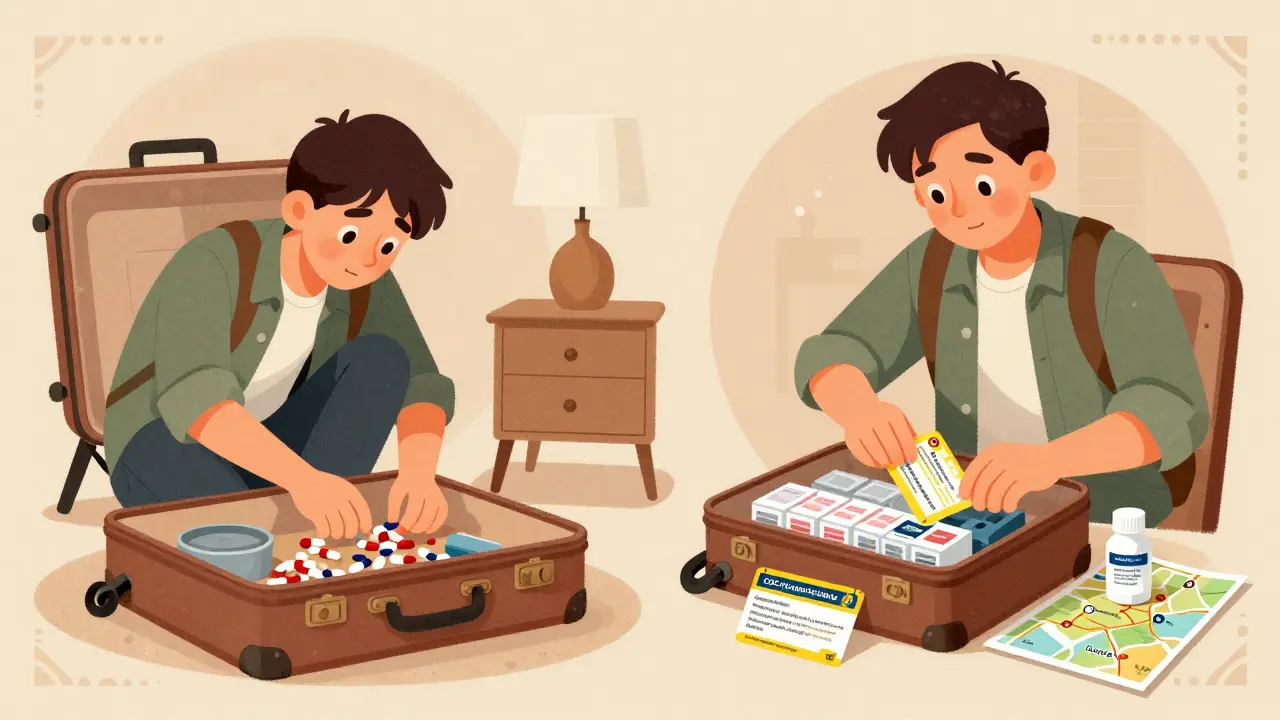
When to Go
The CDC says: 4 to 8 weeks before departure. Why? Because some vaccines need time to work. Yellow fever vaccine? 10 days. Rabies? Three doses over 21 days. Mefloquine? You start 2-3 weeks early because of side effects. If you wait until two weeks out, you might miss the window entirely.But what if you’re last-minute? Don’t panic. Even a visit 1-2 weeks before you leave can help. You might not get all the vaccines, but you can still get malaria pills, diarrhea meds, and safety advice. UC Davis says even a consultation the week before can reduce your risk.
Clinic Types and Costs
Not all clinics are the same. Here’s what you’ll find:| Type | Cost (USD) | Insurance Coverage | Best For |
|---|---|---|---|
| University-affiliated clinics (e.g., UCLA, UC Davis) | $150-$250 | Usually not covered | Complex trips, chronic conditions, detailed planning |
| Retail clinics (CVS MinuteClinic, Walgreens) | $129 | Possible, depending on plan | Simple trips, routine vaccines, quick visits |
| Specialized private clinics (e.g., Mayo, Stanford) | $200-$350 | Varies | High-risk destinations, complex medical histories |
| Hospital-based clinics | $100-$300 | Often covered if referred | Travelers with insurance through the hospital system |
Retail clinics are convenient, but they can’t handle complex cases. If you have kidney disease, are pregnant, or take blood thinners, you need a specialist. Mayo Clinic says they refer patients with complex needs away from retail clinics for good reason.
What to Bring
Don’t walk in blind. Bring:- Your full travel itinerary (dates, cities, activities)
- A list of all medications you currently take
- Your vaccination record (if you have it)
- Your insurance card
- Any medical records for chronic conditions
If you’re unsure about your vaccine history, don’t guess. They can check your blood for immunity or give you a booster. Better safe than sorry.

Common Mistakes to Avoid
Even smart travelers mess up. Here’s what not to do:
- Skipping malaria pills because you think you’ll be fine. Malaria isn’t just a risk-it’s deadly. 28% of preventable malaria cases in U.S. travelers happen because people didn’t start their pills on time.
- Taking antibiotics "just in case." Overprescribing leads to resistance. Use them only when symptoms hit, and only as directed.
- Forgetting to check vaccine requirements. Some countries require proof of yellow fever vaccination at the border. No certificate? No entry.
- Waiting until the last minute. If you wait too long, you might miss the window for full protection.
What’s Changing in 2026
Travel medicine is getting smarter. By 2026, 80% of clinics will use AI tools that pull real-time data on disease outbreaks, weather, and local health advisories. Stanford is already testing genetic tests to see how your body processes antimalarial drugs-so you get the one that works best for you, not just the most common one.Virtual visits are now common. Mayo Clinic has done over 15,000 online consultations since 2022. You can do the whole thing from home, then pick up meds at your local pharmacy.
Final Tip: Don’t Go It Alone
You wouldn’t plan a hiking trip without checking the trail conditions. Why plan a trip to a foreign country without knowing its health risks? Travel health clinics exist because the world is full of hidden dangers-some you can’t Google. They turn uncertainty into a clear plan. And that plan? It’s worth every dollar.Do I need a travel health clinic if I’m only going to Europe?
Yes, if you’re doing anything beyond city tourism. Europe has risks too-tick-borne encephalitis in forested areas of Germany and Austria, hepatitis A from contaminated food in Eastern Europe, and even rabies in rural Romania. A clinic can assess your specific activities and recommend vaccines or medications you didn’t know you needed.
Can I get all my vaccines from my regular doctor?
Maybe, but not always. Your doctor may carry routine vaccines like MMR or tetanus, but not all travel-specific ones. Yellow fever vaccine? Only given at CDC-registered clinics. Typhoid? Some clinics don’t stock it. Rabies pre-exposure? Rarely available outside travel clinics. It’s safer to go where they specialize.
What if I lose my malaria pills while traveling?
Good clinics give you a backup supply. But if you lose them, you’ll need to find a local pharmacy. Bring the generic name (e.g., atovaquone-proguanil) and dosage. Some clinics also provide a digital copy of your prescription via email or app. Always carry a printed copy too.
Are travel health clinics covered by insurance?
Sometimes. Most insurance plans cover vaccines (like hepatitis A or typhoid) if they’re medically necessary, but not the consultation fee. Retail clinics like CVS often accept insurance for vaccines only. University clinics usually don’t accept insurance for the visit, but you may get a receipt to submit for partial reimbursement. Check with your provider ahead of time.
Can I go to a travel clinic if I have diabetes or another chronic condition?
Absolutely-and you should. Travel clinics are experts at managing chronic conditions abroad. They’ll advise on insulin storage in hot climates, how to handle blood sugar fluctuations during long flights, and what to do if you get sick overseas. They often coordinate with your primary doctor to make sure your plan is safe.


Write a comment