
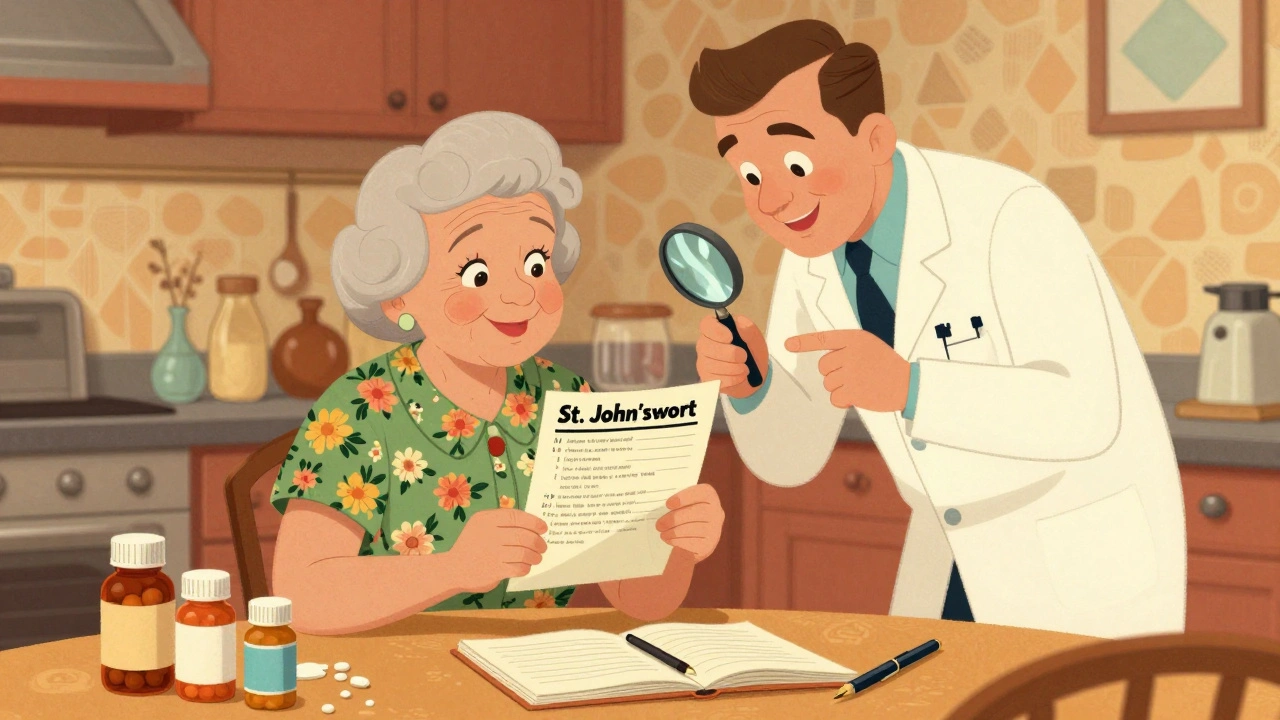
Every year, over 100,000 people in the U.S. die from adverse drug reactions - many of which could have been avoided. The biggest culprit? Incomplete or outdated medication lists. If you’re taking five or more medications - which nearly 40% of adults over 65 do - you’re at serious risk. But here’s the good news: sharing a complete medication list can cut those risks by up to 50%.
What Goes on a Complete Medication List?
A simple note like "I take blood pressure pills" isn’t enough. A full list needs details for every substance you use, not just prescriptions. That includes over-the-counter drugs, vitamins, herbs, and even supplements.For each item, write down:
- Exact name - both brand and generic (e.g., "Lisinopril 10 mg" not just "blood pressure pill")
- Dosage - how much you take (e.g., "500 mg")
- Frequency - how often (e.g., "once daily", "every 6 hours")
- Route - how you take it (e.g., "oral", "topical", "inhaler")
- Purpose - why you take it (e.g., "for high blood pressure", "for joint pain")
- Start date - when you began taking it
- Prescribing provider - doctor, nurse, or pharmacist who wrote the script
- Special instructions - "take on empty stomach", "avoid grapefruit", "take with food"
Don’t forget the non-prescription stuff. Tylenol, ibuprofen, fish oil, melatonin, St. John’s Wort - these all interact. In fact, the FDA reports that 30% of serious drug interactions involve over-the-counter meds or supplements. A 2023 study found that 68% of patients forget to mention these to their doctors. Don’t be one of them.
Why Your Pharmacy Is Your Best Ally
If you use one pharmacy for all your prescriptions, you’re already ahead of most people. Independent pharmacies and major chains like CVS and Shoppers Drug Mart use automated systems that scan for dangerous combinations. These systems catch 92% of major interactions - far better than most EHRs.Pharmacists are trained to spot problems doctors miss. At Johns Hopkins, pharmacist-led reviews cut inappropriate prescribing by 32% in older adults. They don’t just fill scripts - they ask questions like: "Are you still taking that herbal tea your cousin gave you?" or "Did your cardiologist know you started taking magnesium?"
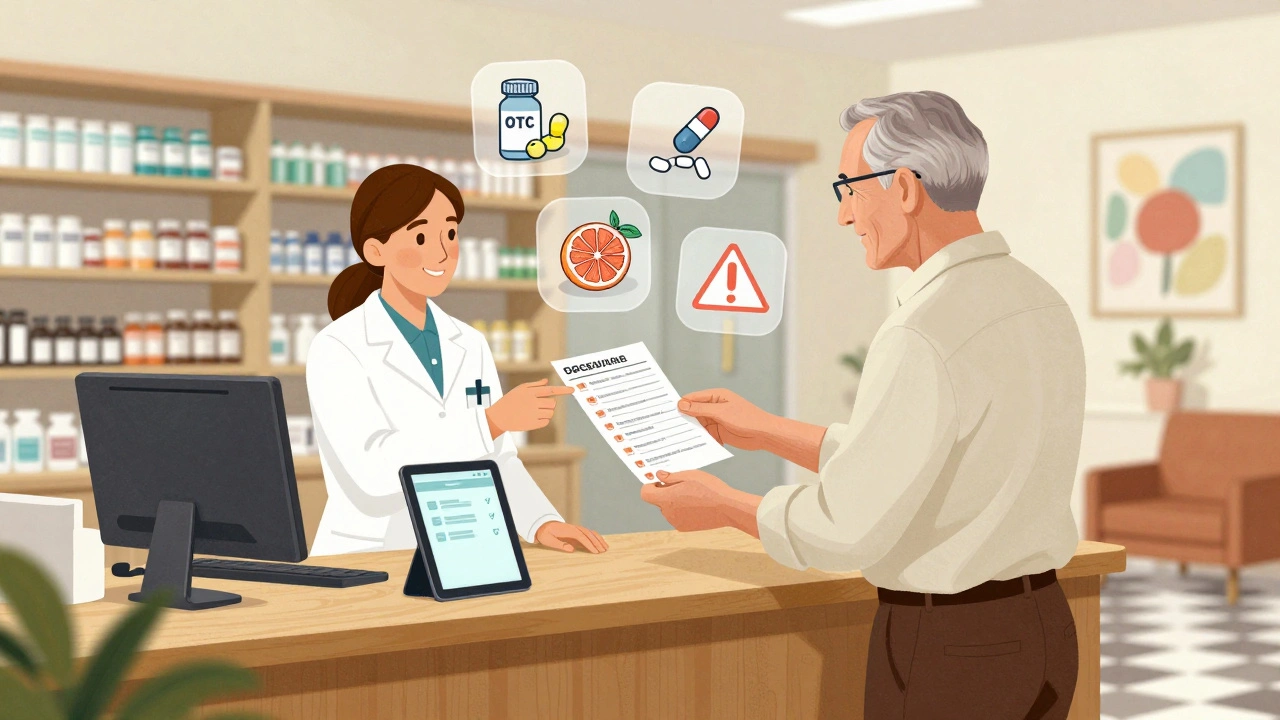
Bring your list to your pharmacist every time you pick up a new med. Ask: "Could this interact with anything else I’m taking?" Most pharmacists will review your full list for free - no appointment needed.
Digital vs. Paper: Which Works Better?
There’s no perfect format, but some methods are more reliable than others.**Paper lists** - kept in your wallet or purse - are simple, but only 62% accurate in emergencies. They get lost, torn, or outdated. If you use paper, update it every month. Write in pen, not pencil.
**Digital lists** - in apps like Medisafe, MyMeds, or the FDA’s free "My Medicine Record" - are more accurate (78% in studies) and easier to update. But they require a smartphone, and nearly a quarter of seniors over 65 don’t use one regularly.
**Electronic health records (EHRs)** - what your doctor’s office keeps - are the most accurate for prescriptions (85%), but they miss over-the-counter meds and supplements 55% of the time. That’s a huge gap.
The best strategy? Combine all three:
- Keep a digital list on your phone with photos of each pill bottle
- Print a clean, updated copy to carry with you
- Use one pharmacy for all your prescriptions
Photos of your bottles are especially helpful. When you’re dizzy or confused, a picture of the label tells the ER staff exactly what you’re taking - no guessing.
When and How to Share Your List
Don’t wait for your doctor to ask. Only 37% of providers routinely request a full medication list. In fact, 63% of patients say their doctors never ask.Hand your list to every provider at the start of every appointment - whether it’s your primary care doctor, a specialist, the ER, or even the dentist. Medication errors spike during care transitions - like when you’re discharged from the hospital or referred to a new specialist.
Use this script: "Here’s my current medication list. I take this for my heart, this for my joints, and this supplement for sleep. Can you check if any of these might interact?"
If you see three or more specialists, pick one provider - usually your primary care doctor or pharmacist - to be your "medication coordinator." They can help spot duplicates, conflicting prescriptions, or dangerous combos.
Common Mistakes That Put You at Risk
Even people who try to keep lists make the same mistakes:- Omitting OTC meds and supplements - the #1 error (37% of cases)
- Forgetting discontinued meds - you stopped the statin? Tell them. It still shows up in your records.
- Wrong dosage - "I take 10 mg" when it’s actually 20 mg
- Missing allergy details - "Allergic to penicillin" isn’t enough. Say "hives and trouble breathing"
- Outdated lists - 52% of paper lists are more than 30 days old
- Missing timing - levothyroxine must be taken on an empty stomach. If you take it with coffee or calcium, it won’t work.
Update your list within 24 hours of any change - new med, stopped med, changed dose. Set a monthly reminder on your phone. If you’re over 65 or on five or more meds, review your list with a family member once a week.
What to Ask Your Provider
Don’t just hand over the list and assume they’ll catch everything. Ask these three questions every time:- "Could any of these medications interact with each other?"
- "Should I avoid any foods, drinks, or supplements while taking these?"
- "Is there a simpler way to take these? I’m on a lot of pills."
Some interactions are subtle. For example, grapefruit juice can make blood pressure and cholesterol meds dangerously strong. Calcium supplements can block thyroid meds. Even common painkillers like ibuprofen can interfere with heart meds.
There’s no shame in asking. The American Medical Association says failure to share a full list is the single most preventable cause of bad drug reactions.
Real Stories, Real Results
One woman in Vancouver, 72, was taking warfarin for a blood clot. She also took St. John’s Wort for low mood - a supplement she thought was "natural and safe." Her three specialists never asked about it. Her pharmacist did. The interaction could have caused a deadly bleed. She stopped it - and switched to a safer mood support.Another man, 68, was on six prescriptions. He didn’t mention his daily fish oil and magnesium. His cardiologist added a new beta-blocker. The combination dropped his blood pressure too low. He ended up in the ER. After he brought a full list, his meds were adjusted - no more fainting.
These aren’t rare cases. They happen every day. But they’re preventable.
What’s Changing in 2025
New tools are making this easier. The U.S. government’s "My Health Record" initiative now lets you pull your med list from multiple pharmacies into one digital file. AI tools like IBM Watson Health can scan your list and flag interactions with 94% accuracy.By 2026, most digital health platforms will require you to report OTC meds and supplements - no more guessing. And thanks to the 21st Century Cures Act, your health record must include your medication list - if your provider is using modern systems.
But technology won’t fix what you don’t share. The most powerful tool is still you - with a clear, updated list in your hand.


Write a comment