
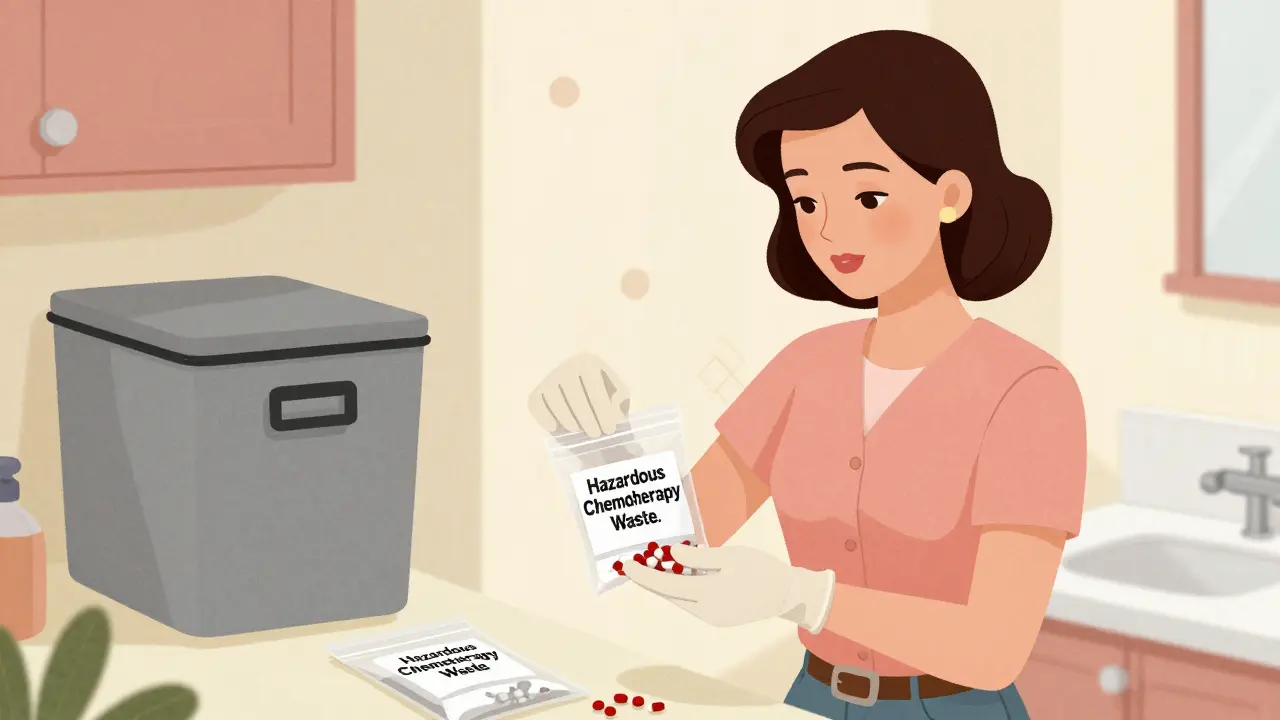
When you’re receiving chemotherapy at home, the treatment itself is already overwhelming. But what happens after you take the pill or finish the IV bag? The empty container, the gloves you wore, even your urine for the next few days - all of it can still be dangerous. Chemotherapy disposal isn’t like tossing out leftover antibiotics or painkillers. These drugs don’t just expire; they stay active, toxic, and capable of harming people, pets, and the environment long after they leave your body.
Why Chemotherapy Waste Is Different
Most medications can go in the trash with coffee grounds or cat litter. Not chemotherapy. These drugs are designed to kill fast-growing cells - that’s how they target cancer. But they don’t know the difference between a tumor and your hair follicles, your gut lining, or a child’s developing cells. Even tiny amounts of leftover drug residue can cause DNA damage, birth defects, or long-term health problems. The American Cancer Society says active chemotherapy compounds can stay in your sweat, urine, vomit, or feces for up to 72 hours after treatment. Some studies show traces can linger for up to seven days. That means every time you use the toilet, change a diaper, or wipe down a counter, you’re potentially spreading something hazardous. And it’s not just you. Waste workers, sanitation staff, and even your own family members are at risk if you don’t handle it right. The Environmental Protection Agency found detectable levels of cyclophosphamide - a common chemo drug - in two out of every three U.S. waterways. That’s not from hospitals. That’s from toilets and trash bins in homes.What You Need to Dispose of Safely
You’re not just disposing of pills. You’re managing a whole set of contaminated items:- Unused oral chemotherapy pills or capsules
- Empty pill bottles or blister packs
- Used gloves, gowns, or masks from handling medication
- Used IV bags, tubing, or syringes
- Used transdermal patches (like those stuck on your skin)
- Used wipes, tissues, or absorbent pads
- Any containers that held liquid chemo drugs
- Soiled bedding or clothing if you’ve had spills
How to Dispose of Oral Chemotherapy Pills
If you have leftover pills, here’s what to do:- Put on a fresh pair of disposable nitrile gloves - the kind used in medical settings, not kitchen gloves.
- Do not crush, break, or dissolve pills. This can release dangerous dust into the air.
- Place the pills directly into a leak-proof plastic bag. Use a bag rated for hazardous waste (at least 1.5 mil thick).
- Seal that bag tightly with a zip-tie or by heat-sealing it.
- Place that sealed bag inside a second identical leak-proof bag. Seal it again.
- Label the outer bag clearly: “Hazardous Chemotherapy Waste - Do Not Open.”
- Store the double-bagged waste in a locked container, out of reach of children and pets, until pickup or disposal.
Transdermal Patches: The Hidden Danger
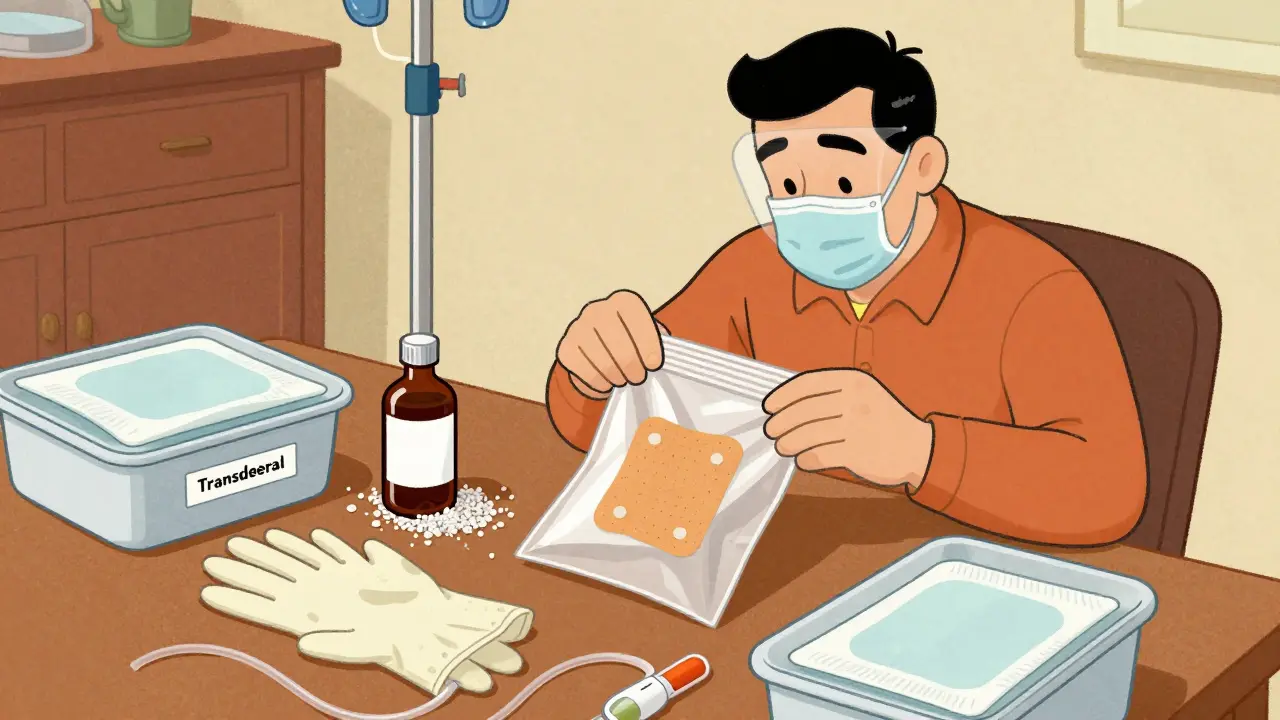
Patch medications like capecitabine or fluorouracil are easy to overlook. You peel them off and toss them, right? Wrong. These patches still contain active drug - often more than you think. Here’s the correct way:- Wear gloves before removing the patch.
- Fold the patch so the sticky side sticks to itself. This traps the drug inside.
- Place it in the first leak-proof bag, seal it.
- Put it in a second bag and seal again.
- Never flush patches. Even if the label says “flush,” chemo patches are an exception.
Liquid Chemotherapy: Absorb It, Don’t Pour It
If you’re handling liquid chemo - whether it’s from a bottle or an IV bag - spills are a real risk. Here’s how to handle it:- Always wear gloves, a gown, and eye protection when preparing or cleaning up.
- Use an absorbent pad or paper towel to soak up any spills. Don’t wipe - absorb.
- Place all used absorbent material into the first leak-proof bag.
- Double-bag it, seal, label.
- For liquid meds in bottles, pour the remaining liquid into an absorbent material like kitty litter or coffee grounds - but only if your provider says it’s safe. Then seal it in the double-bag system.
What NOT to Do
There are three big mistakes people make:- Flushing: Even if the FDA says you can flush certain pills, chemo is never one of them. Flushing contaminates water supplies.
- Single-bagging: One plastic bag isn’t enough. Two are the minimum. One leak can expose someone.
- Using Deterra or MedDrop kiosks without checking: Most drug take-back programs don’t accept chemotherapy. Only 34% of U.S. pharmacies will take it. Don’t assume they will.
What About Mail-Back or Take-Back Programs?
Some options exist, but they’re not widely available.- Mail-back kits: A few cancer centers provide prepaid envelopes for returning chemo waste. But only 28% of U.S. pharmacies offer them, according to the American Society of Health-System Pharmacists.
- MedDrop kiosks: Stericycle runs these in pharmacies and hospitals. They accept about 63% of chemotherapy drugs - but not all. Call ahead. Ask: “Do you accept oral or IV chemotherapy waste?”
- Community take-back events: These are rare for chemo. Most require law enforcement to be present due to DEA rules. Only 12% of events accept chemotherapy.
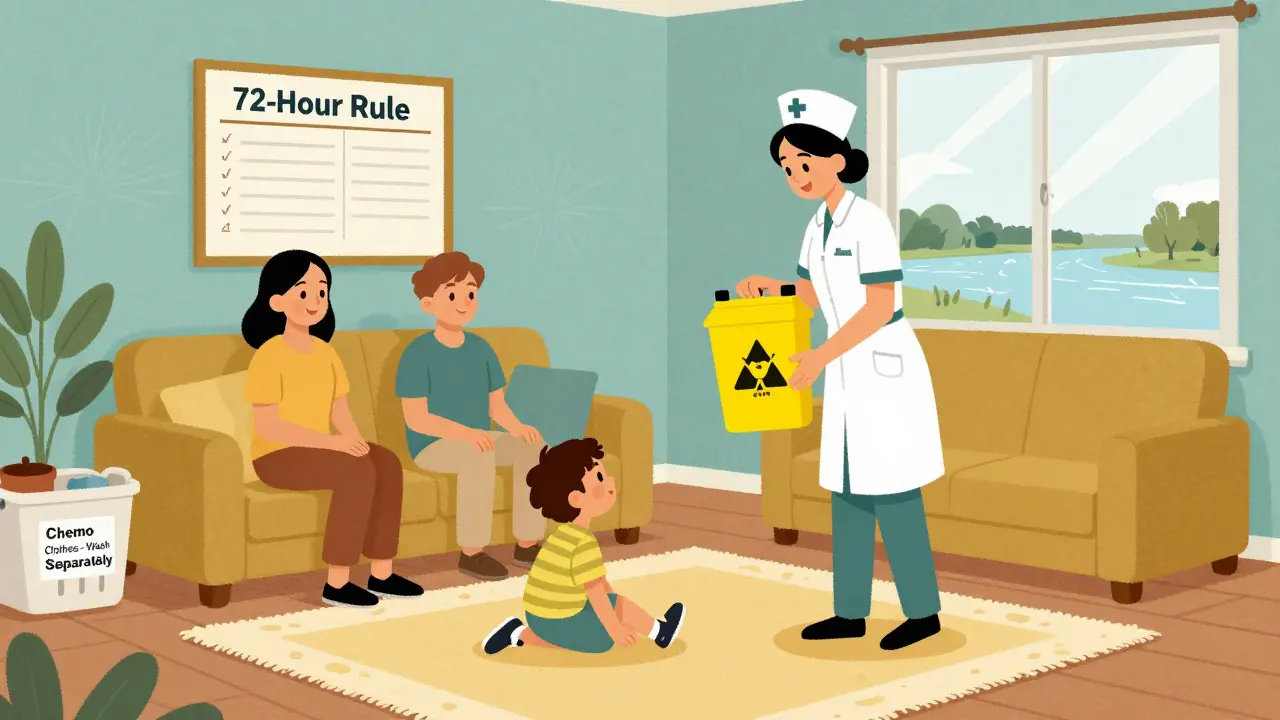
What to Do After Treatment - The 72-Hour Rule
Even after you finish your last dose, the danger doesn’t vanish. Your body is still getting rid of the drug for days.- Wear gloves when handling your own bodily fluids - especially if you’re cleaning up vomit, urine, or stool.
- Flush the toilet twice after each use.
- Wash your hands thoroughly after using the bathroom.
- Use separate towels, washcloths, and bedding if possible.
- Wash soiled clothes separately from the family laundry, using hot water and detergent.
Where to Get Supplies
Your cancer center should give you the first set of supplies: gloves, bags, labels, maybe a yellow container. But what if you run out?- Ask your oncology nurse for replacements.
- Call your pharmacy - some stock hazardous waste bags.
- Buy nitrile gloves (6 mil or thicker) and ASTM D1735-rated plastic bags online or at medical supply stores.
What If You Have a Spill?
Accidents happen. If you spill liquid chemo:- Stay calm. Don’t touch it with bare hands.
- Put on gloves, gown, face shield, and mask - full protective gear.
- Use absorbent pads to soak up the spill. Don’t wipe.
- Place all used materials into a leak-proof bag.
- Wash the area with soap and water - twice.
- Double-bag everything and label it.
- Call your oncology team for further instructions.
Why This Matters - The Bigger Picture
Home chemotherapy is growing fast. Since 2019, home-based cancer treatment has increased by 37%. That means more people are handling dangerous drugs in their kitchens, bedrooms, and bathrooms. But only 53% of patients follow disposal guidelines correctly, according to a 2023 study. That’s not because they’re careless. It’s because the system is confusing, inconsistent, and under-resourced. That’s why new laws are being considered. The Cancer Drug Disposal Act of 2021, still in committee, could create national standards. The EPA has allocated $4.7 million to study better disposal methods. New technologies like the ChemiSafe system are in clinical trials. But right now, you’re the first line of defense. Your actions protect your family, your community, and the environment.Final Checklist for Safe Chemo Disposal
Use this every time you dispose of chemotherapy:- ☐ Wear nitrile gloves (6 mil or thicker)
- ☐ Never crush, break, or flush pills
- ☐ Fold patches sticky-side together
- ☐ Double-bag all waste in leak-proof plastic
- ☐ Seal each bag with a zip-tie or heat-seal
- ☐ Label outer bag: “Hazardous Chemotherapy Waste”
- ☐ Store waste in a locked container
- ☐ Follow 48-72 hour precautions after last dose
- ☐ Call your oncology team if unsure
Can I flush chemotherapy pills down the toilet?
No. Never flush chemotherapy pills or liquids. Even if the FDA allows flushing for some medications, chemotherapy drugs are an exception. Flushing contaminates water supplies and can harm aquatic life. The EPA has found traces of chemo drugs like cyclophosphamide in 67% of U.S. waterways - largely from improper home disposal.
Can I use a drug take-back kiosk like MedDrop for chemotherapy waste?
Maybe - but don’t assume. Only about 63% of chemotherapy medications are accepted at MedDrop kiosks, and only 34% of U.S. pharmacies offer any kind of chemo take-back program. Always call ahead and ask: “Do you accept oral or IV chemotherapy waste?” Some drugs, especially controlled substances, may be accepted, but others are excluded for safety reasons.
How long do I need to wear gloves after taking chemo?
You should wear gloves when handling any used medication containers, soiled tissues, or bodily fluids for at least 48 to 72 hours after your last dose. Active chemotherapy drugs can remain in your sweat, urine, and vomit for up to seven days, depending on the drug. Always follow your oncology team’s specific instructions.
What if I don’t have double plastic bags?
You need double-bagging for safety. If you don’t have specialized bags, ask your cancer center for replacements - they often provide them free. If you must improvise, use two heavy-duty kitchen trash bags (at least 1.5 mil thick), seal each tightly with a zip-tie, and label them clearly. But this is a last resort. Proper hazardous waste bags are designed to prevent leaks and are worth getting from your provider.
Can I wash chemo-contaminated clothes with the rest of the laundry?
No. Wash soiled clothing separately in hot water with detergent. Wear gloves when handling contaminated fabrics. Avoid shaking them before washing, as this can release particles into the air. Run an empty cycle afterward to clean the machine. Never put chemo-soiled clothes in a shared laundry room without first rinsing them thoroughly and double-bagging them.
Is there a device that can neutralize chemotherapy drugs at home?
Currently, no FDA-approved home device neutralizes chemotherapy drugs. Products like Deterra® work for regular medications but are explicitly not approved for chemo. New systems like ChemiSafe are in clinical trials and may become available in the next few years. Until then, double-bagging and professional disposal are the only safe options.
Who should I contact if I’m unsure how to dispose of my chemo?
Call your oncology nurse or pharmacist. They are trained in safe disposal and can guide you based on your specific medication. Many cancer centers have 24/7 helplines. You can also contact the American Cancer Society at 1-800-227-2345 for free guidance. Don’t guess - ask.


Write a comment