

Making a simple mistake when giving your child medicine can land them in the emergency room. In fact, improper dosing contributes to approximately 70,000 emergency department visits annually for children under 12 years old, according to a 2022 report by the Centers for Disease Control and Prevention (CDC)federal public health agency in the United States.. That statistic isn't just a number; it represents parents who trusted the wrong measurement device or misunderstood a tiny decimal point on a bottle. You likely have questions about why some bottles list weight while others list age, or why there are so many different concentrations. The good news is that you can prevent these errors by learning exactly what information matters most.
The confusion often stems from the sheer complexity of the packaging. A study by the American Academy of Pediatricsprofessional association representing pediatricians found that nearly half of parents misinterpret concentration information. When you hold a bottle of liquid medicine, you aren't just looking at a name; you are looking at a regulatory document designed to save lives if read correctly. This guide breaks down exactly what you need to see on those labels to keep your child safe.
Anatomy of the Drug Facts Label
Every over-the-counter (OTC) medicine sold in the United States must display a standardized "Drug Facts" panel. If you buy a prescription medication, the label will include additional details, but the core safety information remains similar. You need to know where to find the critical data without getting lost in the clutter.
The panel contains seven critical components that dictate how you handle the medication:
- Active Ingredient: This tells you exactly what chemical is doing the work. For example, acetaminophen is the active ingredient in Tylenol. You must verify the strength here, typically listed as 160 mg per 5 mL.
- Uses: Describes what symptoms the medicine treats, such as fever or pain.
- Warnings: Often highlighted in bold, this section lists age restrictions (e.g., "Do not use in children under 2 years") and signs of overdose.
- Directions: The most vital section. It provides dosing charts based on weight or age.
- Inactive Ingredients: These are fillers and flavors, which matter for allergies.
- Purpose: Explains the therapeutic category, like analgesic (pain reliever).
- Other Information: Includes storage conditions and shelf life.
If you encounter a prescription bottle, you will also see the patient's name, prescriber info, and pharmacy details. While these are important for logistics, the safety hinges on the strength notation. Confusion between mg/mL (milligrams per milliliter) and total milligrams is common. Always cross-reference the active ingredient line with the directions line to ensure they match.
| Abbreviation | Full Term | Meaning |
|---|---|---|
| mL | Milliliter | Unit of volume for liquids |
| mg | Milligram | Unit of weight for medication potency |
| tsp / t | Teaspoon | Equal to 5 mL (household measure) |
| tbsp / T | Tablespoon | Equal to 15 mL (household measure) |
| BID | Twice Daily | Giving medicine two times a day |
| TID | Three Times Daily | Giving medicine three times a day |
| PRN | As Needed | Give only when symptoms occur |
Weight Versus Age: The Critical Distinction
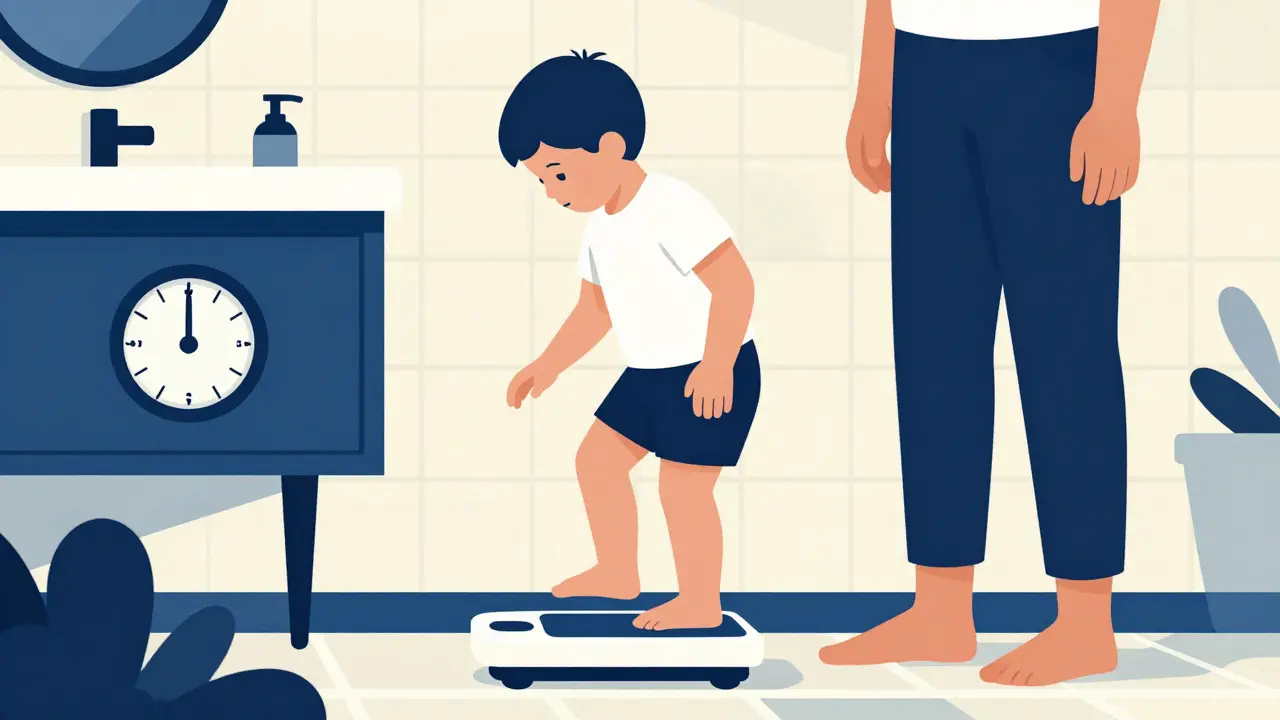
You might wonder why the label offers two different ways to dose: weight and age. While age is easier because you already know your child's birthday, medical experts strongly favor weight as the primary method for determining dosage. Children grow at vastly different rates, and their metabolism of medication correlates much more closely with body mass than birth date.
A landmark study published in Academic Pediatrics analyzed 412 medication errors and concluded that weight-based dosing reduces errors by roughly 38% compared to using age alone. Consider this scenario: Two 4-year-olds walk into your living room. One weighs 33 pounds (15 kg), and the other weighs 48 pounds (22 kg). An age-based chart would give them the exact same amount of liquid. However, a weight-based calculation would show the heavier child needs nearly 50% more medication to reach an effective level, while the lighter child risks toxicity if given the higher dose.
The Food and Drug Administrationregulatory body ensuring food and drug safety has noted that relying on weight instead of age reduces the risk of overdosing by approximately 23%. When you read the label, prioritize the weight column. Look for ranges specified in kilograms or pounds. If your child falls between two lines, always round down to the lower weight range for safety unless directed otherwise by a doctor.
This distinction becomes even more crucial for infants. The American Academy of Pediatrics policy statement notes that for children under 2 years, liver and kidney function is immature. Consequently, manufacturers restrict OTC labels to require physician consultation for anyone under 2. Even then, precise weight tracking is mandatory. You cannot guess the dose for a baby.
Decoding Concentration Strengths
Perhaps the single most dangerous error happens when parents confuse different product strengths. Not all "Children's Liquid" medications are created equal. Some older formulations or specialized infant drops were historically much more concentrated. While the FDA mandated standardization in 2011, variations still exist between brand and store brands.
You must check the "Active Ingredient" box for the concentration. The standard for acetaminophen (Tylenol) is now universally 160 mg per 5 mL. However, if you accidentally pick up a bottle labeled 320 mg/5 mL, you are looking at double the strength. Giving a dose measured for the weaker formula using the stronger liquid results in a massive overdose instantly.
Ibuprofen follows a similar pattern, typically found at 100 mg per 5 mL. When comparing labels side-by-side, you might see "Infant Drops" marked with a warning like "More concentrated." A 2020 study in the Journal of the American Pharmacists Association revealed that 43% of parents misinterpret concentration info when multiple products are available in the cabinet.
To simplify this rule: If you switch brands, stop and compare the Active Ingredient line. If you buy a new bottle after finishing the last one, check the strength again. Manufacturers can change formulations, even if the name looks identical. Never assume the bottle in front of you matches the one you used last month.
Measuring Tools and Decimal Errors
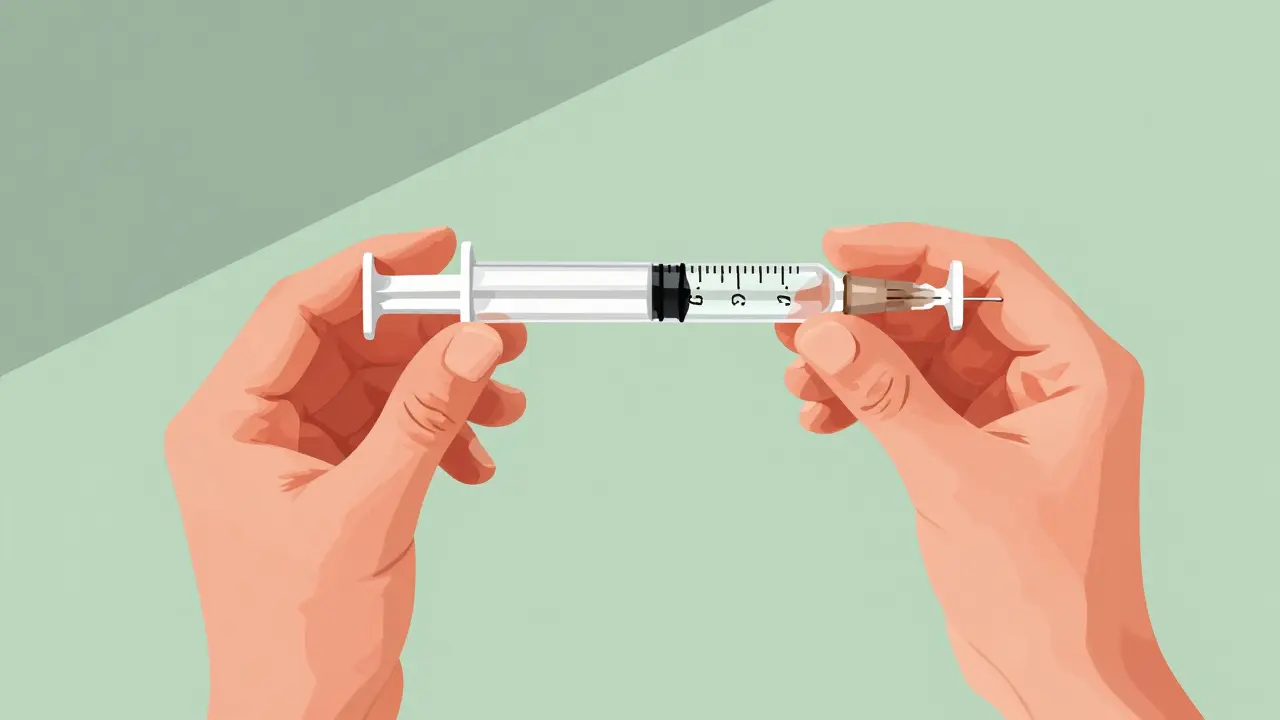
The tool you use to measure the liquid determines whether the information on the label translates into safety. Household kitchen spoons are not measuring devices. A teaspoon in your kitchen drawer can vary by as much as 30% in volume compared to a medical standard. A study in Pediatrics showed that using syringes reduces dosing errors by 43% compared to cups and by 57% compared to household spoons.
The gold standard is an oral syringe with markings every 0.1 mL for infants and 0.5 mL for older children. When measuring, hold the syringe at eye level. Reading from above introduces a significant downward error, causing you to think you have more liquid than you actually do. Reading from below makes the liquid look smaller, leading to underdosing.
Be vigilant about decimals. A prescription order for "2.5 mL" versus "0.25 mL" changes the dose tenfold. Parents have reported giving full teaspoons when the label required a fraction because they missed the dot. Always verbalize the number out loud as you read it. Say "two point five milliliters," not just "five milliliters." This small habit engages your brain and catches visual slips before the medicine enters the bottle.
| Imperial Unit | Metric Equivalent | Safety Note |
|---|---|---|
| 1 Teaspoon (tsp) | 5 mL | Standard measure for liquid meds |
| 1 Tablespoon (tbsp) | 15 mL | Equals 3 teaspoons (common confusion point) |
| 1 Pound | 0.45 Kilogram | Used to convert home scales to metric |
| 1 Kilogram | 2.2 Pounds | Divide pounds by 2.2 for weight |
Practical Safety Checklist
Reading the label requires focus, especially late at night when a child is fussy. Before you administer anything, run through a mental checklist derived from the CDC's 2023 recommendations. You want to verify five elements before uncapping the bottle.
- Patient Match: Ensure the name on the prescription or the intended recipient matches your child.
- Medication Name: Confirm you are holding the right bottle for the symptom (e.g., cold relief versus pain relief).
- Dose Verification: Cross-check the child's current weight against the label's weight column, not just age.
- Route: Verify the administration method. Is it for swallowing, applying topically, or mixing in food?
- Date Check: Inspect the expiration date. Expired medicine may lose potency or become unsafe.
Keep a dedicated scale in your home to track your child's weight quarterly. Relying on memory leads to drift as children grow rapidly. If your child hasn't been weighed since their last birthday, assume they weigh more. A 2022 survey found that 75% of households with young children do not have a digital scale capable of precise measurement. Buying a pediatric scale is a low-cost investment in safety.
Pharmacists are underutilized resources in this process. They can draw lines on a syringe for your child's exact dose based on weight, eliminating daily guessing. Don't hesitate to ask for a demonstration before you leave the counter. It takes a few minutes of their time to prevent weeks of anxiety for yours.
Frequently Asked Questions
What is the safest way to measure liquid medicine?
The safest way to measure liquid medicine is using an oral syringe included with the medication. Hold the syringe at eye level to read the bottom of the liquid meniscus. Avoid using kitchen spoons, which vary significantly in volume and lead to dosing errors.
Should I dose by age or weight?
You should prioritize weight over age for dosing. Weight-based dosing accounts for individual growth differences and reduces medication errors by approximately 38%. Age-based charts should only be used if weight is unavailable, and even then, consult a doctor.
Can I mix infant drops and children's liquid?
Never mix infant drops and children's liquid measurements. Infant drops are often more concentrated. Using the wrong measuring cup for a concentrated liquid causes severe overdose. Always stick to the specific dropper or syringe that came with that specific bottle.
How do I convert pounds to kilograms for dosing?
To convert pounds to kilograms, divide the weight in pounds by 2.2. For example, a child weighing 44 pounds is 20 kilograms (44 divided by 2.2). Most international weight charts use kilograms, so this conversion is essential for understanding medical guidelines.
What does PRN mean on the label?
PRN stands for 'pro re nata,' which translates to 'as needed.' It means you should only administer the medication when symptoms are present, rather than on a fixed schedule. Follow the maximum frequency limits listed in the directions to avoid toxicity.


Write a comment