
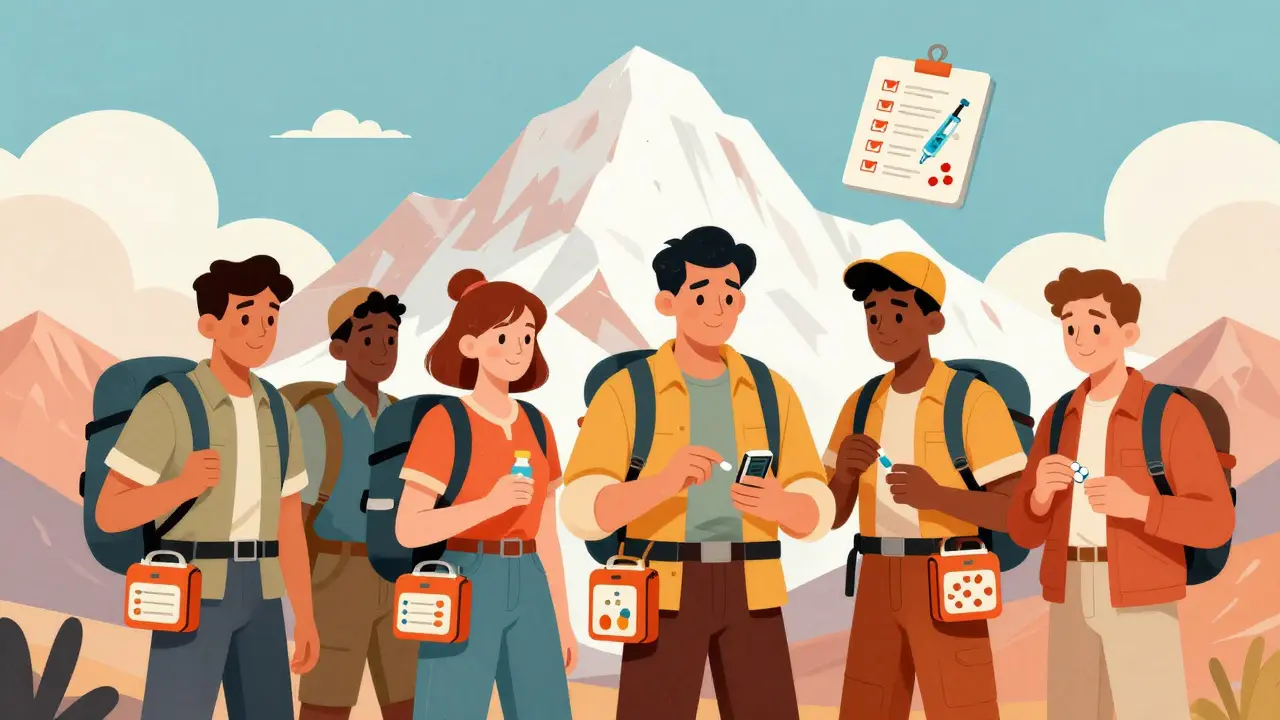
Preparing for a pilgrimage or trek isn’t just about packing clothes and snacks. If you’re heading to places like Mount Kailash, Everest Base Camp, or Lhasa, your health depends on one thing most people overlook: medication. These aren’t just hikes-they’re journeys into thin air, where even a minor health issue can turn life-threatening. And if you’re relying on local pharmacies along the trail? You’re taking a huge risk.
Over 40,000 people trek to Everest Base Camp every year. Around 43% of them will experience symptoms of altitude sickness. Diarrhea affects 60% of trekkers. Insulin can lose 25% of its potency in just 24 hours if stored in freezing temps. And in remote areas, help might be two or three days away. This isn’t fearmongering-it’s fact. The difference between a safe journey and a medical emergency often comes down to what’s in your pack.
Know Your Risks Before You Go
Altitude sickness isn’t something that sneaks up on you. It hits fast and hard. Acute Mountain Sickness (AMS) causes headaches, nausea, dizziness, and fatigue. Left untreated, it can lead to High Altitude Pulmonary Edema (HAPE)-fluid in the lungs-or High Altitude Cerebral Edema (HACE)-swelling in the brain. Both are deadly. Studies show that 25% to 85% of people who climb above 8,000 feet will get some form of altitude sickness, depending on how fast they go up.
But it’s not just altitude. Contaminated water leads to severe diarrhea. Cold temperatures ruin insulin and mess with glucose monitors. Existing conditions like asthma, diabetes, or heart disease can flare up. And if you’re on prescription meds? You can’t just buy replacements at a roadside shop in Nepal or Tibet.
Before you book your trip, ask yourself: What happens if I get sick 10,000 feet up and there’s no pharmacy nearby? That’s the question every trekker and pilgrim needs to answer.
Essential Medications to Carry
You’re not just packing pills-you’re packing a mobile pharmacy. Here’s what you absolutely need:
- Acetazolamide (Diamox): The gold standard for preventing altitude sickness. Take 125 mg twice daily, starting one day before ascent and continuing for 3 days after reaching high altitude. It helps your body adjust by increasing breathing rate. Side effects? More frequent urination and tingling fingers/toes-normal and manageable.
- Dexamethasone: Used to treat HACE. Start with 8 mg, then 4 mg every 6 hours. This isn’t for prevention-it’s for emergencies. Carry it, even if you think you won’t need it.
- Nifedipine (extended-release): For HAPE. Take 20 mg every 12 hours. It opens blood vessels in the lungs. Critical for anyone with a history of breathing issues at altitude.
- Antibiotics (Azithromycin): For traveler’s diarrhea. A single 500 mg dose daily for 3 days is usually enough. Diarrhea is the #1 medical issue on treks-78% of cases happen between 9,000 and 14,000 feet.
- Ibuprofen (400 mg): For headaches, fever, and inflammation. Much safer than aspirin at altitude.
- Antihistamines (Diphenhydramine): For allergic reactions or sleep aid. Keep 25-50 mg doses on hand.
- Topicals: Antibiotic ointment, hydrocortisone cream, and blister pads. You’ll get blisters. Guaranteed.
Don’t forget your regular meds. If you take blood pressure pills, insulin, or thyroid medication? Bring extra. At least a 10-day surplus. And never check them in luggage.
Storage Matters More Than You Think
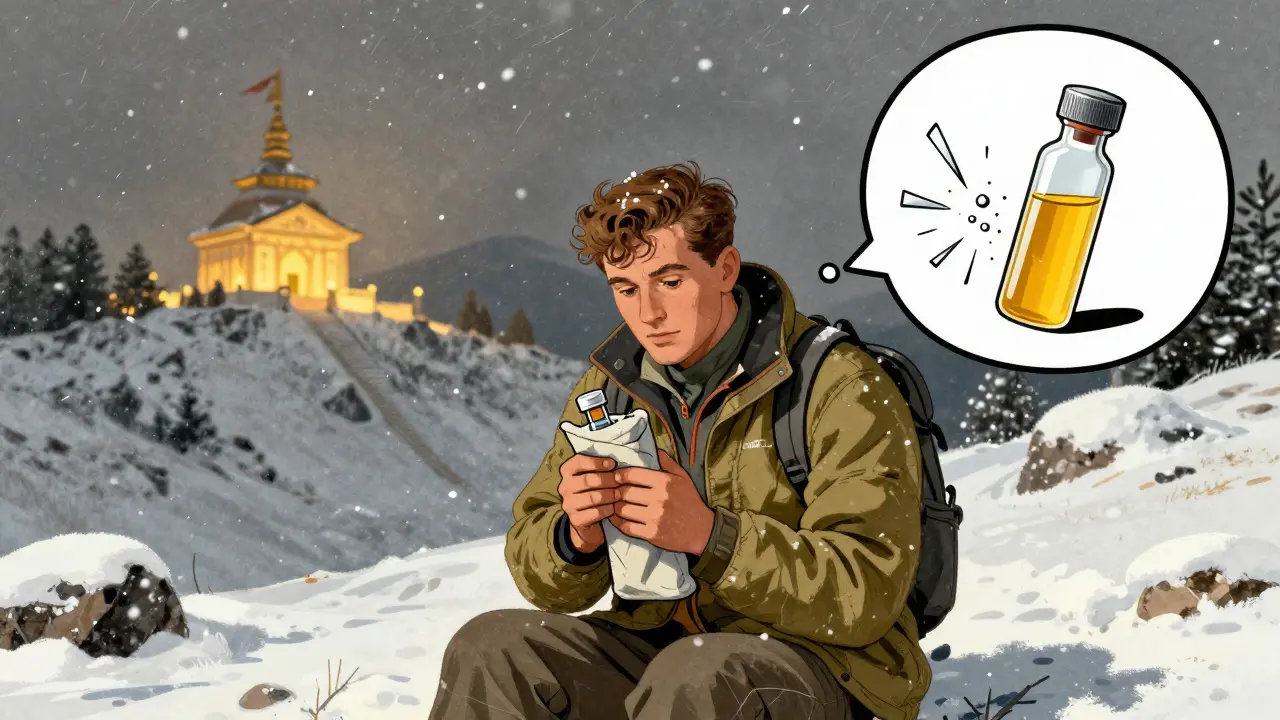
Medications aren’t designed for -10°C weather or 40°C heat. Insulin degrades. Antibiotics lose potency. Glucometers give false readings. A 2023 survey found that 29% of medication issues on treks were caused by temperature damage.
Here’s how to protect your meds:
- Use insulated, waterproof containers. Some are designed specifically for travel-look for ones that maintain 59-77°F (15-25°C).
- Keep insulin close to your body. A waist pouch under your jacket works better than a backpack.
- Store pills in sealed zip-lock bags inside your container. Moisture from sweat or snow can ruin them.
- Test your glucometer before you go. At 14°F (-10°C), error rates jump to 18%. Carry backup test strips and a manual logbook.
One Reddit user lost control of their diabetes after their insulin froze at 14,000 feet. They needed a $4,200 medical evacuation. Don’t let that be you.
Pre-Trip Medical Checkup Is Non-Negotiable
Most people skip this. Big mistake.
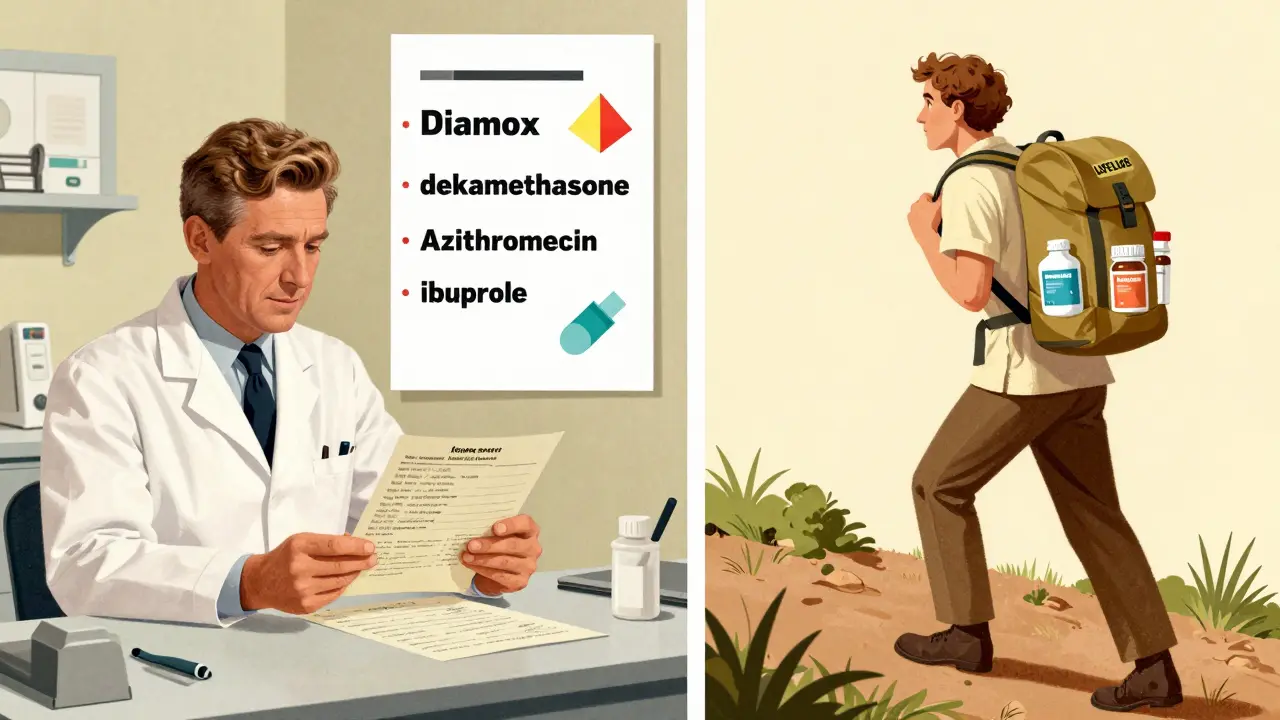
The CDC says the pre-travel consultation is your best shot at staying healthy. 83% of serious altitude complications are preventable with a proper checkup. Your doctor should:
- Review your current meds and adjust doses if needed
- Test for heart or lung conditions that could worsen at altitude
- Prescribe and write letters for controlled substances
- Give you a list of meds with generic names (in case brand names aren’t available abroad)
Also, if you’re carrying opioids, benzodiazepines, or other controlled drugs? You may need a DEA letter or International Narcotics Control Board form. 17% of trekking groups needed this in 2021. Don’t wait until you’re at the border.
Don’t Rely on Local Health Camps
Many pilgrims assume there’s a clinic every few miles. That’s not true. A 2013 survey of health camps along major pilgrimage routes found that 89% didn’t have acetazolamide, dexamethasone, or nifedipine. Even today, only 5% have hyperbaric bags (Gammow Bags) for treating severe altitude sickness.
One trekker described how their friend needed an extra inhaler to make it through two more days of climbing. They couldn’t find it anywhere. A local sherpa had to track down a pharmacy in a village 12 miles away. That’s not an anomaly-it’s standard.
Your meds are your lifeline. If you’re relying on someone else to have them, you’re gambling with your life.
Ascent Strategy: Slow and Steady Wins
Medication helps-but it’s not magic. The best prevention is how you climb.
Experts recommend no more than 1,000 feet (305 meters) of elevation gain per day above 10,000 feet. For Everest Base Camp (17,500 ft), that means a 14-day itinerary. But pilgrims often fly into Lhasa (12,000 ft) or drive straight to high-altitude shrines. That’s dangerous.
If you can’t go slow:
- Start acetazolamide before you even leave home
- Drink 4-5 liters of water daily
- Avoid alcohol and sleeping pills
- Don’t sleep during ascent-rest, but stay awake
These aren’t tips. They’re survival rules.
What to Pack: A Simple Checklist
Here’s your final checklist. Print it. Stick it on your bag.
- Prescription meds (10+ day surplus)
- Acetazolamide (Diamox)
- Dexamethasone (emergency use only)
- Nifedipine (for HAPE)
- Azithromycin (for diarrhea)
- Ibuprofen (400 mg tablets)
- Diphenhydramine (antihistamine)
- Antibiotic ointment
- Hydrocortisone cream
- Blister pads and medical tape
- Water purification tablets or filter
- Insulated, waterproof med container
- Physician’s letter for controlled substances
- Original pharmacy containers with labels
- Backup glucometer and test strips (if diabetic)
- Small notebook to log symptoms
Leave nothing to chance. If you forget one thing, it could be the thing that saves your life.
Future of Pilgrimage Medicine
Things are changing. Nepal’s 2021 Altitude Sickness Prevention Campaign distributed 15,000 medication kits with acetazolamide and education materials. Hospitalizations dropped 22%. The Wilderness Medical Society is testing standardized kits for different altitude zones-below 10,000 ft, 10,000-15,000 ft, and above 15,000 ft. By 2027, 95% of trekking companies will require pre-trip medical consultations.
This isn’t just about convenience. It’s about survival. Pilgrimage medicine is now a recognized field. And the people who prepare properly? They’re the ones who come home.


Write a comment