

Quick Tips for Your Review
- Gather every single pill bottle, including vitamins and herbal supplements.
- Write down any side effects you've noticed, even if they seem minor.
- Track your out-of-pocket spending to see if cheaper alternatives exist.
- Bring a family member or friend to help remember the conversation.
- Verify your official medication list against what you actually take.
What Exactly Is a CMR?
You might hear your insurance provider call it a Comprehensive Medication Review or a CMR. Essentially, it's a structured consultation required by the Medicare Modernization Act of 2003. Under Medicare Part D, eligible beneficiaries get access to Medication Therapy Management (MTM) services. This means a pharmacist spends real time with you to review your entire health history and every drug you take.
Unlike a quick chat at the pharmacy counter while you wait for a prescription, a CMR is a deep dive. It's an interactive, real-time conversation that can happen in person or via telehealth. The goal is to find "medication-related problems"-things like duplications (taking two drugs for the same thing) or conflicts that could land you in the hospital. At the end, you'll receive a written summary including a Consultation Letter, a Medication Action Plan, and a Personal Medication List.
Are You Eligible for a Review?
Not everyone qualifies for a CMR; it's targeted at those with more complex health needs. For 2025 and 2026, the Centers for Medicare & Medicaid Services (CMS) generally looks for a few specific markers. You typically qualify if you have at least three core chronic health conditions and take between two and eight Part D-eligible prescribed drugs. There is also a cost threshold-roughly $1,623 in annual out-of-pocket expenses for covered medications.
If you meet these criteria, your plan sponsor is required to actively reach out to you. Don't wait for them to find you; if you know you have multiple chronic conditions and a long list of meds, feel free to call your insurance provider and ask if you're eligible for your annual MTM service.

The Essential Preparation Checklist
A CMR is only as good as the data you provide. If you forget to mention that daily dose of St. John's Wort or a specific over-the-counter sleep aid, the pharmacist can't check for interactions. To get the most out of your 45 to 90 minutes, follow these steps:
- The Great Pill Gather (20-30 mins): Don't just write a list. Put every single container in a bag. This includes prescription bottles, generic store-brand vitamins, herbal teas, and fish oil capsules. Pharmacists need to see the exact dosage and brand to be accurate.
- Document Your "Gripes" (15-20 mins): Think about the last six months. Do you feel dizzy after taking a certain pill? Does a medication make you drowsy? Do you struggle to open the child-proof caps? Write these down so you don't forget them in the heat of the moment.
- Review Your Health Timeline (10-15 mins): Note any recent hospital visits, new lab results, or changes in your health status. If a doctor changed your dose last month, make sure that's clear.
- Audit Your Actual Usage: Be honest. If you frequently miss your Sunday dose or take a double dose when you forget, tell the pharmacist. Studies show patients often omit 2-3 medications from their lists; being honest helps the pharmacist create a realistic action plan.
Managing Complex Medication Regimens
If you are taking eight or more medications, the preparation process is a bit more intense. Experts suggest allocating up to 90 minutes to get organized. A great pro tip is to create a "medication timeline." This is a simple sheet showing when you started each drug and why. It helps the pharmacist see the evolution of your treatment and identify if an old medication is no longer necessary.
| Number of Medications | Recommended Prep Time | Key Focus Area |
|---|---|---|
| 4-7 Medications | 30-45 Minutes | Basic list and OTC check |
| 8+ Medications | 60-90 Minutes | Medication timeline and side effect log |
What to Expect During the Consultation
Once you're in the meeting-whether via Zoom or in the pharmacy-the pharmacist will start by verifying your list. They will compare what you're taking against your claims data. This is where the "magic" happens. They aren't just checking if the drugs are right; they are looking for cost-effective alternatives. For example, they might find a generic version of a brand-name drug that saves you $50 a month without changing your results.
You should expect a conversation about adherence. They will ask why you might miss a dose. Instead of feeling judged, view this as an opportunity to find solutions, like using a better pill organizer or changing the time of day you take a specific medication to avoid side effects.
Common Pitfalls to Avoid
The biggest mistake people make is arriving without their actual bottles. One Medicare beneficiary reported having to reschedule their entire appointment because the pharmacist couldn't verify dosages from a handwritten note. Another common error is ignoring "natural" supplements. Many people assume vitamins are harmless, but some can dangerously thin your blood or interfere with heart medications.
Also, avoid going alone if you struggle with short-term memory. Bringing a spouse, adult child, or caregiver ensures that the Medication Action Plan is understood by everyone in the house. They can help you remember to ask about that weird rash you had three weeks ago or the specific cost of a new prescription.
Is the Medicare Annual Medication Review free?
Yes, for those who are eligible, the Comprehensive Medication Review (CMR) is a covered service under Medicare Part D. Your insurance plan sponsor provides this as part of their Medication Therapy Management (MTM) program.
Can I do the review over the phone or computer?
Absolutely. CMS regulations allow for the review to be conducted person-to-person or via telehealth technologies. However, you still need to have your medications and lists ready in front of you during the call.
What if I don't meet the eligibility criteria?
If you don't meet the strict CMS thresholds (like the number of chronic conditions or cost requirements), you can still ask your primary care physician or local pharmacist for a comprehensive medication review. While it might not be a formal "CMR" funded by Part D, the health benefits of a full review are still the same.
How often should I have this review?
CMS requires plan sponsors to offer a CMR to targeted beneficiaries at least once every 365 days. Some patients may also receive Targeted Medication Reviews (TMRs) quarterly if they have specific high-risk issues that need closer monitoring.
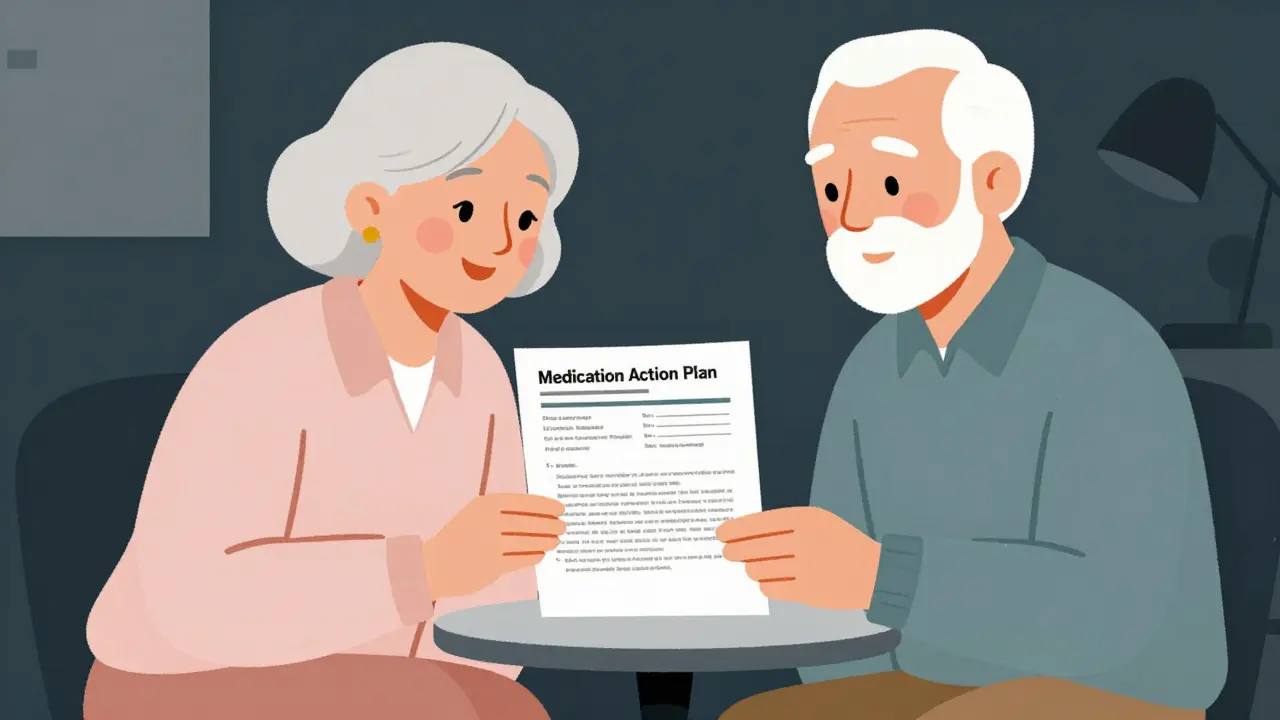
What is a Medication Action Plan?
A Medication Action Plan (MAP) is one of the three formal documents you receive after your review. It is a tailored guide that helps you manage your medications, addresses barriers to taking them correctly, and lists the specific goals for your therapy.
Next Steps After Your Review
Once the meeting ends, don't just file the paperwork in a drawer. Your first priority should be the Medication Action Plan. If the pharmacist suggested a change in dosage or a new generic alternative, contact your prescribing doctor immediately to get the necessary prescriptions updated. The pharmacist identifies the problem, but your doctor must authorize the change.
For those with very complex regimens, consider using a digital health tool or a smart pill dispenser to track the adherence goals discussed during the review. If you find that your health changes significantly-such as a new diagnosis or a sudden change in symptoms-don't wait for the annual cycle; request a Targeted Medication Review (TMR) to ensure your current drug cocktail is still safe and effective.
Write a comment