

Key Takeaways for Error-Free Fulfillment
- Distinguish clearly between partial fills (shipping what's available) and back-orders (delayed fulfillment).
- Use a a specific policy-like "ship-as-available" or "all-or-nothing"-to manage patient expectations.
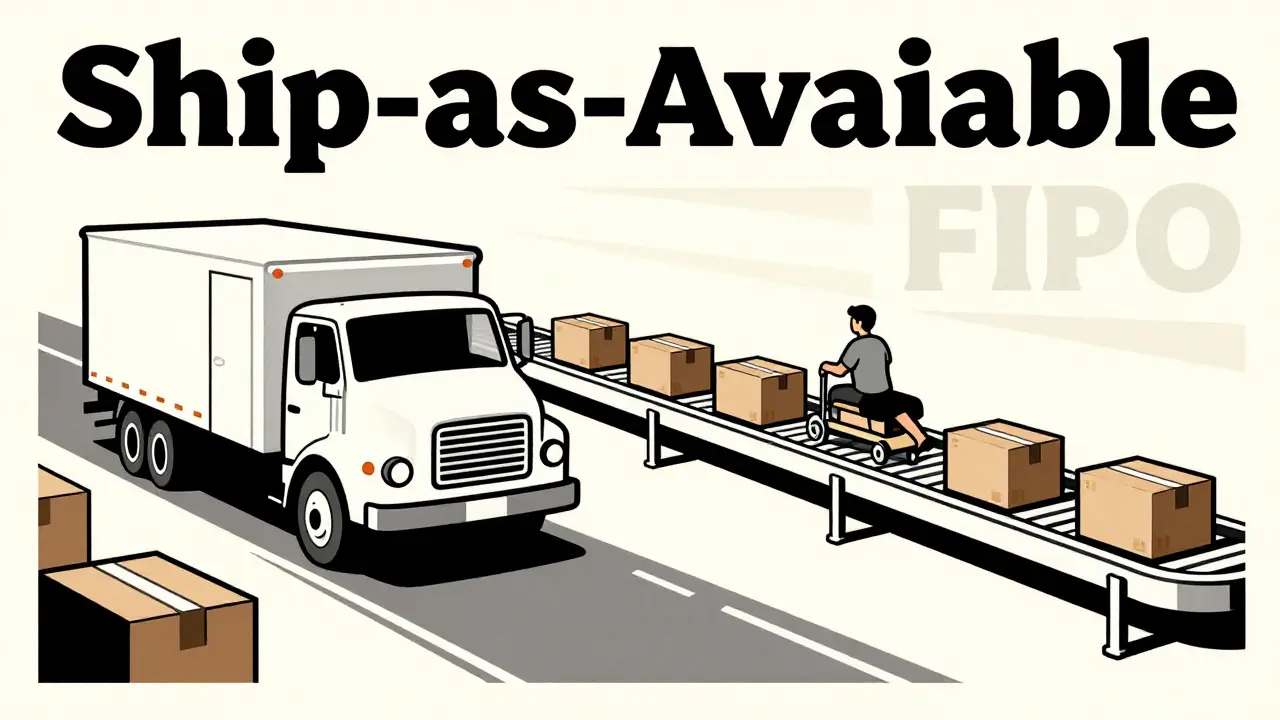
- Implement FIFO (First-In, First-Out) allocation to ensure the oldest back-orders are cleared first.
- Maintain real-time inventory visibility with updates every 5-10 seconds to prevent overselling.
- Set a hard 30-day limit on back-orders before triggering a mandatory customer notification.
Understanding the Difference Between Partial Fills and Back-Orders
Before fixing the process, we have to be clear on the terms. A Partial Fill is an event where only a portion of a prescribed quantity is dispensed because the full amount is unavailable. For example, if a patient needs 60 tablets but you only have 20, you give them the 20 now to prevent a gap in treatment. On the other hand, a Back-Order is a placeholder for an item that is completely out of stock but is expected to arrive from the supplier. The key difference is immediate utility: a partial fill provides some relief, while a back-order provides a promise. According to data from NetSuite, about 8-12% of retail orders hit a back-order snag, but in specialized B2B and healthcare sectors, that number can climb to 25%. When these occur without a clear tracking system, you get "ghost inventory"-items that the system says are there, but the shelf is empty-which is where the most dangerous dispensing errors begin.Choosing the Right Fulfillment Policy
Not every order should be handled the same way. Depending on the urgency of the medication or the type of product, you need a specific policy. The ASCM (Association for Supply Chain Management) suggests four primary strategies to keep operations clean:- Ship-as-Available: The most common for pharmacies. You send whatever is in stock immediately and send the rest later. This minimizes the risk of a patient missing a dose.
- All-or-Nothing: Used for complex kits or high-value equipment where the items are useless without each other. Nothing ships until the entire order is complete.
- Up-to-X-Shipments: A middle ground where you limit the number of partial shipments (usually to 2 or 3) to keep shipping costs from eating your margins.
- Default Back-Order: The standard process for non-urgent items where the order stays open until the supplier replenishes stock.
| Policy Type | Best For... | Risk Level | Patient Impact |
|---|---|---|---|
| Ship-as-Available | Urgent Medications | Low (Safety) / High (Cost) | Immediate relief |
| All-or-Nothing | Medical Equipment Kits | Low (Cost) / High (Delay) | Delayed start of therapy |
| Up-to-X-Shipments | Standard Supplements | Medium | Moderate delay |
Eliminating Errors with Real-Time Visibility and FIFO
Manual reorder points are a recipe for disaster. If your pharmacist is writing down stock levels on a clipboard, you're already behind. To avoid errors, your Inventory Management System must update within 5-10 seconds of a change. If a bottle of medication is scanned out, the system should immediately reflect that it's gone so the next person doesn't promise it to a waiting patient. One of the most effective ways to handle the arrival of back-ordered stock is through FIFO (First-In, First-Out). Instead of putting new stock on the shelf and then checking who needs it, a FIFO protocol allows you to fulfill back-orders straight from the receiving dock. Dave Butterly from FIDELITONE points out that this eliminates "put away time." By processing back-orders the moment the truck arrives, you cut down the time between supply and patient. In some manufacturing cases, this has reduced processing time from 72 hours down to just 4 hours. In a pharmacy, that's the difference between a patient waiting three days for a refill or getting it the same afternoon.The Financial and Communication Side of Partial Fills
Billing is where most partial fill errors occur. If you charge a patient for a full 30-day supply but only give them 10 days, you've created a financial discrepancy and a trust issue. The gold standard is to generate separate invoices for each fulfillment event. Link every single partial shipment to the original purchase order. This creates a paper trail that prevents the "did we already charge them for this?" conversation. Some merchants find that charging customers only when the items are actually filled boosts trust metrics by 28% because it proves the business isn't holding money for products they can't deliver. Communication is the other half of the battle. You can't just leave a back-order open indefinitely. The industry average limit is 30 days. If you hit that mark and still don't have the item, you must notify the customer immediately. To reduce frustration, implement an automated workflow:- Initial Alert: Notify the patient the moment a back-order is triggered.
- ETA Update: Send a fresh estimated time of arrival every 7 days.
- The 30-Day Pivot: If the item isn't here by day 30, give the patient a choice: wait longer, accept a substitution, or get a full refund.
Practical Steps to Implement an Error-Free Workflow
If you're starting from scratch or fixing a broken system, don't try to change everything at once. Break your products into tiers to determine how they should be handled.- Tier 1 (High-Complexity): These are high-value or contract-specific items. They require manual approval before a back-order is confirmed.
- Tier 2 (Standard): These are your everyday items. Use auto-approval for back-orders to keep the line moving.
- Tier 3 (Dead Stock): Discontinued items. These should never be back-ordered. The system should automatically trigger a "discontinued" notification and suggest a substitute.
Dealing with Returns on Partial Orders
Returning items from a partial fill is a nightmare for most systems. If a patient returns a partial shipment, the system often struggles to figure out if they are returning the *whole* order or just *one part* of it. To solve this, use a tagging system. Each single shipment in a partial fill sequence should have a unique identifier linked to the main order. This prevents the system from accidentally marking a back-ordered item as "returned" when the patient was actually returning a different, already-delivered item. Without this, you risk accidentally cancelling a patient's pending medication, which is a critical safety failure.What is the biggest risk of a partial fill in a pharmacy?
The biggest risk is a dispensing error where the patient is not clearly informed of the remaining quantity they are owed, or the pharmacy fails to track the remaining balance, leading to a gap in the patient's medication therapy.
How often should inventory be updated to prevent back-order errors?
Inventory systems should update in real-time, ideally within 5 to 10 seconds of any change. This prevents "overselling" or promising a product to a customer that was just sold to someone else seconds prior.
Should I charge customers upfront for back-ordered items?
While common, charging only when the item is filled is generally better for customer trust. It eliminates the need for complex refunds if the back-order eventually cannot be filled.
What is the FIFO method in back-order management?
FIFO (First-In, First-Out) means that the first customer to place a back-order is the first one to receive the stock when it arrives. This ensures fairness and reduces the average wait time for the oldest pending orders.
How do I handle a back-order that will take longer than 30 days?
Once a back-order hits the 30-day mark, you should trigger a manual or automated review. Provide the customer with an updated ETA or the option to switch to a therapeutic alternative or receive a full refund.
Write a comment