
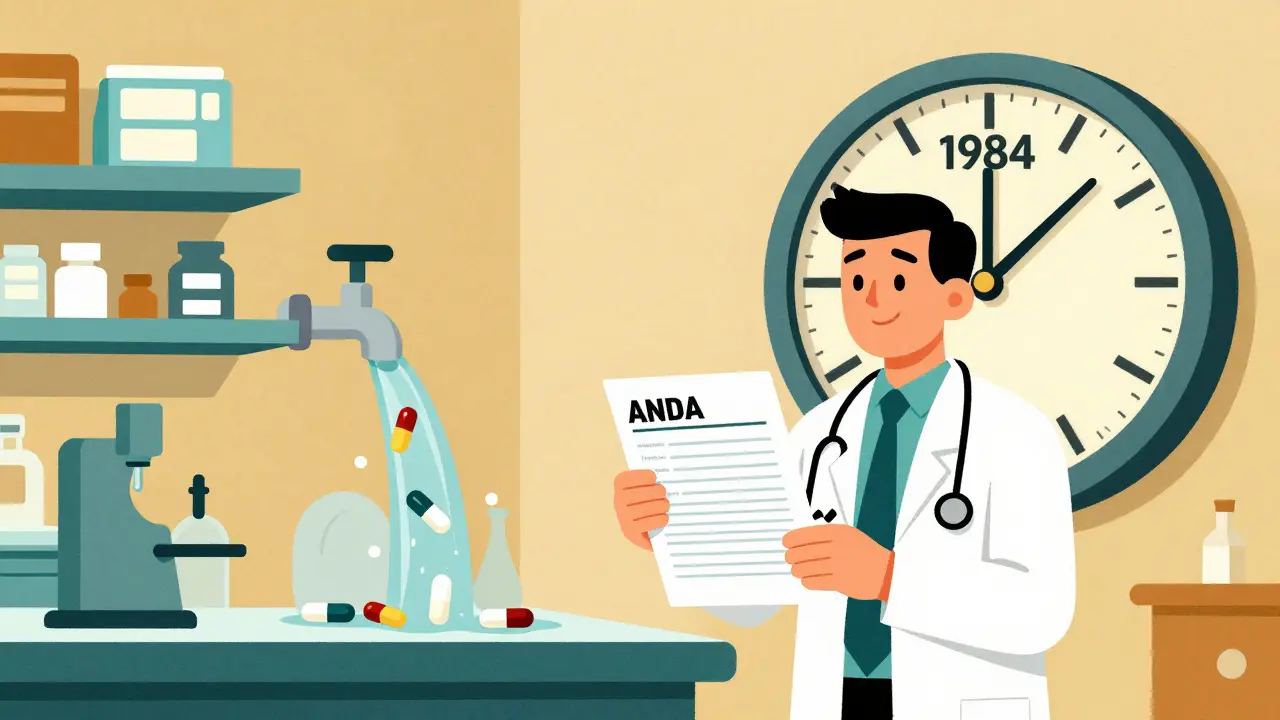
The Hatch-Waxman Act didn’t just change how drugs get approved in the U.S.-it rewrote the rules of the entire pharmaceutical market. Before 1984, getting a generic drug to market was a slow, expensive mess. Only a handful made it through the FDA each year. Then came the Drug Price Competition and Patent Term Restoration Act of 1984-better known as the Hatch-Waxman Act-and everything shifted. It created a system where generic drugs could enter the market quickly, safely, and affordably, while still giving brand-name companies a fair shot at recouping their research costs. Today, 90% of prescriptions in the U.S. are filled with generics. That’s not an accident. That’s Hatch-Waxman in action.
How Generic Drugs Got a Fast Track
Before Hatch-Waxman, generic manufacturers had to prove their drugs were just as safe and effective as the original brand drug. That meant running full clinical trials-costing millions and taking years. The FDA didn’t have a shortcut. So most companies just didn’t bother.
The Act changed that by creating the Abbreviated New Drug Application, or ANDA. Instead of redoing all the safety studies, generic companies only needed to prove their version was bioequivalent to the brand drug. That means it delivers the same amount of active ingredient into the bloodstream at the same rate. No need for new patient trials. Just chemistry, manufacturing, and a simple blood-level comparison.
This cut development costs by about 75%. A new brand drug might cost $1 billion to develop. A generic? Around $25 million. That’s why the number of generic approvals jumped from fewer than 10 per year in the early 1980s to over 770 in 2019. The FDA didn’t lower its standards-it just stopped making generic makers repeat work that had already been done.
The Patent Reset: Why Brand Drugs Still Made Money
If generics could jump in right after a patent expired, why would any company spend $2 billion developing a new drug? That was the big fear. Hatch-Waxman solved it with two key tools: patent term restoration and the 30-month litigation pause.
First, innovator companies could apply to extend their patent life by up to five years to make up for the time lost during FDA review. The average extension? Just over two and a half years. That’s not a free pass-it’s compensation. If a drug took seven years to get approved, the company got back nearly three of those years of exclusivity.
Second, the Act created a legal shield for generic companies. Before 1984, testing a patented drug-even for FDA approval-was considered patent infringement. The Supreme Court case Roche v. Bolar had made it illegal. Hatch-Waxman reversed that. Section 271(e)(1) now lets generic makers use patented drugs for testing during the patent term. They can start development years before the patent expires. That’s why the first generic applicant gets a huge advantage.
The 180-Day Exclusivity Gold Rush
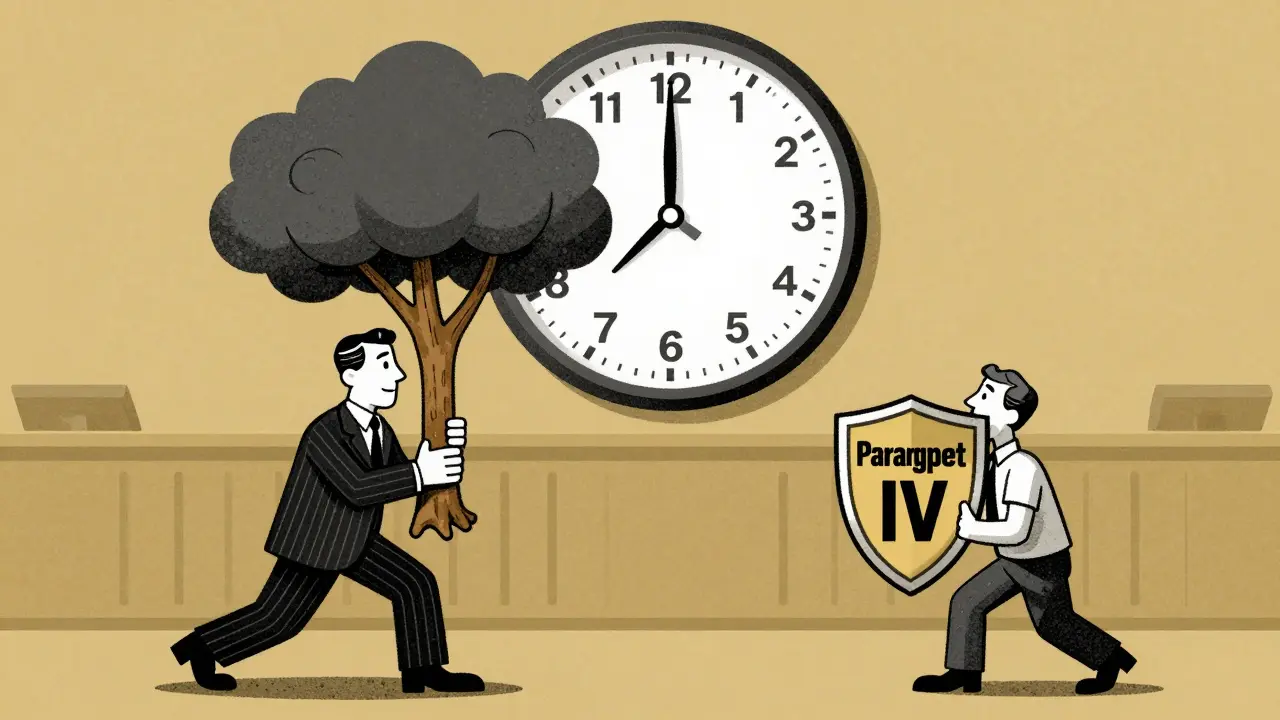
The most controversial part of the Act? The 180-day exclusivity period for the first generic company to file an ANDA with a Paragraph IV certification. That’s when a generic maker says, ‘This patent is invalid or we don’t infringe it.’
That single move triggers a legal clock. The brand company has 45 days to sue. If they do, the FDA can’t approve the generic for 30 months-or until the court rules. But if the first filer wins, they get 180 days of exclusive rights to sell their version. No other generics can enter. That’s a massive financial incentive.
Back in the 1990s, companies would literally camp outside FDA offices to be first to file. The rush was so intense, the FDA changed its rules in 2003 to let multiple companies share the exclusivity if they filed on the same day. Still, the prize remains huge. One 180-day window on a blockbuster drug can mean hundreds of millions in revenue.
The Dark Side: Patent Games and Pay-for-Delay
Hatch-Waxman was meant to balance innovation and competition. But over time, both sides found ways to game the system.
Brand companies started filing dozens of patents on minor changes-like a new pill coating or a slightly different dosage schedule. These are called ‘secondary patents.’ In 1984, a drug had about 3.5 patents on average. Today, it’s over 14. These patents get listed in the FDA’s Orange Book, which triggers automatic 30-month delays every time a generic challenges them. Even if the patent is weak, the delay works in the brand’s favor.
Then there’s ‘product hopping’-when a company slightly changes a drug (say, from a pill to a tablet) and markets the new version as ‘improved.’ Patients switch, generics can’t jump in until the new patent expires, and the original drug gets pulled from shelves. No more cheap generics. Just a pricier ‘new’ version.
The biggest scandal? Pay-for-delay deals. A brand company pays a generic maker to delay its entry. Between 2005 and 2012, about 10% of patent challenges ended this way. The FTC called it anti-competitive. In 2013, the Supreme Court ruled these deals could be illegal-but they didn’t ban them. They’re still happening.
Who’s Winning? Who’s Losing?
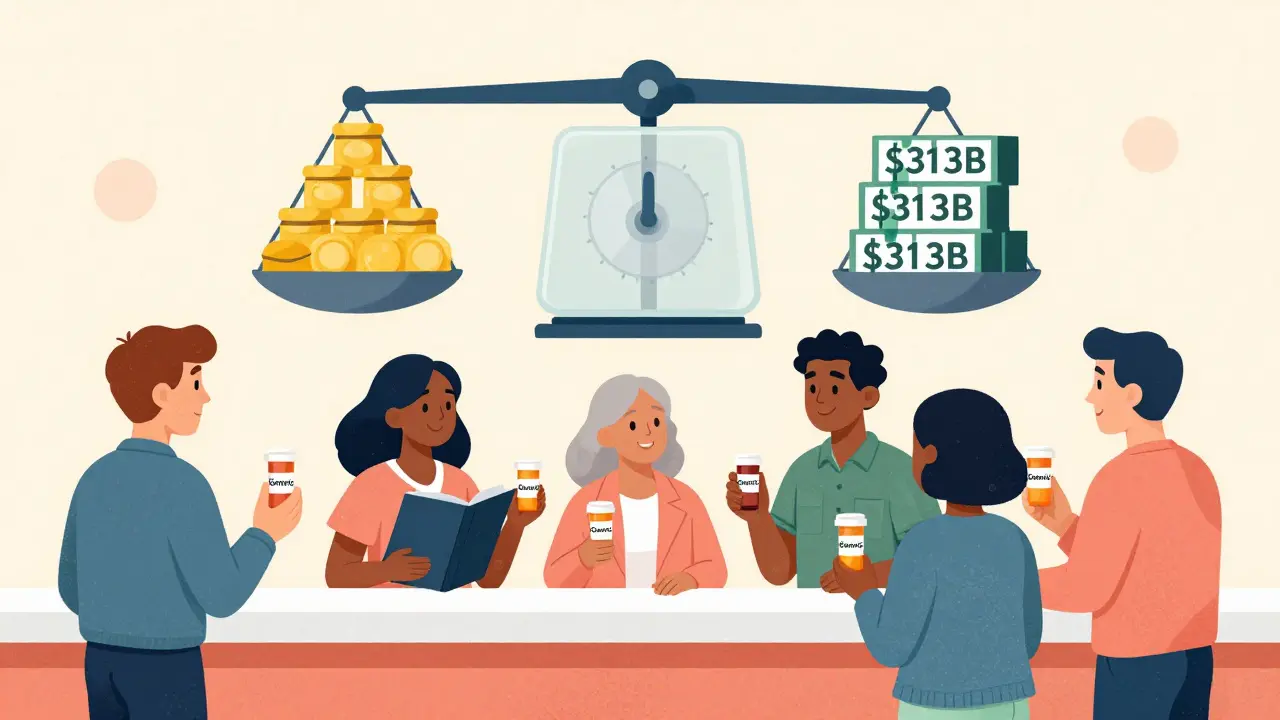
Patients win. The U.S. spends 90% of its prescriptions on generics, but only 18% of its drug dollars. That’s $313 billion saved every year. Without Hatch-Waxman, those savings wouldn’t exist.
Generic manufacturers win too-sort of. The top 10 companies now control 62% of the market. Smaller players struggle with the cost of litigation. A single Paragraph IV challenge can cost $15 to $30 million. That’s not a startup budget. It’s a corporate legal department expense.
Brand companies still make money. But their average market exclusivity is now 13.2 years-not the original 17 years of patent life. They’ve added 2.8 extra years through patent thickets and delays. Harvard’s Aaron Kesselheim found Hatch-Waxman extended effective exclusivity by 1.2 years on average. That’s not a bug. It’s a feature.
And the FDA? They’re overwhelmed. An ANDA submission can be 50,000 pages long. Reviewing them used to take 36 months. Thanks to user fees under GDUFA, it’s now down to 10 months. But 43% of submissions still get rejected on first try. The system works-but it’s creaky.
What’s Changing Now?
The cracks are showing. In 2022, Congress passed the CREATES Act to stop brand companies from refusing to sell samples to generic makers for testing. That was a direct fix to one loophole.
In 2023, the House passed the Preserve Access to Affordable Generics and Biosimilars Act to ban pay-for-delay deals. It’s now in the Senate. If it becomes law, it could save billions more.
The FDA is also cracking down on improper patent listings. In 2022, they released draft guidance to make it harder to list weak or irrelevant patents in the Orange Book. If enforced, this could knock years off generic delays.
By 2025, the FDA aims to cut ANDA review times to just 8 months under GDUFA IV. That’s faster than ever. But the real question is whether these reforms can keep up with the tactics brand companies keep inventing.
Is Hatch-Waxman Still Working?
Yes-but it’s stretched thin. The core idea-speed up generics, protect innovation-still works. Over 15,600 generic drugs are approved under the ANDA pathway. Millions of Americans rely on them every day.
But the system is no longer balanced. Patent thickets, product hopping, and pay-for-delay deals have tilted the scale. The original compromise was between two industries. Now, it’s between a handful of giant corporations and everyone else.
The fix isn’t to scrap Hatch-Waxman. It’s to tighten it. Stop the gaming. Enforce the rules. Let generics enter faster when patents are weak. Let innovation thrive without letting it become a monopoly machine.
For now, the Act still delivers on its promise: affordable drugs for everyone. But the longer we wait to fix its flaws, the more those savings will vanish.


Write a comment