
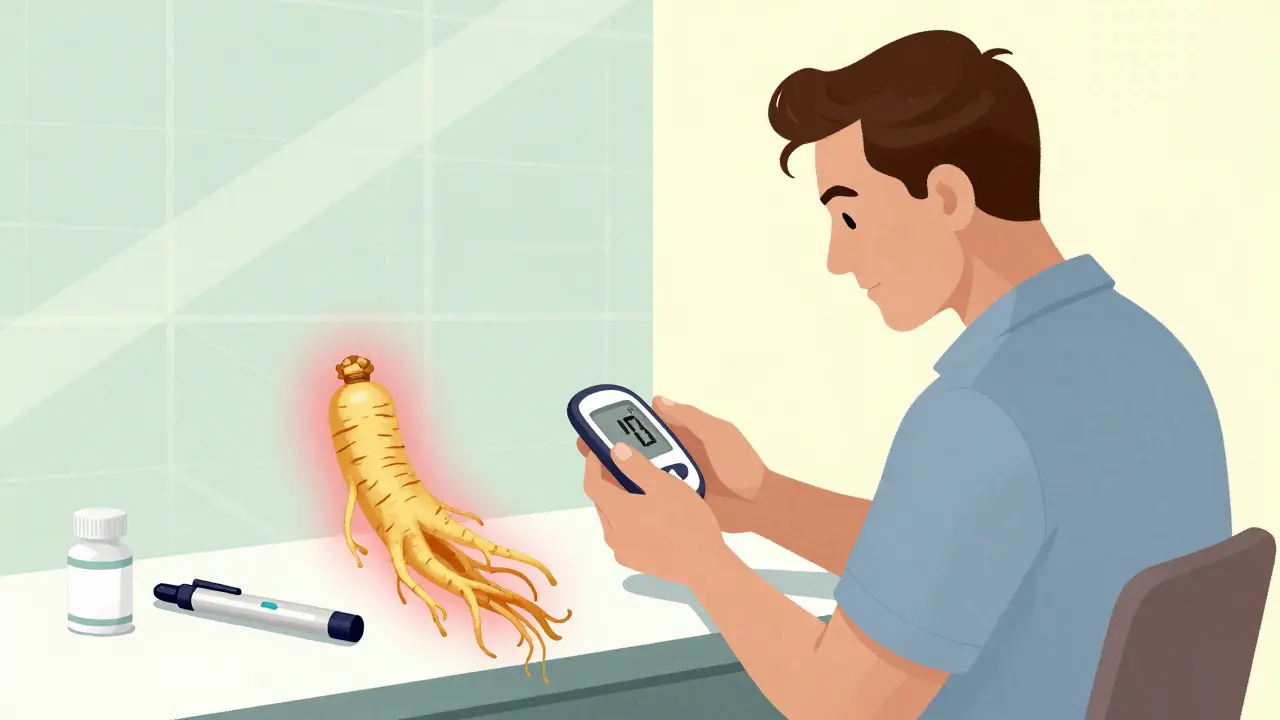
Ginseng & Medication Blood Sugar Risk Calculator
Understanding the Risk
Ginseng can lower blood sugar by approximately 0.71 mmol/L over 12 weeks. When combined with diabetes medications, this effect can increase hypoglycemia risk. This calculator estimates your risk based on your current blood sugar, medications, and ginseng dose.
When you’re managing type 2 diabetes, every supplement you take matters. Even something as natural as ginseng - a root used for centuries in traditional medicine - can change how your diabetes medications work. It’s not just about whether it helps. It’s about whether it might push your blood sugar too low, too fast. And that’s dangerous.
How Ginseng Actually Affects Blood Sugar
Ginseng doesn’t just make you feel more energetic. It directly influences how your body handles glucose. The active compounds, called ginsenosides, help your pancreas release more insulin and make your cells more responsive to it. Studies show it can reduce fasting blood sugar by about 0.71 mmol/L over 12 weeks - not a miracle cure, but enough to matter.
That’s why people with diabetes sometimes add it to their routine. It’s cheap, widely available, and has a reputation for being gentle. But here’s the catch: if you’re already taking metformin, sulfonylureas, or insulin, ginseng can stack on top of those effects. You’re not just getting the benefit - you’re doubling down on the risk.
The Real Danger: Too Much of a Good Thing
Hypoglycemia isn’t just about feeling shaky or sweaty. It can lead to confusion, fainting, seizures, or even coma. And when ginseng lowers your blood sugar on top of your diabetes meds, you might not see it coming. Your body doesn’t always warn you - especially if you’ve had diabetes for years and lost some of your natural hypoglycemia awareness.
WebMD, the Cleveland Clinic, and the Merck Manual all warn about this exact interaction. They don’t say “avoid ginseng.” They say: monitor closely. Because the problem isn’t ginseng itself - it’s the lack of awareness.
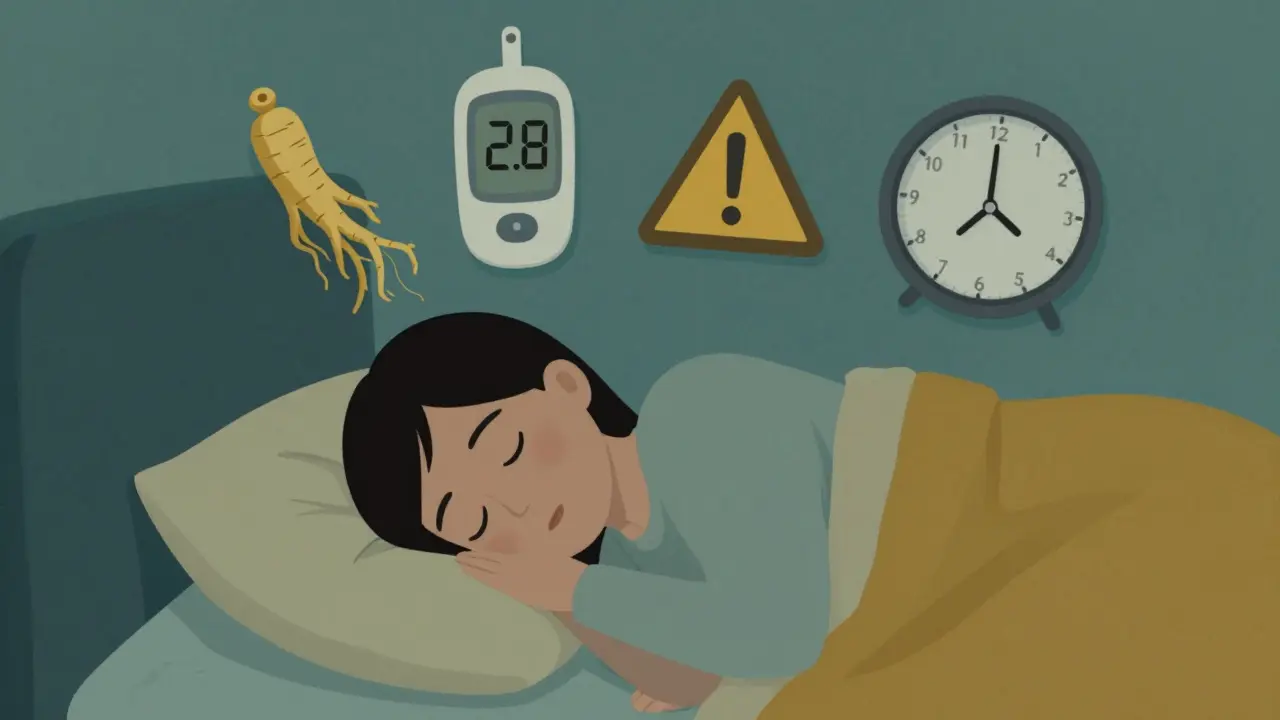
One study with 74 diabetic patients found no major organ damage from ginseng use over 12 weeks. That’s reassuring. But none of those patients were told to stop their insulin. The real risk shows up when people start ginseng without telling their doctor - and then wake up dizzy at 3 a.m. with a blood sugar of 2.8 mmol/L.
Not All Ginseng Is the Same
There’s a big difference between Asian ginseng (Panax ginseng), American ginseng (Panax quinquefolius), and Siberian ginseng (Eleutherococcus senticosus). Only the first two are true ginsengs with proven blood sugar-lowering effects. Siberian ginseng? It might raise or lower blood sugar - no consistency. And if you’re buying it from a market stall or an online seller with no label, you have no idea what you’re getting.
Even among true ginsengs, potency varies. A 200 mg standardized extract isn’t the same as chewing a piece of dried root. Clinical trials used doses between 100 mg and 3,000 mg daily. Most effective results came from 1-3 grams of root or 200 mg of extract. But without knowing the ginsenoside content, you’re guessing.
And don’t forget the liquids. Some ginseng teas, tonics, or drops contain added sugar or alcohol. That’s not just useless - it’s counterproductive. Always check the label. If it says “sweetened” or “contains alcohol,” skip it.
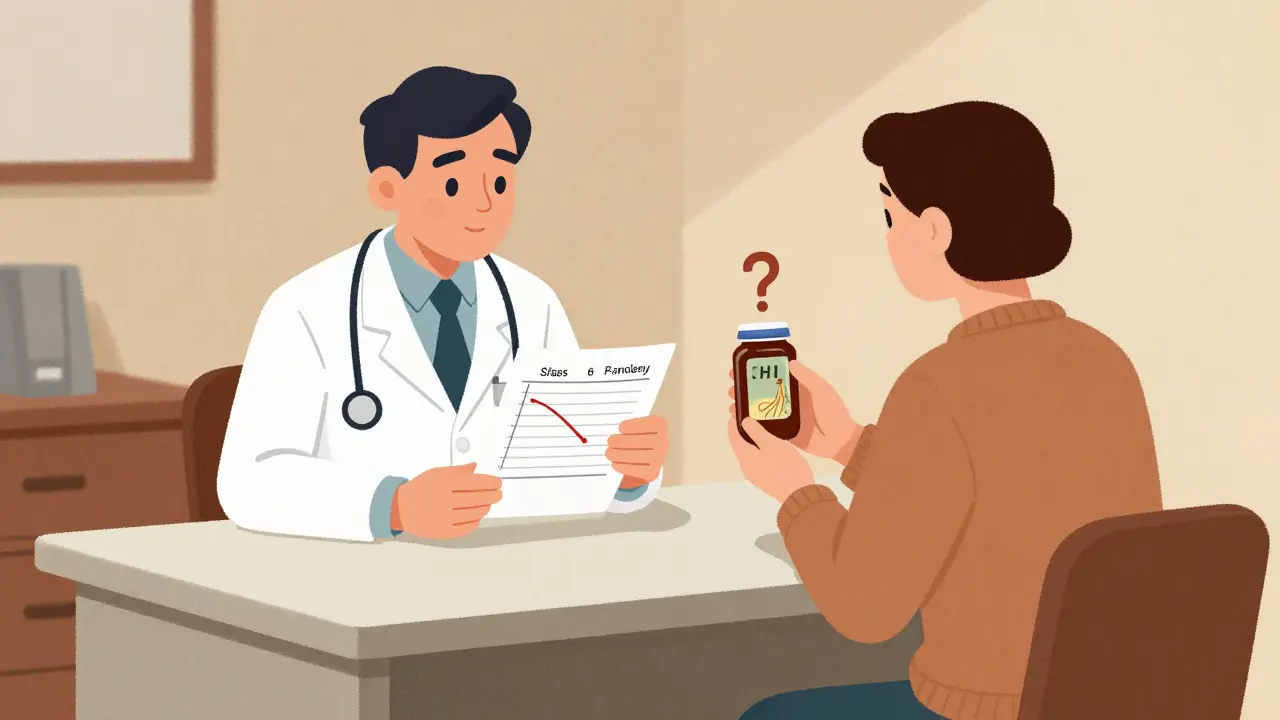
What Your Doctor Needs to Know
Your doctor doesn’t need to approve your ginseng use. But they need to know about it. Why? Because they might need to adjust your medication.
Imagine you’ve been on 10 mg of glipizide for six months. Your blood sugar’s steady at 7.2 mmol/L. Then you start taking 1 gram of American ginseng daily. Two weeks later, your fasting numbers drop to 5.1 mmol/L. You think you’re doing great. But your doctor sees a pattern: your HbA1c dropped from 7.1% to 6.3% in three months - too fast. That’s a red flag. Your medication dose might be too high now. And if you keep going, you could crash.
That’s why the American Academy of Family Physicians and Medical News Today both say: report any unusual results. That means keeping a log. Not just your morning fasting number. Your post-meal readings. Your evening levels. Any time you feel off - write it down.
How to Monitor Safely
If you decide to try ginseng, here’s how to do it without risking your health:
- Start low. Use 200 mg of standardized extract or 1 gram of dried root daily. Don’t jump to 3 grams.
- Test more often. Check your blood sugar 3-4 times a day for the first two weeks - fasting, before meals, and two hours after eating.
- Track symptoms. Note any dizziness, sweating, heart palpitations, or confusion - even if your meter looks fine.
- Wait before adjusting meds. Don’t cut your insulin or pills because your numbers look better. Talk to your doctor first.
- Check the source. Buy from brands that list ginsenoside content (ideally 4-7% total). Avoid products with “proprietary blends” - they hide the dose.
And if you’re on blood thinners like warfarin, aspirin, or NSAIDs? Be extra careful. Ginseng can interfere with those too. Same goes for antidepressants, thyroid meds, or HIV drugs. Diabetics often take multiple pills. One supplement can ripple through your whole regimen.
When to Skip Ginseng Altogether
Some people should avoid ginseng completely:
- If you’ve had low blood sugar episodes in the past six months
- If you’re pregnant or breastfeeding
- If you have high blood pressure or heart rhythm issues
- If you’re on insulin and struggle with hypoglycemia unawareness
- If you’re not willing to test your blood sugar more often
It’s not about being afraid of natural remedies. It’s about respecting how powerful they can be. Ginseng isn’t harmless because it’s herbal. It’s powerful because it works.
The Bottom Line
Ginseng might help lower blood sugar. But it’s not a replacement for your meds. It’s a potential wildcard. Used carelessly, it can cause harm. Used wisely, with monitoring and doctor input, it might add a small benefit.
The science isn’t strong enough yet to say it’s a standard part of diabetes care. But it’s strong enough to say: don’t ignore it. Don’t assume it’s safe. Don’t take it without telling your provider. And never, ever stop monitoring your blood sugar just because you feel fine.
Diabetes management isn’t about avoiding everything that’s not a pill. It’s about knowing what’s in your body - and what it’s doing to you.


Write a comment