
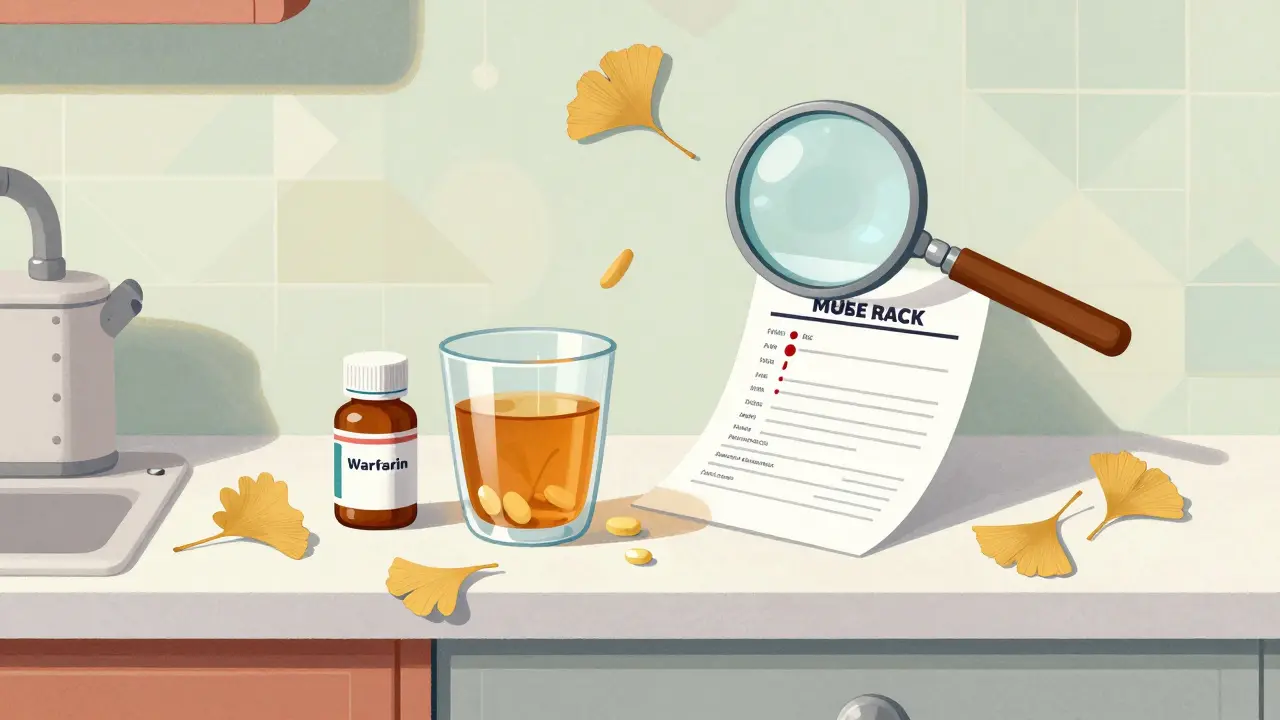
Every year, millions of people take Ginkgo biloba for memory, focus, or circulation. It’s one of the most popular herbal supplements in North America. But if you’re on a blood thinner-whether it’s warfarin, aspirin, clopidogrel, or a DOAC like rivaroxaban-you need to pause and ask: Is this safe?
What Exactly Is Ginkgo Biloba?
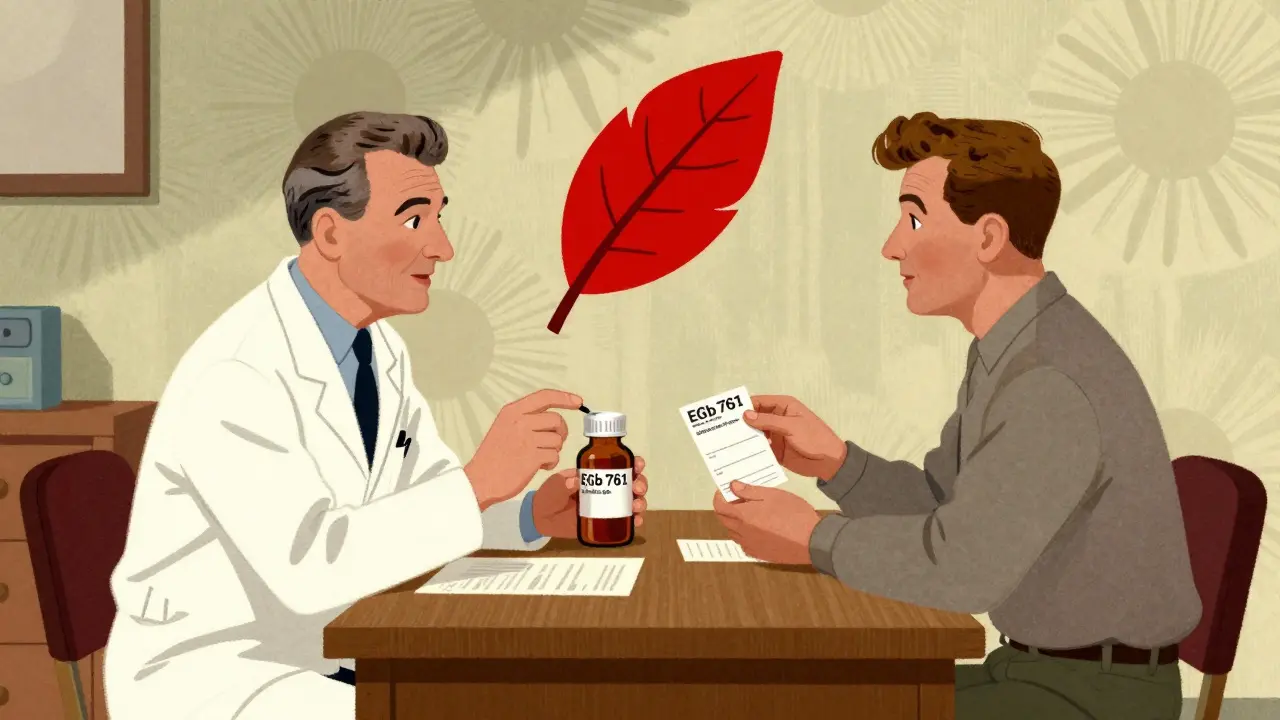
Ginkgo biloba comes from the leaves of the Ginkgo tree, one of the oldest living tree species on Earth, unchanged for over 270 million years. It’s been used in traditional Chinese medicine for centuries, but the modern supplement form most people take is a standardized extract called EGb 761. This version contains 24% flavonol glycosides and 6% terpene lactones-active compounds thought to improve blood flow and protect nerve cells.
It’s not a magic pill for memory, but some studies show modest benefits for older adults with mild cognitive decline. More importantly, it’s widely used for peripheral circulation-helping with leg pain from poor blood flow, tinnitus, or dizziness. About 12 million Americans take it annually. And it’s not just pills: you’ll find it in teas, gummies, and liquid drops.
How Blood Thinners Work
Blood thinners don’t actually thin your blood. They stop clots from forming too easily. There are two main types:
- Anticoagulants like warfarin (Coumadin), apixaban (Eliquis), or rivaroxaban (Xarelto) slow down the body’s clotting process by targeting clotting factors in the liver.
- Antiplatelets like aspirin and clopidogrel (Plavix) stop platelets-the sticky blood cells-from clumping together.
Both are prescribed for heart disease, stroke prevention, or after surgeries like stent placement. Taking them means your body has a harder time stopping bleeding. Even a small cut can take longer to seal. That’s why mixing them with other substances that affect bleeding is risky.
The Controversy: Does Ginkgo Really Increase Bleeding Risk?
This is where things get messy. Some sources say Ginkgo biloba is dangerous with blood thinners. Others say the risk is overblown. Here’s why:
Lab studies suggest Ginkgo may reduce platelet aggregation-meaning it could make it harder for blood to clot. It might also affect how your liver breaks down warfarin, potentially making it stronger. That’s the theory. But theory doesn’t always match real life.
Controlled clinical trials, like the one published in Frontiers in Pharmacology in 2011, found no significant increase in bleeding when Ginkgo was taken with aspirin or warfarin in healthy volunteers. A 2008 review in PubMed concluded that the evidence for dangerous interactions was weak and mostly based on poorly documented case reports.
But here’s the catch: those case reports aren’t just noise. Between 2008 and 2020, the FDA received 18 reports of bleeding events linked to Ginkgo use-some involving brain bleeds. These weren’t all proven to be caused by Ginkgo, but they happened in people already on blood thinners. And in real-world practice, 21% of patients on anticoagulants or antiplatelets also take herbal supplements like Ginkgo, according to a 2020 PLOS ONE study.
The key difference? Most safe studies used high-quality, standardized EGb 761. The bad reports often involved cheap, unregulated products with inconsistent dosing or unknown contaminants. That’s a huge gap.
What the Experts Say
There’s no consensus. But here’s how major institutions line up:
- Mayo Clinic: Says Ginkgo may raise bleeding risk with aspirin, clopidogrel, and warfarin. Advises caution.
- GoodRx: Labels warfarin as a "high-risk" interaction-strongly advises avoiding Ginkgo entirely. Lists aspirin and clopidogrel as "moderate-risk."
- Cleveland Clinic: Lists blood thinners as a direct contraindication to Ginkgo use.
- American Society of Health-System Pharmacists (AHFS): Calls the risk "theoretical"-no strong evidence of harm, but case reports exist.
- Dr. Michael Murray (author of The Encyclopedia of Natural Medicine): Recommends stopping Ginkgo 36 hours before surgery.
- Dr. Tieraona Low Dog and the American Society of Anesthesiologists: Recommend stopping it 2 weeks before any procedure.
Why the difference? It comes down to risk tolerance. Some doctors say: "If there’s even a small chance of bleeding, don’t take the risk." Others say: "Don’t scare people away from a supplement that’s been safely used for decades in controlled studies."
What You Should Do
Don’t guess. Don’t rely on internet forums. Here’s what to do:
- Check your meds. Are you on warfarin, aspirin, clopidogrel, rivaroxaban, apixaban, or any other anticoagulant or antiplatelet? If yes, don’t start Ginkgo without talking to your doctor or pharmacist.
- Be honest. Tell your provider about every supplement you take-even if you think it’s "just herbal" or "harmless."
- Ask about timing. If you’re scheduled for surgery, dental work, or even a colonoscopy, ask if you should stop Ginkgo. Most experts agree: stop it at least 1-2 weeks before any procedure.
- Know your product. If you’re already taking Ginkgo, make sure it’s EGb 761 or another standardized extract. Avoid random brands with no label details. Look for "standardized to 24% flavonoids and 6% terpenes."
- Watch for signs of bleeding. Unusual bruising, nosebleeds that won’t stop, blood in urine or stool, or headaches that feel different than usual? Call your doctor immediately.
What About Other Supplements?
You’re not alone if you’re taking more than one herbal product. Ginkgo isn’t the only one that can interact with blood thinners. Garlic, ginger, turmeric, danshen, and evening primrose oil also affect platelet function or clotting. Taking multiple herbs together can multiply the risk.
Even something as simple as fish oil-commonly taken for heart health-can increase bleeding risk when combined with blood thinners. Many people don’t realize it’s not just prescription drugs that matter.

Why This Matters More Than You Think
Herbal supplements aren’t regulated like prescription drugs. The FDA doesn’t test them for safety or purity before they hit shelves. A 2023 study found that 1 in 5 Ginkgo products on the market didn’t even contain the labeled amount of active ingredients. Some had contaminants. Others had undisclosed fillers.
And here’s the kicker: 78% of pharmacists in a 2022 survey said they routinely warn patients about Ginkgo-blood thinner interactions. That means your pharmacist already knows this is a common problem. But most patients don’t bring it up unless asked.
Electronic health records from Epic and Cerner now flag Ginkgo interactions automatically. If your doctor uses one of these systems, they might see a warning pop up when you’re prescribed a blood thinner. But if you didn’t tell them you’re taking Ginkgo? The warning won’t show up.
Bottom Line: Play It Safe
There’s no clear-cut answer. Science is divided. But your body isn’t a lab. It’s real. And bleeding can be life-threatening.
If you’re on a blood thinner:
- Don’t start Ginkgo without talking to your doctor.
- If you’re already taking it, don’t quit cold turkey-ask your provider how to taper safely.
- Always tell every healthcare provider you see-dentist, surgeon, ER doctor-that you take Ginkgo biloba.
- When in doubt, skip it. There are other ways to support circulation and brain health without adding risk.
Supplements aren’t always safer than pills. Sometimes, they’re riskier-because no one’s watching them as closely.
Can I take Ginkgo biloba with aspirin?
Some studies say yes, others say no. Aspirin is an antiplatelet, and Ginkgo may also affect platelet function. While controlled trials haven’t shown major bleeding with this combo, case reports exist. Most experts recommend avoiding it or using it only under close medical supervision. If you’re on low-dose aspirin for heart protection, don’t add Ginkgo without talking to your cardiologist.
Is Ginkgo biloba safe with warfarin?
Most guidelines say no. Warfarin has a narrow safety window-small changes in how your body processes it can lead to dangerous bleeding or clots. Ginkgo may interfere with warfarin metabolism, and case reports link the two to brain bleeds. GoodRx and the Cleveland Clinic classify this as a high-risk interaction. If you’re on warfarin, avoid Ginkgo unless your doctor approves it after checking your INR levels closely.
Should I stop Ginkgo before surgery?
Yes. Most anesthesiologists and surgeons recommend stopping Ginkgo at least 1-2 weeks before any procedure, even minor ones like dental work. The risk of excessive bleeding during or after surgery is real, even if the evidence isn’t perfect. Don’t assume your surgeon knows you’re taking it-tell them. Bring your supplement bottles to your pre-op appointment.
What are the signs of bleeding from Ginkgo and blood thinners?
Watch for unexplained bruising, nosebleeds that last more than 10 minutes, blood in urine or stool (which may look black or tarry), prolonged bleeding from cuts, or sudden severe headaches, dizziness, or confusion-these could signal internal bleeding, including in the brain. If you notice any of these, contact your doctor immediately.
Are there safer alternatives to Ginkgo biloba?
Yes. For circulation, regular walking, compression socks, and staying hydrated help. For memory and focus, evidence supports omega-3s (from fish oil, not supplements alone), adequate sleep, and managing blood pressure and blood sugar. If you’re taking Ginkgo for cognitive support, talk to your doctor about other options that don’t interfere with your blood thinner. Don’t replace one supplement with another without checking interactions first.
Final Thought
You’re not being paranoid if you’re cautious. The supplement industry doesn’t have to prove safety before selling. You’re the one who has to live with the consequences. If you’re on a blood thinner, your priority isn’t optimizing your brain-it’s staying alive. That means asking questions, speaking up, and choosing safety over convenience-even when the science isn’t 100% clear.


Write a comment