
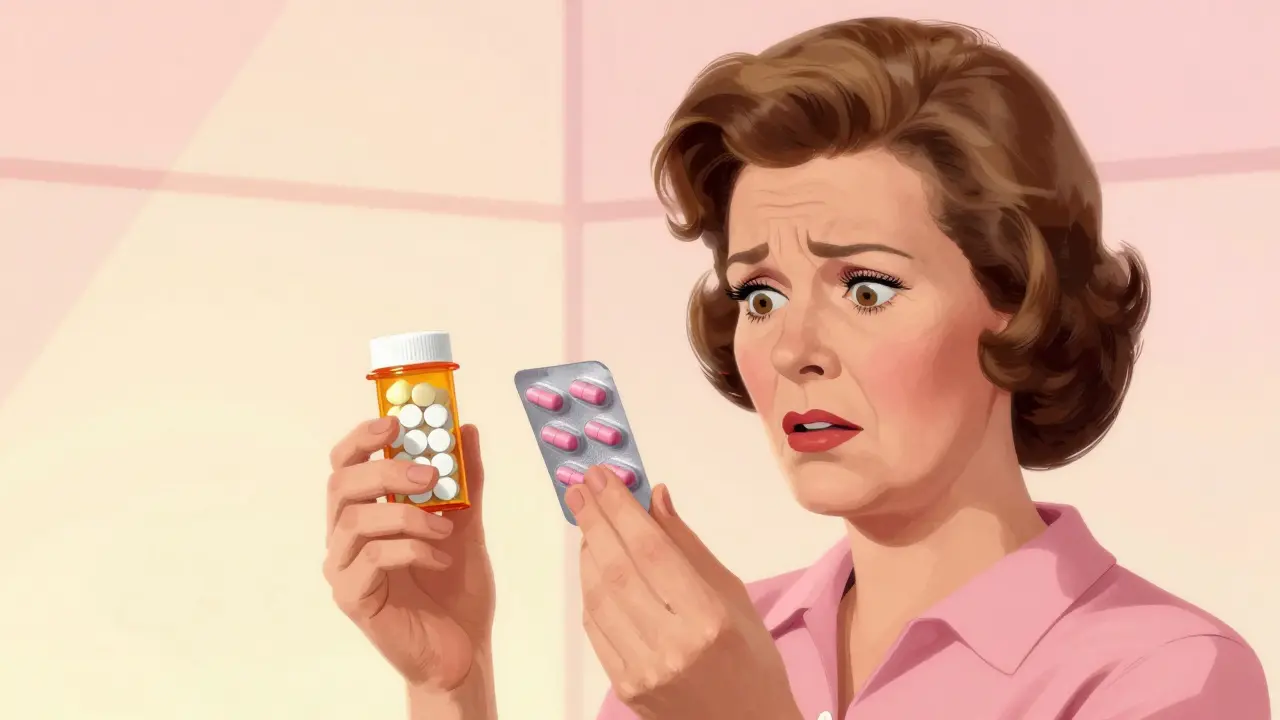
Have you ever opened your pill bottle and thought, "This isn’t the same pill I’ve been taking"? You’re not alone. Every year, millions of Americans experience sudden changes in the color, shape, or size of their generic medications - even when the name on the bottle hasn’t changed. These shifts aren’t mistakes. They’re legal, common, and often completely invisible to doctors and pharmacists until a patient raises a red flag. But here’s the real problem: generic pill appearance changes aren’t just confusing - they’re putting people’s health at risk.
Why Do Generic Pills Look Different?
Generic drugs are required by the FDA to have the same active ingredient, strength, dosage form, and effectiveness as their brand-name counterparts. But here’s the catch: they don’t have to look the same. In fact, U.S. trademark laws make it illegal for a generic drug to look identical to the brand-name version. Why? To prevent confusion in the marketplace and avoid legal battles over intellectual property. That means each manufacturer - whether it’s Teva, Mylan, or a smaller company - gets to pick its own color, shape, and markings.This system works fine on paper. But in real life, patients don’t care about trademark law. They care about whether their medication looks familiar. A patient taking sertraline for depression might get a blue tablet one month, then a white one the next, then a green oval the following month. Same active ingredient. Same dose. Same effect. But to someone who’s been taking it for years, it feels like a different drug.
The Real Cost: Patient Adherence and Safety
"I almost stopped taking my blood pressure meds because the pills changed from white to pink. I thought I’d been given the wrong medicine." - This quote isn’t made up. It’s from a Reddit user in r/pharmacy, and it’s echoed in clinics across the country.Studies show this isn’t just a minor annoyance. A major study in the Annals of Internal Medicine found that 34% of patients stopped taking their medication after a simple color change. When the shape changed - say, from a round tablet to a capsule - that number jumped to 66%. That’s two out of three people abandoning their treatment because of how the pill looked.
It’s not just about fear. Patients often associate certain colors with effectiveness. A white tablet might feel "stronger" to them. A pink one might feel "weaker." One patient described her potassium pills as "flat, circular, neon orange" - a visual cue she trusted. When she received white, capsule-shaped pills instead, she panicked and stopped taking them. She didn’t realize she was risking serious heart complications.
According to a 2022 survey by the American Pharmacists Association, 42% of patients experienced at least one appearance change in their regular meds over 12 months. Nearly 30% of them were worried enough to question whether the new pill was safe or effective.
Legality: What the FDA Actually Allows
The FDA doesn’t require generic drugs to match brand-name pills in appearance. Their approval process focuses on bioequivalence: does the drug get into your bloodstream the same way? Does it work the same? If yes - it’s approved. The color, size, shape, and even the inactive ingredients (like dyes or fillers) can vary. That’s why you’ll find metformin as a white round tablet, a pink oblong one, or even a coated capsule - all from different makers.
But here’s what’s often misunderstood: just because the FDA allows it doesn’t mean it’s harmless. The agency acknowledges the problem. In a 2014 letter published in ACP Journals, experts wrote: "Bioequivalent generic drugs that look like their brand-name counterparts enhance patient acceptance." In other words: if generics looked more like the brand versions, patients would stick with them.
And the problem is growing. With more than 70% of all prescriptions filled with generics in the U.S., even small drops in adherence add up. One patient reported nine different appearances for the same medication over 15 years. That’s not rare. That’s routine.
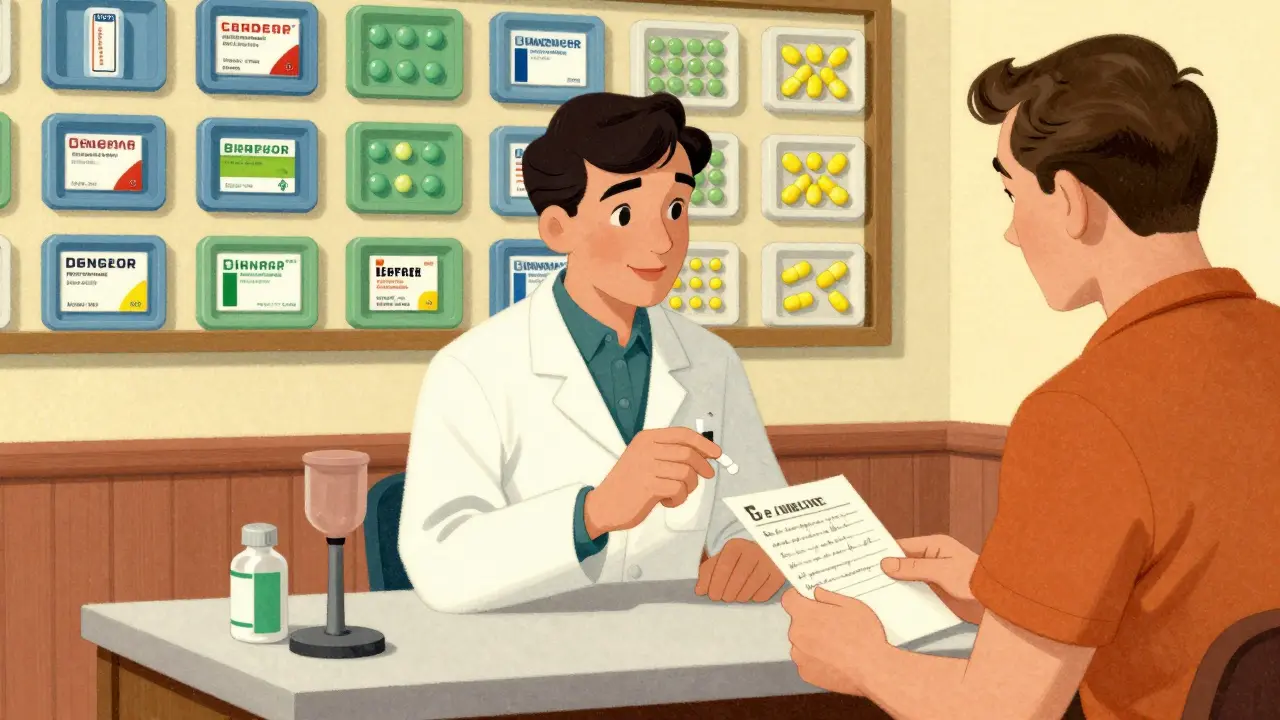
Which Medications Are Most Affected?
Some drugs are notorious for their appearance changes. Here are a few:
- Sertraline (Zoloft): Comes in blue, green, white, and yellow tablets - sometimes even different shapes.
- Metformin: Round, oblong, white, pink, or even coated - depending on the manufacturer.
- Lisinopril: White, pink, peach - no consistent look across brands.
- Gabapentin: One of the most variable. Can be capsules, tablets, or extended-release, with multiple colors and markings.
These aren’t obscure drugs. These are some of the most commonly prescribed medications in the country. If you’re taking one of these, chances are you’ve seen at least one change already.
What Patients Should Do
Don’t panic. But don’t ignore it, either.
- Keep a written list of all your meds. Include the name, dose, and what each pill looks like. Take this list to every appointment.
- Check the bottle label. It should list the manufacturer’s name. If it changes from one refill to the next, that’s normal - but note it.
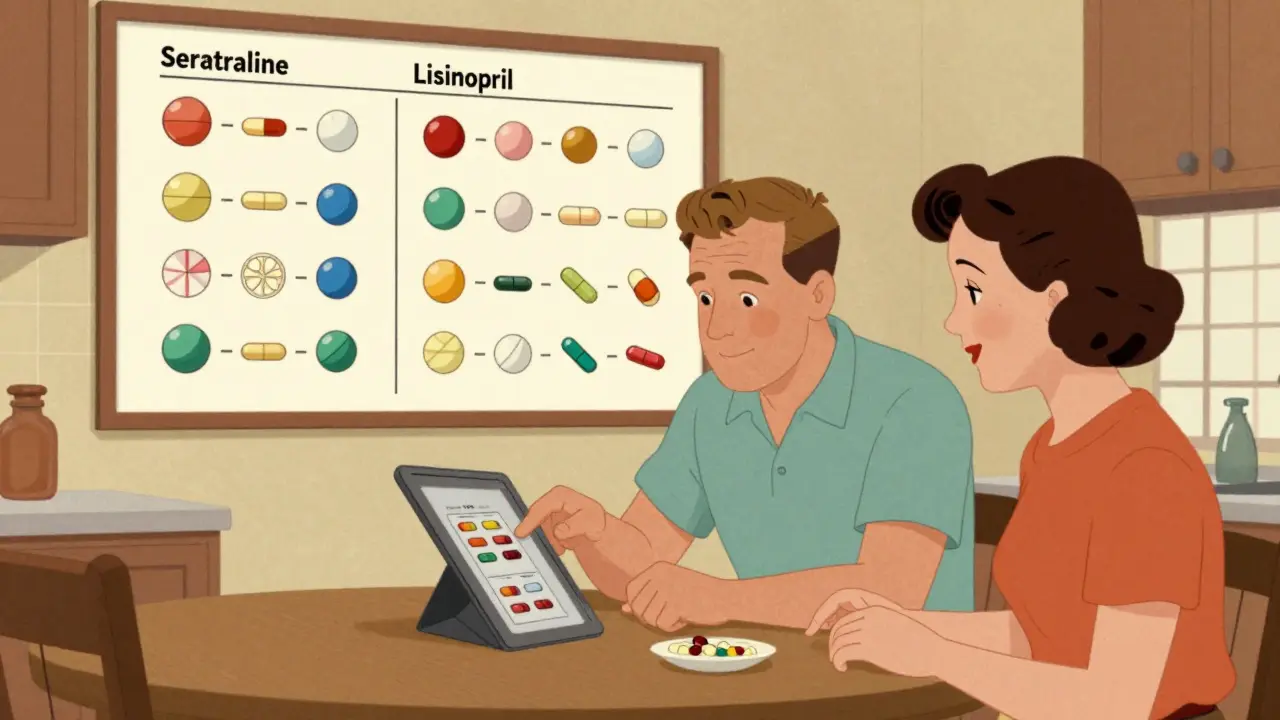
- Use a pill identifier tool. Websites like Medscape’s Pill Identifier or the NIH’s Tracking Your Medications let you search by color, shape, and imprint code. Enter the letters/numbers stamped on the pill - they’re unique to each version.
- Ask your pharmacist. They’re trained to explain appearance changes. Don’t be shy. Say: "I’ve been taking this for years, and now it looks different. Is this still the same medication?"
- Never stop taking a pill because it looks different. Call your doctor or pharmacist first.
What Pharmacists and Doctors Are Doing
Pharmacists are stepping up. In 2018, only 45% of pharmacies notified patients about appearance changes. By 2023, that number jumped to 78%. Many now include a note on the prescription label: "Your medication has changed appearance due to a different manufacturer. Active ingredients unchanged."
Independent pharmacies are also launching pill identification programs. In 2020, only 32% had them. By 2023, 63% did. These programs help patients recognize their meds even when they look different.
Doctors are learning too. Dr. Darrick Lee, a family medicine physician in Los Angeles, tells patients: "One company’s pills will look different from another’s, even though they’re basically the same medication." He asks patients to bring in their pill bottles - not just the list - so he can see exactly what they’re taking.
What’s Next? The Push for Change
The FDA is aware. The MODERN Labeling Act of 2020 gave the agency more power to update generic drug labels when new safety data emerges. In September 2025, the FDA proposed new rules under Section 505(o)(4) of the Federal Food, Drug, and Cosmetic Act - allowing them to require labeling changes based on new safety information, including adherence issues.
Some experts are pushing for a bigger change: standardizing the appearance of generics to match brand-name drugs. But that would require changing trademark law - something drug companies fiercely resist. Until then, patients remain the frontline defense.
The truth is, generics save lives - and money. They cost 80-85% less than brand-name drugs. But if patients stop taking them because they look different, those savings vanish - and so do the health benefits.
The system isn’t broken. It’s just outdated. And until we fix how we treat pill appearance as a health issue - not just a marketing one - people will keep stopping their meds out of fear, not fact.
Is it safe to take a generic pill that looks different from the one I used to take?
Yes, it’s safe - as long as the active ingredient, strength, and dosage form are the same. The FDA requires generic drugs to meet the same standards for safety, purity, and effectiveness as brand-name drugs. Appearance changes are due to different manufacturers choosing different colors, shapes, or coatings - not because the medicine is different. Always check the label for the manufacturer name and use a pill identifier tool if you’re unsure.
Why do pharmacies switch between different generic manufacturers?
Pharmacies choose the lowest-cost option available. Generic drug prices vary between manufacturers, and insurance plans often push for the cheapest version. If one maker lowers their price, the pharmacy switches - even if it means your pill changes color or shape. This happens monthly and is completely legal. It’s not a mistake - it’s how the system works.
Can a pill’s appearance change even if I haven’t switched pharmacies?
Yes. Even if you refill at the same pharmacy, the generic manufacturer supplying the drug can change. Pharmacies don’t always stock the same version. One month, they might get pills from Teva; the next, from Mylan. Each has its own look. This is normal and doesn’t mean your prescription was changed.
What should I do if I notice my pill looks different and I’m worried?
Don’t stop taking it. Call your pharmacist first. They can confirm the medication is correct and explain the change. If you’re still unsure, bring the pill bottle to your doctor. Use a pill identifier tool like Medscape’s online tool to compare the imprint and color. If you’re taking a medication for a serious condition - like blood pressure, epilepsy, or depression - contact your provider immediately. Never guess.
Are there any medications that rarely change appearance?
Brand-name drugs rarely change appearance because manufacturers keep the same formulation to maintain brand recognition. Some generics with only one manufacturer - like certain extended-release versions - also stay consistent. But most common generics - especially widely used ones like metformin, sertraline, or lisinopril - change often because multiple companies make them. If you want consistency, ask your doctor about a brand-name version - though it will cost more.
What to Do Next
Start today: write down what your pills look like. Take a photo of each bottle. Keep the list in your wallet or phone. If you’re on more than three medications, this simple step could prevent a dangerous mistake. Talk to your pharmacist. Ask them to notify you if a change is coming. And if you ever feel unsure - speak up. Your health isn’t just about what’s inside the pill. It’s also about whether you trust what you see.


Write a comment