
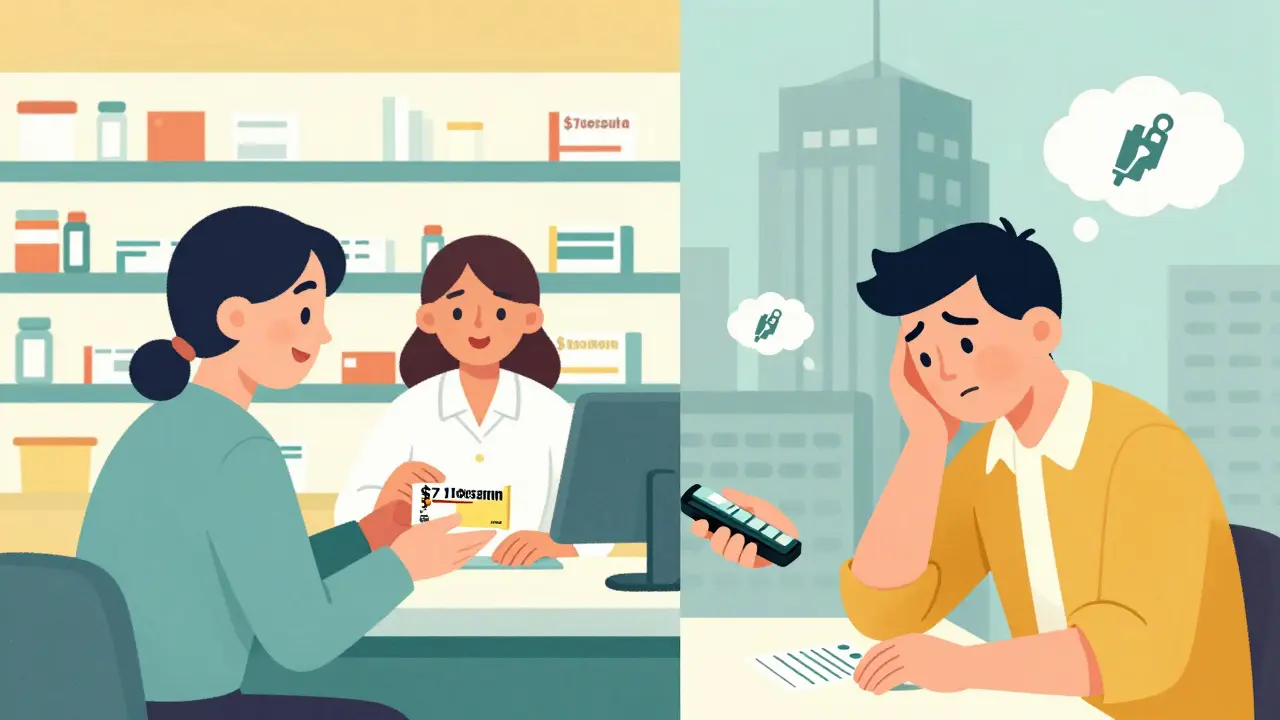
Every year, Americans fill over 3.9 billion prescriptions for generic drugs. That’s nearly 9 out of every 10 prescriptions written. Yet, these same generics make up just 12% of total prescription drug spending. Meanwhile, brand-name drugs-only 10% of prescriptions-account for 88% of the money spent. This isn’t a glitch. It’s the math of how generics change everything.
What You Pay vs. What the System Pays
In 2024, the average out-of-pocket cost for a generic prescription was $6.95. For a brand-name drug? $28.69. That’s more than four times as much. For someone taking five medications a month, switching to generics could save over $1,200 a year. For uninsured patients, the gap is even wider. Brand-name drugs now cost an average of $130.18 per prescription-up 50% since 2019. Generics? They went down $2.45 over the same period. This isn’t just about individual wallets. It’s about the entire healthcare system. In 2023 alone, generic and biosimilar drugs saved the U.S. healthcare system $445 billion. That’s more than the annual GDP of Finland. Without generics, Americans would be paying over $1.2 trillion more for prescriptions each year.The Numbers Behind the Savings
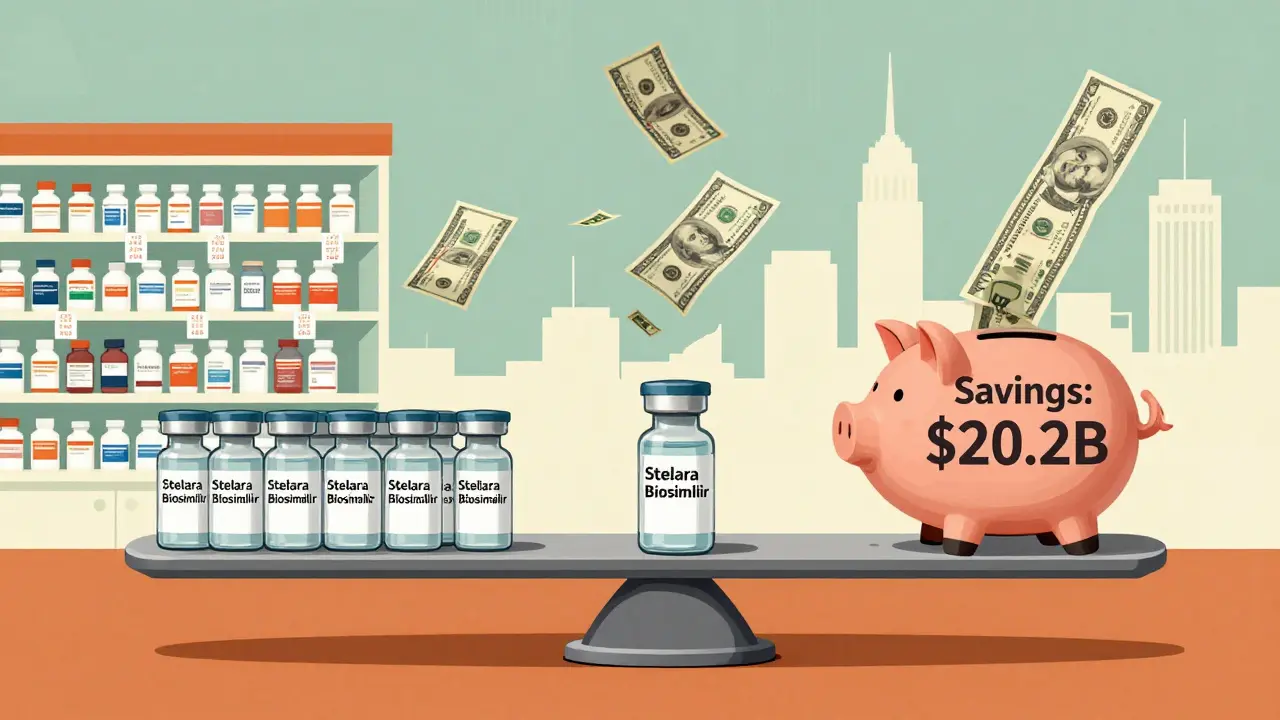
The savings aren’t random. They’re built into the system. Since 2014, generic and biosimilar drugs have saved consumers $3.4 trillion. That’s not a guess. It’s from the Association for Accessible Medicines, which tracks every approved generic and its price impact. The FDA estimates that just the generics approved in 2022 will save $18.9 billion over their first few years on the market. Biosimilars-generic versions of complex biologic drugs-are making an even bigger dent. Since they first entered the market, biosimilars have saved $56.2 billion. In 2024, that number was $20.2 billion. One example: Stelara, a drug used for Crohn’s disease and psoriasis, had a list price of over $5,000 per dose. When nine biosimilar versions launched by mid-2025, prices dropped as much as 90%. Suddenly, patients who couldn’t afford treatment could get it. Even more striking: since 2019, total spending on generic drugs in the U.S. has dropped by $6.4 billion-even as the number of prescriptions climbed from 167 billion to 197 billion. That’s not inflation. That’s deflation. Generics are making medicine cheaper even as demand grows.Why Are Brand Drugs So Expensive?
Brand-name companies don’t make money because their drugs are better. They make money because they can. Patent protection gives them 20 years of exclusivity. But many companies don’t stop there. They file dozens, sometimes over 75, additional patents-on coatings, dosing schedules, delivery methods-to delay generics. One drug, originally set to lose patent protection in 2016, had its monopoly extended to 2034 through patent thickets. This isn’t just legal. It’s profitable. Blue Cross Blue Shield estimates that “pay for delay” deals-where brand companies pay generic makers to hold off on launching cheaper versions-cost consumers $3 billion a year and the system $12 billion. These deals are legal, but they’re not fair. Meanwhile, the cost of brand-name drugs keeps rising. In January 2025, big pharma raised prices on 250 drugs by an average of 4.5%. That’s nearly double the rate of inflation. Generics? Prices kept falling.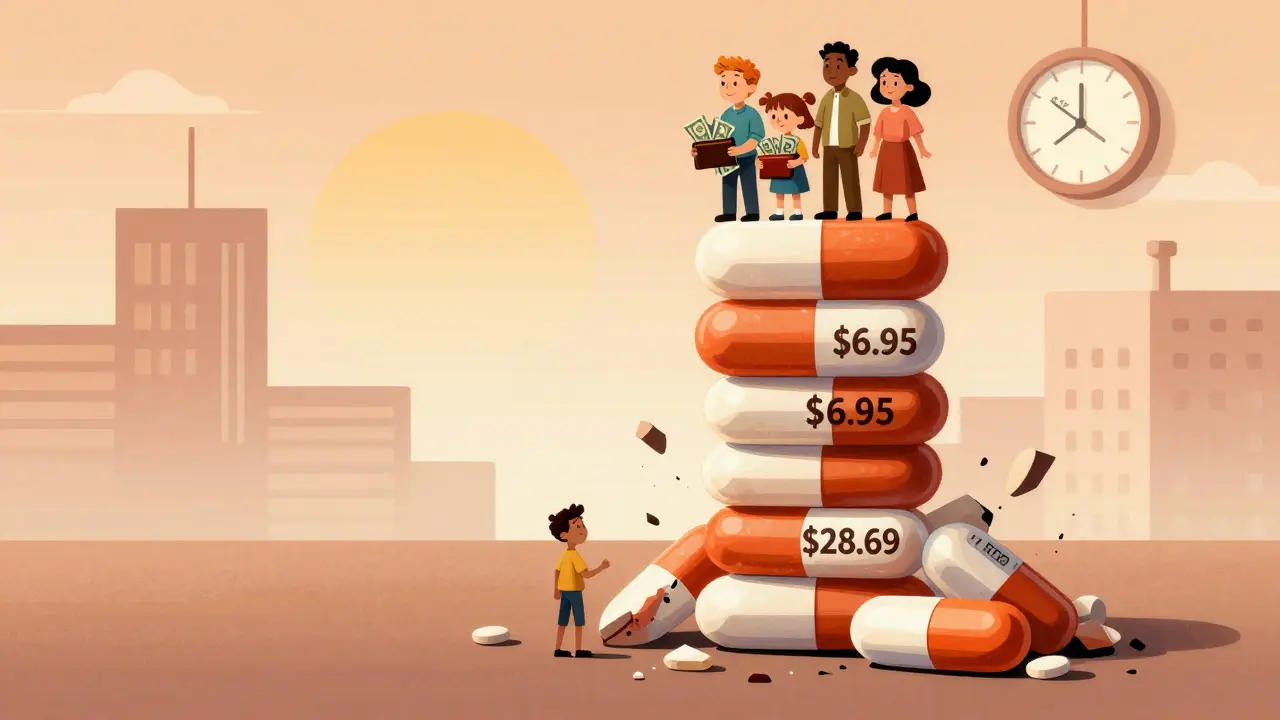
Who Benefits the Most?
Medicare beneficiaries. Medicaid recipients. Uninsured patients. People on fixed incomes. The people who can’t afford to skip a dose because they’re choosing between medicine and groceries. In 2024, 87% of commercial health plans required pharmacists to substitute generics when available. That’s not optional. It’s policy. Pharmacies are trained to do it. Insurers push for it. And patients? They’re saving money without even asking. But not everywhere. Only 42 states have modern pharmacy laws that let pharmacists switch a brand to a generic without calling the doctor first. In the other eight, patients might get stuck with an expensive brand-even if a generic exists-because the law doesn’t let the pharmacist act.What About Effectiveness?
Some people worry generics aren’t the same. They’re not. They’re identical. The FDA requires generics to have the same active ingredient, strength, dosage form, and route of administration. They must also be bioequivalent-meaning they work the same way in the body. There are rare exceptions. For drugs with a narrow therapeutic index-like warfarin, levothyroxine, or certain seizure meds-small differences in absorption can matter. But even here, the FDA reports that less than 1% of generic prescriptions have any reported issues. Most variations are due to inactive ingredients, not the medicine itself. If you switch from one generic brand to another and feel different, it’s likely your body adjusting to a slightly different filler or coating-not the active drug. Talk to your pharmacist. They can help you stick with the same manufacturer if needed.The Big Patent Cliff Coming in 2025
Three blockbuster drugs are about to lose patent protection. Together, they brought in $8.6 billion in sales in 2023:- Entresto (heart failure) - $5.4 billion in sales
- Tradjenta (diabetes) - $1.7 billion in sales
- Opsumit (pulmonary hypertension) - $1.5 billion in sales
What’s Holding Back More Savings?
The biggest obstacle isn’t science. It’s policy. Patent thickets. Product hopping. Pay-for-delay. These aren’t accidents. They’re strategies. And they’re legal-for now. Two bills introduced in early 2025 aim to fix this:- The Affordable Prescriptions for Patients Act targets patent thickets by limiting how many patents a company can file on one drug.
- The Drug Competition Enhancement Act bans product hopping-when a company slightly changes a drug just before its patent expires to block generics.
How to Use Generics Right
You don’t need a degree in pharmacology to save money. Here’s what actually works:- Ask your doctor: “Is there a generic version of this?” If they say no, ask why. Sometimes it’s habit, not science.
- Check your pharmacy’s price list. Some generics cost less if you pay cash instead of using insurance.
- Use mail-order pharmacies. They often have better generic pricing and 90-day supplies.
- Ask about biosimilars for biologics-especially for conditions like rheumatoid arthritis, Crohn’s, or cancer.
- Don’t assume a brand is better. If your insurance covers a generic, it’s because it’s proven safe and effective.
What’s Next?
By 2025, biosimilars are projected to save over $133 billion since their launch. The FDA says reducing regulatory barriers is a top priority. Health systems like Kaiser Permanente have already cut pharmacy costs by 30% by mandating generics. The data is clear: generics work. They’re safe. They’re cheaper. And they’re saving lives-not just money.Yet, the system still treats them like an afterthought. Patients are told to “ask their doctor.” But doctors aren’t paid to track patent expirations. Pharmacists aren’t always allowed to switch without permission. Insurers don’t always push the cheapest option.
It doesn’t have to be this way. The tools are here. The savings are real. All that’s missing is the will to use them.Are generic drugs as effective as brand-name drugs?
Yes. The FDA requires generic drugs to have the same active ingredient, strength, dosage form, and route of administration as the brand-name version. They must also be bioequivalent-meaning they work the same way in your body. Over 90% of generics are rated as therapeutically equivalent. Less than 1% of patients report any measurable difference in effectiveness.
Why are generic drugs so much cheaper?
Generic manufacturers don’t have to repeat expensive clinical trials. Thanks to the Hatch-Waxman Act of 1984, they only need to prove their drug is bioequivalent to the brand. That cuts development costs by up to 90%. With multiple companies making the same drug, competition drives prices down. Brand-name companies recover R&D costs through high prices during their patent monopoly. Generics compete on price from day one.
Can I switch from a brand to a generic safely?
For most medications, yes. The FDA approves generics as safe substitutes. For drugs with a narrow therapeutic index-like warfarin, thyroid meds, or seizure drugs-your doctor might prefer you stay on the same brand or generic manufacturer to avoid small absorption differences. But even then, switching between approved generics is usually safe. Always talk to your pharmacist before switching.
Do insurance plans cover generics?
Yes-and they often require it. As of 2025, 87% of commercial health plans mandate generic substitution when available. Many plans have lower copays for generics, sometimes as low as $5. Some even charge more for brand-name drugs unless your doctor writes a letter explaining why you need it.
What’s the difference between a generic and a biosimilar?
Generics are exact copies of small-molecule drugs, like aspirin or metformin. Biosimilars are highly similar-but not identical-to complex biologic drugs, like insulin or cancer treatments. Because biologics are made from living cells, they can’t be copied exactly. But biosimilars are proven to work the same way. They’ve saved over $56 billion since 2015, with $20.2 billion saved in 2024 alone.
Why don’t all pharmacies automatically switch to generics?
In 8 states, pharmacy laws don’t allow pharmacists to substitute a brand with a generic without the doctor’s permission. Even in states that allow it, some doctors still write “dispense as written” on prescriptions. That’s often outdated advice. Ask your pharmacist if your prescription can be switched. If they say no, ask why.
Are there any downsides to using generics?
The main downside is access. Some patients can’t switch because their doctor doesn’t know about available generics, or because their state’s laws block substitution. In rare cases, patients report minor side effects from different inactive ingredients (like fillers or dyes), but these are not the active drug. The FDA monitors these reports closely-less than 1% of generic prescriptions have any issue.
How can I find out if a generic is available for my drug?
Ask your pharmacist. They have access to the FDA’s Orange Book, which lists all approved generics and their therapeutic equivalence ratings. You can also check websites like GoodRx or Drugs.com, which show real-time pricing for both brand and generic versions. If a generic exists and your insurance doesn’t cover it, ask your doctor if they’ll write a new prescription for the generic version.


Write a comment