
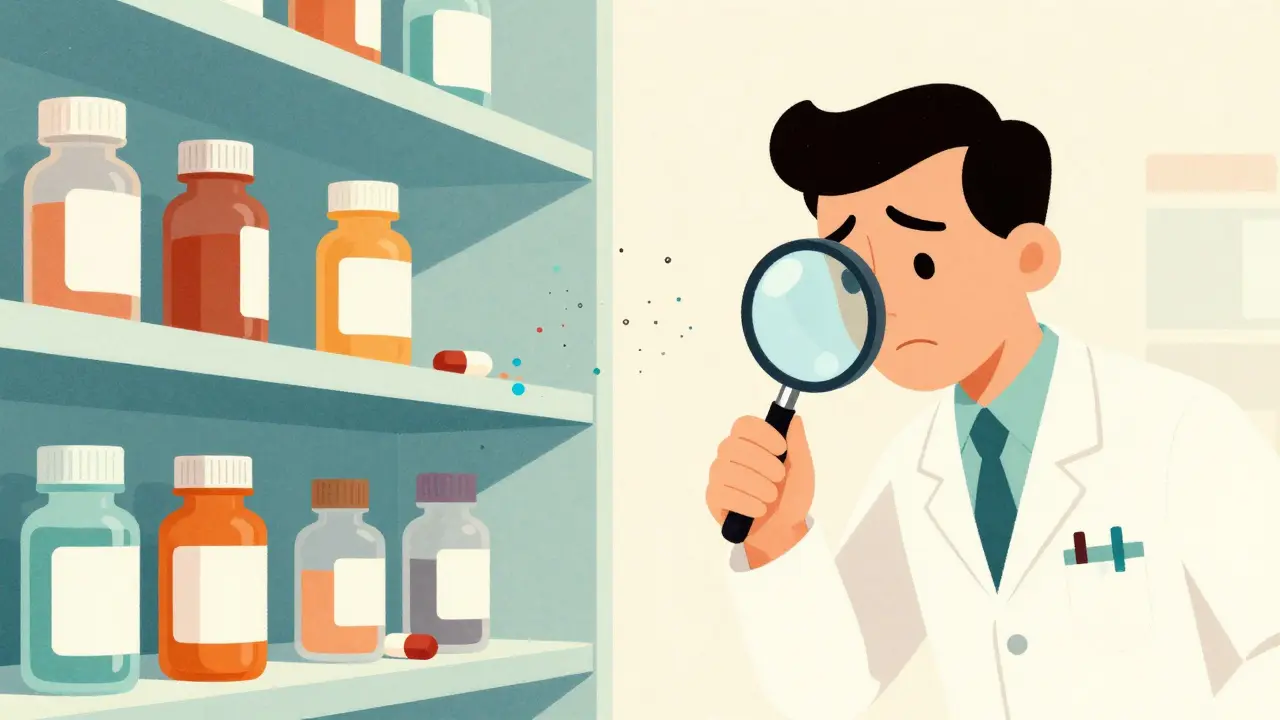
Every time you pick up a generic pill, you expect it to work just like the brand-name version. And for the most part, it does. But behind the scenes, a quiet but serious threat is growing: generic drug contamination. It’s not rare. It’s not theoretical. It’s happening right now - and it’s putting patients at risk.
What Exactly Is Generic Drug Contamination?
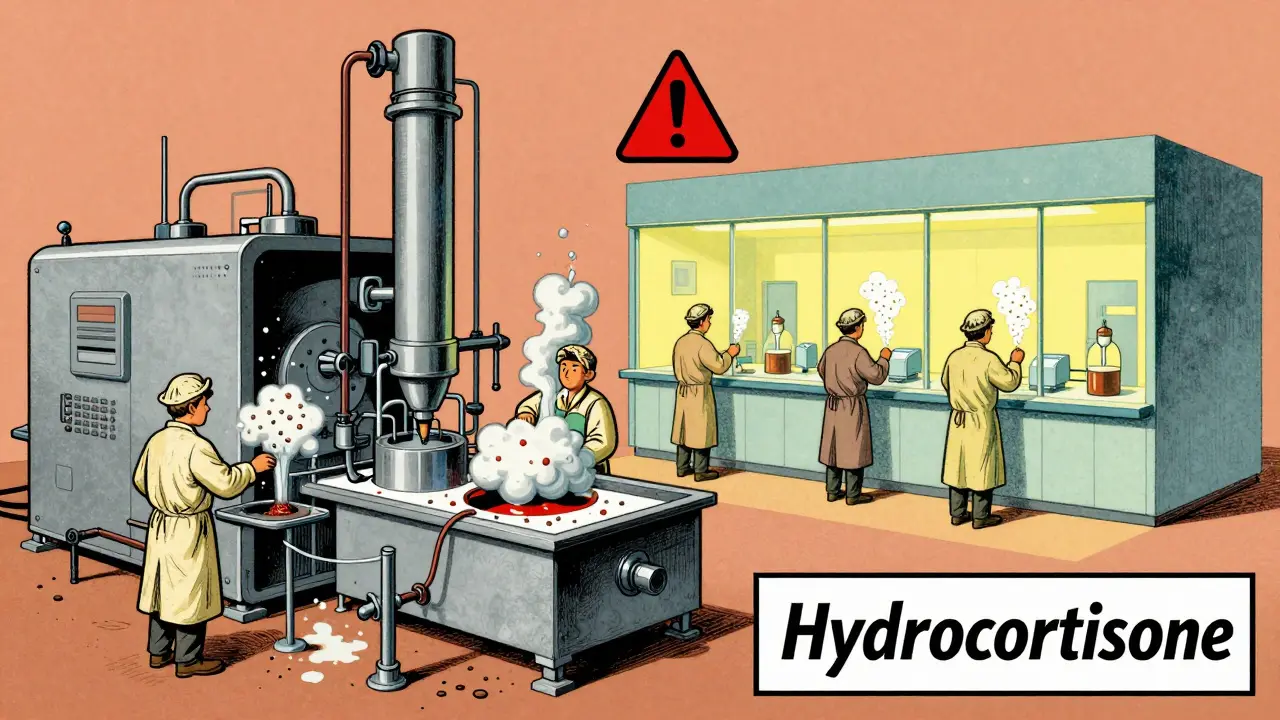
Contamination means unwanted substances sneak into your medicine. It could be leftover chemicals from another drug, dust from the air, bacteria, mold, or even tiny metal particles. The FDA calls this cross-contamination - when one drug accidentally mixes with another during manufacturing. For example, a batch of blood pressure pills might pick up traces of a diabetes drug because the same machine wasn’t cleaned well enough. Or a sterile injection could get contaminated with mold spores from a poorly sealed room. These aren’t just tiny flaws. They can cause serious harm. In 2021, a patient developed severe skin rashes after using a generic hydrocortisone cream contaminated with an unknown chemical. Another case involved metronidazole tablets with blue specks that tested positive for copper - a toxic metal. Patients didn’t know their meds were unsafe until a pharmacist noticed something off.Why Are Generic Drugs More at Risk?
Generic drugs make up 90% of all prescriptions in the U.S. They’re cheaper, and that’s good - unless cost-cutting compromises safety. While brand-name and generic drugs must meet the same FDA standards, the pressure to keep prices low changes how companies operate. Most generic drugmakers operate on thin margins - 20-25% profit compared to 60-70% for brand-name makers. That means less money for clean facilities, advanced testing, or well-trained staff. The FDA found that in 2022, 8.3% of generic manufacturing sites got flagged for contamination issues, while only 5.1% of brand-name sites did. In India, where 60% of U.S. generic drugs are made, contamination-related inspection findings were nearly double those in the U.S. Older factories are another problem. Facilities built before 2000 have 34% higher contamination risk. Many still use open equipment, manual handling, and outdated ventilation systems. Even small mistakes - like a worker shedding 40,000 skin cells per minute - can introduce particles into the air. In cleanrooms, one person standing still can release 100,000 particles larger than 0.3 microns. That’s enough to ruin a batch of sterile medicine.Where Does Contamination Come From?
Contamination doesn’t happen by accident. It’s usually tied to specific steps in the process:- Shared equipment: Machines used for multiple drugs without proper cleaning. Even after wiping, 10 parts per million (ppm) of leftover drug residue can remain - and that’s not always safe, especially for powerful drugs like cancer treatments.
- Poor facility design: Many plants don’t meet modern air quality standards. Non-sterile drugs should be made in ISO Class 8 environments. Sterile drugs need ISO Class 5. Too many facilities fall short.
- Human error: 75-80% of particles in cleanrooms come from people. Handling vials, breaking ampules, or pulling needles out incorrectly causes 62% of hazardous drug contamination incidents.
- Global supply chains: 80% of active ingredients come from India and China. The FDA inspects only 1% of imported drugs. That means most shipments aren’t checked for impurities until they’re already in U.S. warehouses.
How Are Contaminated Drugs Detected?
Traditionally, labs had to wait 7 days to test for microbes. That’s too long. By then, contaminated pills are already on shelves. But new tech is changing that. Top manufacturers now use rapid microbiological methods that cut detection time from 7 days to just 4 hours. By 2022, 63% of leading generic companies had adopted these tools. The FDA also uses advanced systems like PREDICT to flag risky shipments before they even reach U.S. ports. In 2023, this system caught 37% more contaminated imports than the old one. Still, it’s not perfect. Only a fraction of drugs get tested. Pharmacists are often the first to spot something wrong. In a 2022 survey, 28% of hospital pharmacists reported encountering suspicious generics. Some noticed odd colors, strange smells, or inconsistent tablet shapes. One pharmacist on Reddit posted photos of blue specks in metronidazole tablets - later confirmed as copper contamination.What’s Being Done to Prevent It?
Prevention starts with strict rules - Good Manufacturing Practices (GMP). But following the rules isn’t enough. You need to go beyond them.- Cleaning validation: Companies must prove they can remove 10 ppm of residue from previous products. That requires swab tests, chemical analysis, and three successful cleaning cycles in a row.
- Closed systems: Some manufacturers, like Teva’s facility in Italy, installed fully enclosed production lines. This cut cross-contamination by 78% between 2018 and 2022.
- Real-time monitoring: Mylan’s Morgantown plant added sensors that track particles and humidity 24/7. Contamination incidents dropped 82% in three years.
- Personnel training: Every worker must get 8-12 hours of initial contamination training - and annual refreshers. Gowning procedures, hand hygiene, and movement protocols are now part of daily routines.
What Happens When a Drug Is Contaminated?
When contamination is found, manufacturers must act fast. The FDA has a mandatory recall system under 21 CFR Part 7. Companies can’t delay. But here’s the problem: many don’t report issues until patients get sick. The FDA’s MedWatch system collected 1,247 reports of suspected generic drug contamination between 2020 and 2022. Of those, 387 involved real harm - allergic reactions, organ damage, infections. One patient developed sepsis after taking a contaminated injectable antibiotic. Another had a stroke after a contaminated blood thinner changed its absorption rate. Recalls cost an average of $18.7 million per incident. That’s why some companies hide problems. But the risk to patients is far greater than the cost.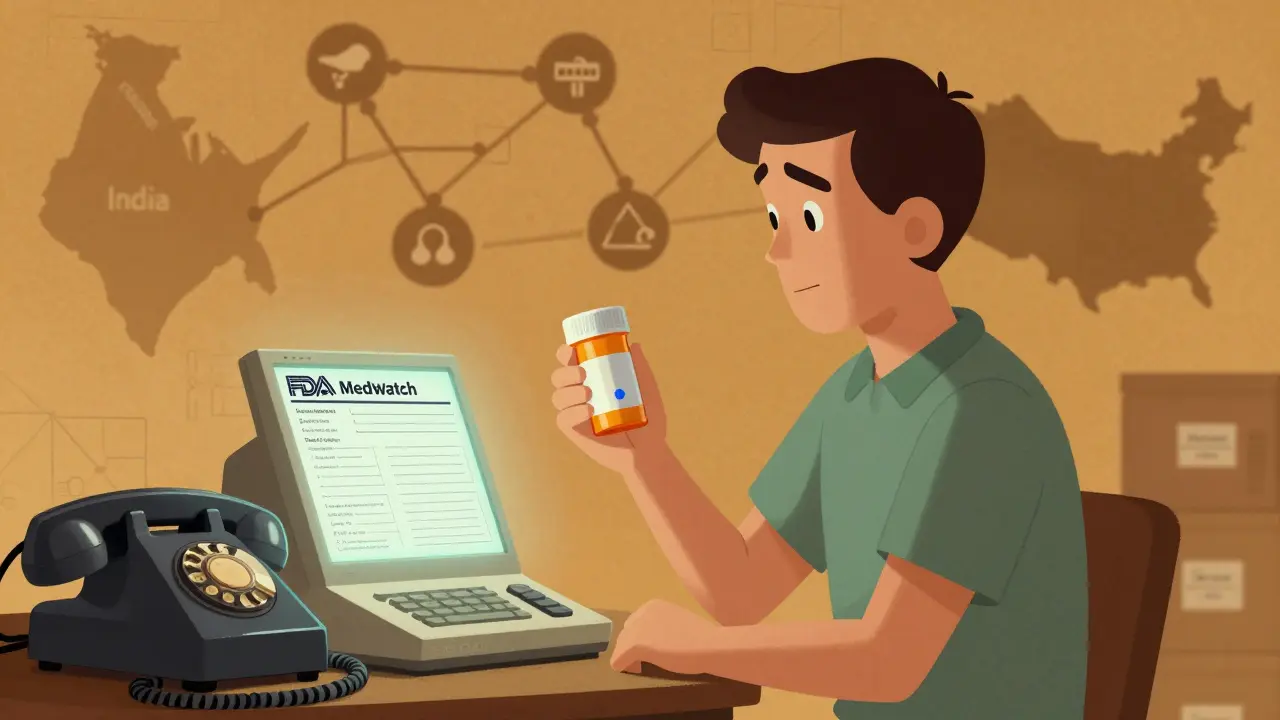
What Can You Do as a Patient?
You can’t test your pills at home. But you can stay alert:- Check for changes. If your generic pill looks different - new color, shape, or markings - ask your pharmacist. It might be a different maker. Not all generics are equal.
- Report side effects. If you feel worse after switching to a generic, tell your doctor. File a report with MedWatch. Your report could help stop a dangerous batch.
- Ask about the manufacturer. Some pharmacies can tell you which company made your drug. Look up their recall history on the FDA website.
- Don’t ignore odd smells or textures. A bitter taste, chalky feel, or strange odor could mean contamination. Don’t take it.
The Future: Better Systems, But Still Risks
The FDA is rolling out AI-powered monitoring systems in 2024 that analyze 15,000 data points per facility to predict contamination before it happens. Early tests show 89% accuracy. That’s a big step forward. But experts warn: technology can’t fix everything. The real problem is the global supply chain. As long as 80% of ingredients come from distant countries with weak oversight, contamination will remain a threat. Dr. Scott Gottlieb, former FDA commissioner, put it bluntly: "Our inspection system was built for a time when most drugs were made in the U.S. Now, we’re playing catch-up with a system that can’t keep pace."Final Thoughts
Generic drugs save billions of dollars every year. They’re essential. But safety shouldn’t be a trade-off. The system is improving - faster testing, better equipment, stricter rules. But progress is slow, and the stakes are high. If you rely on generics, know that not all are created equal. Stay informed. Ask questions. Report anything unusual. Your vigilance might be the last line of defense between you and a contaminated pill.Are generic drugs less safe than brand-name drugs?
No - generic drugs must meet the same FDA standards for strength, purity, and effectiveness as brand-name drugs. But contamination risks are higher because many generic manufacturers operate with lower budgets, older facilities, and less oversight. The drug itself is just as effective - but the risk of impurities entering the product during manufacturing is greater.
How can I tell if my generic drug is contaminated?
You usually can’t tell by looking or feeling. But if your pill looks different - new color, unusual spots, strange odor, or odd texture - don’t take it. Contact your pharmacist. If you experience new or worsening side effects after switching to a generic, report it to your doctor and file a MedWatch report with the FDA.
Which countries produce the most contaminated generic drugs?
India and China produce about 80% of the active ingredients used in U.S. generic drugs. In 2022, FDA inspections found contamination-related issues at 12.7% of Indian manufacturing sites - more than double the rate in U.S. facilities. That doesn’t mean all drugs from these countries are unsafe, but the risk is higher due to scale, oversight gaps, and older infrastructure.
What should I do if I think my medication is contaminated?
Stop taking the medication immediately. Contact your pharmacist or doctor. Keep the bottle and any remaining pills - they may be needed for testing. File a report with the FDA’s MedWatch system. This helps regulators track patterns and issue recalls faster. Don’t wait for symptoms to get worse.
Are there any generic drug makers known for better quality?
Yes. Companies like Teva, Mylan, and Sandoz have invested heavily in closed manufacturing systems, real-time monitoring, and advanced cleaning protocols. Teva’s facility in Italy reduced contamination by 78% using fully enclosed production lines. Mylan’s Morgantown plant cut incidents by 82% with automated particle sensors. These companies don’t cut corners - and their track record shows it.
How often do contaminated drugs get recalled?
In 2022, 22% of all U.S. drug recalls were due to contamination - and 37% of those affected generic drugs. That’s one in five recalls. The most common causes were microbial growth, chemical impurities, and cross-contamination. Recalls cost manufacturers an average of $18.7 million each, but the real cost is patient safety.
Can pharmacies test drugs for contamination?
Most independent pharmacies cannot. Testing requires expensive lab equipment and certified technicians. Only large hospital systems or specialty labs can do it - and even then, it’s rare. That’s why pharmacists rely on visual checks, manufacturer reputation, and patient reports to spot problems. If you’re concerned, ask your pharmacy if they know the manufacturer - and check the FDA’s recall database.


Write a comment