
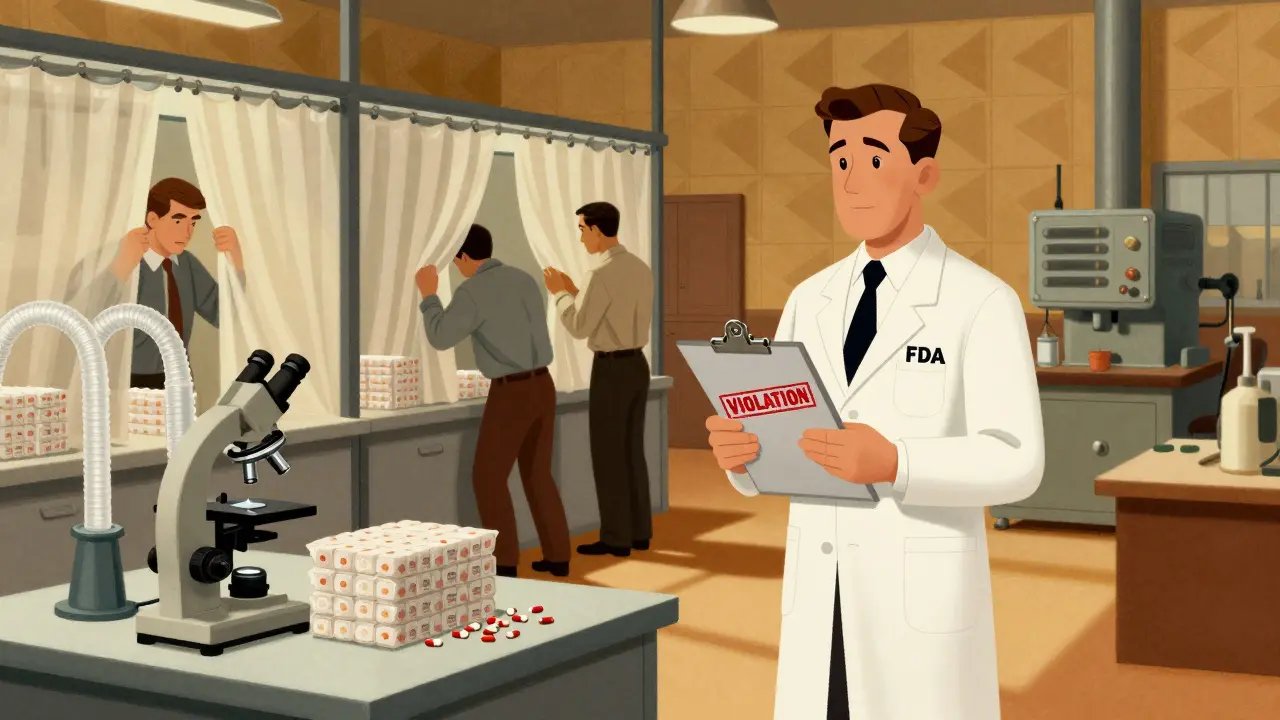
When you buy a pill, a medical device, or even a consumer gadget made overseas, you assume it’s safe. But what if the factory that made it was cutting corners? In 2024, foreign manufacturing quality failures caused 37% of all drug shortages in the U.S., according to FDA data. This isn’t an accident. It’s a pattern - and it’s getting worse.
How Quality Falls Apart Overseas
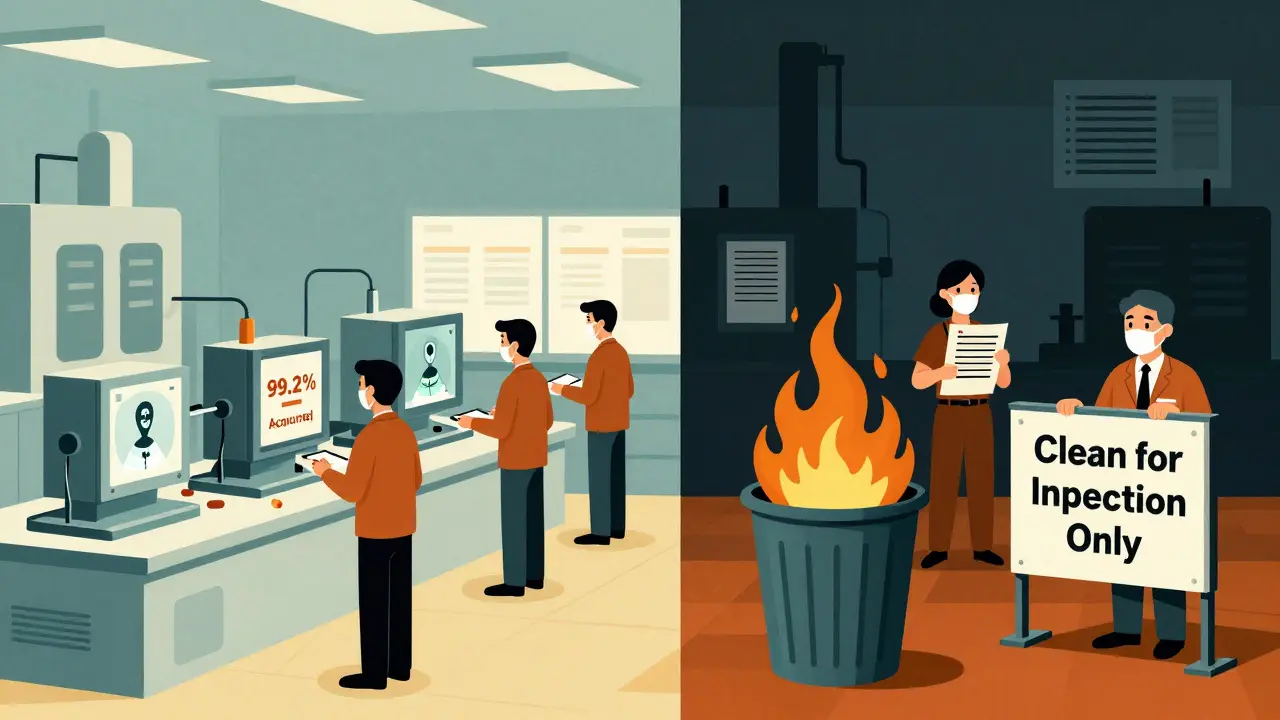
It starts with a simple promise: lower costs. But cost-cutting doesn’t just mean cheaper labor. It often means cheaper materials, skipped tests, and falsified records. In Chinese pharmaceutical plants alone, 68% of FDA-inspected facilities were found to be substituting raw materials - swapping medical-grade silicone for industrial-grade, or using lower-purity active ingredients. One facility, Wuhu Nuowei Chemistry Co., Ltd., received a formal FDA warning in February 2025 after batches were found to contain impurity levels twice the legal limit. These aren’t rare mistakes. They’re systemic.Process validation - the step where manufacturers prove their methods consistently produce safe products - is skipped in 42% of non-compliant overseas facilities. Documentation? Faked in 29% of cases. And here’s the kicker: 78% of FDA inspections in China are announced in advance. That means factories have days to clean up, hide evidence, or even temporarily hire qualified staff. Meanwhile, U.S. plants face unannounced inspections more than 95% of the time. That’s not fairness. That’s a double standard.
The Real Cost of Bad Quality
You think you’re saving money by manufacturing overseas? Think again. Harris Sliwoski’s analysis shows unaddressed quality issues add 15% to 25% to total manufacturing costs. Why? Rework. Recalls. Lost sales. Legal battles. One German company got hit with a $1.2 million claim from Sinosure - China’s export credit agency - even though the goods they received were defective. The agency sided with the supplier. The importer lost money, time, and trust.On the consumer side, the damage is worse. A Reddit thread from March 2025 collected 287 firsthand accounts from importers who got burned. One story stood out: a supplier in Shenzhen replaced medical-grade silicone with a cheaper alternative in breathing devices. 12,000 units were recalled. Patients suffered. The company’s brand was ruined. And the supplier? They simply moved to a new factory name and kept selling.
Who’s Doing It Right? The Exceptions
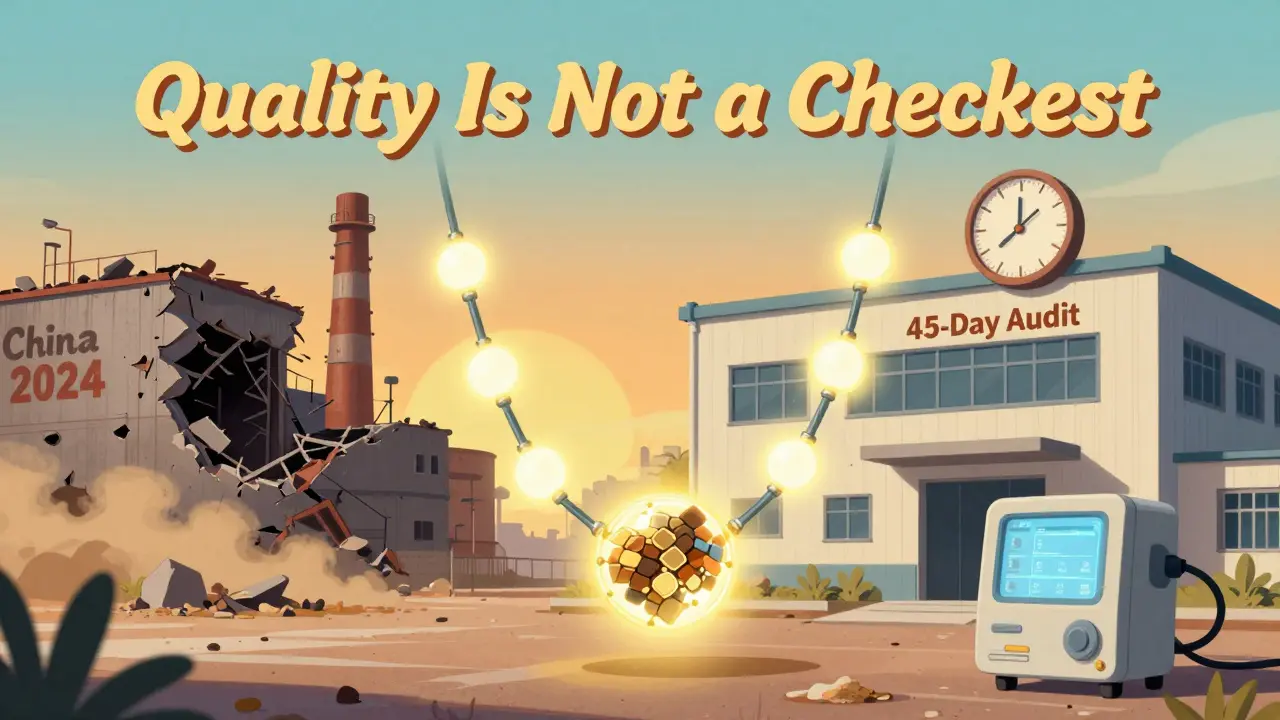
Not all overseas manufacturing is a gamble. A Minnesota-based medical device company reduced defects from 12.7% to just 0.8% in two years - not by luck, but by building a “China-specific quality triad.” They hired a full-time local quality manager who reported directly to headquarters. They used blockchain to track every batch from raw material to shipment. And they paid for unannounced third-party audits every 45 days. The result? Zero FDA 483 observations in 2024.Another success story: EU manufacturers. Their Qualified Person (QP) system requires a certified professional - physically located in the EU - to sign off on every batch before it’s sold. That person is legally liable. If a batch is contaminated, they face fines, license loss, even criminal charges. The Brookings Institution found this system cut quality failures by 22% compared to U.S. imports from non-MRA countries. It’s not magic. It’s accountability.
Why the System Is Broken
The FDA had 1,100 inspectors in 2024. They were responsible for checking over 15,000 foreign facilities. That’s one inspector for every 14 facilities. No wonder most inspections are scheduled. No wonder 47% of Chinese drug plants got flagged for violations - compared to 29% of U.S. ones.Meanwhile, China’s “Made in China 2025” initiative claims to fix quality. But while 73% of top-tier manufacturers say they’ve adopted AI-driven quality controls, Harris Sliwoski’s field reports show something darker: coordinated fraud. Suppliers are using “bank-switch scams” - switching production lines between compliant and non-compliant operations. One factory might have a clean inspection one month, then switch to a back-alley workshop the next. No one’s checking.
What’s Changing in 2025 and Beyond
The tide is turning. On May 6, 2025, FDA Commissioner Marty Makary announced a new policy: parity inspections. Foreign facilities will now be inspected under the same rules as U.S. plants - including unannounced visits. By Q4 2025, 40% of foreign inspections will be unannounced. By 2027, that number jumps to 75%. This isn’t a suggestion. It’s a mandate.Companies are reacting. Deloitte’s 2025 report shows 41% of manufacturers are shifting production to “friend-shored” countries like Mexico, Vietnam, and India. But here’s the catch: Vietnam improved quality by 18% since 2022, while Indian facilities still account for 34% of FDA import alerts - even though they only make up 25% of foreign suppliers. Moving doesn’t fix the problem. Fixing the system does.
How to Protect Your Business
If you’re sourcing overseas, here’s what actually works:- Don’t trust paperwork. Audit facilities in person - and unannounced. One visit isn’t enough. Do it every 60-90 days.
- Require direct access. Talk to the quality control team, not just the factory manager. Ask to see their training records and internal audit logs.
- Use tech - not just humans. AI-powered visual inspection systems detect defects at 99.2% accuracy. Traditional inspection? Only 85-90%. But only 22% of Chinese factories use them. Demand it.
- Build contracts with teeth. Vague quality standards cause 58% of recoverable losses. Define exact tolerances, material specs, and penalties for non-compliance.
- Invest in training. Successful companies spend $18,500 per year per facility on quality staff training. It’s not a cost. It’s insurance.
And never, ever assume compliance. The FDA’s 2025 warning letter to Chengdu Innovation Pharmaceutical Co. said it plainly: “The facility failed to establish appropriate standards to ensure batch purity.” That’s not a technical glitch. That’s negligence. And it’s happening more often than you think.
The Future of Overseas Manufacturing
By 2028, Deloitte predicts manufacturers using digital quality ecosystems - combining AI, IoT sensors, blockchain tracking, and real-time data - will hit 95%+ compliance. But that’s only for those who adapt. The rest? They’ll keep getting caught in recalls, lawsuits, and reputational ruin.The choice isn’t between domestic and overseas. It’s between smart oversight and blind trust. The companies that survive will be the ones who treat quality control like a core business function - not a checkbox.
Why are FDA inspections in China often announced in advance?
Historically, the FDA faced logistical and diplomatic challenges conducting unannounced inspections in China. Limited staffing, visa restrictions, and lack of legal authority to enter facilities without notice made scheduled inspections the norm. Through 2024, 78% of inspections in China were announced. But starting in 2025, the FDA is shifting to parity with U.S. inspections - meaning unannounced visits will become the standard, with 75% of foreign inspections planned to be unannounced by 2027.
Can AI really fix quality problems in overseas factories?
AI can’t fix bad culture - but it can expose it. AI-powered visual inspection systems detect defects like missing components, wrong labels, or material substitutions with 99.2% accuracy, far beyond human capability. The problem isn’t the tech - it’s adoption. Only 22% of Chinese manufacturers have fully integrated these systems as of Q2 2025. Companies that demand AI-based quality monitoring from their suppliers are seeing defect rates drop by over 30% within a year.
Is Vietnam a safer alternative to China for manufacturing?
Vietnam has shown real progress - 18% improvement in quality metrics since 2022 - and offers lower political risk than China. But it’s not a magic solution. Many Vietnamese factories still lack formal quality systems, and regulatory oversight is less mature than in the EU or U.S. The key is not where you manufacture, but how you oversee it. A well-managed factory in Vietnam beats a poorly managed one in Germany.
What’s the biggest mistake companies make when sourcing overseas?
Relying on third-party agents without direct oversight. Many companies hire a sourcing company in Hong Kong or Shanghai and assume they’re handling quality. But these agents often have no technical expertise, and their incentives are tied to volume, not compliance. The most successful companies send their own quality engineers to live on-site, audit suppliers directly, and sign contracts that hold the factory legally responsible for defects.
How long does it take to build a reliable overseas supply chain?
Most small and medium businesses take 6 to 9 months to build a functional system. This includes vetting suppliers (8-12 weeks), training staff, installing monitoring tools, and establishing audit routines. Rushing this process leads to costly failures. The average SME spends $18,500 per year per facility on quality training alone - but that’s far cheaper than a recall.


Write a comment