
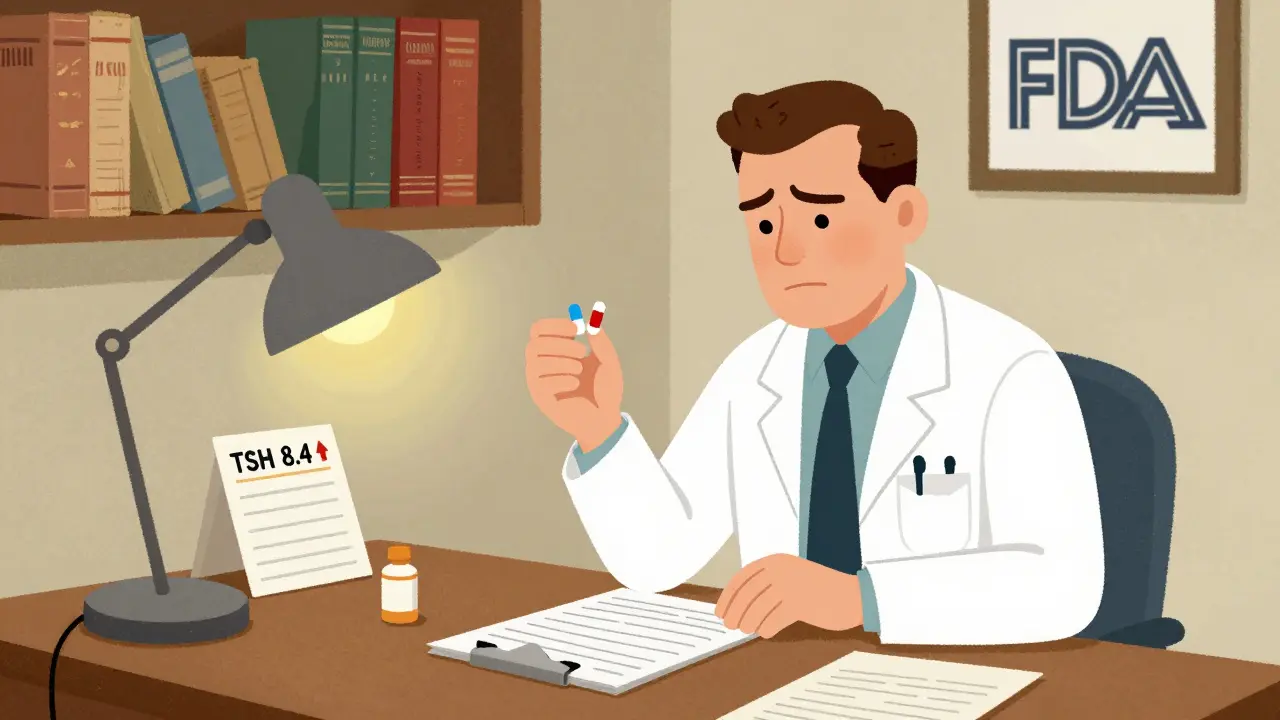
Doctors prescribe generic drugs every day - but not always because they believe in them. Behind the prescription pad, many providers harbor doubts. Some worry the pills won’t work as well. Others fear side effects. A few still think generics are cheaper because they’re inferior. The truth? Most generics are just as safe and effective as brand-name drugs. But perception doesn’t always follow science.
Why Do Some Doctors Still Doubt Generics?
It’s not about ignorance. It’s about experience. A 2017 study of 134 physicians in Greece found that more than 25% believed generic drugs were less effective than brand-name versions. Even more concerning - 27.3% questioned whether generics were truly therapeutically equivalent. These aren’t fringe opinions. They’re widespread.
Older doctors, especially those with over 10 years of practice, are more likely to be skeptical. Male physicians also show stronger resistance than their female counterparts. Why? One reason: they’ve spent decades prescribing brand-name drugs that worked. When a patient comes back saying, “This new pill makes me feel weird,” it’s easier to blame the generic than the condition or the dose.
Then there’s the issue of narrow-therapeutic-index drugs - medications like warfarin, levothyroxine, and phenytoin. These drugs have a tiny window between effective and toxic. A small difference in absorption can cause real harm. Some doctors report adverse events after switching patients to generics, especially with thyroid meds. While studies show bioequivalence is generally maintained, those single bad experiences stick. Reddit threads from practicing physicians are full of stories: “Switched my patient to generic levothyroxine. TSH went from 2.1 to 8.4 in two weeks.” These aren’t myths. They’re real cases that fuel doubt.
The Knowledge Gap
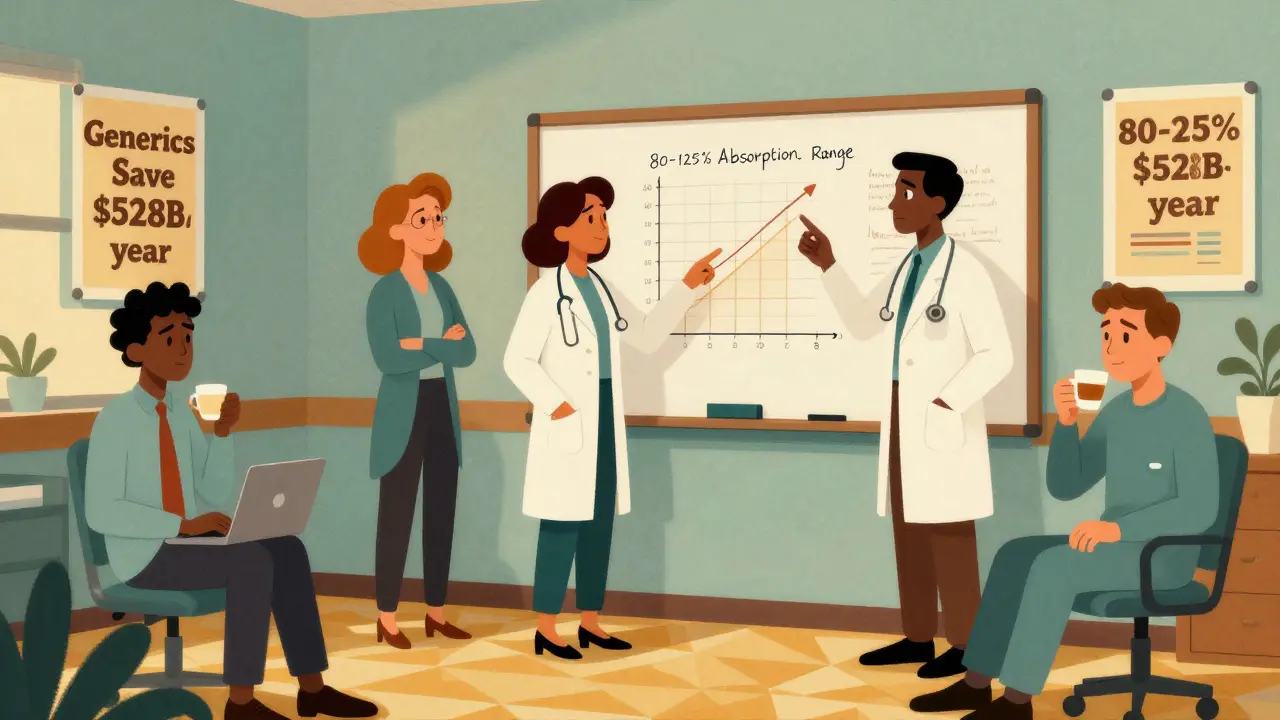
Here’s the irony: most doctors think they know how generics work. But a 2020 study of primary care physicians found only 43.7% could correctly explain FDA bioequivalence standards - which require generics to deliver 80% to 125% of the brand’s active ingredient. That’s a huge range. And yet, 78.4% claimed they were “familiar” with the rules.
Medical schools don’t help. Only 38.7% of U.S. medical programs include structured education on generics. Most doctors learn about them on the job - if they learn at all. Many never see the data showing that generics perform just as well in real-world settings. They rely on anecdotal stories, pharmacy reps, or outdated textbooks.
Even worse, many don’t know how to explain generics to patients. When a patient asks, “Why is this pill cheaper?” and the doctor replies, “It’s the same thing,” it doesn’t feel convincing. Patients notice the shape, color, or taste is different. They worry. And if the doctor doesn’t address those fears, trust erodes.
What Doctors Actually Want
It’s not that doctors hate generics. Many want to prescribe them. The problem is they lack the tools to do so confidently.
A 2023 survey found 83.4% of physicians believe doctors need more education on generics. Nearly two-thirds (63.4%) asked for better comparative efficacy data. Over half (57.8%) worried about inconsistent quality between different generic manufacturers. One doctor put it bluntly: “I’ll prescribe a generic if I know which company made it - and if I’ve seen it work in my patients before.”
Time is another barrier. Primary care doctors spend an average of 15 minutes per visit. Explaining bioequivalence, addressing fears, and checking for adverse reactions? That’s not always possible. One survey found 74.3% of physicians felt they didn’t have enough time to properly counsel patients on generic switches.
And then there’s the system. Insurance companies push generics. Pharmacy benefit managers force substitutions. Doctors feel like they’re being pressured - not educated. That breeds resentment. Instead of seeing generics as a tool, some see them as a corporate mandate.
What Works: Real Solutions That Change Minds
Change is possible. And it’s not about more ads or louder marketing. It’s about better information.
A 2017 study in Greece gave doctors a 90-minute workshop with real-world data on generic outcomes. After six months, those doctors increased their generic prescribing by 22.5%. The biggest jump? Among physicians with 5-10 years of experience. Not the veterans. Not the rookies. The ones still open to learning.
Peer influence matters. Doctors listen to other doctors. Programs that train high-prescribing physicians to mentor their peers saw 43.2% more impact than external educators. One clinic in Oregon paired each skeptical provider with a colleague who had successfully switched 80% of their thyroid patients to generics. Within a year, the skeptics’ prescribing rates doubled.
Real-time data helps too. Johns Hopkins ran a pilot where providers got automatic alerts when new generics were approved - with links to published studies on their effectiveness. Within months, prescribing of those new generics jumped by 28.6%. Doctors didn’t need a lecture. They needed proof they could trust.
The FDA’s 2023 GDUFA III rules now require more post-market surveillance on generics. That means more data on side effects, absorption rates, and long-term outcomes. When doctors can see that a generic version of metformin has the same 10-year outcomes as the brand - with fewer reports of GI upset - they start to change their minds.

Why This Matters Beyond the Prescription
Generics make up 90.1% of all U.S. prescriptions but only 22.7% of drug spending. That’s $528 billion saved globally every year. But if doctors won’t prescribe them, patients won’t take them.
And here’s the hidden cost: patient mistrust. A CDC study found that 41.7% of patients who were switched to generics without proper explanation stopped taking their meds altogether. Why? They thought their doctor didn’t care enough to give them the “real” drug. That’s not just a pharmacy issue. That’s a breakdown in trust - and it affects every part of their care.
Patients don’t get their information from drug labels. They get it from their doctors. Sixty-eight percent say their provider is their main source of knowledge about generics. If the doctor says, “It’s fine,” but looks unsure, the patient hears: “I don’t trust this.”
That’s why the solution isn’t just about education - it’s about communication. Simple phrases like “This generic has been used by over 50,000 patients in our system and works just like the brand” make a difference. So does saying, “I’ve had patients switch before, and here’s what to watch for.”
The Future: Will Doctors Ever Fully Embrace Generics?
Yes - but slowly. IQVIA predicts that by 2030, 78.4% of physicians will view generics as therapeutically equivalent. That’s up from 64.7% today. But narrow-therapeutic-index drugs? Those will remain tricky. Even by 2035, an estimated 25.3% of doctors will still prefer brands for drugs like warfarin or lithium.
One thing is clear: attitudes aren’t fixed. They’re shaped by data, experience, and trust. The doctors who switch are the ones who see the evidence - not just hear about it. The ones who change are the ones who get support, not pressure.
Generics aren’t the enemy. They’re the opportunity. For patients. For systems. For doctors who want to do right by their care - without breaking the bank.
Do doctors really think generic drugs are less effective?
Yes, some do. Studies show that 25% to 28% of physicians still believe generics are less effective or lower quality than brand-name drugs, even though they’re required by the FDA to be bioequivalent. This belief is stronger among older, male, and specialist physicians, and often stems from anecdotal experiences or lack of updated education.
Are generic drugs really as safe as brand-name drugs?
For most medications, yes. The FDA requires generics to deliver the same active ingredient in the same amount and with the same effectiveness as the brand. Bioequivalence standards (80-125% absorption) ensure they work the same way in the body. Real-world studies on drugs like statins, antibiotics, and blood pressure meds show no meaningful difference in outcomes.
Why do some doctors hesitate to prescribe generics for thyroid or blood thinners?
These are narrow-therapeutic-index drugs, where even small changes in blood levels can cause problems. Some doctors report adverse events after switching patients to generics - like unstable TSH levels with levothyroxine or INR spikes with warfarin. While studies show these are rare and often due to switching between different generic brands, not generics vs. brand, the fear persists. Many doctors now prefer to keep patients on the same generic manufacturer once stabilized.
What’s the biggest barrier to prescribing generics?
Time and education. Most doctors don’t have enough time during visits to explain generics to patients. They also lack access to clear, up-to-date data on generic performance. A 2023 survey found 86.1% of physicians felt continuing education on generics was insufficient - and 74.3% said they didn’t have enough time to counsel patients properly.
Can education change a doctor’s attitude toward generics?
Absolutely. A 2017 study showed that a single 90-minute workshop with real-world evidence increased generic prescribing by 22.5% over six months. Doctors who received peer mentoring from colleagues who successfully switched patients saw even greater gains. The key isn’t more lectures - it’s trusted data, practical examples, and conversations with peers who’ve done it.
How do patient beliefs affect generic prescribing?
A lot. Patients often get their information from their doctor. If a doctor expresses doubt - even subtly - patients are more likely to refuse generics or stop taking them. One CDC study found 41.7% of patients discontinued their meds after being switched to generics without proper explanation. That’s not just a pharmacy issue - it’s a communication failure.


Write a comment