
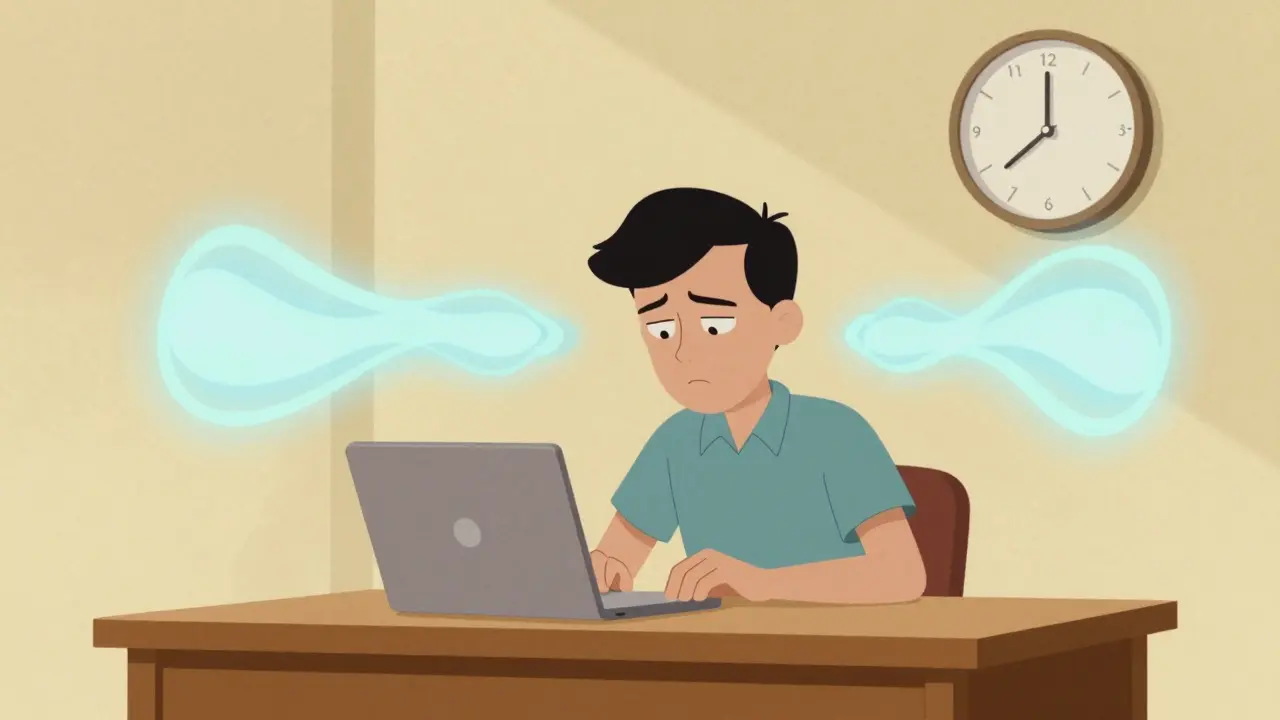
Every time you check your phone, stare at your laptop, or scroll before bed, you’re exposed to blue light-short-wavelength, high-energy light that’s everywhere in modern life. It’s not just about how tired your eyes feel. It’s about whether that tiredness is temporary, or if it’s slowly adding up to something worse. And the truth? Most of what you hear about blue light is mixed, confusing, and often wrong.
What Blue Light Actually Does to Your Eyes
Blue light isn’t the enemy. The sun emits way more of it than any screen. But here’s the catch: when you’re staring at screens for hours, especially at night, your eyes get hit with a steady, unnatural dose of blue light in the 415-455 nm range. That’s the sweet spot where light has enough energy to trigger chemical reactions in your cornea and retina. Studies show exposure to this range for just 24 hours at high intensity can drop corneal cell viability by over 37%. That’s not theoretical-it’s measured in labs.
And it’s not just damage. Blue light scatters more than other colors, making your eyes work harder to focus. That’s why your vision gets blurry after hours of screen time. It’s not dryness alone-it’s visual fatigue from your eyes constantly adjusting. The result? Headaches, watery or dry eyes, and that heavy, strained feeling behind your eyeballs.
Then there’s sleep. Blue light suppresses melatonin-the hormone that tells your body it’s time to rest. Harvard studies found that blue light at night suppresses melatonin twice as long as green light and shifts your internal clock three hours, compared to just 1.5 hours for warmer light. That’s why scrolling in bed leaves you wide awake, even when you’re exhausted.
Do Blue Light Glasses Actually Help?
There are thousands of blue light glasses on Amazon. They’re cheap, easy to buy, and marketed like a cure-all. But the science says otherwise.
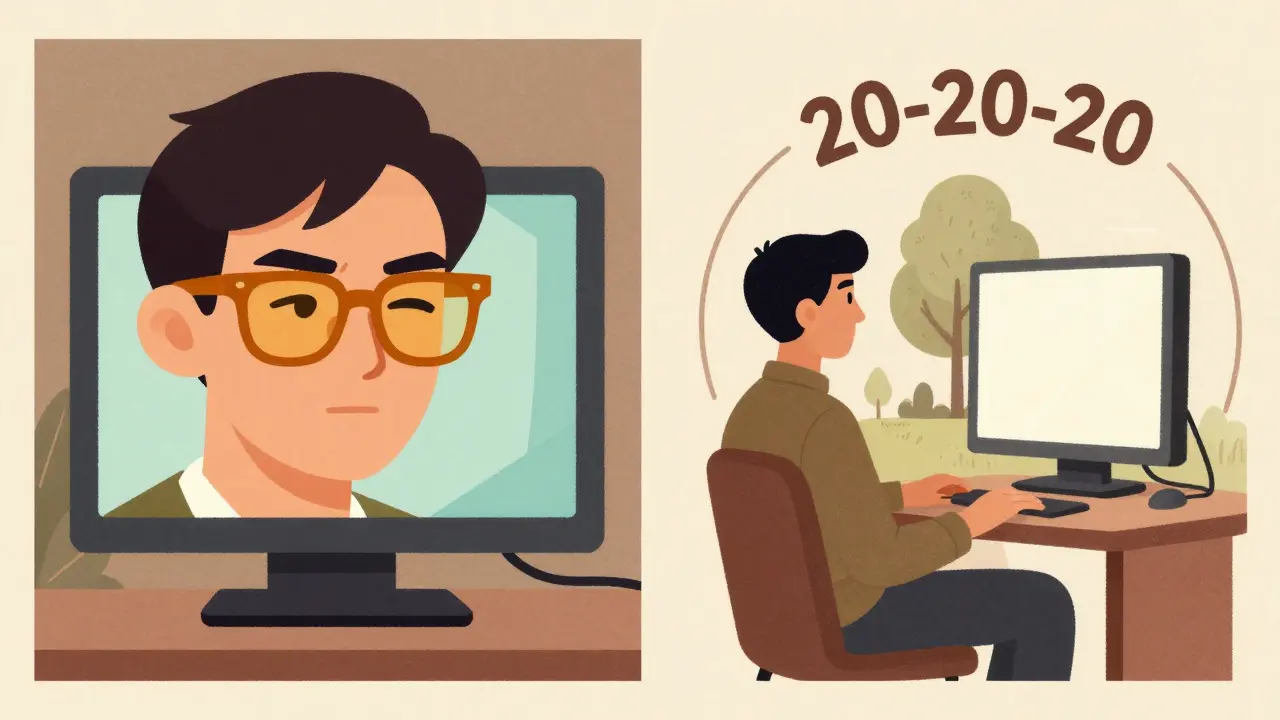
Amber-tinted lenses block 65-100% of blue light. That sounds great-until you try to edit photos, read a color-coded spreadsheet, or even see someone’s face clearly. A University of Manchester study found they reduce visual acuity by over 8% in color-critical tasks. For designers, photographers, or anyone who works with visuals, that’s a dealbreaker.
Clear lenses with blue light filters? They only block 10-25%. Essilor’s Eyezen lenses claim 20% reduction-but Consumer Reports tested them and found just 12%. That’s barely better than turning down your screen brightness.
And here’s the kicker: the American Academy of Ophthalmology says there’s no proof blue light from screens damages your eyes. They don’t recommend the glasses. Why? Because the biggest issue isn’t permanent damage-it’s temporary strain. And that’s not solved by tinted lenses.
What Actually Reduces Eye Strain (And It’s Not What You Think)
Forget the glasses. The real fix is simple, free, and backed by hard data.
- The 20-20-20 rule: Every 20 minutes, look at something 20 feet away for 20 seconds. A 2021 study in Optometry and Vision Science showed this cuts eye strain by over 53%. It’s not magic-it gives your focusing muscles a break.
- Brighten or dim your screen: Match your screen brightness to your room. If your screen is way brighter than your surroundings, your pupils are constantly fighting to adjust. The Lighting Research Center found reducing this mismatch cuts discomfort by 41%.
- Move your screen farther away: Holding your phone 12 inches from your face forces your eyes to focus at 8.3 diopters. At 20-30 inches? That drops to 3.7 diopters. Less strain. More comfort.
- Use night mode two hours before bed: It doesn’t need to be extreme. Just turning on Night Shift or f.lux reduces melatonin suppression by 58% compared to full brightness. You don’t need amber tones-you just need less blue light at night.
These aren’t guesses. They’re proven habits. And they cost nothing.
Why Screen Filters Are Overhyped
Software filters like Night Shift or f.lux reduce blue light by 10-20%. Sounds good, right? But here’s what they miss: the most damaging part of blue light-the 415-455 nm peak-is still getting through. The International Commission on Illumination says that range is the real problem. Software can’t fully block it without making your screen look like a sepia photo.
Hardware filters? Screen protectors that claim to block blue light? They’re often just tinted plastic. Independent tests show they reduce transmission by 10-30%, but they also make colors look dull and reduce contrast. You trade one problem for another.
And then there’s the market. The global blue light protection industry hit $3.12 billion in 2022. But here’s the twist: display manufacturers are moving on. Apple’s iOS 17.4 (March 2024) now uses ambient light sensors to adjust color temperature automatically-reducing melatonin suppression by 37% without changing how colors look. OLED screens from Samsung and LG are starting to cut blue light at the hardware level, reducing emissions by 30-40% without filters. That means in a few years, you won’t need glasses or screen protectors-you’ll just use a modern screen.
What About Supplements?
There’s new hope in lutein and zeaxanthin-nutrients found in leafy greens and egg yolks. A February 2024 study in Nature Communications showed taking 10 mg of lutein and 2 mg of zeaxanthin daily increased macular pigment density by 0.12. That’s equivalent to the natural filtering of a 25% blue light-blocking lens. No tint. No distortion. Just your body’s own defense.
It’s not a magic pill. But if you’re already eating well, it’s an easy upgrade. If you’re not? Start with spinach. Or kale. Or even a boiled egg.
Real People, Real Results
On Reddit’s r/Bluelight, 142,000 members share their experiences. 78% say the 20-20-20 rule helped reduce eye strain. 63% say they sleep better. But 42% of people who bought blue light glasses on Amazon said they noticed no difference. And 31% complained about the yellow tint ruining their work.
Photographers on DPReview forums refuse them outright. One user, ‘PhotoJim,’ wrote: ‘The color shift ruins my ability to accurately assess skin tones.’ That’s not an outlier-it’s a professional’s reality.
Meanwhile, people who set up their workspace right-screen at arm’s length, lighting matched, breaks taken-report fewer headaches, less dryness, and better sleep. No glasses. No filters. Just habits.
The Bottom Line
Blue light from screens doesn’t cause blindness. It doesn’t destroy your retina. But it does cause strain. It does mess with sleep. And it does make your eyes feel like they’ve been sandblasted after a long day.
You don’t need expensive glasses. You don’t need screen filters. You need to change how you use your devices.
Set a timer for 20 minutes. When it goes off, look out the window. Adjust your screen brightness to match the room. Move your laptop back. Turn on night mode before dinner. Eat a green salad. That’s it.
The science is clear: habits beat hardware. And the best filter? Your own behavior.
Do blue light glasses really protect my eyes from damage?
No credible evidence shows that blue light from screens causes permanent eye damage like macular degeneration or cataracts. The American Academy of Ophthalmology states there’s no scientific proof blue light from digital devices harms your eyes. What blue light glasses may help with is temporary eye strain and sleep disruption-but even then, simple habits like the 20-20-20 rule and reducing screen brightness before bed are just as effective, and often more practical.
Is blue light worse at night?
Yes. Blue light suppresses melatonin-the hormone that signals your body to sleep. Research from Harvard Medical School shows that 6.5 hours of blue light at night suppresses melatonin for 105 minutes, compared to only 52 minutes with green light. This delays sleep onset and shifts your circadian rhythm. That’s why scrolling in bed makes it harder to fall asleep, even if you’re tired.
How much screen time is too much for eye health?
There’s no set limit, but the average person now spends nearly 7 hours a day on digital devices. The problem isn’t the number of hours-it’s how you use them. Continuous screen use without breaks leads to digital eye strain. Symptoms like dry eyes, blurred vision, and headaches appear after just 2 hours of uninterrupted use. The fix isn’t less screen time-it’s better screen habits: breaks, proper distance, and lighting.
Can blue light cause headaches?
Yes, but indirectly. Blue light doesn’t directly trigger migraines, but it contributes to visual fatigue. When your eyes struggle to focus on a screen with scattered light, your eye muscles tense up. This tension can radiate into your forehead and temples, causing tension headaches. A 2023 WebMD review found 52.1% of users report blurred vision and 38% say they get immediate headache relief from following the 20-20-20 rule.
Should I use blue light filters on all my devices?
Only if you’re using them consistently. Most people turn on night mode on their phone but forget their laptop or tablet. A 2021 study found that 68% of users fail because they don’t apply settings across all devices. If you’re going to use filters, make sure they’re on every screen you use after sunset. But remember: filters alone won’t fix eye strain. Combine them with breaks, proper distance, and ambient lighting.
Are there better alternatives to blue light glasses?
Absolutely. The best alternatives are free: the 20-20-20 rule, lowering screen brightness, increasing viewing distance to 20-30 inches, using warm ambient lighting, and taking screen breaks. For sleep, use night mode two hours before bed. For long-term eye health, eat foods rich in lutein and zeaxanthin-like spinach, kale, and eggs. These work better than glasses and don’t distort color or cost money.
What to Do Next
Start tonight. Turn on night mode on your phone and laptop two hours before bed. Tomorrow, set a timer for every 20 minutes of screen time. When it rings, stand up, walk to a window, and look at something far away. Do this for five days. You’ll notice your eyes feel less tired. You’ll fall asleep faster. And you won’t need to spend a cent.
Blue light isn’t the villain. Bad habits are. Fix those, and your eyes will thank you.


Write a comment